13 Bay Window Curtain Ideas to Frame Your Space
A bay window is the best seat in the house and the hardest window to dress. Three angles, three different…
A bay window is the best seat in the house and the hardest window to dress. Three angles, three different widths, and a corner that laughs at standard curtain rods. But get it right and the whole room changes. Light softens into something golden, the window nook becomes the spot everyone fights over, and the architecture you paid for finally gets the frame it deserves. Below are 13 curtain ideas that work on real bays, from crisp tailored panels to relaxed natural weaves. Each one tells you what to measure, what to look for, and how to hang it so the result looks intentional instead of improvised.
In This Guide
- A Clean Geometric Repeat
- A Darker Trim Against a Light Field
- A Relaxed Fabric Texture
- A Plain Treatment With Simple Hardware
- A Soft Check Pattern
- A Natural-Fiber Look Suited to the Room
- A Calm Monochrome Pairing
- A Restrained Vintage-Style Fabric
- A Linen-Look Finish With Neat Hems
- A Delicate Vertical Pattern
- A Simple Solid Color Repeated in Textiles
- A Soft Neutral Fabric With Simple Folds
- A Subtle Stripe Echoing Room Colors
The Bay Window Curtain Rules Before You Hang Anything
Measure each of the three window sections separately, because bays are almost never symmetrical. Write down all three widths, the height from your planned rod position to the floor, and the depth of the bay from wall to glass. You will need every number at the store.
Choose hardware that follows the angles. A curved bay rod or a ceiling-mounted flexible track bends through the corners so panels glide as one treatment. Three separate straight rods can work in a pinch, but the gaps at the corners always show.
Mount the rod 4 to 6 inches above the window frame, or run it all the way to the ceiling if you want the bay to feel taller. Give every panel real stacking room, roughly one-third of its window section’s width, so open curtains frame the glass instead of covering it.
Keep fabric clear of radiators. Many bays sit above one, and curtains should end at the sill or be tied fully to the sides, never bunched over hot metal.
Make it child-safe from the start. Skip loose pull cords entirely and choose cordless tiebacks, clip rings, or a simple baton wand for drawing panels. If cords already exist, fit a cord cleat high on the wall and wrap them tight and out of reach.
Plan for sun and privacy together. Bays face the street and the sun in equal measure. A sheer underlayer gives daytime privacy without darkening the room, while lined outer panels protect fabric from fading and close out the evening. If your bay anchors the main living space, it helps to think about the whole room at once, and our narrow living room layout ideas cover how seating and windows work together.
1. A Clean Geometric Repeat
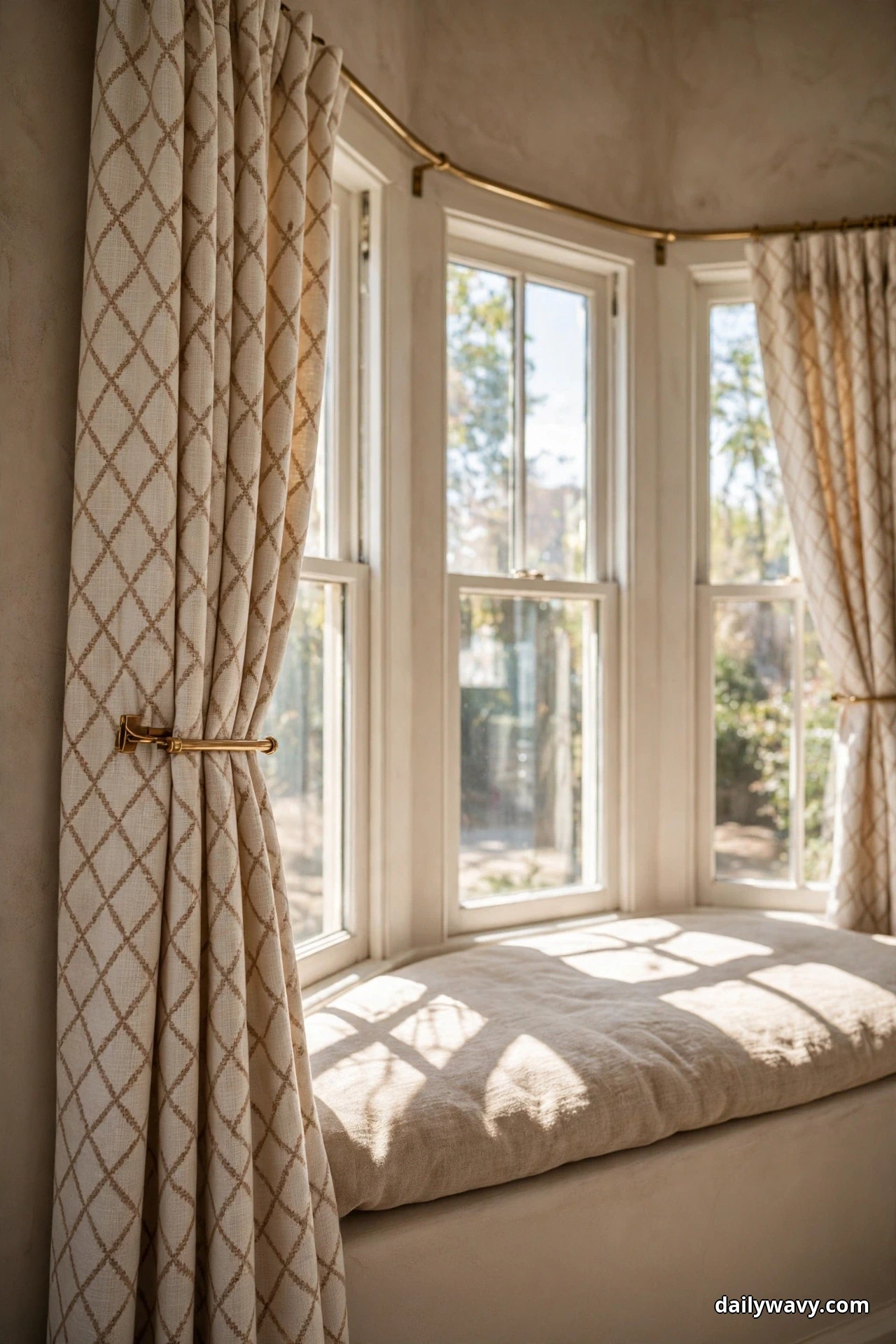
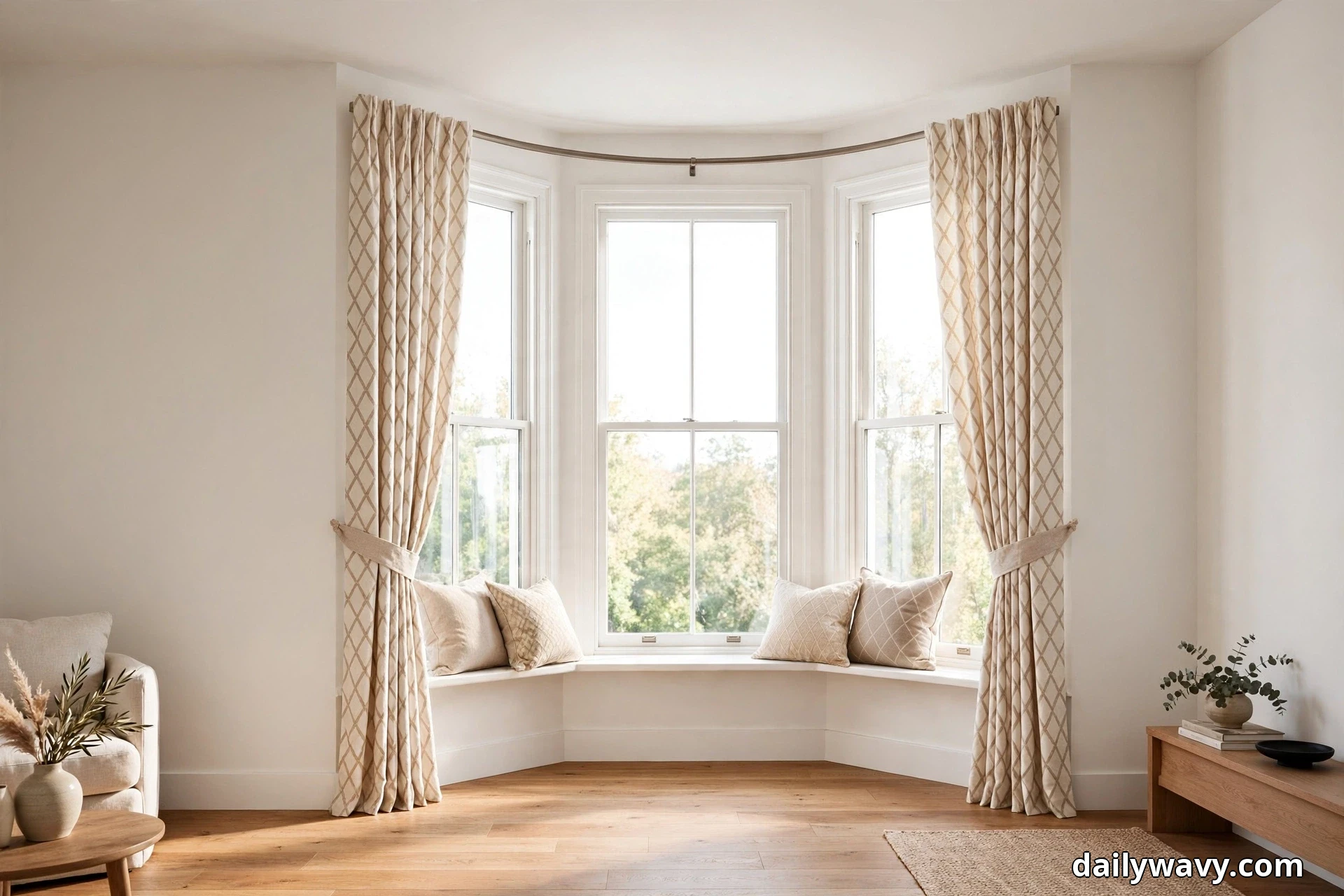
A small, tidy geometric print is the bay window’s best friend. The repeat gives the eye something to follow around the angles, so the three sections read as one deliberate design instead of three separate windows that happen to sit together. On a cream ground with a soft taupe lattice, it stays calm enough for a living room but interesting enough that the window earns a second look.
The look: Floor-length panels in a cream fabric printed with a subtle warm-taupe diamond lattice, hung from a slim brass curved bay rod. Panels stack at the outer sides on linen tiebacks, leaving the middle section open to the view. A window seat below carries two plain cushions that pick up the taupe tone.
Measure first: Each panel should be 1.5 to 2 times the width of its window section so the pleats look full when closed. Note the pattern repeat size on the fabric bolt; a small repeat (under 6 inches) is forgiving around bay corners, while a large repeat needs matching across panels.
How to do it: Mount the curved rod 5 inches above the frame and let panels just kiss the floor. If you are using a ceiling track instead, choose carriers that glide smoothly through the bends and test them before the curtains go up. Steam the panels after hanging so the geometric lines fall straight.
Effort and budget: Moderate. Ready-made geometric panels in standard lengths keep costs down; the curved bay rod is the one specialty purchase. Lower-cost swap: buy straight panels and have a local alterations shop add the curve-friendly heading tape, or use clip rings on the bay rod and skip the heading work altogether.
2. A Darker Trim Against a Light Field
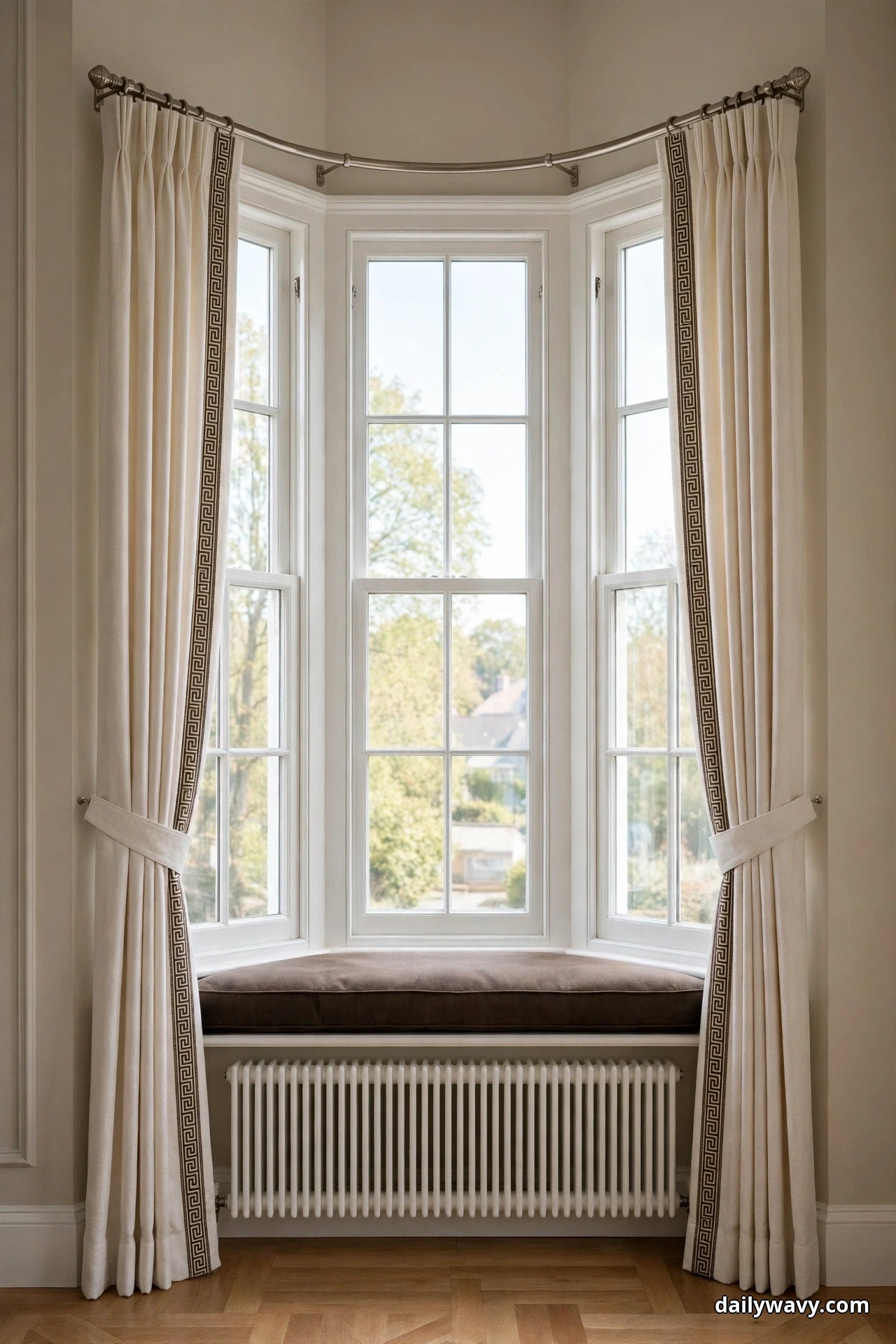
When you love plain curtains but plain feels flat, trim is the answer. A darker band running down the leading edge of each panel gives the window a tailored, finished edge and draws the eye along the height of the bay. Ivory linen-look fabric with an espresso Greek-key trim reads classic without reading fussy.
The look: Warm ivory panels on a brushed-nickel bay rod, each with a 2-inch band of espresso-brown Greek-key trim sewn down the inner leading edge. The trim lands exactly where the panels meet when closed, so the pattern frames the center of the window like a picture frame. One espresso cushion on the window seat ties it together.
Measure first: Measure the finished length of each panel’s leading edge and buy trim by the yard with 10 percent extra for turning the ends under. Match the trim’s weight to the fabric; heavy braid on lightweight voile will pull.
How to do it: Pin the trim 1 inch in from the panel edge, miter or fold the top and bottom ends neatly, then sew or use strong fusible web tape to attach it. Press everything flat with a warm iron before hanging so the edge falls in a straight line.
Effort and budget: Low to moderate, and mostly an afternoon’s work if you can sew a straight line. Lower-cost swap: dark grosgrain ribbon in place of woven trim gives the same graphic edge for a fraction of the price.
3. A Relaxed Fabric Texture

Not every bay wants tailoring. In a reading corner or a family room, a relaxed crinkled cotton in warm oatmeal feels like the room exhaled. The texture does all the decorating, so the color can stay quiet and the whole treatment looks effortlessly collected rather than decorated.
The look: Unlined washed-cotton panels with a soft crinkle and visible slub, hanging with easy casual folds from a simple wooden bay rod. Hems just kiss the floorboards. A well-worn armchair and a folded throw sit beside the bay, and the curtains look like they have always been there.
Measure first: Relaxed panels need less fullness, about 1.25 times the section width. Because washed cotton can shrink, buy panels 2 to 3 inches longer than your finished measurement if you plan to wash them first.
How to do it: Wash and dry the fabric before hemming to get shrinkage out of the way. Skip the iron; the crinkle is the point. Hang the panels and let them settle for a day, then adjust the folds by hand until they look naturally uneven in a good way.
Effort and budget: Low. Washed cotton panels are among the most affordable ready-mades. Lower-cost swap: painter’s drop cloths, washed twice for softness, make genuinely convincing relaxed bay panels for very little money.
4. A Plain Treatment With Simple Hardware
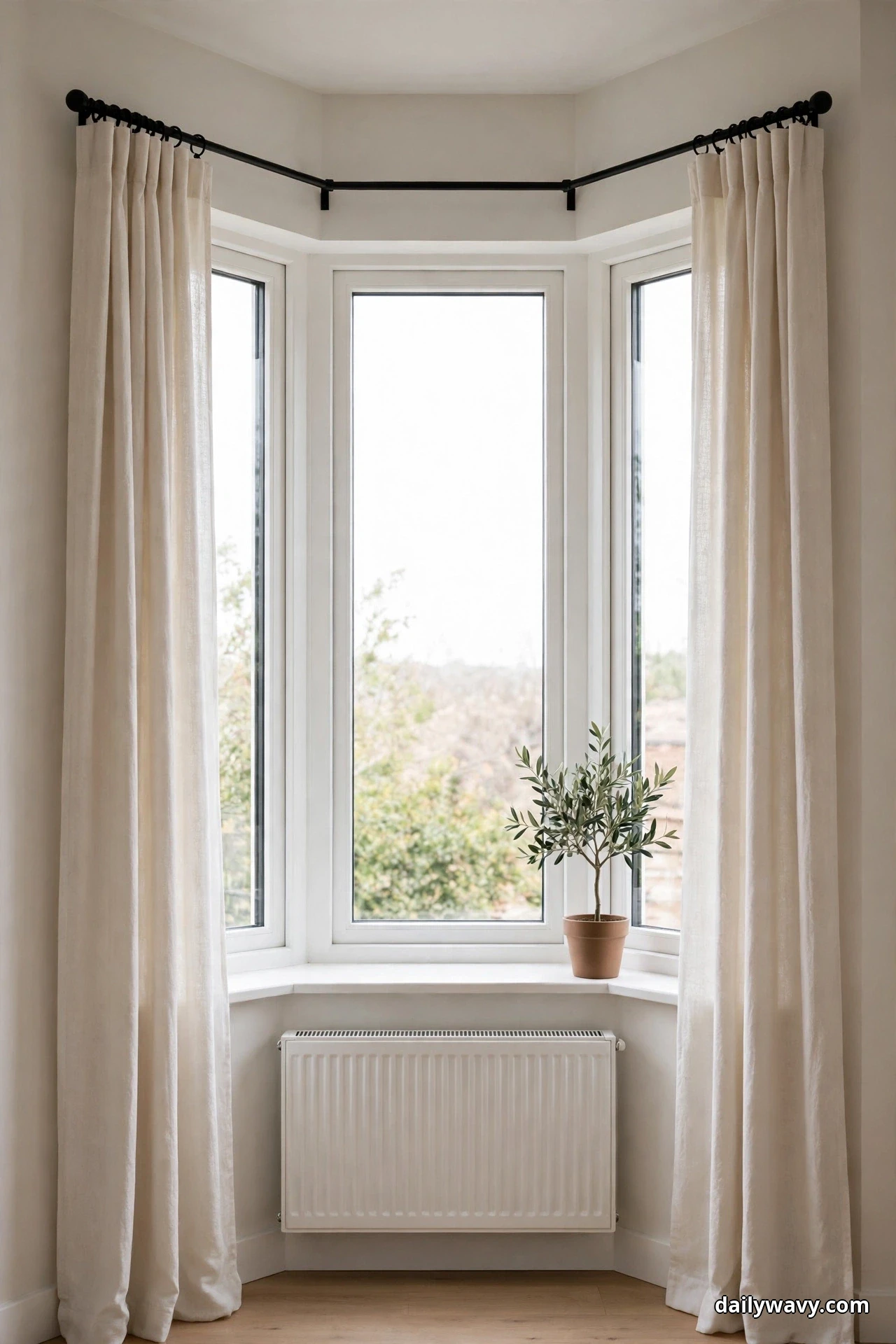
Sometimes the bravest choice is the plainest one. Warm-white panels on a slim matte-black rod with simple clip rings let the bay’s architecture and the daylight do the talking. It suits modern rooms, small rooms, and anyone who changes their mind about color every two years, because the curtains disappear and everything else gets to shine.
The look: Unlined warm-white panels clipped to plain matte-black rings on a slim black bay rod with small ball finials. Folds are crisp and even. A potted olive tree on the sill and bare floorboards keep the scene minimal. The black hardware draws one clean line across the top of the window and stops.
Measure first: Space one ring every 4 inches across each panel’s width for even folds. Because clips grip the fabric top, measure from the bottom of the ring to the floor, not from the rod.
How to do it: Clip the panels and hang them, then slide rings until the folds look even. The beauty of clips is that hemming becomes optional; you set the length by where you clip. Keep the finials small so they do not fight the bay’s corners.
Effort and budget: Low. This is the fastest bay treatment to hang. Lower-cost swap: plain flat sheets in a warm white, clipped to the rings, are nearly indistinguishable from budget curtain panels once hung.
5. A Soft Check Pattern

A soft gray-and-cream check brings instant friendliness to a breakfast nook bay. It is the fabric equivalent of a deep breath on a slow morning. Tied back with simple cotton ties, the checks frame the table below and make even a weekday breakfast feel a little more considered.
The look: Gingham check panels in soft gray and cream on a white bay rod, tied back at sill height with simple cotton ties to reveal a wooden farmhouse table tucked into the bay. Morning light filters through the checks and throws a faint pattern across the tabletop.
Measure first: Tiebacks sit best at about one-third of the panel’s length up from the floor, or level with the sill in a nook. Measure the tieback drop so both sides match exactly; mismatched tiebacks are the one thing guests always notice.
How to do it: Hang the panels full length, then gather each one and test the tieback position before fixing the hooks. Sew simple ties from matching fabric, or buy cotton cord and knot the ends. Fluff the fabric above and below the tie so the gathers look soft, not strangled.
Effort and budget: Low to moderate. Lower-cost swap: check tablecloths in the right size, hemmed top and bottom, make charming nook panels and the pattern scale is often perfect for a small bay.
6. A Natural-Fiber Look Suited To The Room
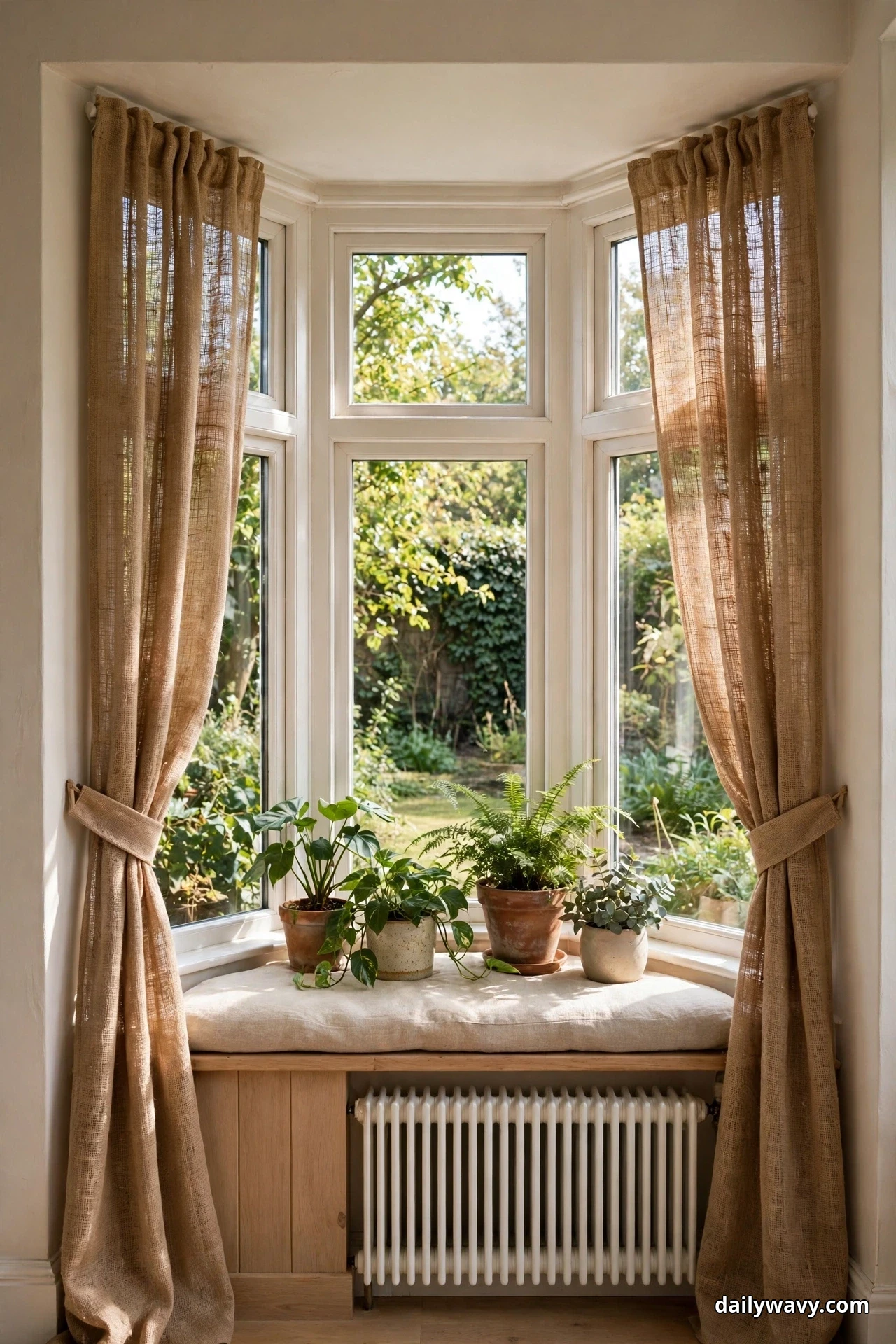
A bay that looks onto a garden deserves fabric that feels like it belongs outdoors. A woven natural-fiber look in warm sand tones connects the room to the view, especially in a sunroom or a kitchen eating area. The texture filters light into something dappled and warm, like sitting under a very civilized tree.
The look: Panels woven to a jute-like texture in warm sand, hanging from a natural wood bay rod in a garden-facing bay. Leafy houseplants crowd the window seat, and daylight comes through the weave with a soft golden cast. Rattan or cane nearby completes the story.
Measure first: Loose weaves can stretch over time, so order panels 1 to 2 inches longer than your finished length and let them relax for a week before deciding on hems. Check the weave density against the light; you want glow, not a full view of the neighbors.
How to do it: Choose a cotton-polyester woven to the natural look rather than real jute, which sheds fibers constantly. Hang panels and leave them alone for several days so the weave settles, then trim or hem to the final length.
Effort and budget: Moderate. Lower-cost swap: burlap-look polyester panels give the texture without the shedding or the price of real woven fibers.
7. A Calm Monochrome Pairing

A bedroom bay should lower your heart rate, and nothing does that like monochrome. Walls, sheers, and solid panels all in tonal warm whites and creams blur the edges of the window until the whole bay feels like one soft exhale. It is quiet, it is forgiving, and it makes morning light feel like a kindness.
The look: An ivory sheer underlayer on the inner track plus solid cream panels outside, all on a double bay rod in a bedroom bay. The layers glow in morning sun. Linen bedding in matching cream shows at the frame edge, and nothing in the scene rises above a whisper.
Measure first: A double treatment needs a double rod or a double track with enough clearance between layers that the panels do not crush the sheers. Allow 3 to 4 inches between the two rods.
How to do it: Hang sheers first and get them sitting right, then add the outer panels. Keep every textile in the same warm family; mix warm white with cool white and the calm falls apart. If your bedroom bay needs the full restful treatment, our small bedroom with a queen bed ideas show how bedding and windows work as one scheme.
Effort and budget: Moderate. Lower-cost swap: white flat sheets make excellent sheer underlayers for very little money, and nobody can tell once they are gathered on a rod.
8. A Restrained Vintage-Style Fabric
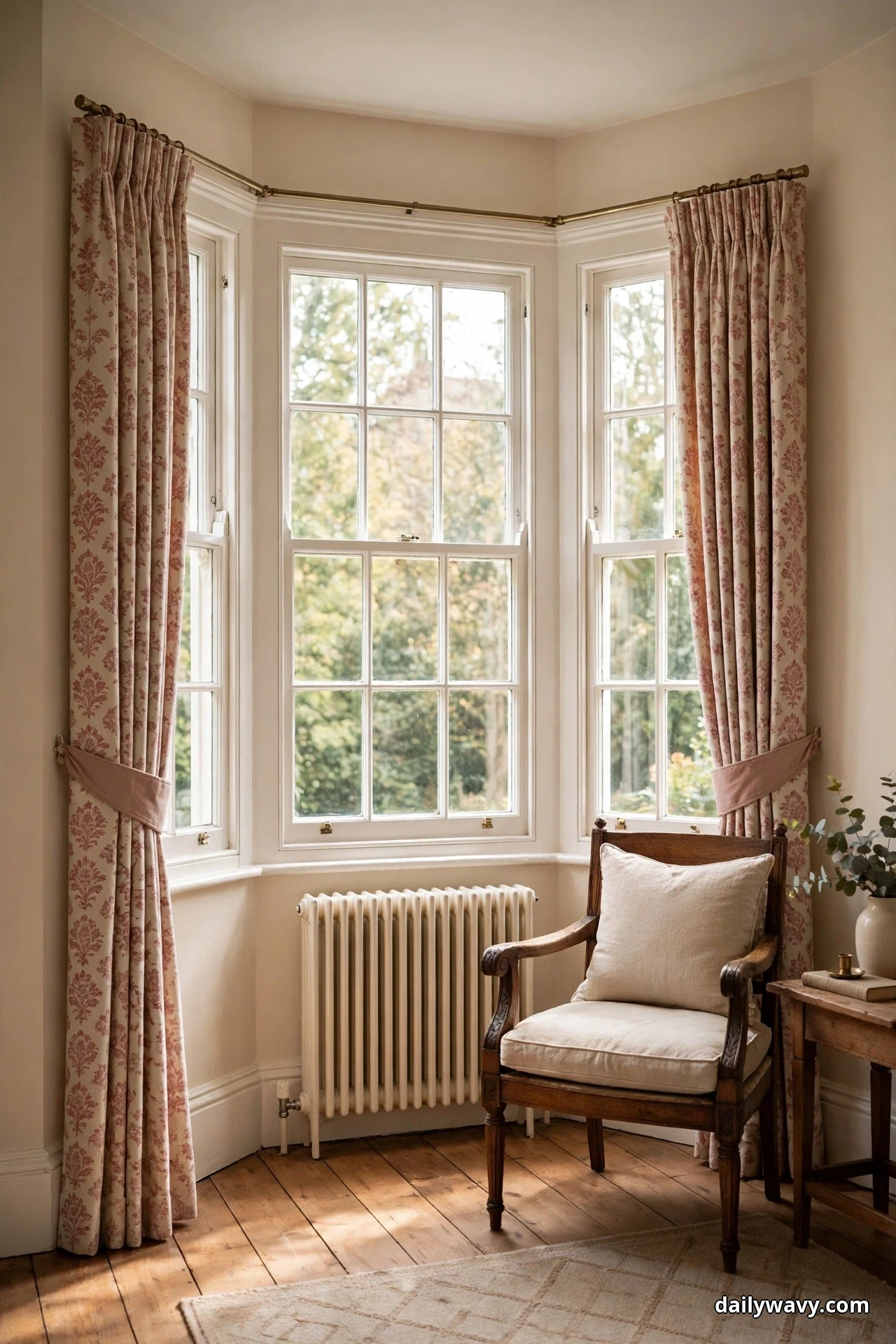
Vintage florals have a reputation for going overboard, but restraint changes everything. A small-scale faded rose damask on a cream ground, kept to the curtains alone, gives a traditional sitting-room bay a sense of history without a single doily in sight. The key is letting the fabric be the only vintage voice in the room.
The look: Small-scale vintage floral damask in faded dusty rose on cream, made into full-length panels for a traditional bay. An antique wooden armchair with a plain cushion sits beside the window. Walls stay plain, the rug stays quiet, and the curtains carry the room’s character on their own.
Measure first: Note the pattern repeat and buy enough fabric to match repeats across panels, which usually means ordering 10 to 15 percent more than the plain calculation. A small-scale print (under 4 inches) is far more forgiving around bay corners than a large one.
How to do it: Keep every other pattern in the room small or solid so the floral stays the star. Line the panels to protect the print from sun fading, which vintage-style dyes are prone to. Hang them full and let the pattern do the work.
Effort and budget: Moderate to higher if you are having panels made, which vintage prints often require. Lower-cost swap: genuine vintage curtains from estate sales and thrift shops often come in exactly these prints, already hemmed, for a fraction of custom prices.
9. A Linen-Look Finish With Neat Hems
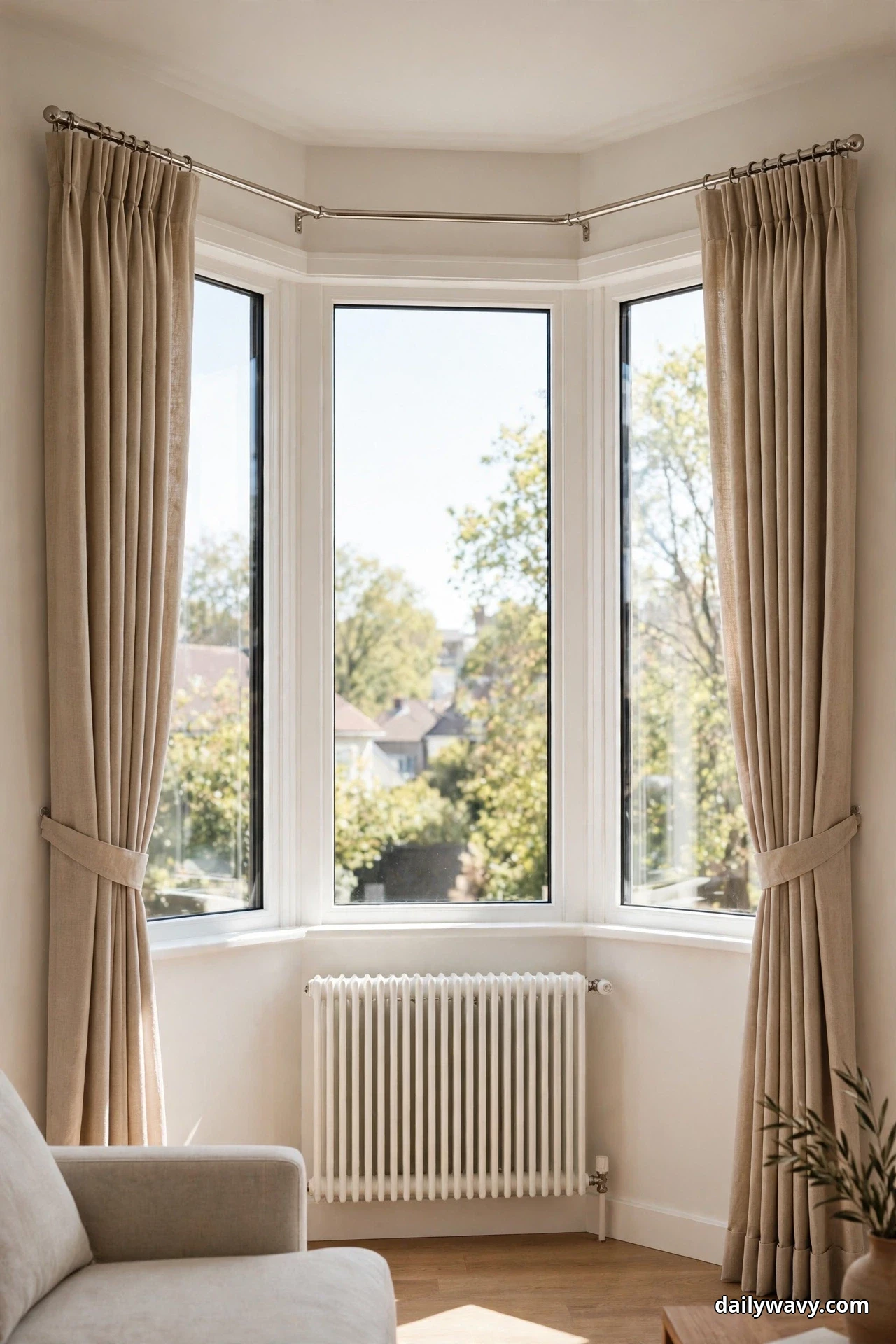
There is a particular satisfaction in a hem that falls perfectly straight. Tailored linen-look panels with crisp double-turned hems and even pleats give a bay window a quietly expensive air, the decorating equivalent of a well-pressed shirt. It suits anyone who likes their rooms calm, orderly, and quietly confident.
The look: Warm greige linen-look panels with visible neat double hems and mitered corners, hanging in crisp even pleats from a polished-nickel bay rod in a modern living room. Daylight catches the hem line like a drawn rule. Everything about the window says measured and meant.
Measure first: Add 8 inches to your finished length to allow for a proper 4-inch double-turned hem. Measure the floor carefully; bays often have slightly uneven floors, and a tailored hem shows every dip, so measure each panel’s drop separately.
How to do it: Press the hems with a hot iron and use fusible hem tape for a crisp edge that will not wobble. Pleater tape at the heading gives the even folds; space the pleats consistently and let the panels hang for two days before a final press of the pleat lines.
Effort and budget: Moderate. The fabric does not need to be real linen; a good linen-look polyester presses just as crisply and resists creasing better. Lower-cost swap: iron-on hem tape transforms ordinary ready-made panels into tailored-looking ones in under an hour.
10. A Delicate Vertical Pattern
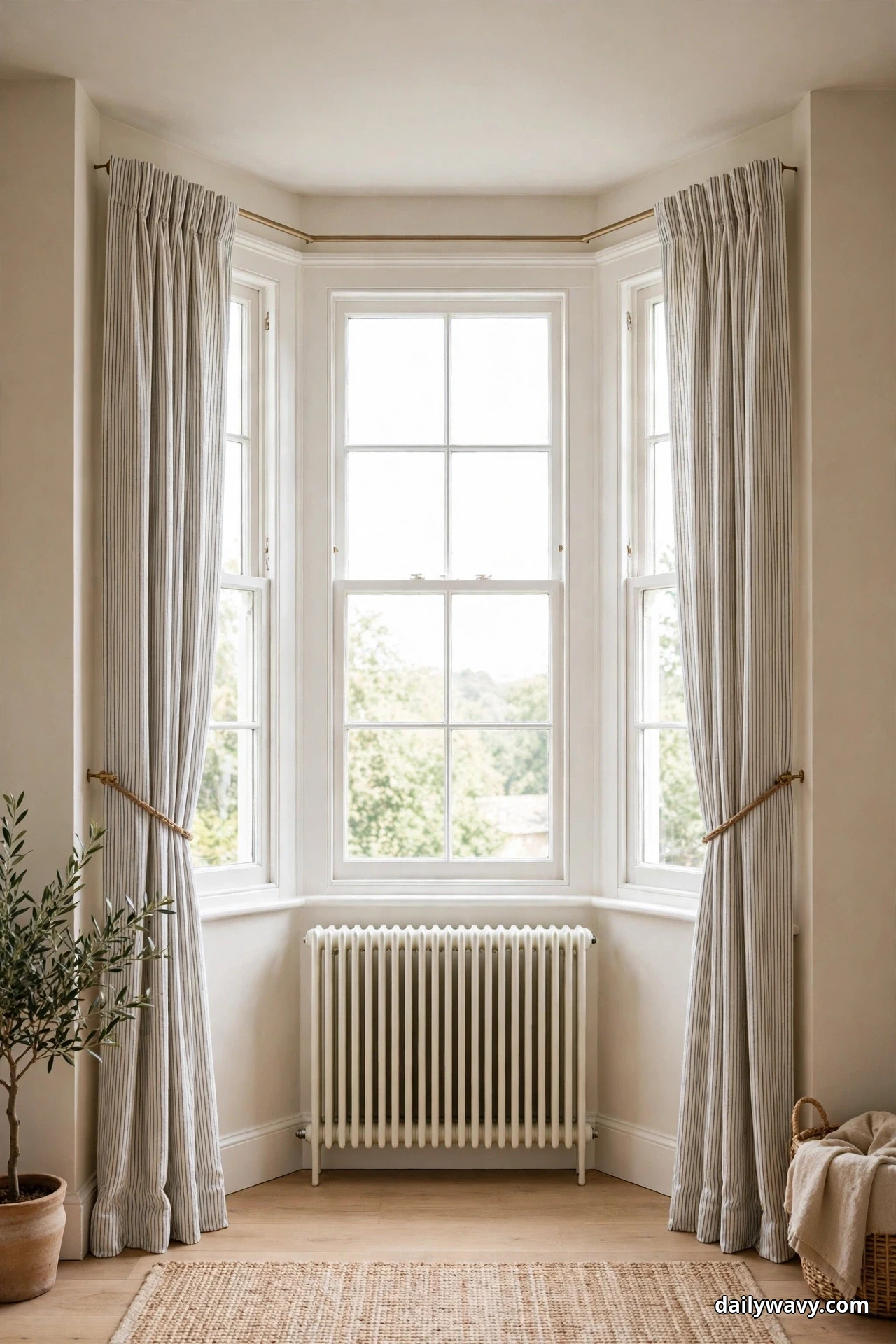
Low ceilings and bay windows are a common pairing, and a delicate vertical stripe is the oldest trick for making both feel taller. Fine charcoal pinstripes on ivory draw the eye straight up the panels, and the window gains a sense of height that no amount of wishing provides. It is subtle from across the room and quietly clever up close.
The look: Full-length panels in a fine charcoal ticking stripe on ivory, hung as high as the ceiling allows on a slim bay rod. The stripes run unbroken from top to hem, panels fall straight and full, and the bay feels a full foot taller than it is. Furniture under the window stays low so the vertical line runs uninterrupted.
Measure first: Mount the rod as close to the ceiling as the bay allows to maximize the lengthening effect. Measure stripe alignment at the seams if panels are joined; wandering stripes ruin the illusion.
How to do it: Keep the stripe fine and the contrast soft; bold stripes shout where delicate ones suggest. Hang panels so the stripes fall perfectly vertical, adjusting the heading until they do. Avoid horizontal patterns anywhere near the bay, which would cancel the effect.
Effort and budget: Low to moderate. Ready-made ticking-stripe panels are widely available in standard lengths. Lower-cost swap: striped cotton shower curtains are the wrong fabric and weight for this; stick to proper curtain panels, even budget ones, for the right drape.
11. A Simple Solid Color Repeated In Textiles

One solid color, used three times, is the simplest route to a room that looks designed. Warm-clay curtain panels on the bay, two clay throw pillows, and a folded clay throw on the window seat tell a single confident color story against cream walls. It is restrained, it is warm, and it photographs beautifully.
The look: Solid warm-clay panels on a dark bronze bay rod, the exact clay tone repeated in two throw pillows and a folded throw across the window-seat cushion. Cream walls and a natural rug stay neutral so the clay reads as a deliberate accent, not a loud one.
Measure first: Carry a fabric swatch when shopping for the pillows and throw, and check the match in daylight; indoor lighting lies about warm tones. Buy all dyed pieces from the same dye lot where possible.
How to do it: Follow the rule of three: the color appears in the curtains, the pillows, and the throw, and nowhere else. If you cannot find matching ready-mades, buy one spare curtain panel and have simple pillow covers sewn from it for a perfect match.
Effort and budget: Low to moderate. Lower-cost swap: fabric dye can bring existing light-colored curtains and a spare pillow cover into the same color family for the price of a dye packet and an afternoon.
12. A Soft Neutral Fabric With Simple Folds

Some windows want softness without fuss, and a simple gathered header in warm greige delivers exactly that. The fabric falls in easy, even waves with no pleating hardware to fuss over, like the window is wearing its favorite sweater. It is the most forgiving treatment on this list and one of the prettiest.
The look: Warm-greige panels on a relaxed back-tab header, falling in soft simple folds to the floor in a bright bay. A neutral armchair and a small side table with a book sit beside the window. Daylight filters gently through the weave, and the whole corner feels like an invitation to sit down.
Measure first: Back tabs add 2 to 3 inches of apparent length below the rod, so mount the rod slightly higher than you would for a standard header, or order panels slightly shorter. Measure tab spacing so the gathers fall evenly.
How to do it: Steam out the packaging creases before hanging, then arrange the folds by hand and leave them for a day to set. The header should look relaxed, not sloppy; if the tabs gape, the panels are too wide for the rod.
Effort and budget: Low. Back-tab ready-mades are widely sold and need no extra hardware. Lower-cost swap: simple rod-pocket panels give a similar soft gathered look for even less.
13. A Subtle Stripe Echoing Room Colors

The most satisfying curtains are the ones that look like they grew out of the room. A subtle wide stripe in sage and cream does exactly that when the sage picks up the armchair beside the bay and the cream picks up the walls. Nothing matches exactly, everything relates, and the window feels inevitable rather than added.
The look: Full-length panels in a soft wide stripe of sage green and warm cream, tied back with simple fabric sashes on a brushed-brass bay rod. A sage armchair sits at the bay’s edge, cream walls surround, and a natural rug grounds it all. The stripe quietly connects every piece.
Measure first: Hold fabric samples against the upholstery and wall color in daylight before committing; undertones shift dramatically between showroom and home. Note the stripe scale against the bay’s width; wide stripes suit wide bays, narrow stripes suit small ones.
How to do it: Pull one stripe color into a cushion and the other into a piece of wall art to complete the echo. Keep the stripe subtle; if you can read it from the doorway but it does not shout, the scale is right. Tiebacks in a matching solid keep the focus on the stripe.
Effort and budget: Moderate. Lower-cost swap: ready-made striped panels in the right color family, paired with one new cushion cover in the accent tone, achieve the echo without custom fabric.
Bay Window Curtain Questions, Answered
Should I use one continuous rod or three separate rods on a bay?
One continuous curved bay rod or a flexible ceiling track almost always looks better, because the treatment reads as a single design and panels glide through the corners. Three separate straight rods can work if each section gets enough brackets, but expect visible gaps at the angles where light leaks through.
How wide should each curtain panel be?
For pleated or tailored panels, each panel should measure 1.5 to 2 times the width of its window section so the folds look full when closed. Relaxed treatments like washed cotton or back-tab headers can drop to about 1.25 times the width. When in doubt, go wider; skimpy curtains are the most common bay mistake.
What do I do about the radiator under my bay window?
Keep all fabric clear of it. Choose sill-length curtains, or make sure full-length panels are tied fully to the sides and cannot drift over the heat. Never bunch fabric over a working radiator; it wastes heat and is a fire risk. If the radiator dominates the bay, consider an inside-mounted blind plus short side panels instead.
Are curtains or blinds better for a bay window?
They do different jobs. Blinds give precise light control per section, while curtains give softness, insulation, and style. The happiest bays often combine both: a simple blind or sheer inside each section for function, plus curtain panels at the sides for the finished look.
How do I keep bay window curtains child-safe?
Eliminate loose cords entirely. Choose cordless tiebacks, clip rings, or a baton wand to draw the panels, and keep any furniture for climbing away from the window. If your treatment has cords, fit a cord cleat high on the wall, out of a child’s reach, and wrap cords tightly around it every time.
Can I hang bay curtains if I rent?
Have an honest conversation with your landlord first, since bay rods and ceiling tracks need screws. For a no-drill option, lightweight spring-tension rods can sit inside each window section’s frame reveal and hold sheer panels, which suits renters and still softens the bay. Heavier curtains really do need proper mounted hardware.
The View Deserves a Good Frame
A bay window is architecture showing off, and the right curtains are simply good manners toward it. Whether you go tailored or relaxed, patterned or plain, the principles stay the same: measure every section, follow the angles with proper hardware, keep fabric clear of heat, and keep every cord out of reach of the smallest people in the house. Start with the idea that made you stop scrolling, and let the rest of the room follow its lead. If your bay sits near the front of the house, our small entryway decor ideas help the first thing guests see feel just as considered. And for the wider scheme, browse the full Home and Decor collection for ideas that pair well with every treatment above. And if smaller windows elsewhere in the house need the same care, our small window curtain ideas give compact frames the same framed finish.