16 Small Home Office Decor Ideas | DailyWavy
16 Small Home Office Decor Ideas for a Thoughtful Work Area A small work area rewards thoughtfulness. When every item…
16 Small Home Office Decor Ideas for a Thoughtful Work Area
A small work area rewards thoughtfulness. When every item earns its spot, even a desk tucked into a corner feels calm and workable. This guide walks through sixteen small changes, each checked against the real constraints of a tight space: light that lands on your screen, cables that creep everywhere, a chair that needs room to move, and shelves your arm can actually reach. Measure twice, buy once, and build a spot you enjoy sitting down to each morning. If the desk lives in a bedroom corner, our small bedroom ideas handle that overlap room by room.
Jump to an idea
- A Compact Lamp Off The Main Work Area
- A Vertical File Holder
- A Small Tray For Everyday Tools
- A Cable Channel Beneath The Desk
- A Shelf Above Seated Eye Level
- A Calm Artwork Beside The Screen
- A Plant Positioned Out Of The Keyboard Zone
- A Soft Pinboard With Organized Notes
- A Shallow Drawer Divider
- A Laptop Stand With A Separate Keyboard
- A Basket For Spare Equipment
- A Simple Curtain Managing Window Glare
- A Narrow Bookcase At The Side
- A Neutral Desk Mat
- A Closed Box For Chargers
- An Adjustable Task Chair With Clear Legroom
1. A Compact Lamp Off The Main Work Area
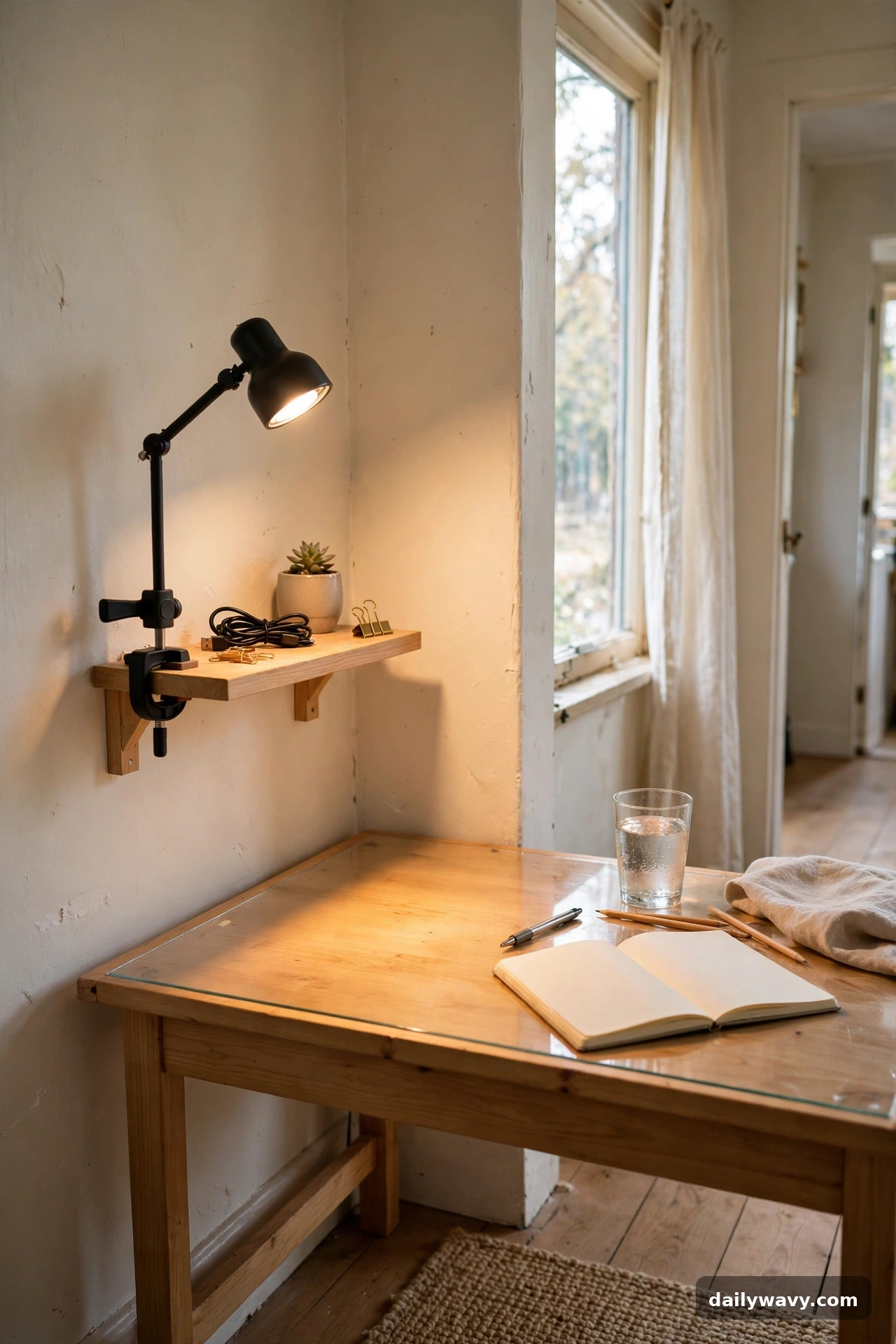
A desk lamp eats a surprising amount of a small surface, so move the light off the desk itself. A clamp lamp on a nearby shelf, a wall-mounted swing arm, or a slim floor lamp placed just behind the desk corner all free up the full worktop.
What to measure: Note your desk depth and the distance to the nearest shelf, wall, or floor spot within about 24 inches of your seated position. The lamp head should land 15 to 20 inches above the desk surface for even light.
Materials and placement: A metal or matte-finish lamp with an adjustable head works best. Place it on your non-dominant side, left side if you write with your right hand, so your arm never casts a shadow over your work. Angle the shade to bounce light off the wall rather than aiming the bulb straight at the screen.
Effort: About 15 minutes to clamp or mount and adjust.
Lower-cost alternative: Move a lamp you already own onto the bookshelf or side table nearest the desk and aim it across the work area.
2. A Vertical File Holder
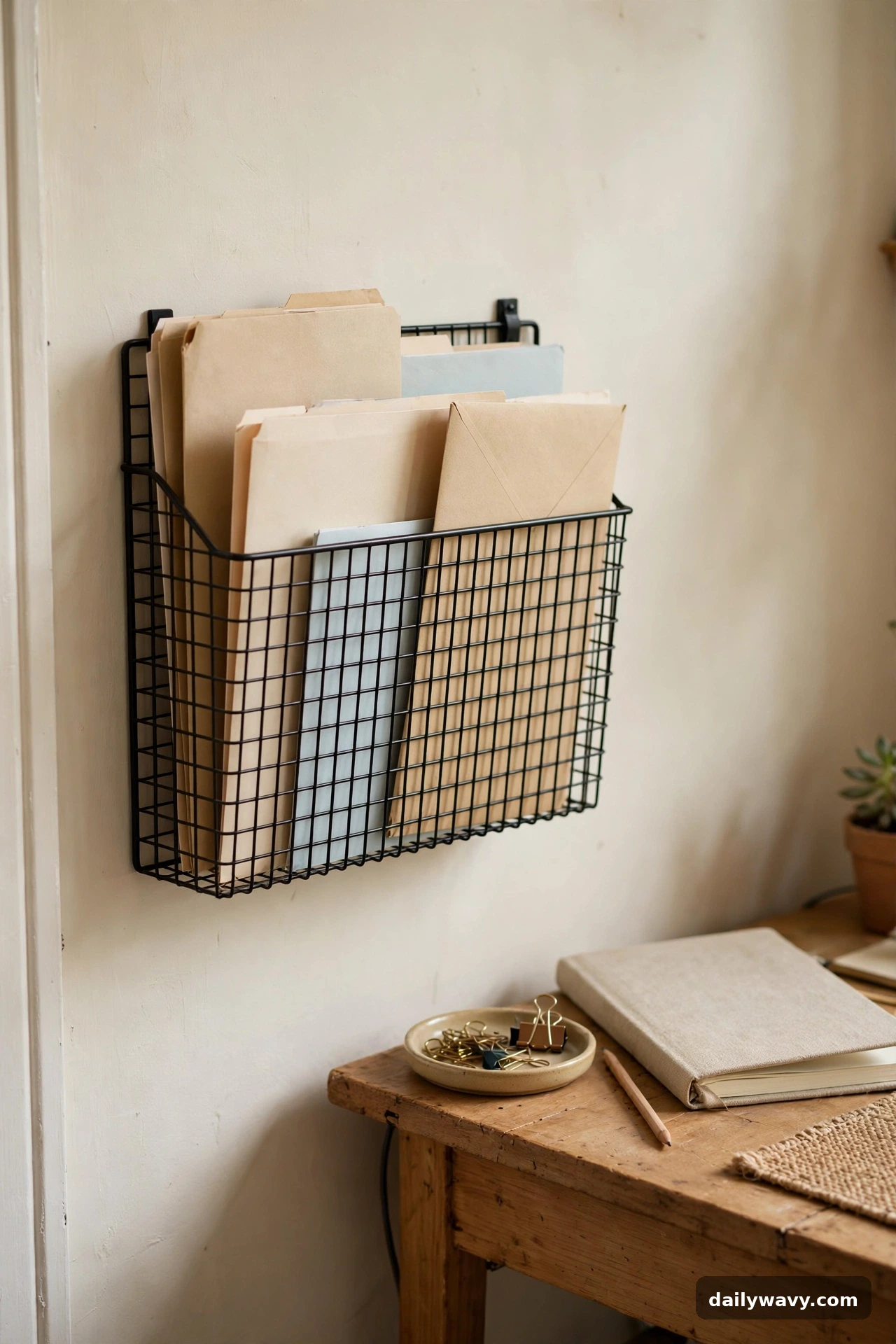
Paper stacks spread sideways, which is the enemy of a small desk. A vertical file holder turns a horizontal pile into an upright row and keeps current papers visible at a glance.
What to measure: Check the height of your largest folders, then confirm the wall or desk-edge space where the holder will live. Wall-mounted versions need about 12 inches of clear wall width.
Materials and placement: Wire mesh, bamboo, or powder-coated metal all hold up well. Mount it on the wall beside the desk or on the desk edge within arm’s reach of your seated position, on your non-dominant side so it never crowds your writing hand.
Effort: About 10 minutes to hang or position.
Lower-cost alternative: A sturdy magazine holder or a cut-down cereal box wrapped in wrapping paper does the same job while you decide on a permanent piece.
3. A Small Tray For Everyday Tools

Pens, sticky notes, a USB drive, and reading glasses scatter across a desk in days. One small tray gives them a boundary, and the desk reads as tidy even when the tray is full.
What to measure: Claim a zone roughly 10 by 14 inches on the desk, usually right of the keyboard or behind it, and size the tray to fit inside it with room to spare.
Materials and placement: Wood, leather, or metal trays with a low rim keep items contained without hiding them. Keep the tray inside your measured reach, about 16 to 20 inches from the desk edge, so you grab tools without stretching.
Effort: None beyond placing it and sorting your tools in.
Lower-cost alternative: A shallow serving plate, a box lid, or a large coaster set groups the same items for free.
4. A Cable Channel Beneath The Desk
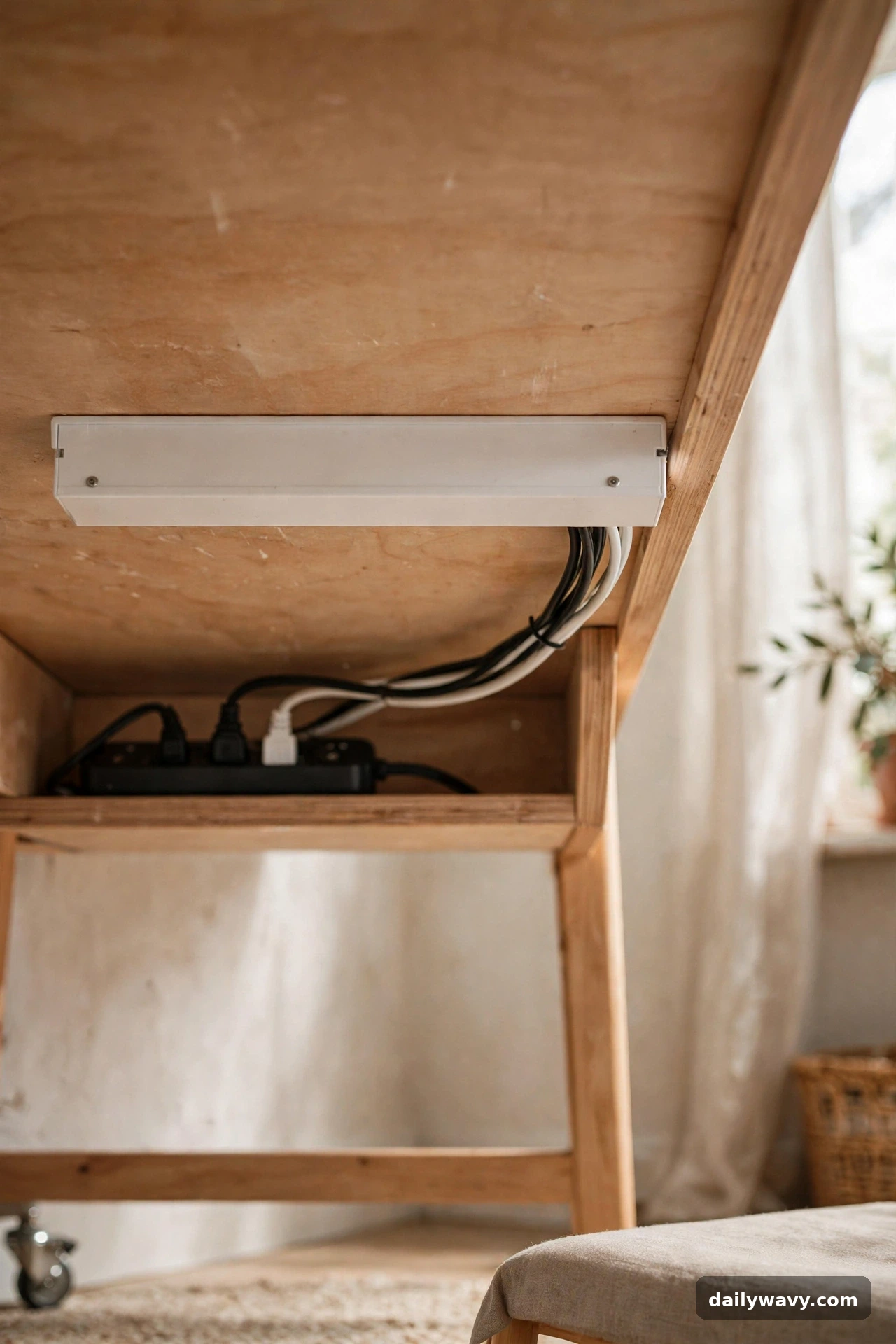
Cables are the fastest way to make a small office feel chaotic. A channel screwed or stuck under the back edge of the desk gathers the charger cords, monitor cable, and power strip into one hidden line.
What to measure: Measure the desk width and choose a channel a few inches shorter. Check the clearance under the desk so the channel sits above your knees with at least 4 inches to spare.
Materials and placement: Plastic or metal raceways with snap-on lids are easy to open when you add a device. Mount it along the back underside of the desk with screws or strong adhesive strips, and drop the power strip inside it or directly below it.
Effort: About 30 minutes, most of it routing and bundling the cables neatly.
Lower-cost alternative: Adhesive cable clips along the desk edge tame the worst tangles for a few dollars.
5. A Shelf Above Seated Eye Level

When the desk is small, the wall above it is free real estate. A single shelf holds reference books, a small speaker, or the printer paper you reach for daily, without touching the work surface.
What to measure: Sit at the desk and note where your eye level lands. The shelf bottom should sit 20 to 24 inches above the desk surface, high enough to clear your sightline and monitor, low enough that you can reach items without standing.
Materials and placement: A floating shelf with hidden brackets looks clean; visible brackets cost less and hold more weight. Center it over the desk, find the wall studs, and keep heavier items over the brackets.
Effort: About 45 minutes including finding studs and leveling.
Lower-cost alternative: A sturdy wall-mounted picture ledge, usually sold for frames, holds books and small boxes just as well.
6. A Calm Artwork Beside The Screen
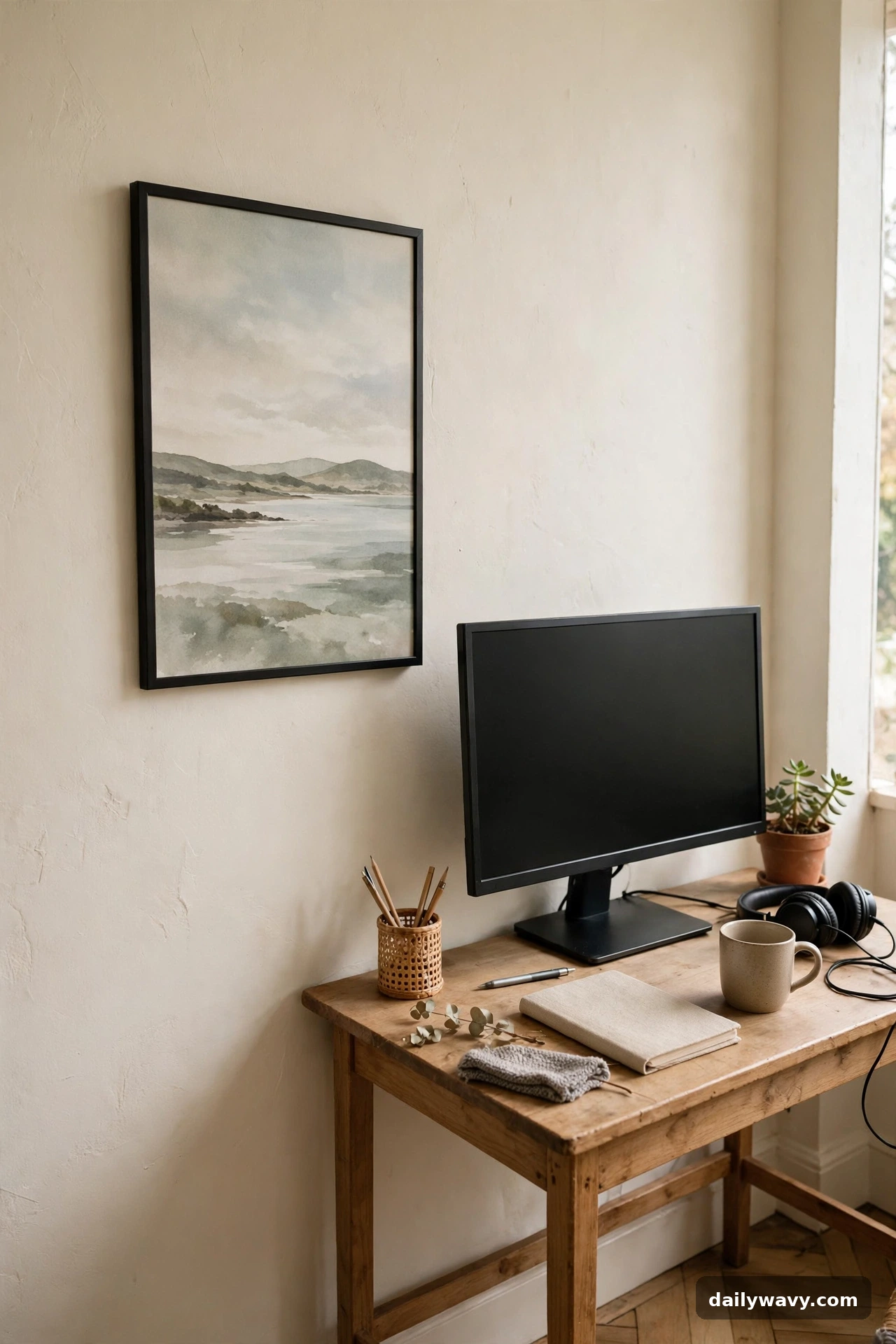
A small office can feel like all function and no warmth. One calm piece of art beside the monitor adds personality without the visual noise that a busy gallery wall brings to video calls.
What to measure: An 8-by-10 or 11-by-14 inch frame suits most small walls. Hold it up beside the screen before hanging to check the balance.
Materials and placement: Choose a simple frame in wood or matte black and a subject with soft colors, a landscape, an abstract print, or a black-and-white photograph. Hang it beside the monitor rather than behind it, so it stays out of your camera background and out of your peripheral glare zone.
Effort: About 15 minutes to hang.
Lower-cost alternative: Frame a postcard, a calendar page, or a page from an old book you love.
7. A Plant Positioned Out Of The Keyboard Zone
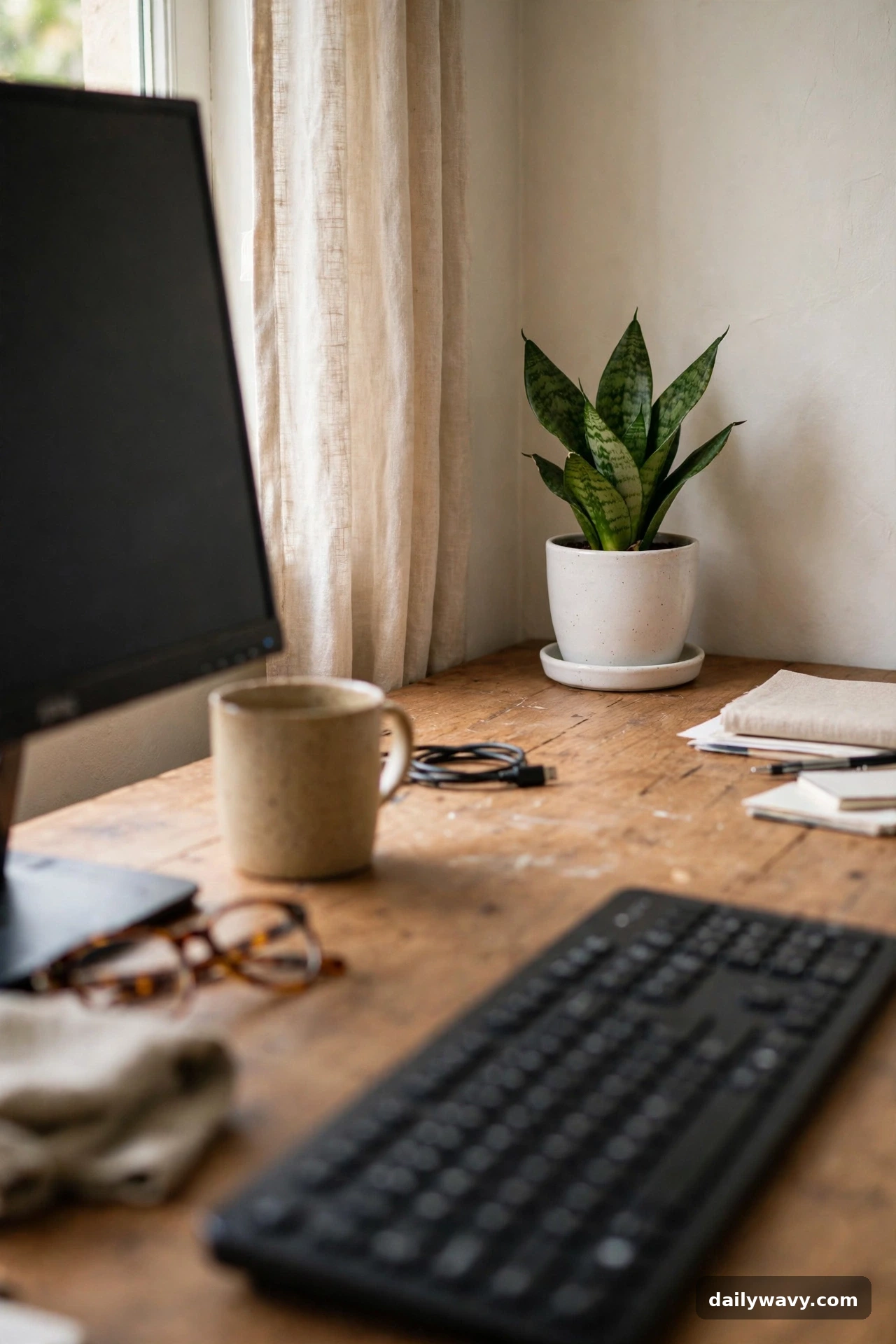
A plant softens a work corner, but water and keyboards are a bad pairing. The trick is placement: keep the plant close enough to enjoy and far enough that a spill never reaches your electronics.
What to measure: A 4 to 6 inch pot fits a back desk corner or a nearby shelf. Leave at least 12 inches between the pot and the keyboard.
Materials and placement: Low-light tolerant plants like snake plants and pothos forgive a dim corner and irregular watering. Set the pot on a saucer or tray, and keep it at the back corner of the desk or on the shelf above, never between you and the screen.
Effort: About 10 minutes to pot and place.
Lower-cost alternative: A pothos cutting rooted in a jar of water costs nothing and looks fresh for months.
8. A Soft Pinboard With Organized Notes
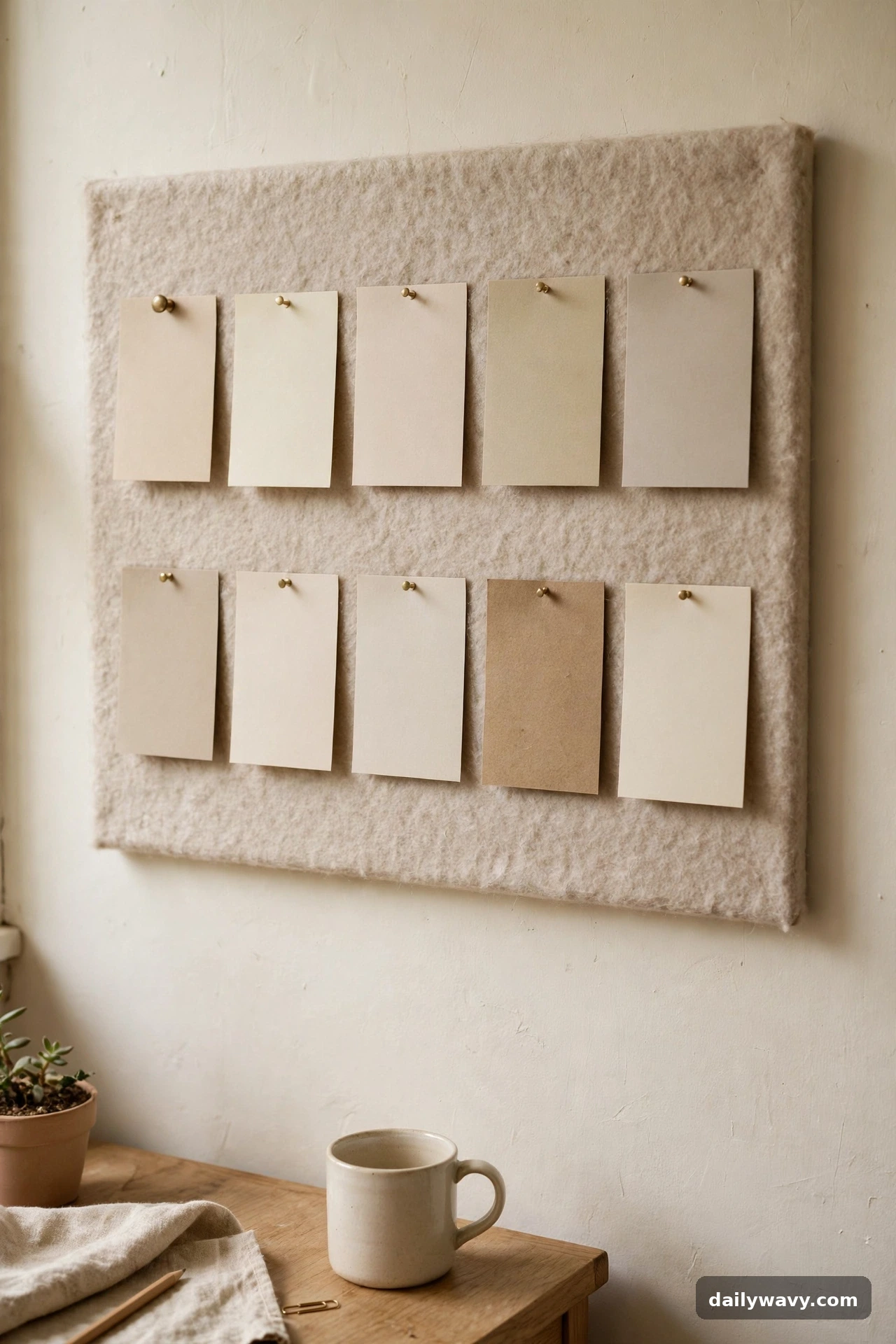
Sticky notes on the monitor edge peel off and clutter the screen frame. A soft pinboard on the wall beside the desk holds the same reminders in one visible, organized place.
What to measure: A 16-by-20 inch board fits most small walls. Hang it at seated eye level, within arm’s reach of the desk chair.
Materials and placement: Felt or fabric-covered cork boards accept pushpins and look softer than plain cork. Divide the board into two or three zones, for example this week, waiting on others, and ideas, so the notes stay scannable instead of becoming a new pile.
Effort: About 20 minutes to hang and sort notes onto it.
Lower-cost alternative: A clipboard hung on a single wall hook holds the current week’s notes for almost nothing.
9. A Shallow Drawer Divider
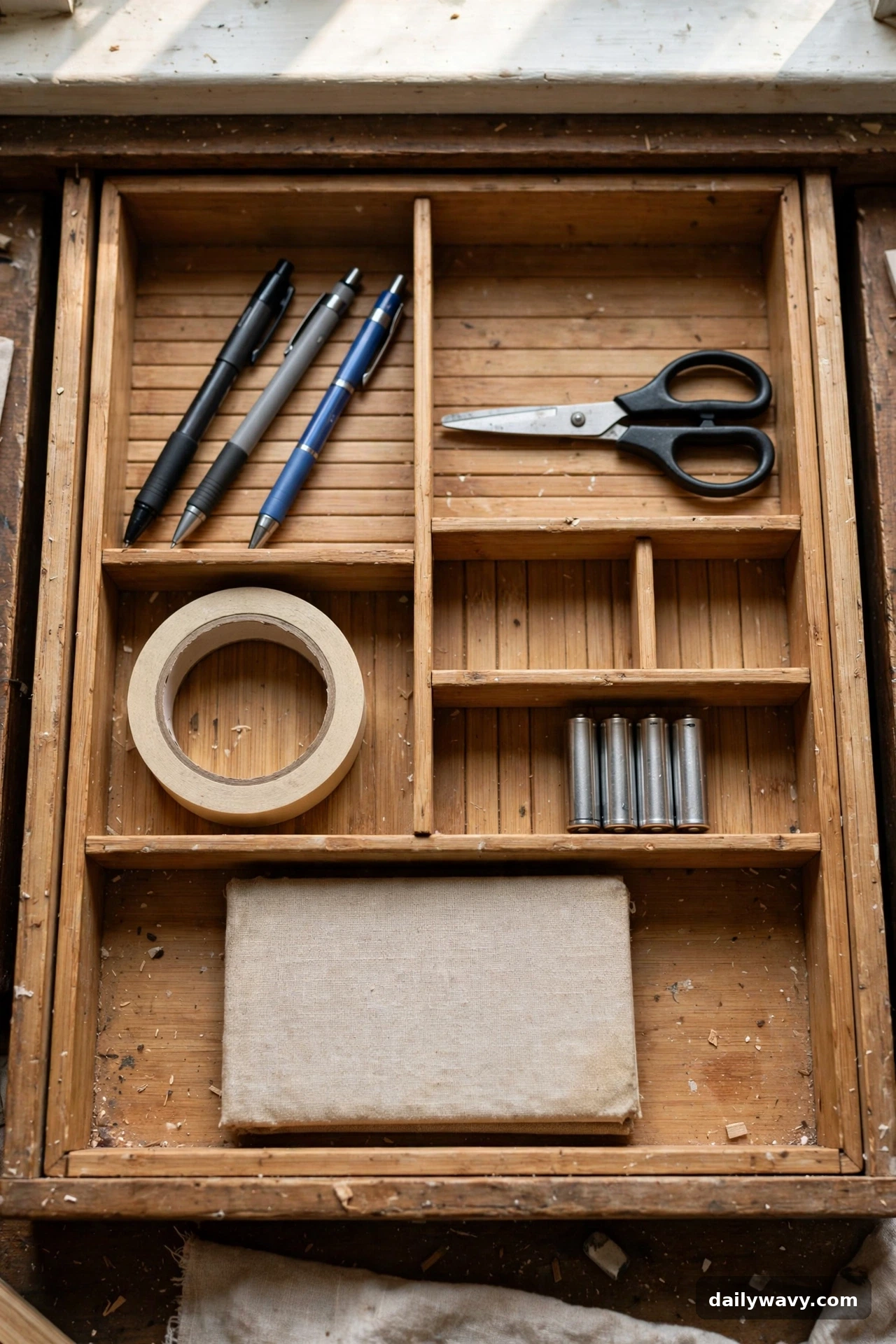
One junk drawer can swallow scissors, tape, batteries, and spare keys whole. Shallow dividers split the drawer into lanes so everything stays findable.
What to measure: Measure the drawer interior, length, width, and depth, before buying. Adjustable dividers cover small size differences.
Materials and placement: Bamboo or plastic dividers with spring-loaded ends fit without tools. Give each category its own lane: writing tools, adhesives, small electronics, and personal items.
Effort: About 10 minutes to fit and sort.
Lower-cost alternative: Small tins, sturdy gift boxes, or cut-down cartons make free custom compartments.
10. A Laptop Stand With A Separate Keyboard

Working hunched over a flat laptop all day gets uncomfortable fast. A stand lifts the screen closer to eye level, and a separate keyboard and mouse let your hands rest at a natural height on the desk.
What to measure: The stand should raise the screen so the top of the display sits at or slightly below your seated eye level. Check that your desk still has clear legroom underneath, with no boxes blocking your knees.
Materials and placement: Aluminum or sturdy plastic stands fold flat when you travel. Place the stand centered on the desk, the external keyboard directly in front of it, and the mouse beside the keyboard within easy reach.
Effort: About 5 minutes to set up.
Lower-cost alternative: A stack of large, sturdy books raises the screen the same way while you test whether the setup suits you. Note that comfort varies person to person, and persistent discomfort is worth discussing with a professional rather than solving with furniture alone.
11. A Basket For Spare Equipment
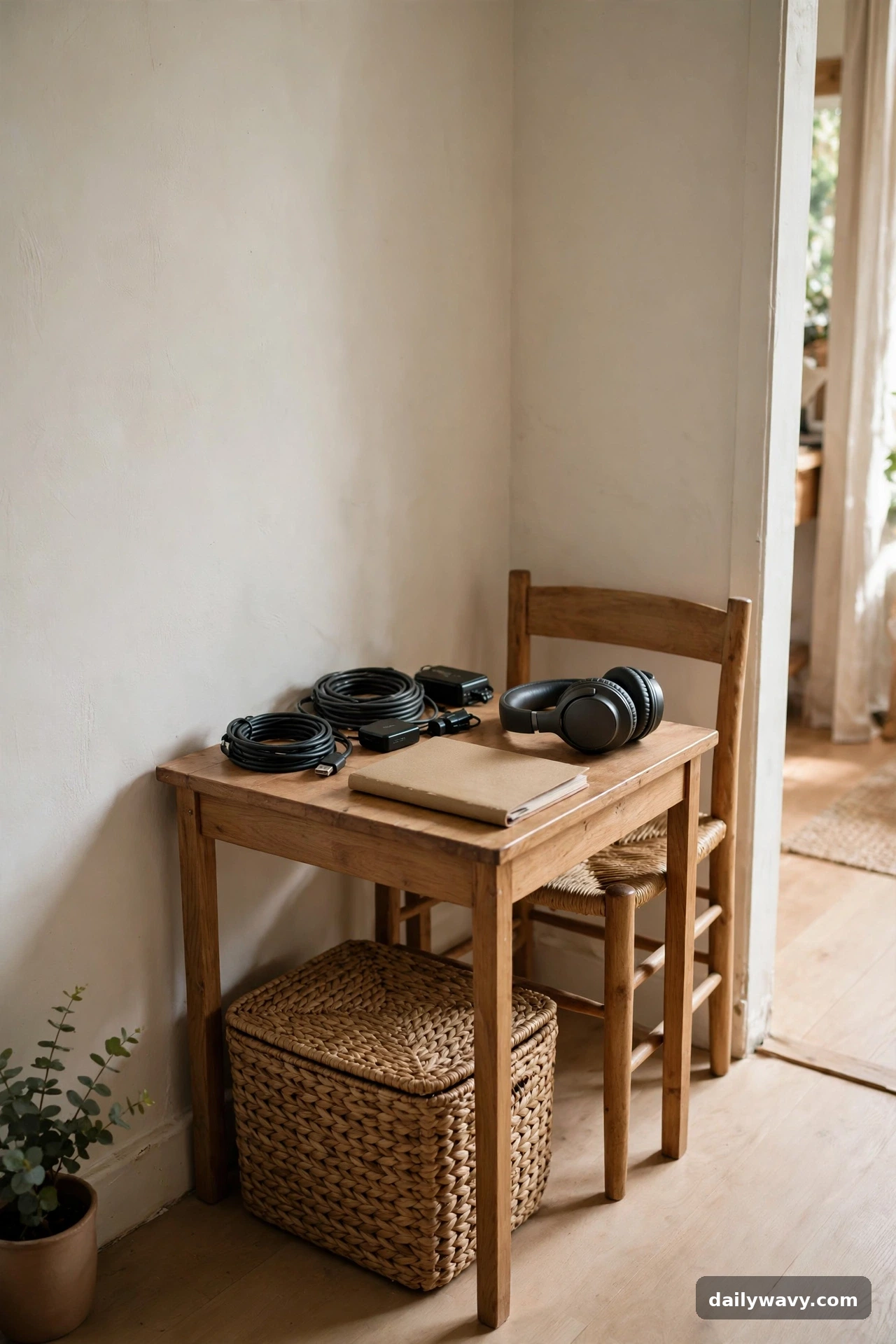
Spare chargers, an extra notebook, headphones, and the backup drive need a home that is not the desk surface. A lidded basket under or beside the desk swallows the overflow and keeps the room looking calm.
What to measure: Measure the floor or shelf space beside the desk, and pick a basket that slides in with an inch to spare on each side.
Materials and placement: Woven seagrass, felt, or fabric baskets with lids hide visual clutter best. In a shared room this matters even more, since the office should be able to disappear in the evening. Our narrow living room layout ideas show how hidden storage keeps a shared space feeling like a living room after hours.
Effort: About 5 minutes to fill and position.
Lower-cost alternative: A sturdy shopping bag or a cardboard box tucked into a cube shelf does the same job out of sight.
12. A Simple Curtain Managing Window Glare
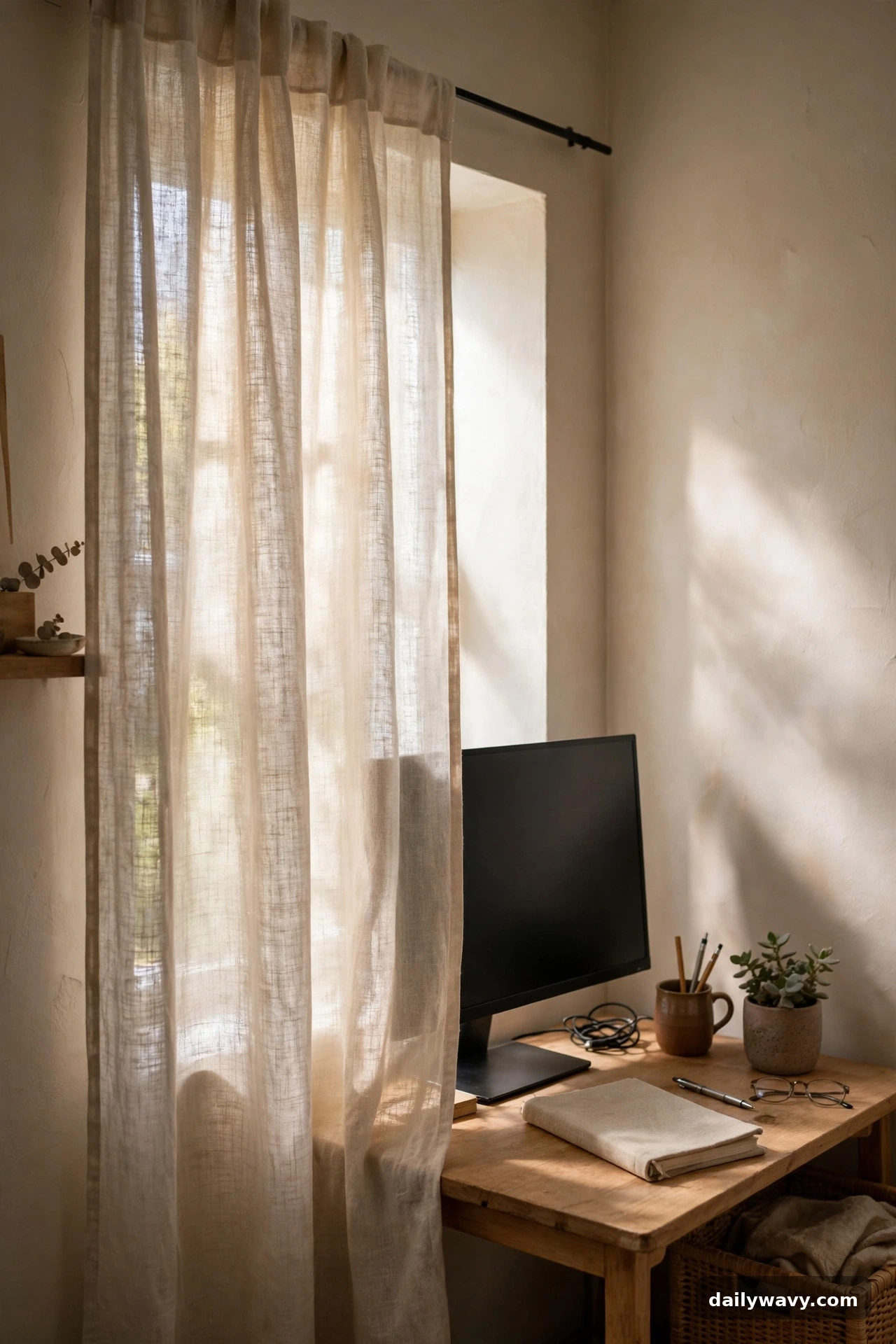
A desk near a window gets lovely light and brutal screen glare by midafternoon. A light-filtering curtain softens the direct sun without turning the room dark.
What to measure: Measure the window frame width and add 4 to 6 inches for coverage. A tension rod fits inside most frames with no drilling.
Materials and placement: Linen-look or sheer polyester panels diffuse sunlight while keeping the room bright. Hang the panel on the window nearest the desk, and draw it during the hours the sun hits the screen directly. If drilling is not allowed, a tension rod is renter-friendly.
Effort: About 20 minutes to hang.
Lower-cost alternative: Turn the desk perpendicular to the window so light comes from the side instead of from behind or in front of the screen.
13. A Narrow Bookcase At The Side
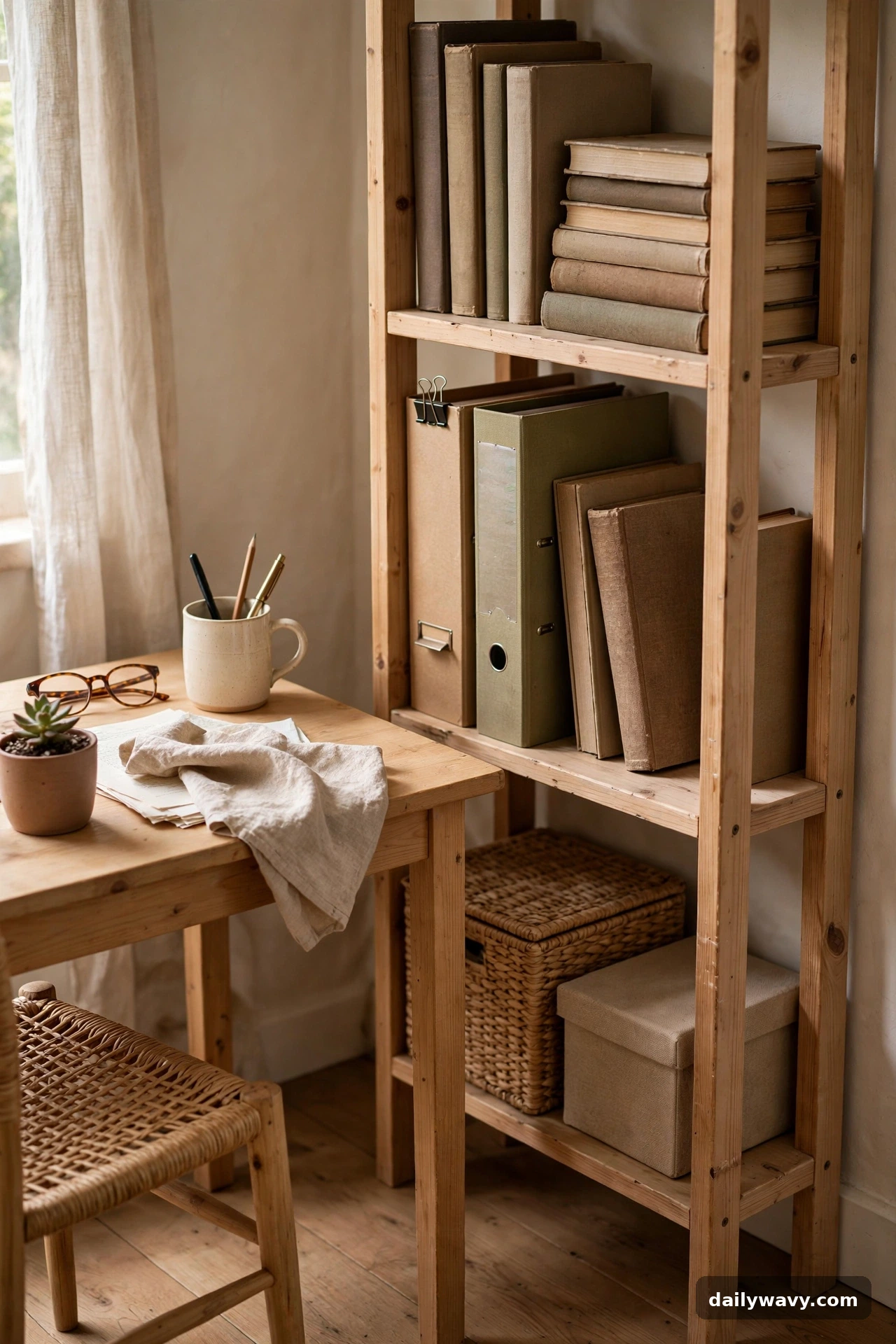
A small desk has no room for the books, binders, and boxes a workday needs. A narrow bookcase parked beside the desk adds vertical storage in a footprint barely wider than a sheet of paper is long.
What to measure: Look for a unit 10 to 12 inches deep and no wider than the wall space allows. Check that it does not block your chair’s path or the door swing.
Materials and placement: Slim wood or metal bookcases with adjustable shelves adapt as your storage needs change. Place it beside the desk on your non-dominant side so books stay within arm’s reach without crowding your writing elbow.
Effort: About 30 to 45 minutes to assemble.
Lower-cost alternative: A tall stack of sturdy crates, screwed together for stability, makes a perfectly good narrow shelf.
14. A Neutral Desk Mat
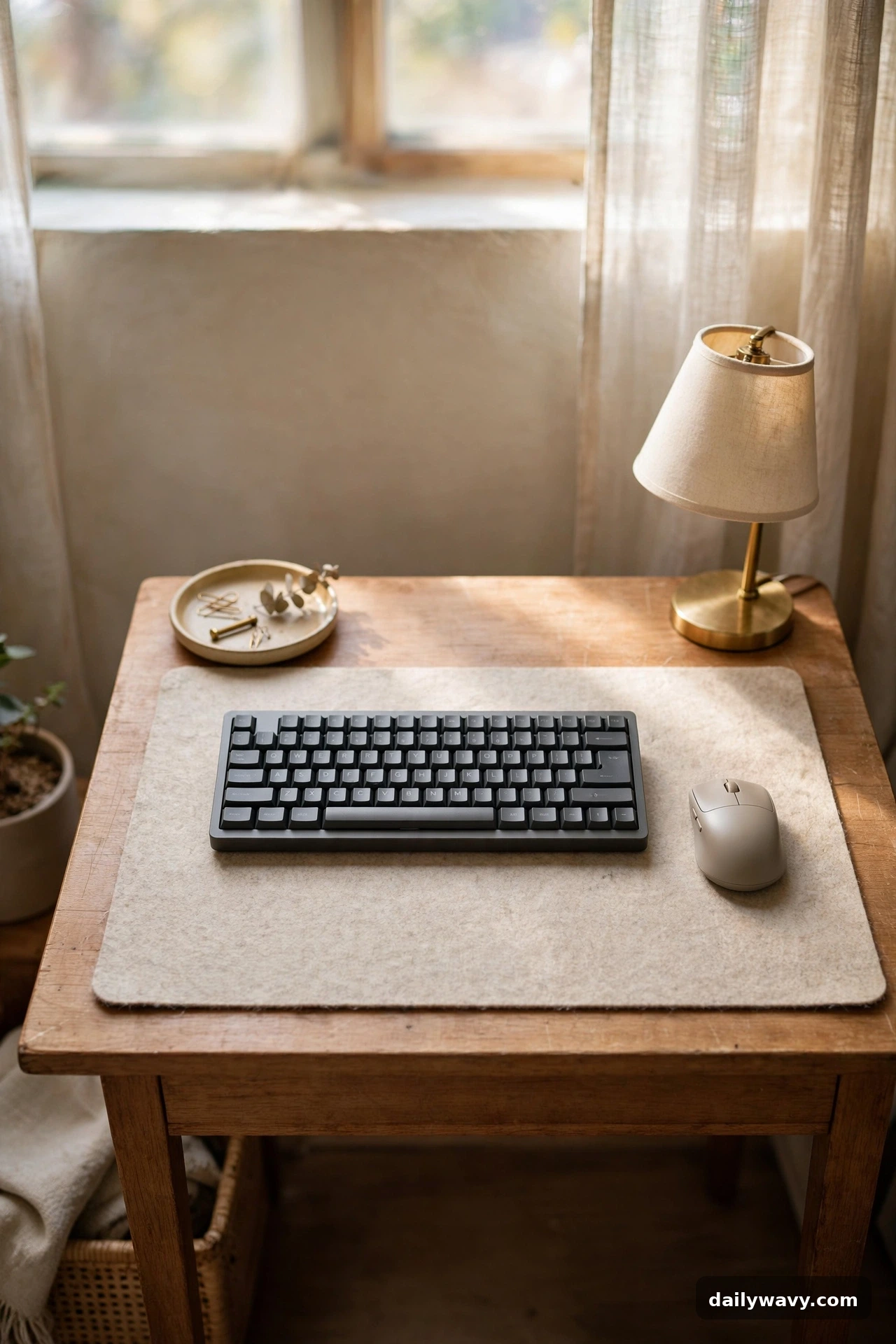
A desk mat does three quiet jobs: it protects the desk surface, it defines the work zone visually, and it gives the mouse a smooth track. In a neutral tone it blends with everything else in the room.
What to measure: Choose a mat slightly larger than your keyboard and mouse area, typically 24 by 14 inches or a full desk-length 36 by 16 inches.
Materials and placement: Felt, cork, or vegan leather mats all lie flat and wipe clean. Center it on the desk with the keyboard and mouse on top, leaving the tray and lamp zones clear at the edges.
Effort: About 2 minutes to unroll and position.
Lower-cost alternative: A large fabric placemat or a piece of cut felt from a craft store covers the same zone.
15. A Closed Box For Chargers

The power strip is the ugliest resident of any small office. A closed cable box hides the strip and the tangle of plugs while keeping everything plugged in and reachable.
What to measure: Measure your power strip, then choose a box a few inches longer on each side. Check that the box has ventilation slots or an open back so heat escapes.
Materials and placement: Ventilated plastic or wood boxes made for this purpose are safest. Set it on the floor beside a desk leg or on a low shelf, thread the cables through the side slots, and keep the box lid easy to lift for plugging things in.
Effort: About 10 minutes to route the cables.
Lower-cost alternative: A shoebox with holes cut in the sides hides the strip, though a purpose-made ventilated box is safer for anything that runs warm.
16. An Adjustable Task Chair With Clear Legroom
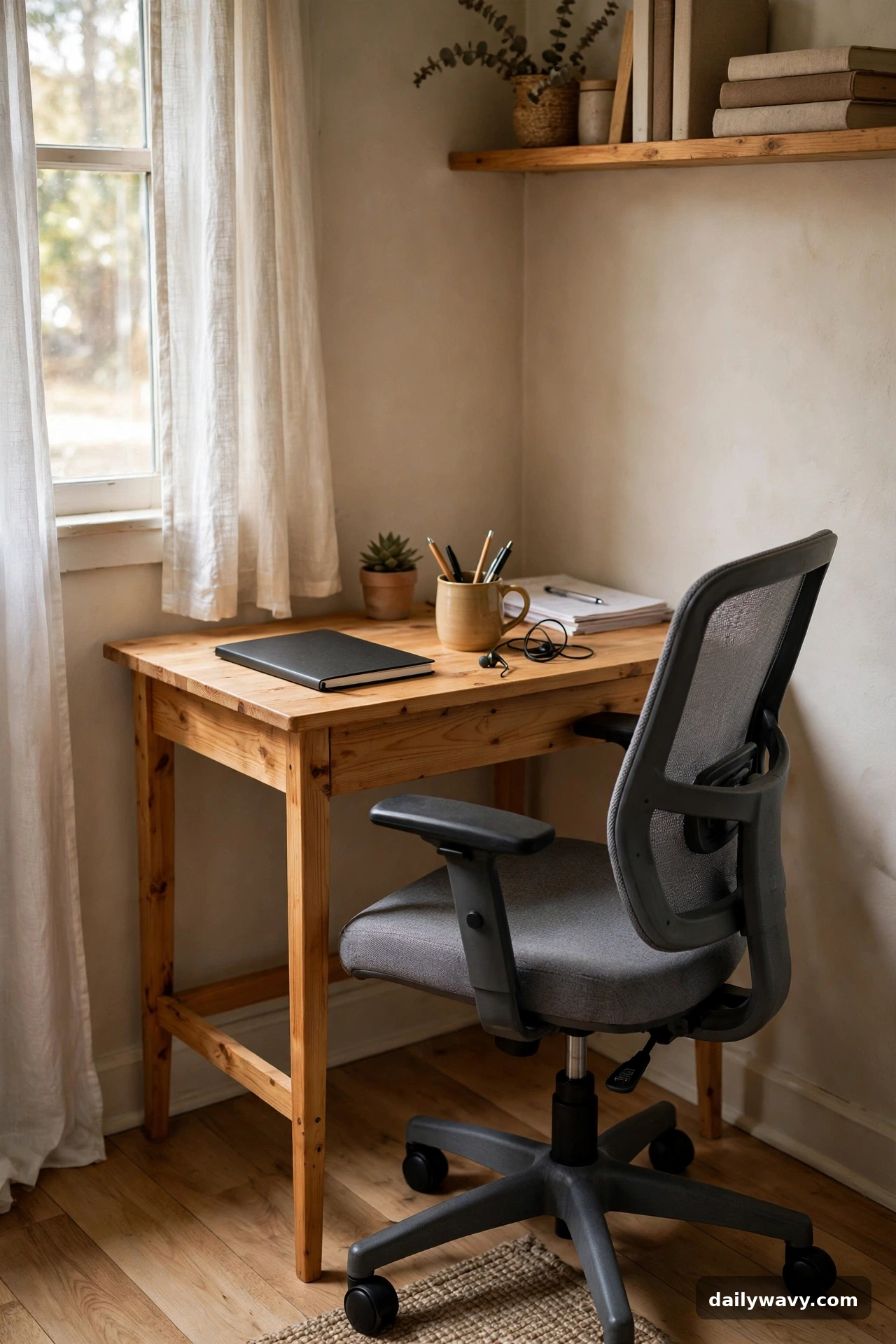
The chair is the one piece worth choosing carefully in a small office, because a chair that does not fit the desk makes everything else harder. Adjustable height lets you match the chair to the desk instead of the other way around.
What to measure: With your feet flat on the floor, your elbows should rest at roughly a right angle when your hands are on the keyboard. Measure from the floor to the underside of the desk, and confirm the chair’s height range covers your number. Keep about 24 inches of clear floor behind the chair so it rolls back freely.
Materials and placement: A compact task chair with adjustable height, a supportive backrest, and smooth-rolling casters suits small rooms because it tucks fully under the desk. Keep the legroom under the desk completely clear of boxes and baskets, and roll the chair in when you finish for the day.
Effort: About 20 to 30 minutes to assemble.
Lower-cost alternative: A firm cushion on your current chair improves comfort for very little money. Be honest with yourself, though: no cushion or decor choice resolves real pain or ergonomic symptoms, and ongoing discomfort deserves a professional assessment, not just new furniture.
Frequently asked questions
How much floor space does a small home office really need?
A desk 40 to 48 inches wide and about 24 inches deep, plus roughly 30 inches of chair room behind it, fits a complete setup. Many corners and alcoves already offer this much.
How do I stop glare on my screen?
Start free: turn the desk so the window light comes from the side. If the sun still hits the screen, a light-filtering curtain on that window solves it for most of the day.
Where should all the cables go?
Route them into a channel under the desk back edge, drop the power strip into a ventilated box beside the desk leg, and use the tray and drawer dividers for the small items. Three containers handle nearly every cable.
My desk is in my bedroom or living room. Does this still work?
Yes, with one extra rule: everything should be able to disappear. Lidded baskets, a closed charger box, and a chair that tucks under the desk keep the room feeling like a bedroom or living room after hours. See our small bedroom ideas and narrow living room layout ideas for room-specific layouts.
Do I need an expensive ergonomic chair?
Adjustability matters more than price: height adjustment and a backrest you can set to your desk make the biggest day-to-day difference. Comfort is personal, and persistent pain is a reason to talk to a professional, not a reason to keep shopping for chairs.
How do I keep a small desk tidy long term?
Give every category a container, the tray, the file holder, the drawer lanes, the basket, and do a two-minute reset at the end of each workday. Small spaces stay tidy through habit, not through buying more organizers.
A thoughtful small office is not about having less. It is about everything having a measured place, light that behaves, cables that stay hidden, and a chair that fits the desk. Start with the two or three ideas that fix your biggest daily annoyance, and add the rest as the space settles into its routine. For more small-space projects, browse the Home and Decor collection.