12 Vanilla Cake Recipes for Celebrations and Coffee Breaks
Vanilla cake is the quiet hero of every celebration table. It never fights the occasion, it photographs beautifully, and it…
Vanilla cake is the quiet hero of every celebration table. It never fights the occasion, it photographs beautifully, and it gives you a blank canvas for whatever sounds good that week: tangy yogurt glaze for a Tuesday coffee break, glossy caramel frosting for a birthday, bright orange curd when you want something unexpected. The base recipe below stays the same across all twelve ideas, so once you have it down, each variation is just a new topping or frosting to master. Every recipe includes real quantities, timing, and storage.
Jump to an idea
- Vanilla Cake With Yogurt Glaze
- Vanilla Cake With Caramel Frosting
- Vanilla Cake With Cherry Compote
- Vanilla Cake With Coconut Cream
- Vanilla Cake With Mascarpone Frosting
- Vanilla Cake With Browned-Butter Icing
- Vanilla Cake With Raspberry Buttercream
- Vanilla Cake With Hazelnut Topping
- Vanilla Cake With Orange Curd
- Vanilla Cake With Cinnamon Crumbs
- Vanilla Cake With Ganache
- Vanilla Cake With Whipped Cream And Fruit

The vanilla cake method that makes every version work
All twelve ideas start from the same dependable base cake. Learn it once and the rest of this page is just choosing a finish.
You need (makes two 8-inch layers, about 12 servings):
- 2 1/2 cups all-purpose flour
- 2 cups granulated sugar
- 2 1/2 teaspoons baking powder
- 1/2 teaspoon fine salt
- 3/4 cup (1 1/2 sticks) unsalted butter, at room temperature
- 3 large eggs, at room temperature
- 1 cup whole milk
- 2 teaspoons pure vanilla extract
Method:
- Heat the oven to 350°F. Grease two 8-inch round pans and line the bottoms with parchment.
- Whisk the flour, sugar, baking powder, and salt in a large bowl.
- Beat the butter alone for 1 minute until smooth, then add the dry mixture and beat on low until it looks like damp sand, about 1 minute.
- Whisk the eggs, milk, and vanilla in a separate bowl. Pour about half into the flour mixture and beat on medium for 2 minutes. Add the rest and beat 1 more minute.
- Divide between the pans. Bake 25 to 30 minutes, until the tops spring back when lightly pressed and a toothpick comes out clean.
- Cool 10 minutes in the pans, then turn out onto a wire rack and cool completely before filling or frosting.
Pan conversions: The same batter fills one 9×13-inch pan (bake 30 to 35 minutes; the cinnamon-crumb version with its streusel topping bakes 35 to 40 minutes), 24 standard cupcakes (fill two-thirds full, bake 18 to 20 minutes), or three 6-inch rounds (bake 22 to 25 minutes; the layers will be tall). For a single 8 or 9-inch round, halve the recipe and bake 25 to 28 minutes.
The frosting ratio to remember: A classic American buttercream follows 1 cup butter to 4 cups powdered sugar to 2 to 3 tablespoons milk or cream, plus flavor. That covers and fills a two-layer 8-inch cake with a little left over. Several recipes below build on this ratio with a twist.
Food safety and storage: Cakes with perishable fillings or frostings (yogurt glaze, mascarpone, whipped cream, fruit curd, coconut cream) belong in the refrigerator and keep up to 3 days (whipped cream and fruit is best served the same day); bring slices to room temperature 30 minutes before serving for the best texture. Buttercream, caramel, and ganache versions are fine at cool room temperature up to 2 days, but never leave any cake with dairy or egg fillings out longer than 2 hours (1 hour if it is above 90°F). Unfrosted layers freeze beautifully up to 2 months when wrapped tightly in plastic wrap plus foil.
1. Vanilla Cake With Yogurt Glaze
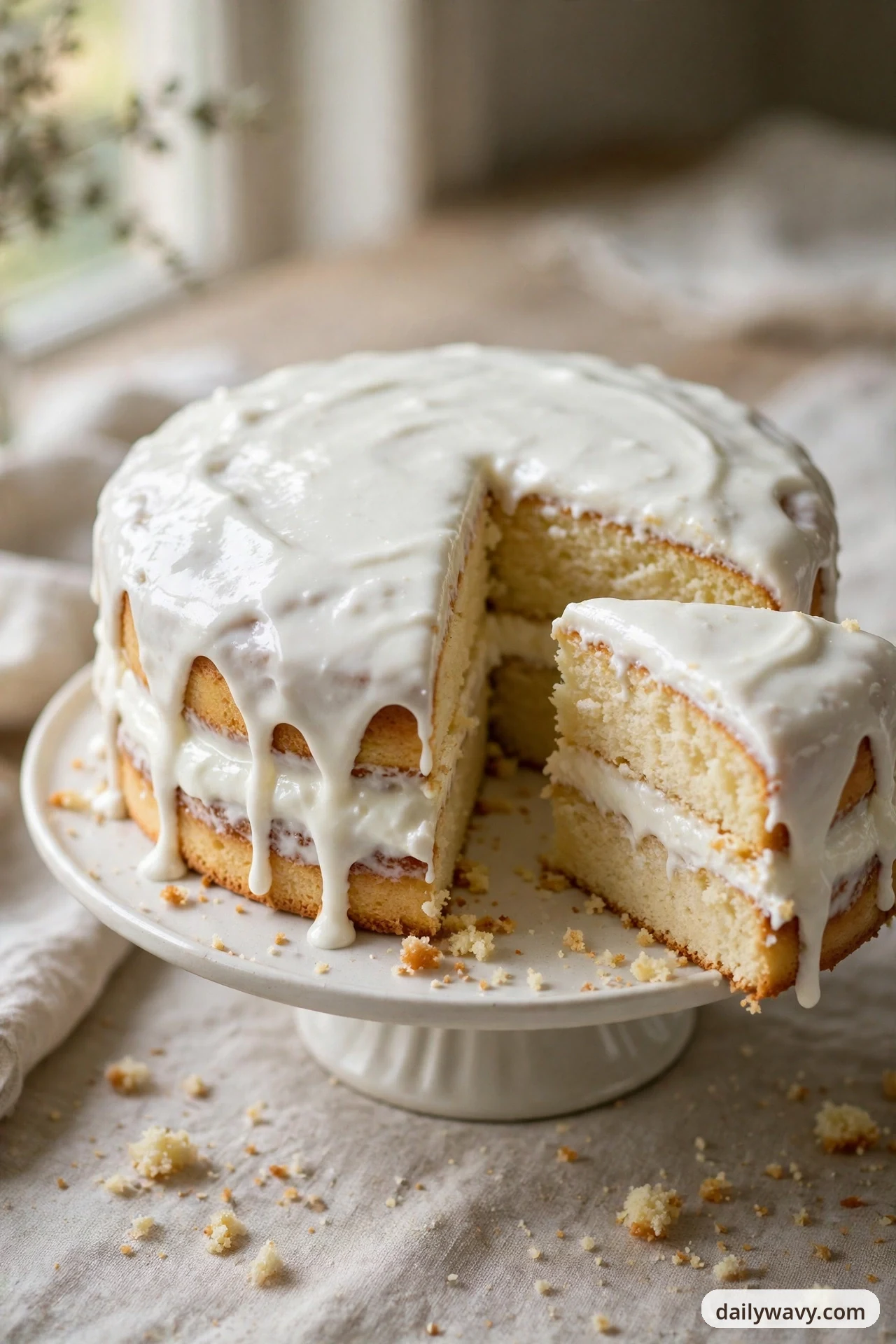
This is the lightest way to finish a vanilla cake, and the one to reach for when the cake is meant for an ordinary afternoon rather than a party. The glaze is tangy and just sweet enough, and it sets into a soft matte shell that looks effortless on the stand. It takes five minutes and no mixer.
You need (for the glaze, covers two 8-inch layers):
- 1 cup plain Greek yogurt (whole milk or 2%)
- 1 1/2 cups powdered sugar, sifted
- 1 teaspoon pure vanilla extract
- 1 to 2 tablespoons milk
Method:
- Bake and cool the base cake completely.
- Whisk the yogurt, powdered sugar, and vanilla until smooth.
- Add milk a teaspoon at a time until the glaze pours in a thick ribbon.
- Pour over the cake, letting it drip naturally over the edges. Let it set 20 minutes before slicing.
Timing: 5 minutes of active work, plus 20 minutes to set.
Troubleshooting: If the glaze is too thin, whisk in more powdered sugar a tablespoon at a time. If it is too thick, add milk by the teaspoon. Full-fat Greek yogurt gives the smoothest result; nonfat can taste chalky.
Storage: Refrigerate up to 3 days in a covered container. The glaze softens at room temperature, so serve chilled slices within 2 hours of taking the cake out.
Why it works: The tang of the yogurt balances the sweet crumb the way a squeeze of lemon brightens a rich dish. The texture stays soft rather than crunchy, which suits a simple snack cake. If you want a dairy-free version, use thick coconut yogurt in place of the Greek yogurt and a splash of plant milk or water in place of the milk, though the flavor leans tropical.
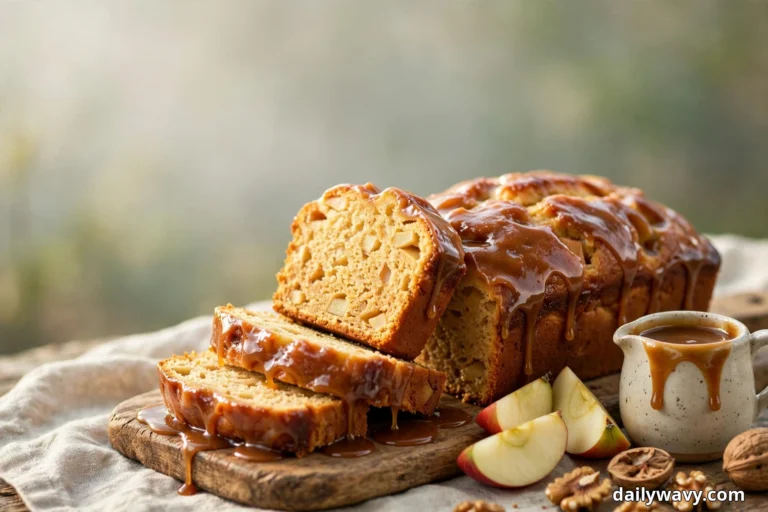
2. Vanilla Cake With Caramel Frosting

Caramel frosting turns the same vanilla layers into a proper celebration cake. The caramel is a real cooked caramel, deep and slightly salty, whipped into butter so it spreads like silk. This is the birthday version.
You need (fills and frosts two 8-inch layers):
- 1 cup packed light brown sugar
- 1/2 cup unsalted butter
- 1/4 cup heavy cream
- 1/2 teaspoon fine salt
- 1/2 cup unsalted butter, at room temperature (for the frosting)
- 2 1/2 cups powdered sugar, sifted
- 1 teaspoon pure vanilla extract
Method:
- Make the caramel: combine the brown sugar, 1/2 cup butter, cream, and salt in a saucepan. Bring to a boil, stirring, then boil 2 to 3 minutes. Cool completely to room temperature (at least 45 minutes).
- Beat the remaining 1/2 cup butter until fluffy, about 2 minutes.
- Add the cooled caramel (reserve 2 tablespoons for drizzling) and vanilla; beat 1 minute.
- Add the powdered sugar one cup at a time, beating until smooth.
- Fill and frost the cooled cake. Drizzle any extra caramel over the top.
Timing: 15 minutes active, plus 45 minutes to cool the caramel.
Troubleshooting: If the frosting is too soft, the caramel was still warm. Chill the bowl 15 minutes and re-beat. If it is too stiff, add cream a teaspoon at a time. Do not rush the caramel cooling step; warm caramel melts butter and there is no fixing it except a chill and a re-whip.
Storage: Cool room temperature up to 2 days, or refrigerate up to 4 days.
Why it works: Cooked caramel brings butterscotch depth and a whisper of salt that plain vanilla buttercream cannot match, and the color alone makes the cake look bakery-made. A good shortcut exists: warm a quality store-bought caramel sauce, cool it fully, and use it in place of the homemade caramel.
3. Vanilla Cake With Cherry Compote
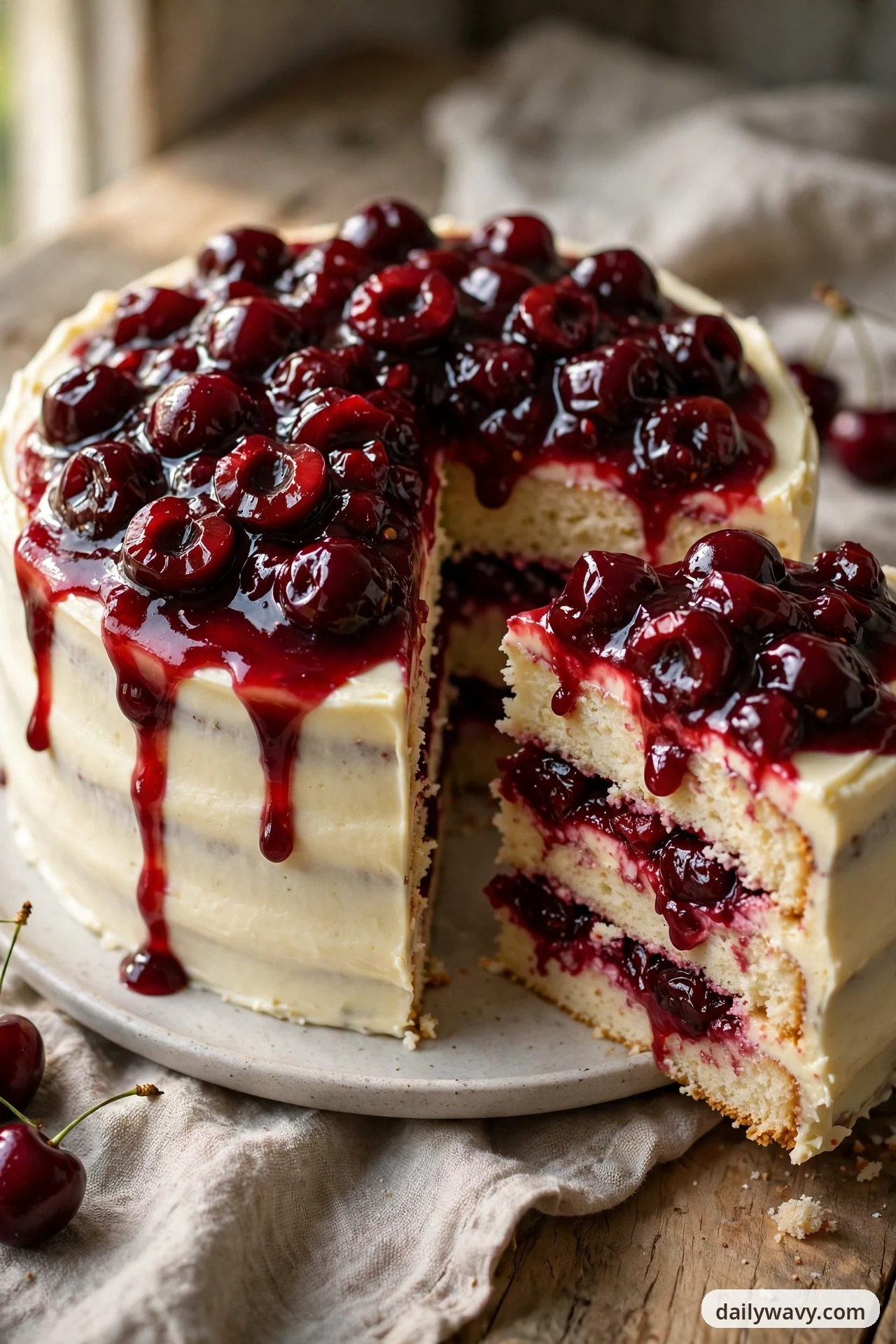
Tart cherries against sweet vanilla crumb is a classic pairing for a reason. The compote cooks down to a glossy, jammy filling that stains the cake layers the prettiest ruby color, and a spoonful of whipped cream keeps it from ever feeling heavy.
You need (for the compote and cream, fills two 8-inch layers):
- 3 cups pitted sweet or sour cherries, fresh or frozen
- 1/3 cup granulated sugar
- 1 tablespoon fresh lemon juice
- 1 teaspoon cornstarch mixed with 1 tablespoon cold water
- 1 1/2 cups heavy cream
- 3 tablespoons powdered sugar
- 1 teaspoon pure vanilla extract
Method:
- Combine the cherries, granulated sugar, and lemon juice in a saucepan. Simmer over medium heat 8 to 10 minutes until the fruit softens and the juices thicken slightly.
- Stir in the cornstarch slurry and simmer 1 minute more. Cool completely.
- Whip the cream, powdered sugar, and vanilla to firm peaks.
- Spread half the compote over the bottom layer, add a layer of whipped cream, set the top layer, and finish with the remaining compote and cream.
Timing: 15 minutes active, plus cooling.
Troubleshooting: Runny compote usually means it needed another minute or two of simmering, or the slurry was skipped. Sour cherries need the full 1/3 cup of sugar; sweet cherries can take a little less. If using frozen cherries, thaw and drain them first so the compote is not watery.
Storage: Refrigerate up to 3 days. The whipped cream is the limiting factor; it holds best in the first 48 hours.
Why it works: The compote adds moisture and acidity, which keeps each bite lively instead of one-note sweet. The texture contrast matters too: soft cake, jammy fruit, airy cream. In winter, frozen cherries are a reliable choice.
4. Vanilla Cake With Coconut Cream
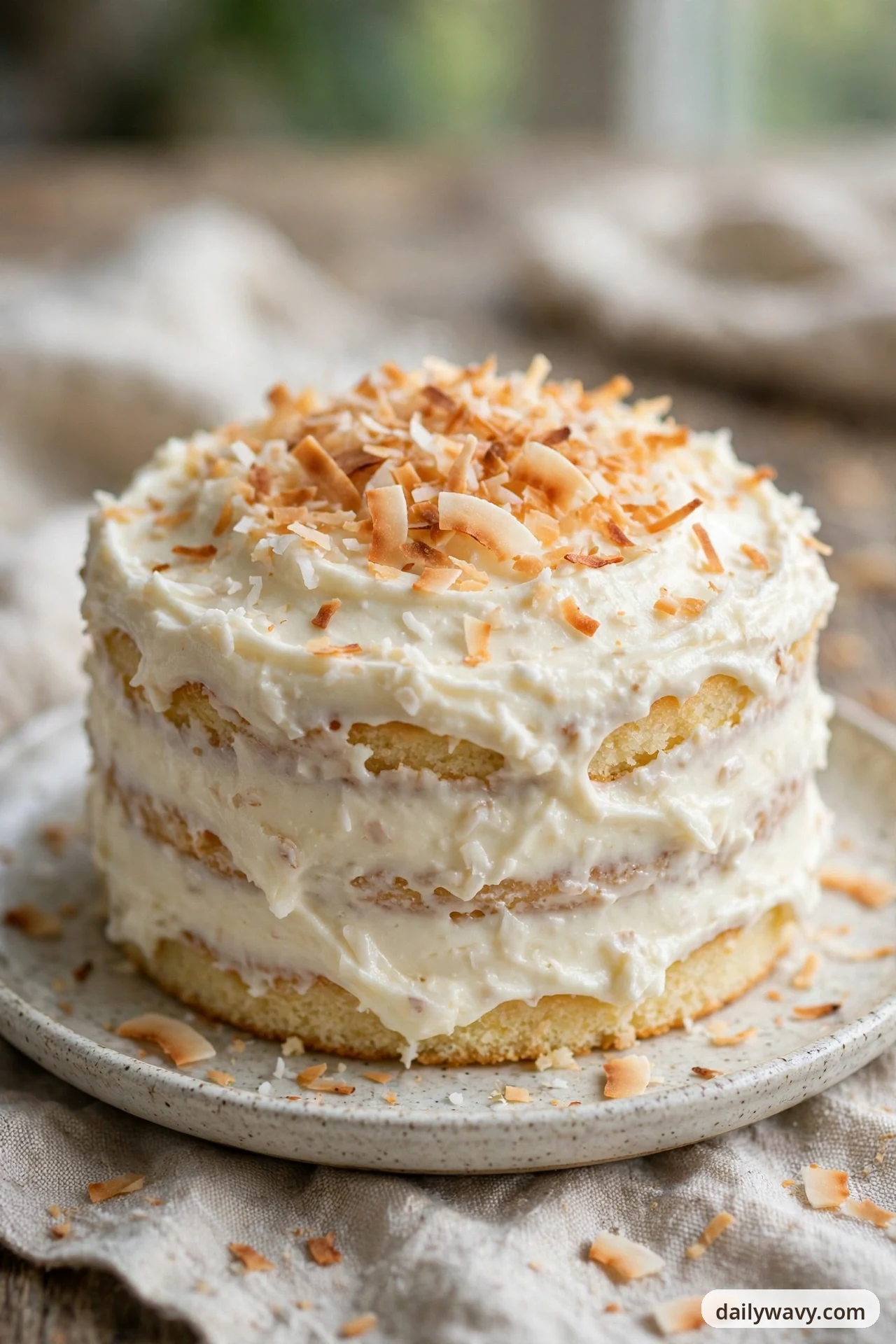
This one tastes like a holiday in cake form. The frosting is rich but not heavy, and the toasted coconut on top gives every slice a little crunch. It is a natural pick for spring gatherings and summer birthdays.
You need (fills and frosts two 8-inch layers):
- 8 ounces cream cheese, at room temperature
- 1/2 cup coconut cream (the thick solid from a chilled can of full-fat coconut milk)
- 1 1/2 cups powdered sugar, sifted
- 1/2 teaspoon coconut extract (optional)
- 1 cup sweetened shredded coconut, toasted
Method:
- Chill the can of coconut milk overnight; scoop out 1/2 cup of the thick solid cream (save the liquid for smoothies).
- Beat the cream cheese until smooth, about 1 minute.
- Add the coconut cream, powdered sugar, and coconut extract; beat until fluffy.
- Toast the coconut in a dry skillet over medium heat, stirring, for 3 to 4 minutes, until golden; it goes from golden to burnt fast.
- Frost the cooled cake and press the toasted coconut onto the sides and top.
Timing: 15 minutes active, plus overnight chilling of the coconut milk.
Troubleshooting: If the frosting is too soft, you used the watery part of the can. Only the solid cream whips properly. If it tastes flat, a pinch of salt and the coconut extract make a real difference.
Storage: Refrigerate up to 3 days.
Why it works: Coconut cream is lighter than butter-based frosting but still rich, and the toasted flakes add the crunch the soft cake lacks. The flavor reads unmistakably tropical without any artificial notes. Toasted coconut chips make a fine substitute for shredded.
5. Vanilla Cake With Mascarpone Frosting
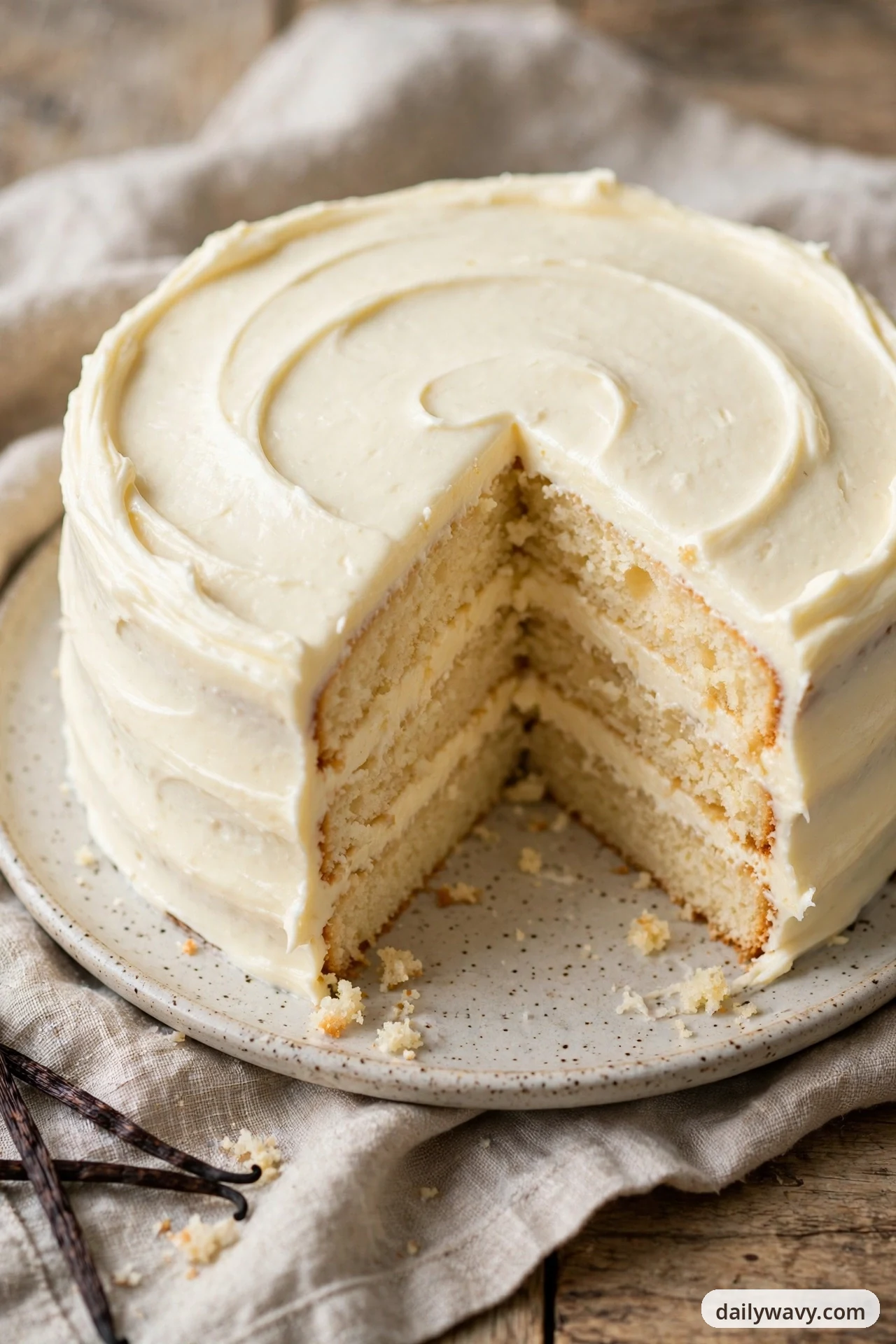
Mascarpone frosting is what you make when you want elegance without fuss. It is silkier and less sweet than American buttercream, and it pairs with vanilla the way good company pairs with a long lunch: quietly perfect.
You need (fills and frosts two 8-inch layers):
- 8 ounces mascarpone cheese, at room temperature
- 1 1/2 cups heavy cream, cold
- 3/4 cup powdered sugar, sifted
- 2 teaspoons pure vanilla extract
Method:
- Stir the mascarpone with the powdered sugar and vanilla until just smooth.
- In a separate bowl, whip the cold cream to firm peaks.
- Fold the whipped cream into the mascarpone in two additions, gently, until no streaks remain.
- Fill and frost the cooled cake immediately.
Timing: 10 minutes active.
Troubleshooting: Mascarpone curdles if it is overworked or too cold, so stir it gently and use it at room temperature. Whipping the cream separately and folding is the whole trick; beating everything together is how grainy frosting happens. If the frosting softens on a warm day, chill the frosted cake 20 minutes before serving.
Storage: Refrigerate up to 3 days. Serve within 2 hours of taking it out of the fridge, and let slices sit 20 to 30 minutes so the frosting softens to its silky best.
Why it works: The flavor is creamy and gently sweet with a fresh dairy tang, much lighter on the palate than buttercream. The texture is cloudlike rather than dense. Cream cheese makes a workable substitute, though the result is tangier and slightly firmer.
6. Vanilla Cake With Browned-Butter Icing
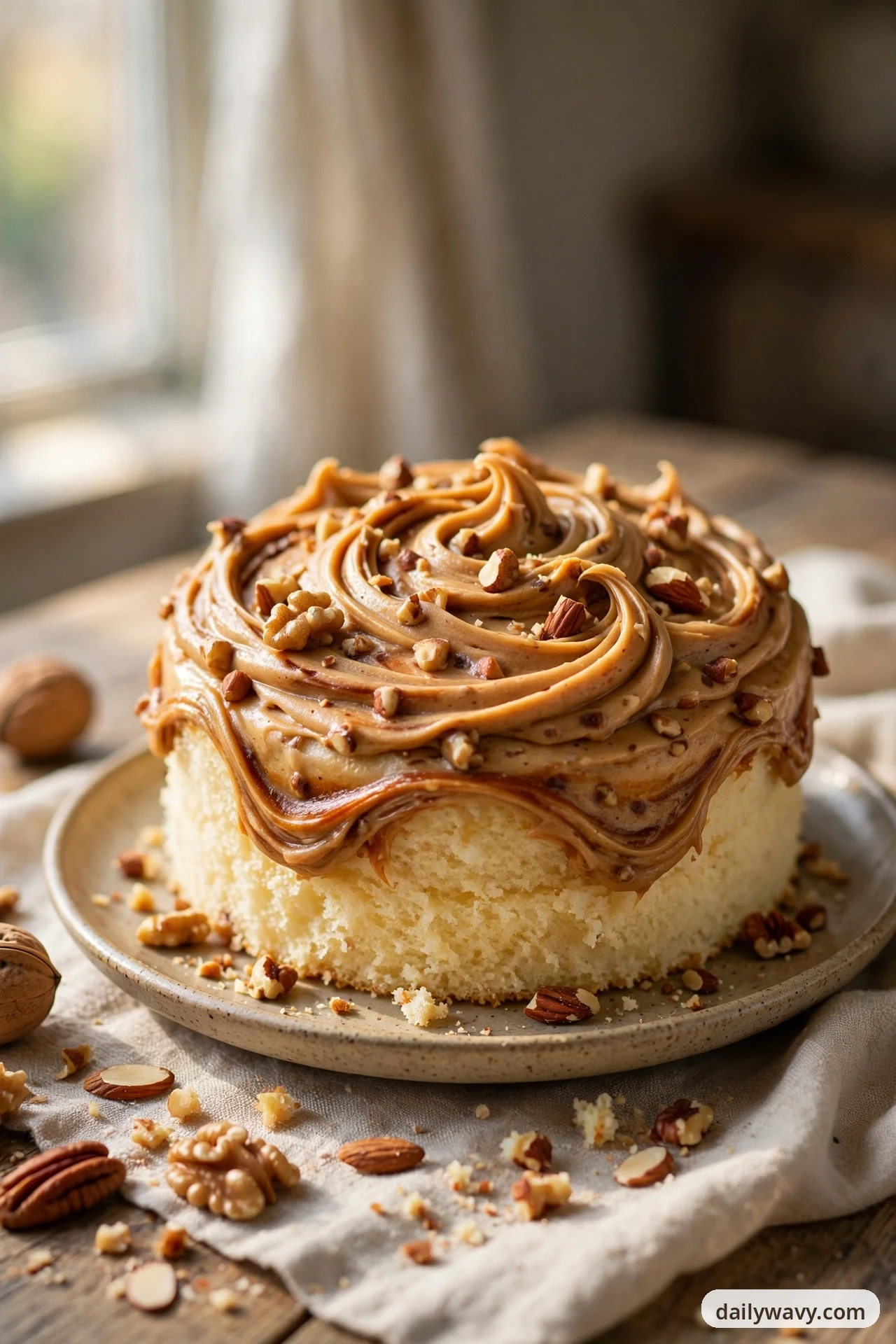
Browning the butter first gives this icing a nutty, toffee-like depth. The secret is just patience at the stove for five minutes. It is one of the coziest frostings on this list.
You need (fills and frosts two 8-inch layers):
- 3/4 cup (1 1/2 sticks) unsalted butter
- 3 cups powdered sugar, sifted
- 3 to 4 tablespoons milk
- 1 teaspoon pure vanilla extract
- Pinch of fine salt
Method:
- Melt the butter in a light-colored saucepan over medium heat. It will foam, then the foam will subside and the milk solids will turn amber with a nutty smell, 5 to 7 minutes. Pour into a bowl, including the browned bits, and cool until firm but not hard, about 1 hour (or 20 minutes in the fridge).
- Beat the cooled browned butter until smooth.
- Add the powdered sugar, milk, vanilla, and salt; beat 2 to 3 minutes until fluffy.
- Fill and frost the cooled cake.
Timing: 15 minutes active, plus 1 hour to cool the butter.
Troubleshooting: If the icing tastes greasy instead of nutty, the butter was not browned enough; look for an amber color and a toasted smell, not just melted. If it is grainy, beat longer; powdered sugar needs a full 2 to 3 minutes to dissolve into the butter. Too thick means more milk, a teaspoon at a time.
Storage: Cool room temperature up to 2 days, or refrigerate up to 4 days.
Why it works: The Maillard reaction in the browned milk solids adds real complexity, warm and almost hazelnutty, which plays beautifully against plain vanilla. A pinch of flaky salt on top makes it even better. This is also a good choice for people who usually skip frosting.
7. Vanilla Cake With Raspberry Buttercream
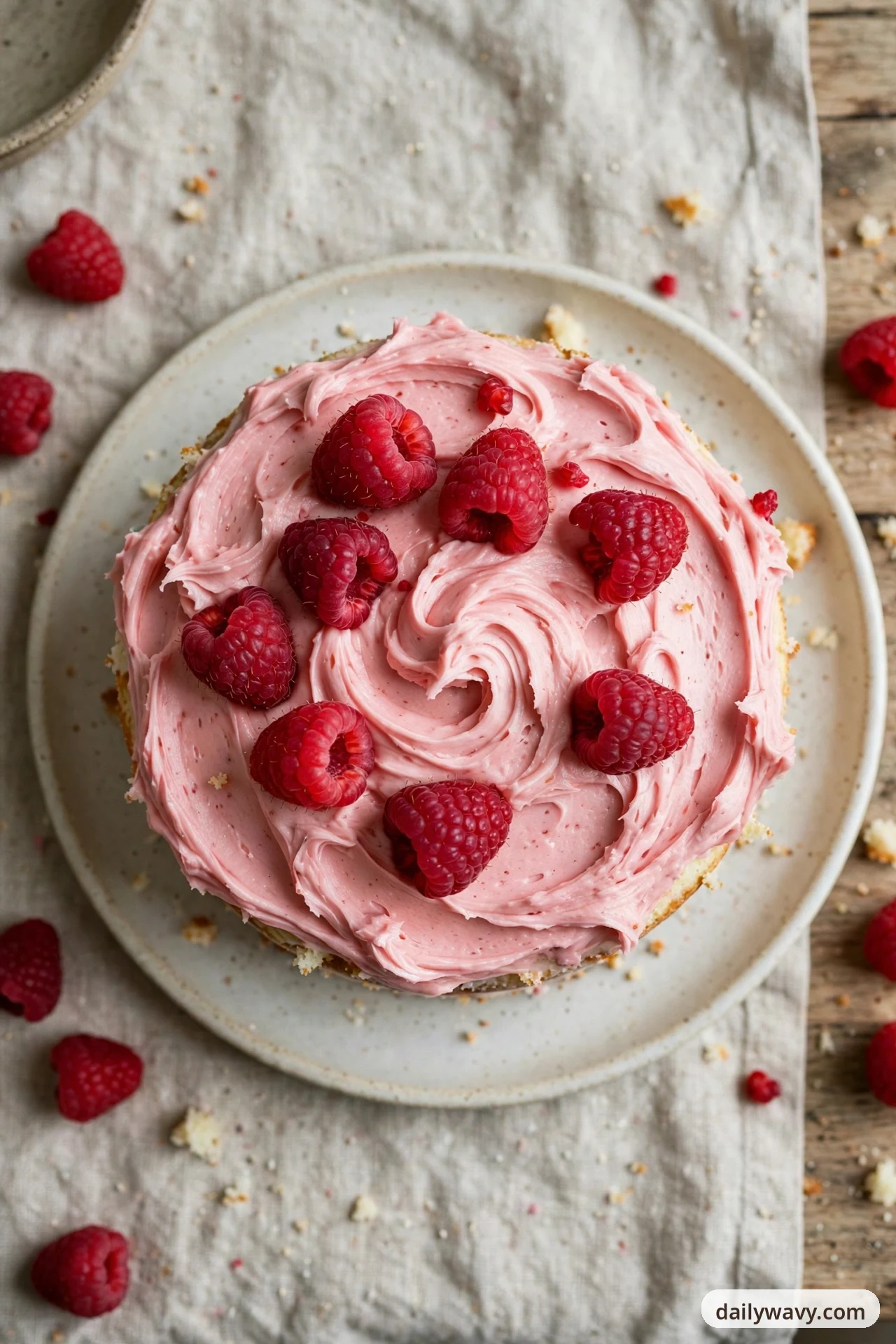
Pink, fresh, and just tart enough to keep the sweetness in check, raspberry buttercream is one of the prettiest frostings here and one of the most flavorful. Real raspberries do the work; no food coloring needed.
You need (fills and frosts two 8-inch layers):
- 1 cup fresh raspberries (or frozen, thawed)
- 1 cup unsalted butter, at room temperature
- 4 cups powdered sugar, sifted
- 1 to 2 tablespoons milk
- 1 teaspoon pure vanilla extract
- Pinch of fine salt
Method:
- Cook the raspberries in a small saucepan over medium heat, mashing, until they release their juices and thicken slightly, about 5 minutes. Push through a fine sieve to remove seeds. You should have about 1/3 cup puree. Cool completely.
- Beat the butter until fluffy, about 2 minutes.
- Add the powdered sugar one cup at a time, then the cooled raspberry puree, vanilla, salt, and enough milk for a spreadable consistency. Beat 2 minutes.
Timing: 20 minutes active, plus cooling the puree.
Troubleshooting: Skipping the sieve leaves seeds in the frosting. Make sure the puree is fully cool before adding it, or the butter will melt and the frosting will split. If the color is paler than you hoped, a spoonful of freeze-dried raspberry powder deepens it without thinning the frosting.
Storage: Cool room temperature up to 2 days, or refrigerate up to 4 days.
Why it works: The berries add genuine fruit flavor and acidity, not just color, so the cake tastes as good as it looks. The texture stays smooth and classic buttercream. Freeze-dried raspberry powder (about 2 tablespoons) is a fine substitute when fresh berries are out of season.
8. Vanilla Cake With Hazelnut Topping
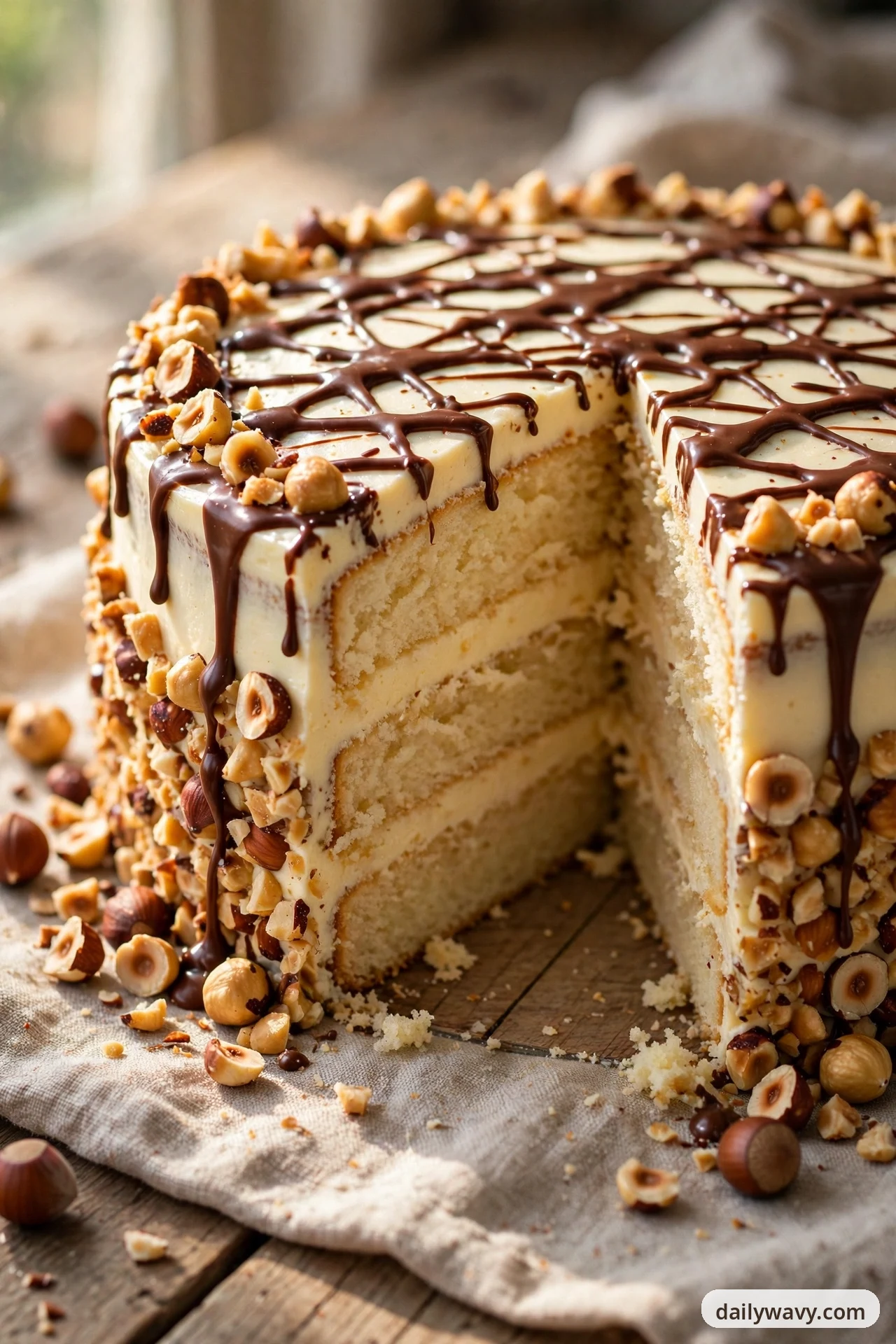
Vanilla cake, a simple buttercream, a cascade of toasted hazelnuts, and a warm chocolate-hazelnut drizzle. It reads like a bakery window cake but comes together from pantry staples.
You need (for a two-layer 8-inch cake):
- 1 cup unsalted butter, at room temperature
- 4 cups powdered sugar, sifted
- 2 to 3 tablespoons milk
- 2 teaspoons pure vanilla extract
- 1 1/2 cups hazelnuts, toasted, skins rubbed off, roughly chopped
- 1/2 cup chocolate-hazelnut spread
- 2 tablespoons heavy cream
Method:
- Toast the hazelnuts at 350°F for 10 to 12 minutes until fragrant, then rub them in a clean kitchen towel to remove the bitter skins; roughly chop.
- Beat the butter until fluffy. Add the powdered sugar one cup at a time, then the milk and vanilla; beat 2 minutes until smooth.
- Frost the cooled cake with a thin, even layer.
- Press the chopped hazelnuts onto the sides and scatter some over the top.
- Warm the chocolate-hazelnut spread with the cream until pourable, drizzle over the top, and let set 15 minutes.
Timing: 20 minutes active, plus 15 minutes to set.
Troubleshooting: If the drizzle is too thick to pour, add more cream a teaspoon at a time; too thin means it needed less. Press the nuts on while the frosting is fresh so they stick.
Storage: Cool room temperature up to 2 days. The nuts stay crunchiest in the first 48 hours.
Why it works: The crunch of the nuts against soft cake and creamy frosting is the whole appeal, and the chocolate-hazelnut drizzle ties the flavors together. Toasted almonds make a fine substitute if hazelnuts are hard to find.
9. Vanilla Cake With Orange Curd
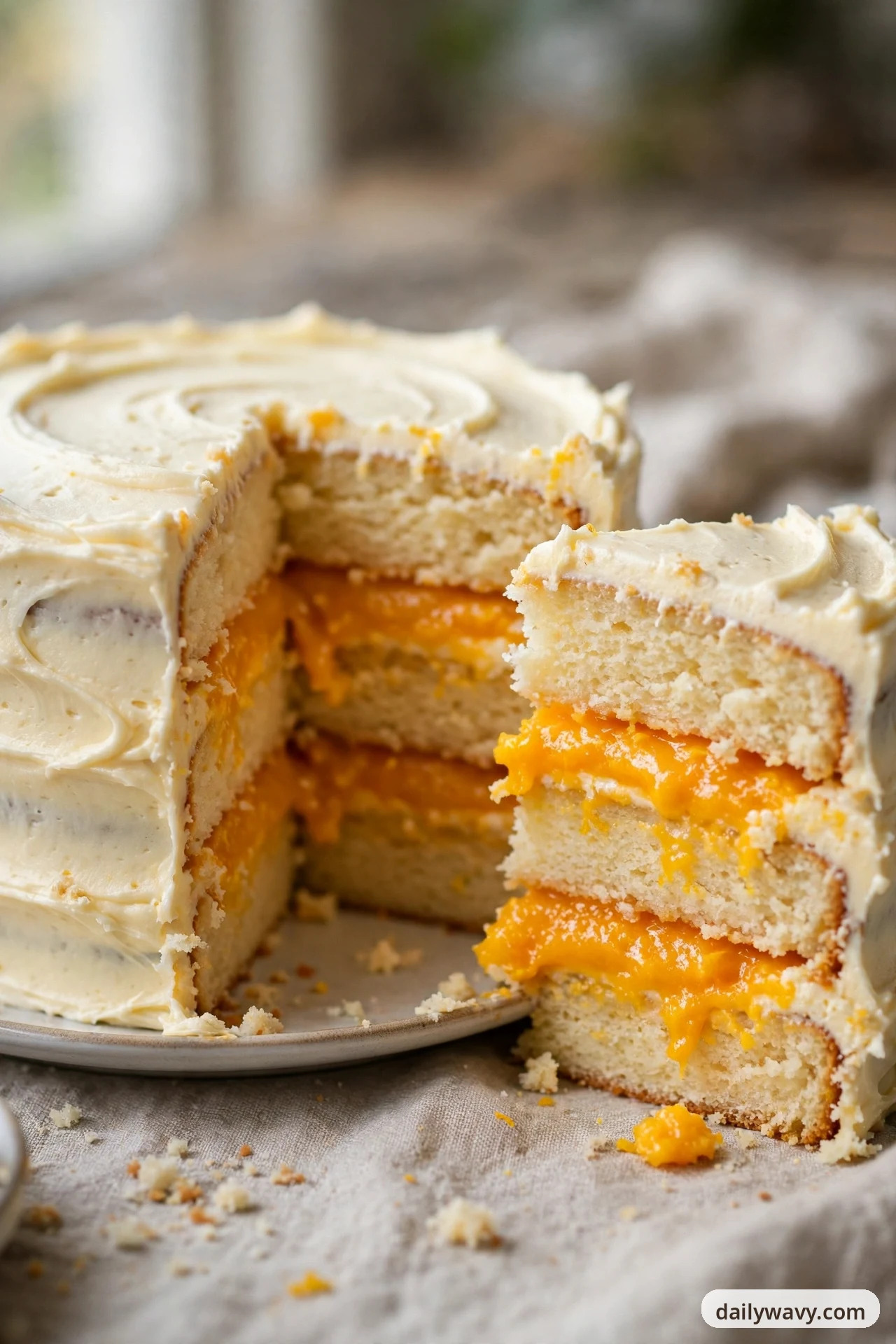
Orange curd is sunshine in a jar, and tucked between vanilla layers it turns an everyday cake into something special. The curd is easier than it sounds; it just needs steady stirring and a thermometer or a watchful eye.
You need (for the curd and assembly, fills two 8-inch layers):
- 1/2 cup fresh orange juice (about 2 oranges)
- 1 tablespoon finely grated orange zest
- 1/2 cup granulated sugar
- 3 large egg yolks
- 6 tablespoons cold unsalted butter, cubed
- 1 cup unsalted butter, at room temperature (for the dam)
- 2 cups powdered sugar, sifted
- 1 teaspoon pure vanilla extract
Method:
- Whisk the orange juice, zest, sugar, and yolks in a saucepan. Cook over medium-low heat, stirring constantly, until the curd thickens and reaches 170°F, about 8 to 10 minutes. Do not boil.
- Off the heat, whisk in the cold butter one cube at a time. Strain into a bowl, press plastic wrap on the surface, and chill at least 2 hours.
- Beat 1 cup butter with the powdered sugar and vanilla for the dam. Pipe or spread a ring of buttercream around the edge of the bottom layer, fill the center with the chilled curd, and set the top layer.
- Frost the outside thinly or leave the sides bare for a naked-cake look.
Timing: 25 minutes active, plus 2 hours to chill the curd.
Troubleshooting: Curd that will not thicken usually needed more time or slightly more heat; 170°F is the magic number where yolks set the mixture. The buttercream dam is not optional; it keeps the soft curd from squeezing out the sides. Strain the curd even if it looks smooth; it catches any bits of cooked egg.
Storage: Refrigerate up to 3 days. The curd is perishable, so the 2-hour room-temperature rule applies strictly.
Why it works: The bright citrus cuts through the richness of cake and buttercream, and the color contrast in a cut slice is genuinely stunning. Lemon curd made the same way is a fine substitute when oranges are not at their best.
10. Vanilla Cake With Cinnamon Crumbs
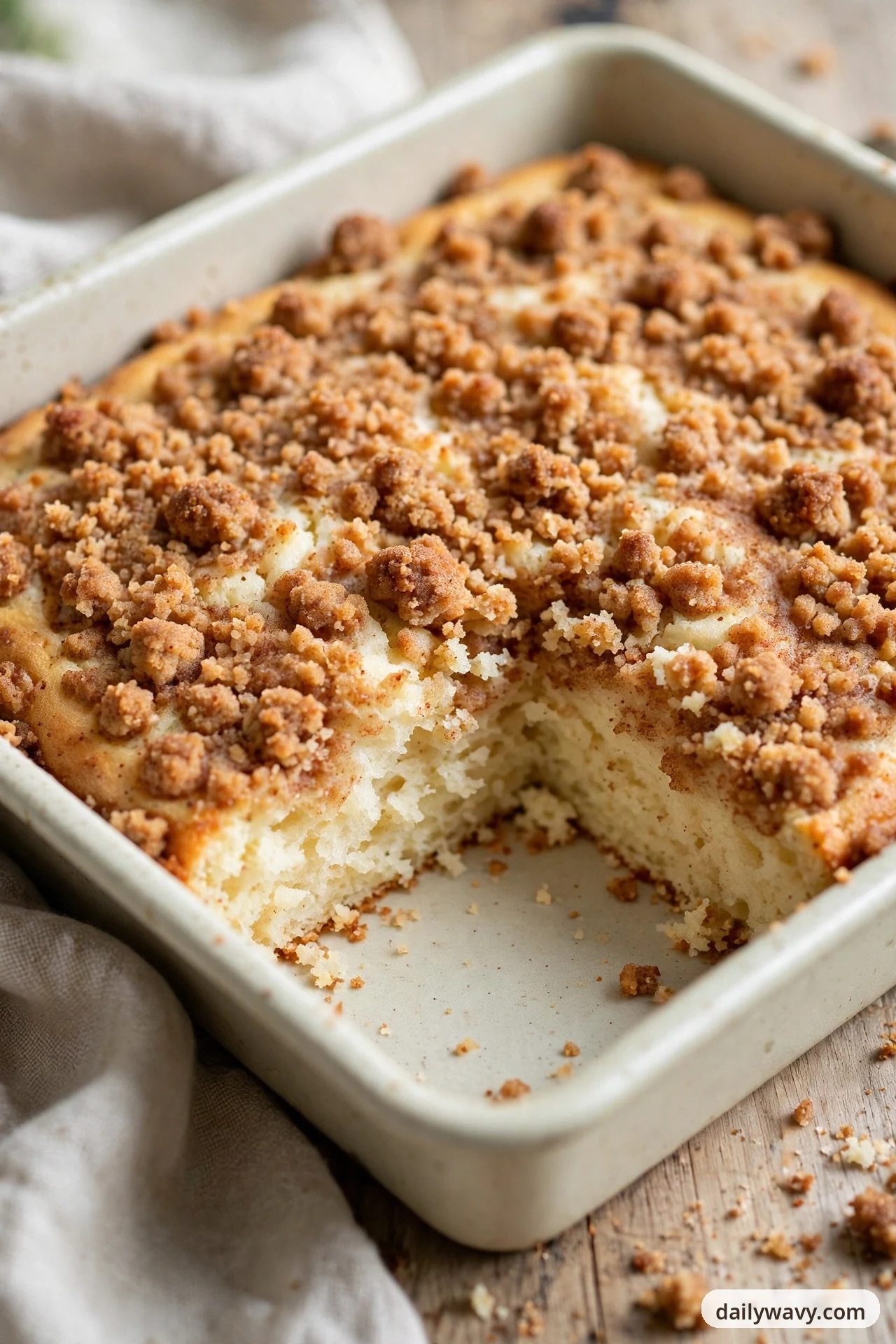
Part vanilla cake, part coffee cake, this is the one you bake for the weekend itself. The cinnamon streusel bakes right onto the top in a 9×13 pan, so there is no frosting, no layers, and no fuss. It is one of the easiest recipes on this page.
You need (one 9×13-inch pan, about 15 servings):
- 1 cup all-purpose flour
- 1/2 cup packed light brown sugar
- 2 teaspoons ground cinnamon
- 1/4 teaspoon fine salt
- 1/2 cup cold unsalted butter, cubed
- 1 batch base cake batter (above)
Method:
- Heat the oven to 350°F. Grease a 9×13-inch pan.
- Rub the flour, brown sugar, cinnamon, salt, and cold butter together with your fingertips until coarse crumbs form. Chill 15 minutes.
- Spread the base cake batter in the pan. Sprinkle the crumbs evenly over the top.
- Bake 35 to 40 minutes, until a toothpick comes out clean and the crumbs are golden.
Timing: 15 minutes active, 35 to 40 minutes baking.
Troubleshooting: Crumbs that sink into the batter were too warm or too large; chilling firms the butter so they sit on top. If the top browns before the center is done, tent loosely with foil for the last 10 minutes. A toothpick test in the center, avoiding the crumbs, is the reliable doneness check.
Storage: Cool room temperature up to 2 days, covered. The crumb topping stays crispest on day one.
Why it works: The buttery cinnamon crunch on top gives the soft vanilla crumb exactly the contrast it needs, and skipping the frosting makes this a true everyday cake. Fold 1/2 cup chopped pecans into the crumbs if you want extra texture.
11. Vanilla Cake With Ganache
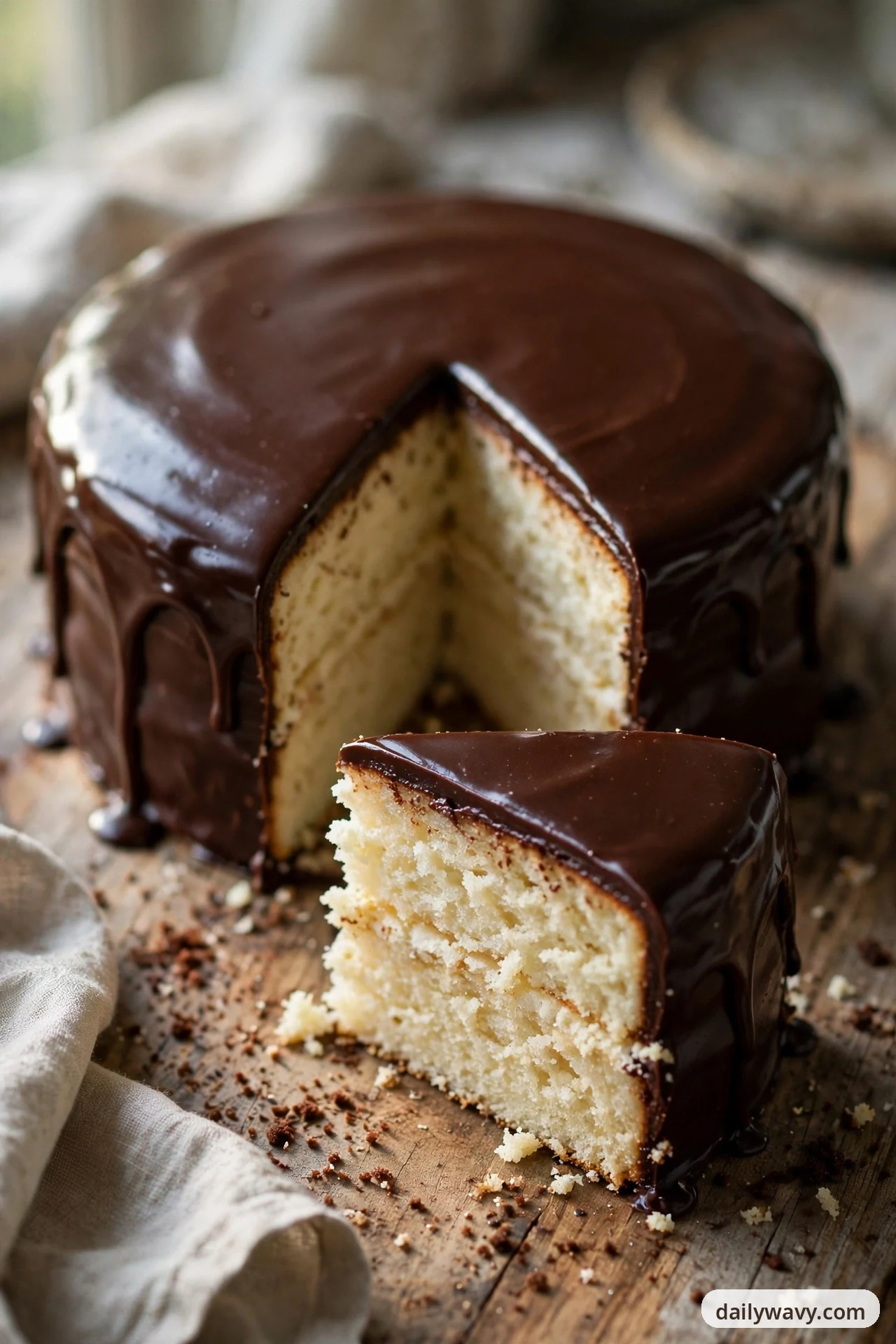
A ganache glaze is a fast route to a cake that looks professionally finished. The chocolate sets into a glossy shell with that satisfying drip edge, and the vanilla-chocolate pairing is timeless for a reason.
You need (glazes a two-layer 8-inch cake):
- 8 ounces semisweet chocolate, finely chopped
- 3/4 cup heavy cream
- 1 tablespoon unsalted butter, at room temperature
- 1/2 cup unsalted butter, at room temperature, plus 2 cups powdered sugar, sifted (for the crumb coat, half the standard ratio)
Method:
- Frost the cooled cake with a thin crumb coat of plain buttercream (1/2 cup butter beaten with 2 cups powdered sugar, half the standard ratio) and chill 30 minutes. A smooth, cold surface is the key to clean drips.
- Place the chopped chocolate in a heatproof bowl. Heat the cream to just simmering and pour over the chocolate. Let stand 2 minutes, then stir from the center outward until smooth. Stir in the butter.
- Cool the ganache to about 90°F; it should flow like thick honey.
- Pour over the top of the chilled cake, nudging it to the edges so it drips naturally. Let set 20 minutes.
Timing: 15 minutes active, plus 30 minutes chilling and 20 minutes setting.
Troubleshooting: Ganache poured too hot melts the frosting underneath and slides off; the 90°F target matters. If it is too thick to drip, warm it gently 10 seconds at a time. Lumps mean the chocolate was not chopped finely enough; strain it and carry on.
Storage: Cool room temperature up to 2 days, or refrigerate up to 4 days.
Why it works: The slight bitterness of semisweet chocolate balances the sweet vanilla crumb, and the glossy finish hides every imperfection underneath. For a white chocolate version, use 12 ounces white chocolate to 1/2 cup cream, since white chocolate needs a higher chocolate ratio to set.
12. Vanilla Cake With Whipped Cream And Fruit
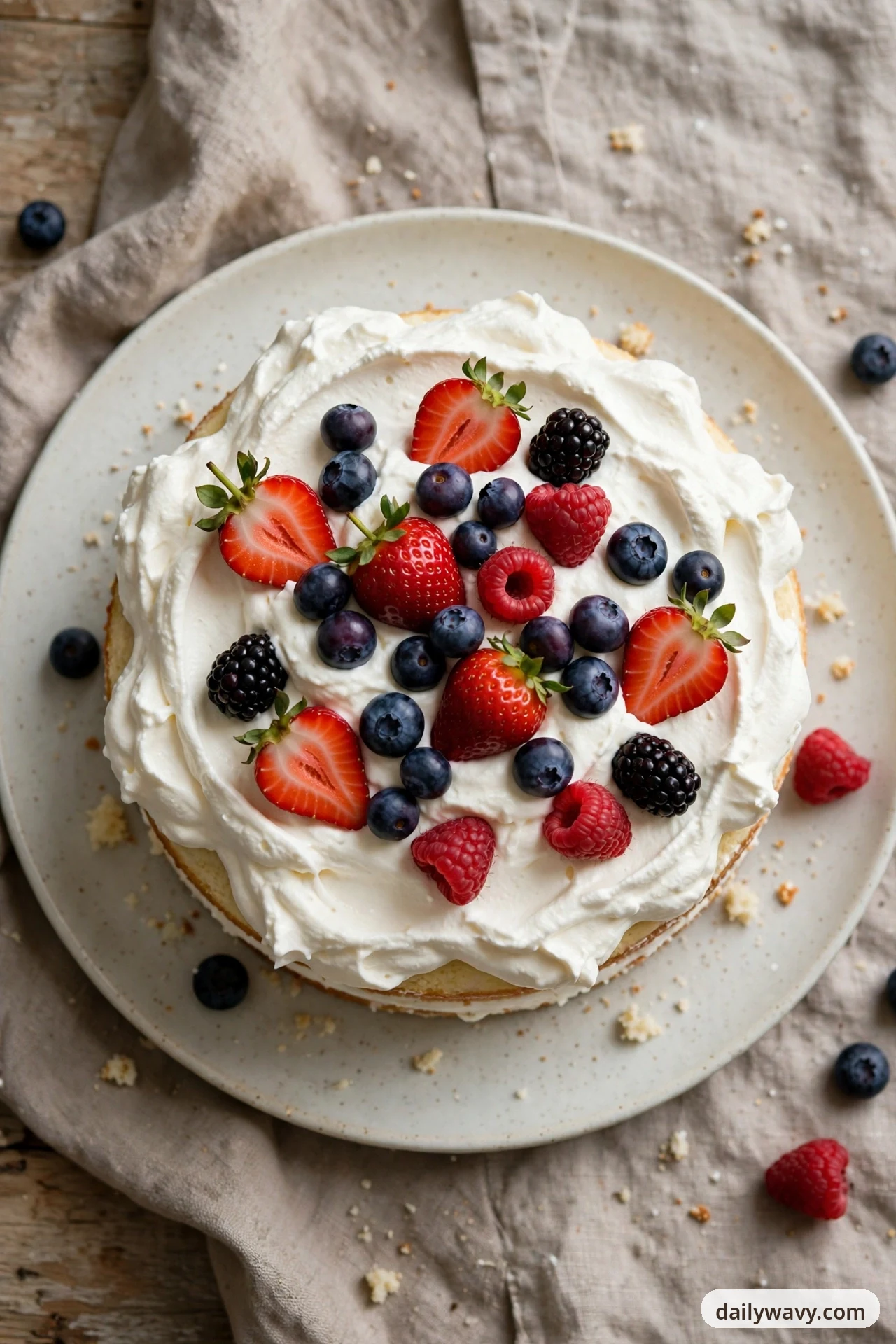
One of the lightest finishes on this list, and a good choice for warm weather. Billowy whipped cream and macerated berries turn vanilla cake into something closer to a trifle, fresh and barely sweet.
You need (for a two-layer 8-inch cake):
- 2 cups mixed fresh berries (strawberries, blueberries, raspberries)
- 1 tablespoon granulated sugar
- 1 teaspoon fresh lemon juice
- 1 1/2 cups heavy cream, cold
- 1/4 cup powdered sugar, sifted
- 1 teaspoon pure vanilla extract
Method:
- Toss the berries with the granulated sugar and lemon juice. Rest 20 minutes until juicy.
- Whip the cold cream, powdered sugar, and vanilla to firm peaks.
- Layer the cake with whipped cream and a spoonful of berries and their juices. Finish the top with the remaining cream and berries.
Timing: 15 minutes active, plus 20 minutes to macerate.
Troubleshooting: Whipped cream weeps if it sits too long, so assemble this cake within a few hours of serving. Whip to firm, not stiff, peaks; overwhipped cream turns grainy. If the berries are underripe, the sugar and lemon juice do real work softening and sweetening them.
Storage: Refrigerate and serve the same day. The unfrosted cake layers can be baked ahead, but assemble with cream and fruit at most 4 hours before serving.
Why it works: Fresh fruit and barely sweetened cream let the vanilla flavor shine instead of competing with it, and the whole thing tastes cool and light. Any seasonal fruit works: sliced peaches in summer, poached pears in fall.
Vanilla cake questions, answered
Can I bake the layers ahead of time?
Yes. Bake, cool completely, and wrap each layer tightly in plastic wrap. They keep 1 day at room temperature or up to 2 months in the freezer (add a layer of foil over the plastic). Thaw frozen layers at room temperature, still wrapped, so condensation forms on the wrap instead of the cake.
Why did my cake dome in the middle or sink?
Doming usually means the oven ran hot; an oven thermometer is the cheapest fix in baking. Sinking usually means underbaking or opening the oven door early. Too much leavener can cause a fast rise followed by a collapse, so measure the baking powder carefully. For flatter layers, bake at 325°F for a few minutes longer.
Can I use salted butter?
Yes. Just omit the 1/2 teaspoon of salt in the base recipe. The difference is small either way.
How should I store a frosted cake?
It depends on the frosting. Buttercream, caramel, and ganache versions are fine at cool room temperature up to 2 days. Anything with yogurt, mascarpone, fruit curd, or coconut cream must be refrigerated and is best within 3 days. Whipped cream and fruit is best served the same day. Never leave dairy or egg fillings at room temperature longer than 2 hours (1 hour if it is above 90°F). A tidy baking setup helps too; if your staples are organized, as in our small pantry organization guide, baking on a whim gets much easier.
Can I halve the recipe?
Yes. Halve everything for one 8 or 9-inch round and bake 25 to 28 minutes. The batter math scales cleanly because the recipe is built on simple ratios.
My buttercream is too sweet. What can I do?
Add a pinch of salt first; it genuinely reduces perceived sweetness. You can also beat in another 2 tablespoons of butter per cup of powdered sugar already used, or switch to a less sweet finish from this page like the mascarpone frosting or the yogurt glaze.
Pick your finish and bake
Twelve cakes, one base recipe, and not a single one that needs special equipment beyond two pans and a mixer. If you are new to layer cakes, start with the yogurt glaze or the cinnamon crumbs; both are forgiving and delicious. If you want a showpiece, the caramel frosting and the orange curd earn their place at any celebration table. And for the quietest kind of treat, a warm slice of plain vanilla cake next to your morning coffee, perhaps after a make-ahead breakfast like our apple cinnamon overnight oats, is hard to beat.
For more baking ideas, our blueberry muffin recipes use the same pantry staples, and the full Food & Drink collection has plenty more to explore. Happy baking.