
15 Lemon Cheesecake Ideas with Different Crusts and Finishes
Lemon cheesecake sits in a sweet spot few desserts can claim. It is rich enough for a celebration and bright…
Lemon cheesecake sits in a sweet spot few desserts can claim. It is rich enough for a celebration and bright enough to finish a heavy meal, and the lemon keeps every bite from feeling heavy. The real fun is the crust. Swap a plain graham base for something spiced, nutty, or salty, and the same creamy filling tastes like a brand-new dessert. This roundup gives you 15 complete lemon cheesecake ideas, each with a different crust or finish, and every one spells out whether it is baked or chilled, what sets the filling, and how long it needs in the fridge. Pick the one that matches your mood and make it once.
Jump to an idea
- Lemon Cheesecake With A Ginger Crust
- Lemon Cheesecake With A Pecan Crust
- Lemon Cheesecake With Vanilla Wafer Base
- Lemon Cheesecake With A Toasted Oat Crust
- Lemon Cheesecake With Mascarpone Filling
- Lemon Cheesecake With Yogurt Filling
- Lemon Cheesecake With A Pistachio Crust
- Lemon Cheesecake With A Cinnamon Crust
- Lemon Cheesecake With A Coconut Crust
- Lemon Cheesecake With A Hazelnut Crust
- Lemon Cheesecake With A Caramel Biscuit Base
- Lemon Cheesecake With A Pretzel Crust
- Lemon Cheesecake With Citrus Curd Topping
- Lemon Cheesecake With Dark Chocolate Ganache
- Lemon Cheesecake With A Biscuit Crust

Lemon cheesecake basics: baked, chilled, set and stored
Every idea below starts from one of two methods, and knowing which one you are making saves a lot of second guessing. A baked lemon cheesecake gets its structure from eggs cooked in the oven. It slices cleanly, stands tall, and carries a gentle custard flavor. A chilled (no-bake) lemon cheesecake sets in the refrigerator instead, and its structure comes from the setting agent you choose: unflavored gelatin gives a cleaner, more sliceable set, while a cream cheese and whipped cream mixture without gelatin sets softer and creamier, closer to a mousse. This roundup tells you the method, the setting agent, and the chill time for every single version, so the photo always matches what you will actually serve.
Pan size matters more than most recipes admit. All 15 ideas are built for a 9-inch springform pan, which gives you 10 to 12 generous slices. An 8-inch pan makes a taller cake but needs about 10 extra minutes in the oven and a longer chill. Never use a pan without removable sides; you cannot lift a cheesecake cleanly out of a regular cake pan.
A few rules apply to every version. Use full-fat, block-style cream cheese, not the spreadable tub kind, and bring it to room temperature before you start so the filling mixes smooth with no lumps. Fresh lemon juice and zest taste noticeably brighter than bottled, and you will need about 3 medium lemons for most of these recipes. Bake at the temperature the recipe gives you, not higher, because a hot oven is the main reason cheesecakes crack. Cool the baked cake in the turned-off oven with the door cracked for one hour, then move it to the refrigerator for at least 6 hours (8 hours for the mascarpone version), ideally overnight. Chilled versions need 8 hours minimum. And the food-safety rule that covers all of them: cheesecake is a dairy dessert, so refrigerate it within 2 hours of serving (1 hour if the temperature is above 90°F), keep it cold for 3 to 4 days, and freeze slices (well wrapped, unfrosted) for up to 2 months if you need longer, except the mascarpone version (up to 1 month); do not freeze the two chilled versions (yogurt filling and caramel biscuit base).
If lemon is your thing beyond dessert, it also stars in a savory favorite: our lemon garlic chicken skillet uses the same fresh-lemon brightness in a weeknight dinner.
1. Lemon Cheesecake With A Ginger Crust
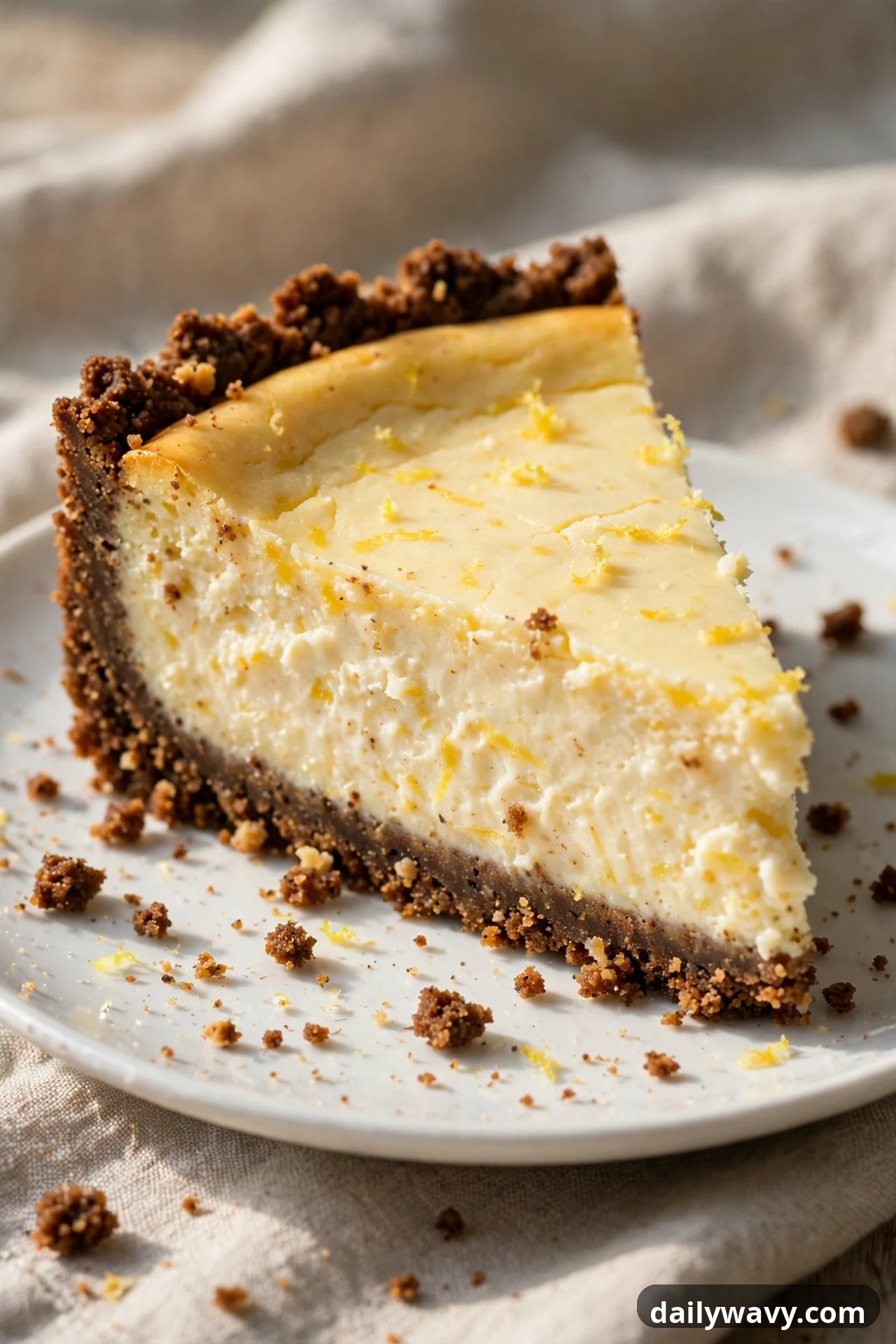
Spiced ginger snaps ground into a crust do something plain graham crumbs cannot: they answer the lemon with warmth. The filling is the classic baked lemon cheesecake, smooth and bright, and the peppery ginger base keeps the whole slice lively from first bite to last. This is the version to make when you want a cheesecake that tastes like it belongs on a holiday table.
Method: baked. Setting agent: eggs. Pan: 9-inch springform. Chill: 6 hours minimum, overnight is better.
You need (serves 10 to 12): For the crust, 1 1/2 cups gingersnap cookie crumbs, 5 tablespoons melted butter, 2 tablespoons sugar. For the filling, 32 ounces (4 blocks) full-fat cream cheese at room temperature, 1 cup sugar, 3 large eggs at room temperature, 1/2 cup sour cream, 1/3 cup fresh lemon juice, 2 tablespoons finely grated lemon zest, 1 teaspoon vanilla extract, 2 tablespoons all-purpose flour.
Method: Heat the oven to 325°F. Mix the gingersnap crumbs, melted butter, and sugar, and press the mixture firmly into the bottom and halfway up the sides of the springform. Bake the crust for 10 minutes, then cool it while you make the filling. Beat the cream cheese and sugar until completely smooth, about 3 minutes. Add the eggs one at a time, mixing on low just until each disappears. Stir in the sour cream, lemon juice, zest, vanilla, and flour. Pour into the crust and bake 60 to 70 minutes, until the edges are set but the center still wobbles slightly when you nudge the pan. Turn the oven off, crack the door, and let the cake cool inside for 1 hour. Refrigerate at least 6 hours before slicing.
Troubleshooting: If the top browns too fast, tent it loosely with foil for the last 20 minutes. Cracks come from overbaking, so pull the cake while the center still moves a little; it finishes setting as it cools.
Storage: Refrigerate leftovers within 2 hours. Keeps 3 to 4 days covered in the fridge. Freeze slices wrapped tightly in plastic and foil for up to 2 months; thaw overnight in the fridge.
2. Lemon Cheesecake With A Pecan Crust
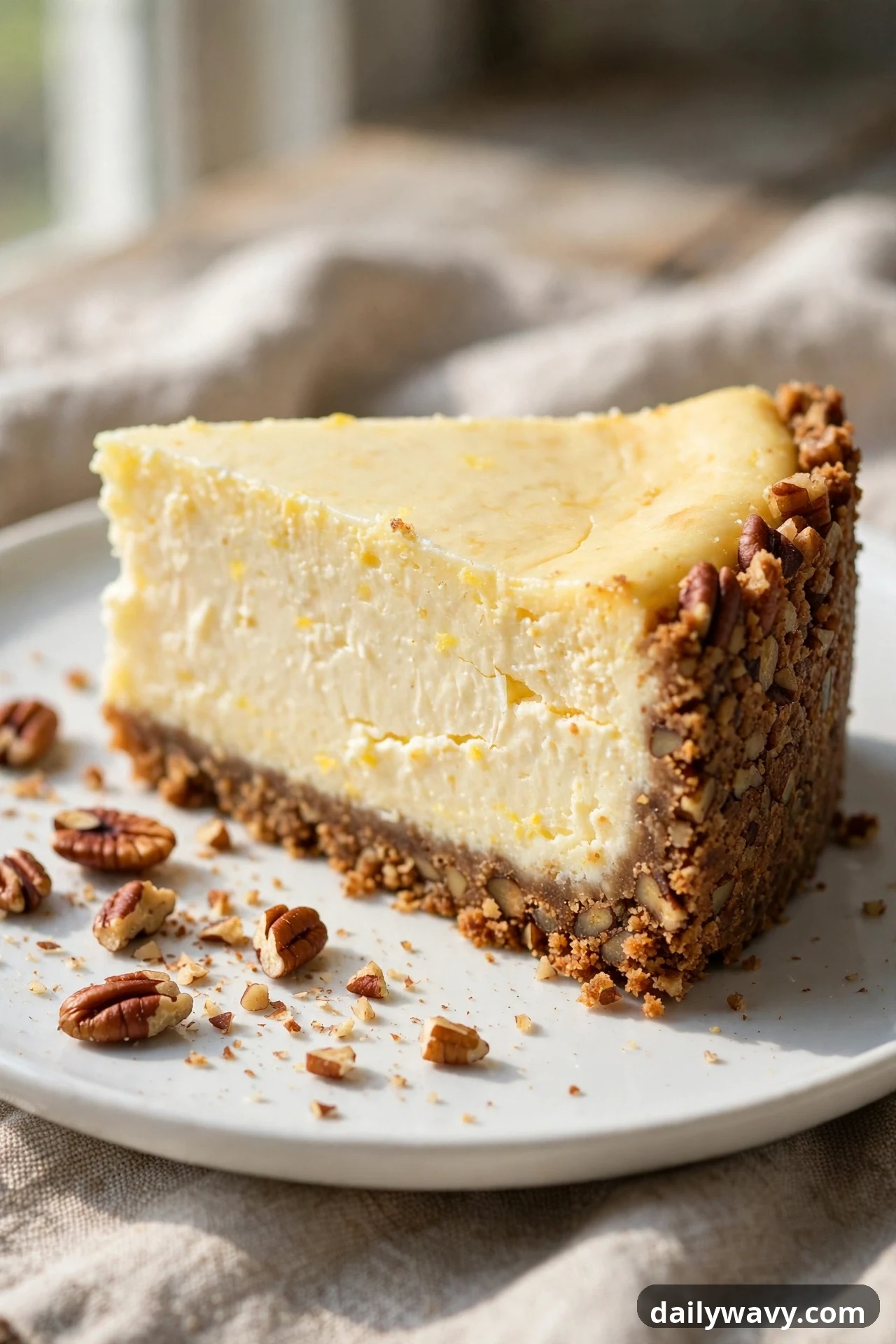
A pecan crust tastes like the filling has a built-in praline base. Toasted pecans ground with a little sugar and butter bake into something buttery and almost caramel-like, and the rich nut flavor makes the lemon taste even brighter by contrast. This one is a good pick for gatherings: the toasted pecan flavor reads as homemade without being easy to name.
Method: baked. Setting agent: eggs. Pan: 9-inch springform. Chill: 6 hours minimum, overnight is better.
You need (serves 10 to 12): For the crust, 1 1/2 cups pecan halves, toasted 8 minutes at 350°F and cooled, 1/4 cup sugar, 5 tablespoons melted butter, pinch of salt. For the filling, 32 ounces full-fat cream cheese at room temperature, 1 cup sugar, 3 large eggs at room temperature, 1/2 cup sour cream, 1/3 cup fresh lemon juice, 2 tablespoons finely grated lemon zest, 1 teaspoon vanilla extract, 2 tablespoons all-purpose flour.
Method: Toast the pecan halves at 350°F for 8 minutes, then cool completely. Reduce the oven to 325°F. Pulse the cooled pecans and sugar in a food processor until they look like coarse crumbs with a few small pieces left. Stir in the melted butter and salt, then press into the bottom and halfway up the sides of the springform. Bake 10 minutes and cool. Beat the cream cheese and sugar smooth, add the eggs one at a time on low speed, then mix in the sour cream, lemon juice, zest, vanilla, and flour. Pour over the crust and bake 60 to 70 minutes until the edges are set and the center wobbles slightly. Cool in the turned-off oven with the door cracked for 1 hour, then refrigerate at least 6 hours.
Troubleshooting: Do not overprocess the pecans or they turn into butter. Stop while the crumbs are still crumbly. If the crust edges brown too much, cover the rim with a strip of foil halfway through the bake.
Storage: Refrigerate within 2 hours, 3 to 4 days in the fridge. Slices freeze well wrapped tightly, up to 2 months.
3. Lemon Cheesecake With Vanilla Wafer Base

Vanilla wafers make the gentlest crust of the bunch, and that is exactly the point. The pale, buttery base has a soft vanilla note that lets the lemon filling be the star, and it is a wonderful pick for kids or anyone who finds nut or spice crusts too loud. If someone asks you for a classic lemon cheesecake, make this one.
Method: baked. Setting agent: eggs. Pan: 9-inch springform. Chill: 6 hours minimum, overnight is better.
You need (serves 10 to 12): For the crust, 1 1/2 cups vanilla wafer crumbs (about 45 wafers), 4 tablespoons melted butter, 2 tablespoons sugar. For the filling, 32 ounces full-fat cream cheese at room temperature, 1 cup sugar, 3 large eggs at room temperature, 1/2 cup sour cream, 1/3 cup fresh lemon juice, 2 tablespoons finely grated lemon zest, 1 teaspoon vanilla extract, 2 tablespoons all-purpose flour.
Method: Heat the oven to 325°F. Stir the wafer crumbs, melted butter, and sugar together and press firmly into the bottom and halfway up the sides of the springform. Bake 10 minutes and cool. Beat the cream cheese and sugar until perfectly smooth. Add eggs one at a time on low, then stir in the sour cream, lemon juice, zest, vanilla, and flour. Pour into the crust and bake 60 to 70 minutes until the edges are set and the center still wobbles slightly. Turn off the oven, crack the door, and cool 1 hour inside. Refrigerate at least 6 hours.
Troubleshooting: Vanilla wafer crumbs are fine and sandy, so press them down hard with a flat-bottomed glass or they crumble when sliced. Room-temperature cream cheese is non-negotiable here; cold blocks leave lumps that never smooth out.
Storage: Refrigerate within 2 hours; keeps 3 to 4 days. Freeze slices tightly wrapped for up to 2 months.
4. Lemon Cheesecake With A Toasted Oat Crust
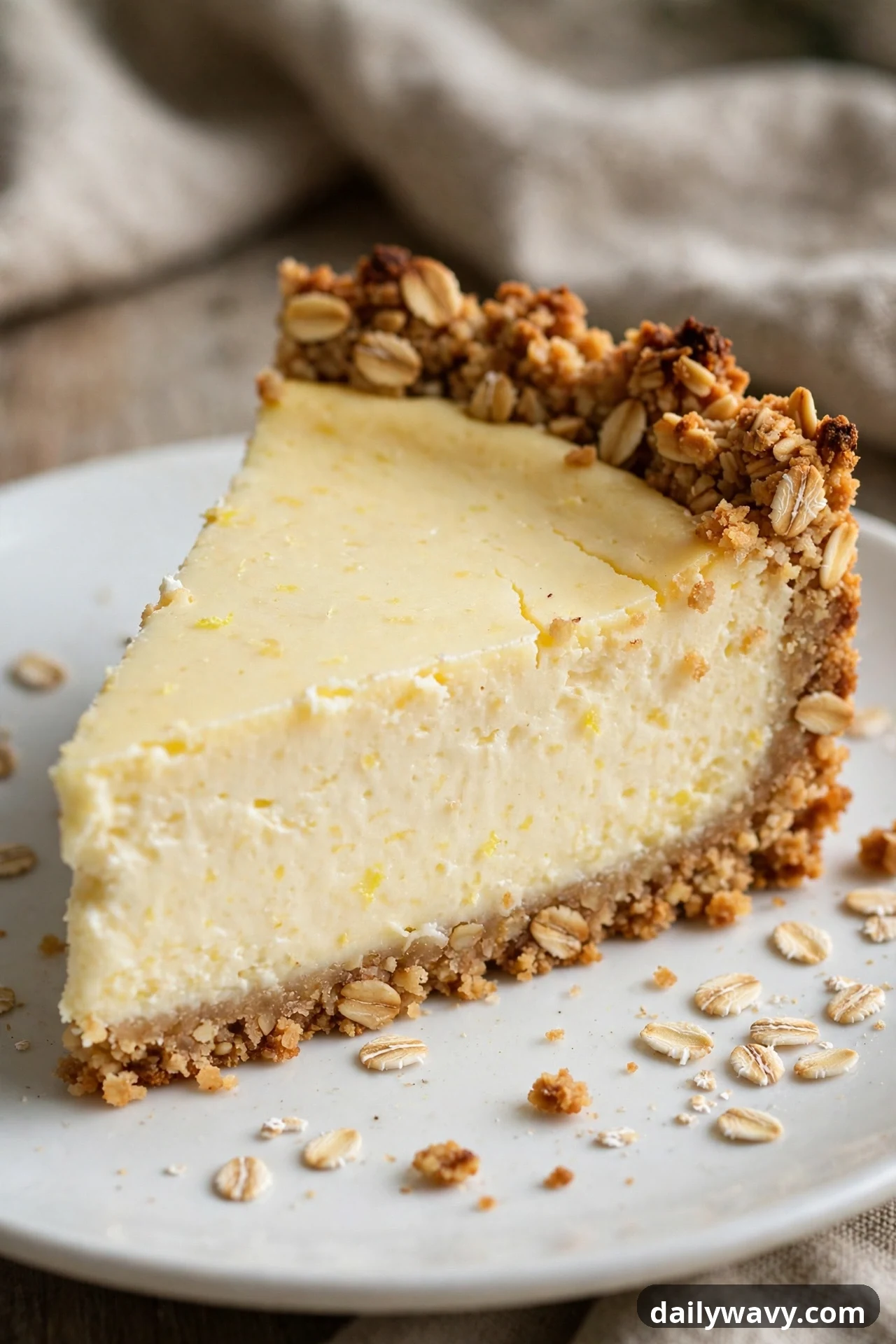
Toasting the oats before they become a crust changes everything. Raw oats taste flat and starchy, but ten minutes in a hot pan turns them nutty and fragrant, almost like granola. Paired with bright lemon, this crust tastes wholesome without tasting like health food, and the slightly chewy texture is a lovely contrast to the silky filling.
Method: baked. Setting agent: eggs. Pan: 9-inch springform. Chill: 6 hours minimum, overnight is better.
You need (serves 10 to 12): For the crust, 1 cup old-fashioned rolled oats, 1/2 cup all-purpose flour, 1/3 cup packed brown sugar, 1/2 teaspoon cinnamon, 6 tablespoons melted butter, pinch of salt. For the filling, 32 ounces full-fat cream cheese at room temperature, 1 cup sugar, 3 large eggs at room temperature, 1/2 cup sour cream, 1/3 cup fresh lemon juice, 2 tablespoons finely grated lemon zest, 1 teaspoon vanilla extract, 2 tablespoons all-purpose flour.
Method: Toast the oats in a dry skillet over medium heat for 8 to 10 minutes, stirring often, until they smell nutty and turn light gold. Cool, then pulse with the flour, brown sugar, cinnamon, and salt until the oats are coarsely ground. Stir in the melted butter and press into the bottom and halfway up the sides of a 9-inch springform. Heat the oven to 325°F and bake the crust 10 minutes. Meanwhile, beat the cream cheese and sugar smooth, add the eggs one at a time on low, then mix in the sour cream, lemon juice, zest, vanilla, and flour. Pour into the crust and bake 60 to 70 minutes until the edges are set and the center wobbles slightly. Cool 1 hour in the turned-off oven with the door cracked, then refrigerate at least 6 hours.
Troubleshooting: Watch the oats like a hawk in the last few minutes of toasting; they go from golden to burned fast. Use old-fashioned oats, not instant, or the crust turns gummy.
Storage: Refrigerate within 2 hours; keeps 3 to 4 days. Freezes well in wrapped slices, up to 2 months.
5. Lemon Cheesecake With Mascarpone Filling
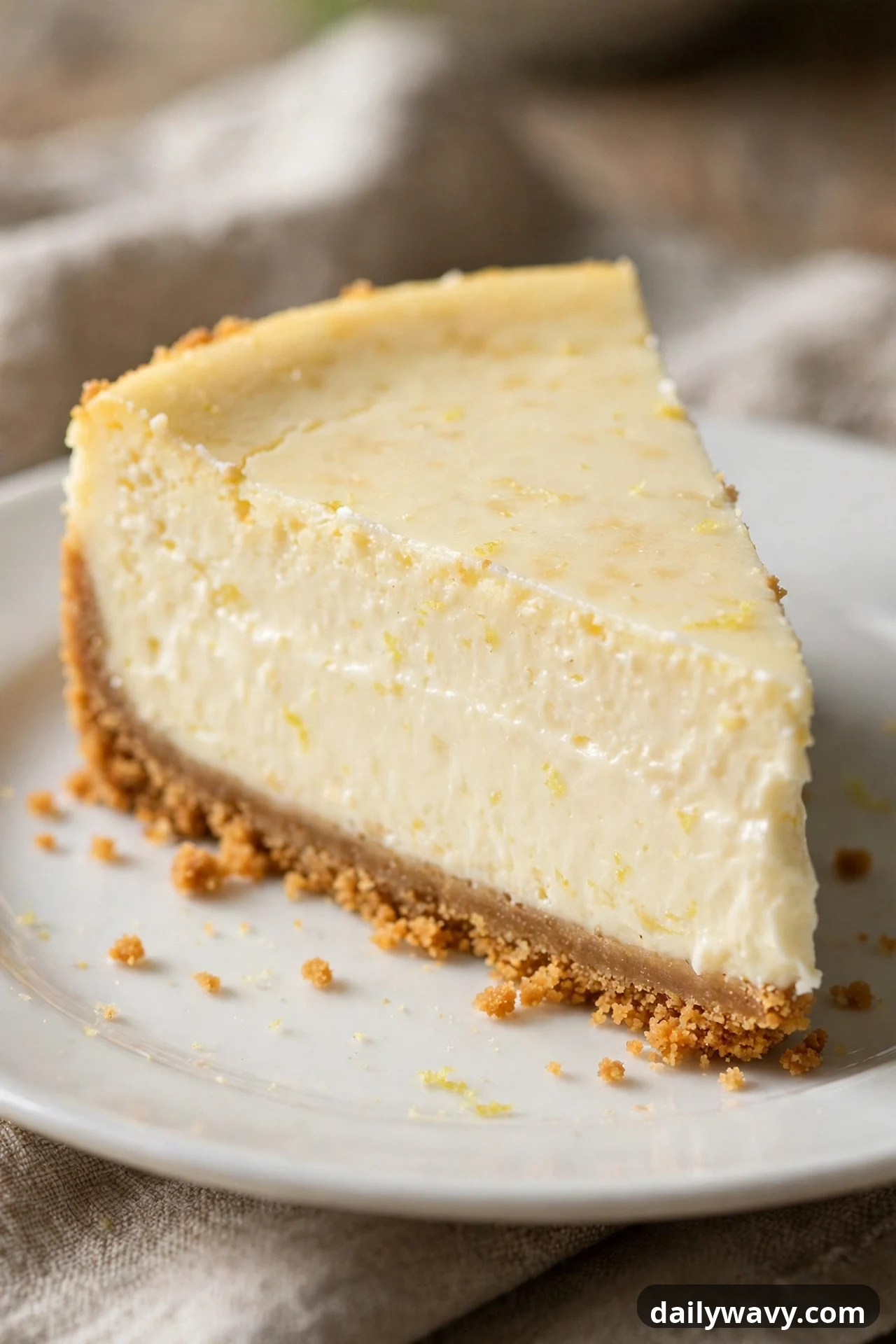
This one changes the filling instead of the crust, and the result is one of the silkiest cheesecakes in the roundup. Half the cream cheese is swapped for mascarpone, which has more butterfat and a mild, milky flavor, so the filling tastes richer and less tangy than the classic. The lemon still shines through, but the edges are softer, like a lemon cloud.
Method: baked, low and slow. Setting agent: eggs. Pan: 9-inch springform. Chill: 8 hours minimum, overnight is better.
You need (serves 10 to 12): For the crust, 1 1/2 cups graham cracker crumbs, 5 tablespoons melted butter, 2 tablespoons sugar. For the filling, 16 ounces full-fat cream cheese at room temperature, 16 ounces mascarpone at room temperature, 1 cup sugar, 3 large eggs at room temperature, 1/3 cup fresh lemon juice, 2 tablespoons finely grated lemon zest, 1 teaspoon vanilla extract, 2 tablespoons all-purpose flour, pinch of salt.
Method: Heat the oven to 300°F, a touch lower than usual, because mascarpone is delicate. Press the graham crumb mixture into the bottom and halfway up the sides of the springform and bake 10 minutes. Beat the cream cheese and mascarpone with the sugar until completely smooth. Add the eggs one at a time on low speed, then stir in the lemon juice, zest, vanilla, flour, and salt. Pour into the crust and bake 65 to 75 minutes, until the edges are set and the center still wobbles. Turn off the oven, crack the door, and cool 1 hour inside. Refrigerate at least 8 hours; the mascarpone needs the extra time to firm up fully.
Troubleshooting: Mascarpone curdles if it is overbeaten, so stop mixing the moment the filling looks smooth. A water bath (wrap the pan in foil and set it in a roasting pan of hot water) gives the creamiest texture, but it is optional.
Storage: Refrigerate within 2 hours; keeps 3 to 4 days. This version is softer, so freeze only if needed, wrapped very tightly, up to 1 month.
6. Lemon Cheesecake With Yogurt Filling
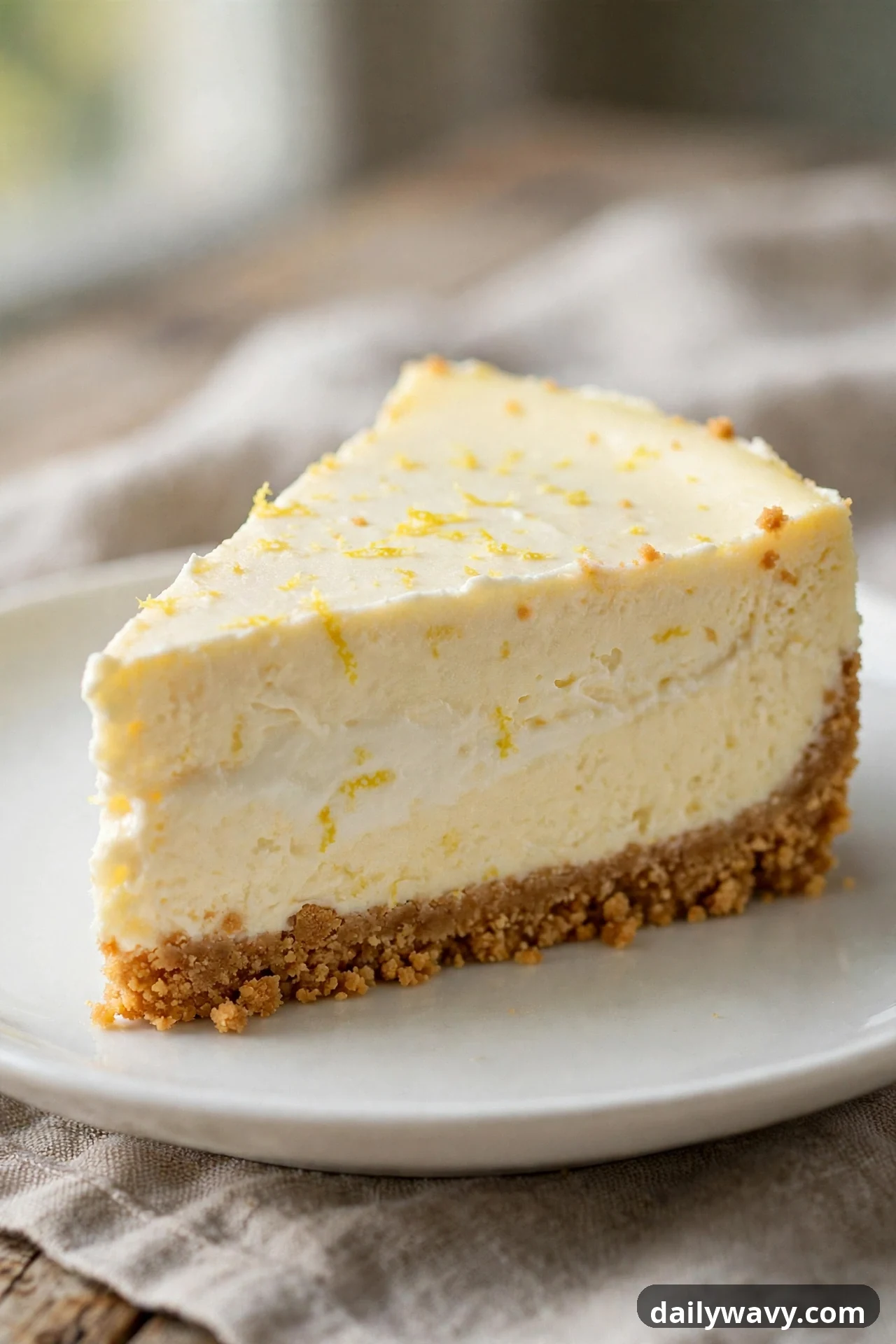
For one of the lightest cheesecakes here, Greek yogurt replaces half the cream cheese and the whole thing is chilled instead of baked. The filling sets with unflavored gelatin, so it still slices cleanly, but it tastes fresh and tangy rather than rich. It is the version you serve after a big dinner, when nobody has room for anything heavy but still wants dessert.
Method: chilled, no-bake. Setting agent: unflavored gelatin. Pan: 9-inch springform. Chill: 8 hours minimum, overnight is best.
You need (serves 10 to 12): For the crust, 1 1/2 cups graham cracker crumbs, 5 tablespoons melted butter, 2 tablespoons sugar. For the filling, 2 1/4 teaspoons (1 packet) unflavored gelatin, 3 tablespoons cold water, 16 ounces full-fat cream cheese at room temperature, 1 1/2 cups plain full-fat Greek yogurt, 3/4 cup sugar, 1/4 cup fresh lemon juice, 1 tablespoon finely grated lemon zest, 1 teaspoon vanilla extract.
Method: Press the graham mixture into the bottom of the springform (no need to go up the sides) and refrigerate 30 minutes. Sprinkle the gelatin over the cold water in a small bowl and let it bloom 5 minutes, then warm it gently until just dissolved; do not boil it. Beat the cream cheese and sugar until smooth, then beat in the yogurt, lemon juice, zest, and vanilla. Stir the dissolved gelatin into the mixture, mixing well. Pour into the crust, smooth the top, and refrigerate at least 8 hours until firmly set. The slice will be creamy and slightly soft, exactly as a chilled cheesecake should be, not as firm as a baked one.
Troubleshooting: If the gelatin clumps, it was too hot or the filling was too cold when added. Let the gelatin cool 2 minutes after dissolving and make sure the filling is at room temperature before mixing it in.
Storage: Keep refrigerated at all times; serve within 3 days. Do not freeze this one; thawing makes the yogurt weep.
7. Lemon Cheesecake With A Pistachio Crust

Pistachios give this cheesecake one of its prettiest crusts: pale green, speckled, and unmistakably different the moment it hits the table. Their mild, buttery flavor sits quietly behind the lemon instead of competing with it. Use unsalted pistachios, because the salted kind makes the crust taste like a snack mix.
Method: baked. Setting agent: eggs. Pan: 9-inch springform. Chill: 6 hours minimum, overnight is better.
You need (serves 10 to 12): For the crust, 1 1/2 cups shelled unsalted pistachios, 1/4 cup sugar, 4 tablespoons melted butter, pinch of salt. For the filling, 32 ounces full-fat cream cheese at room temperature, 1 cup sugar, 3 large eggs at room temperature, 1/2 cup sour cream, 1/3 cup fresh lemon juice, 2 tablespoons finely grated lemon zest, 1 teaspoon vanilla extract, 2 tablespoons all-purpose flour.
Method: Heat the oven to 325°F. Pulse the pistachios and sugar in a food processor until they are fine crumbs with a little texture left. Stir in the melted butter and salt and press into the bottom and halfway up the sides of the springform. Bake 10 minutes and cool. Beat the cream cheese and sugar smooth, add the eggs one at a time on low, then mix in the sour cream, lemon juice, zest, vanilla, and flour. Pour into the crust and bake 60 to 70 minutes until the edges are set and the center wobbles slightly. Cool 1 hour in the turned-off oven with the door cracked, then refrigerate at least 6 hours.
Troubleshooting: Pistachios burn faster than other nuts because of their natural sugars, so keep the crust bake to a true 10 minutes and press the crumbs gently rather than packing them rock hard.
Storage: Refrigerate within 2 hours; keeps 3 to 4 days. Freeze slices wrapped tightly for up to 2 months.
8. Lemon Cheesecake With A Cinnamon Crust

Cinnamon and lemon sound like an odd pair until you taste them. The warm spice takes the sharp edge off the citrus, and the whole slice tastes like something between a cheesecake and a lemon bar with a snickerdoodle base. This is a cold-weather version, the one you make when the sun sets early and dessert needs to feel cozy.
Method: baked. Setting agent: eggs. Pan: 9-inch springform. Chill: 6 hours minimum, overnight is better.
You need (serves 10 to 12): For the crust, 1 1/2 cups graham cracker crumbs, 1 1/2 teaspoons ground cinnamon, 1/4 cup sugar, 6 tablespoons melted butter. For the filling, 32 ounces full-fat cream cheese at room temperature, 1 cup sugar, 3 large eggs at room temperature, 1/2 cup sour cream, 1/3 cup fresh lemon juice, 2 tablespoons finely grated lemon zest, 1 teaspoon vanilla extract, 2 tablespoons all-purpose flour.
Method: Heat the oven to 325°F. Mix the graham crumbs, cinnamon, sugar, and melted butter and press firmly into the bottom and halfway up the sides of the springform. Bake 10 minutes and cool. Beat the cream cheese and sugar until smooth, add the eggs one at a time on low, then stir in the sour cream, lemon juice, zest, vanilla, and flour. Pour into the crust and bake 60 to 70 minutes until the edges are set and the center still wobbles slightly. Turn off the oven, crack the door, and cool 1 hour inside. Refrigerate at least 6 hours.
Troubleshooting: Measure the cinnamon, do not eyeball it; too much overwhelms the lemon. A dusting of cinnamon sugar over the chilled top just before serving makes it look bakery-made.
Storage: Refrigerate within 2 hours; keeps 3 to 4 days. Slices freeze well, up to 2 months.
9. Lemon Cheesecake With A Coconut Crust

A coconut crust turns lemon cheesecake into something tropical. Sweetened shredded coconut pressed with butter and baked becomes chewy and caramelized at the edges, like a macaroon, and the coconut flavor with lemon is a combination that stands out. Toast the extra coconut for the top so the look matches the flavor.
Method: baked. Setting agent: eggs. Pan: 9-inch springform. Chill: 6 hours minimum, overnight is better.
You need (serves 10 to 12): For the crust, 2 cups sweetened shredded coconut, 2 tablespoons sugar, 3 tablespoons melted butter, plus 1/4 cup sweetened shredded coconut for topping. For the filling, 32 ounces full-fat cream cheese at room temperature, 1 cup sugar, 3 large eggs at room temperature, 1/2 cup sour cream, 1/3 cup fresh lemon juice, 2 tablespoons finely grated lemon zest, 1 teaspoon coconut extract (optional), 2 tablespoons all-purpose flour.
Method: Heat the oven to 325°F. Toast the extra 1/4 cup coconut in a dry skillet over medium heat, stirring often, until golden, about 3 minutes. Set aside for topping. Lightly grease a 9-inch springform. Toss the coconut with the sugar and melted butter and press it into the bottom of the springform, building it slightly up the sides. Coconut shrinks a little, so press it a bit thicker than a crumb crust. Bake 12 minutes until the edges start to turn golden, and cool. Beat the cream cheese and sugar smooth, add the eggs one at a time on low, then mix in the sour cream, lemon juice, zest, coconut extract if using, and flour. Pour into the crust and bake 60 to 70 minutes until the edges are set and the center wobbles slightly. Cool 1 hour in the turned-off oven with the door cracked, then refrigerate at least 6 hours. Sprinkle the toasted coconut over the top before serving.
Troubleshooting: Coconut crusts can stick, so grease the pan well before pressing. If the crust edges brown too much during the filling bake, shield them with a foil ring.
Storage: Refrigerate within 2 hours; keeps 3 to 4 days. Freeze slices wrapped tightly for up to 2 months.
10. Lemon Cheesecake With A Hazelnut Crust
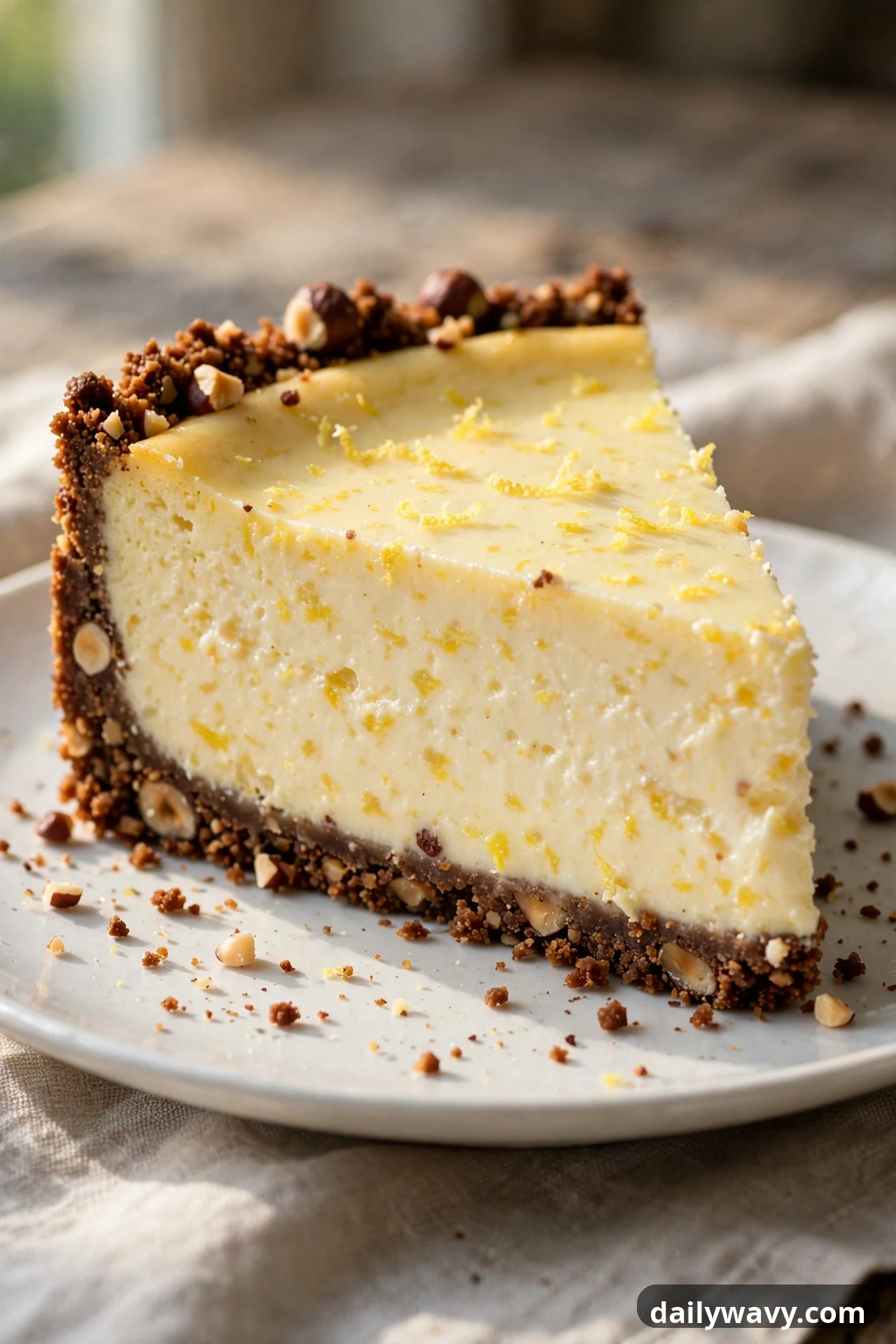
Hazelnuts have a deep, almost chocolatey richness even without any cocoa involved, and that richness makes this cheesecake taste like something from a European patisserie. Toast the hazelnuts and rub off most of the skins before grinding; the skins are bitter and they dull the crust’s flavor. The pale yellow filling against the dark crust also looks striking in photos.
Method: baked. Setting agent: eggs. Pan: 9-inch springform. Chill: 6 hours minimum, overnight is better.
You need (serves 10 to 12): For the crust, 1 1/2 cups hazelnuts, toasted 10 minutes at 350°F with most skins rubbed off, 1/4 cup sugar, 5 tablespoons melted butter, pinch of salt. For the filling, 32 ounces full-fat cream cheese at room temperature, 1 cup sugar, 3 large eggs at room temperature, 1/2 cup sour cream, 1/3 cup fresh lemon juice, 2 tablespoons finely grated lemon zest, 1 teaspoon vanilla extract, 2 tablespoons all-purpose flour.
Method: Toast the hazelnuts at 350°F for 10 minutes, rub off most of the skins in a kitchen towel, and cool completely. Reduce the oven to 325°F. Pulse the cooled hazelnuts and sugar until they are coarse crumbs. Stir in the melted butter and salt and press into the bottom and halfway up the sides of the springform. Bake 10 minutes and cool. Beat the cream cheese and sugar smooth, add the eggs one at a time on low, then mix in the sour cream, lemon juice, zest, vanilla, and flour. Pour into the crust and bake 60 to 70 minutes until the edges are set and the center wobbles slightly. Cool 1 hour in the turned-off oven with the door cracked, then refrigerate at least 6 hours.
Troubleshooting: A few skins left on the nuts are fine, but aim to remove most of them in a kitchen towel right after toasting. Hazelnut crusts are oilier than others, so bake the crust the full 10 minutes to set it.
Storage: Refrigerate within 2 hours; keeps 3 to 4 days. Freeze slices wrapped tightly for up to 2 months.
11. Lemon Cheesecake With A Caramel Biscuit Base

Caramelized spice biscuits (the kind sold as speculoos or Biscoff) grind into a crust that tastes like it was already a dessert before you added the filling. This version is chilled instead of baked, which makes it one of the easiest cheesecakes in the roundup: no oven time for the cake itself, just a long chill while gelatin does the work.
Method: chilled, no-bake. Setting agent: unflavored gelatin. Pan: 9-inch springform. Chill: 8 hours minimum, overnight is best.
You need (serves 10 to 12): For the crust, 2 cups caramelized biscuit crumbs (about 30 biscuits), 6 tablespoons melted butter. For the filling, 2 1/4 teaspoons (1 packet) unflavored gelatin, 3 tablespoons cold water, 24 ounces full-fat cream cheese at room temperature, 1 cup heavy cream, whipped to soft peaks, 3/4 cup sugar, 1/4 cup fresh lemon juice, 1 tablespoon finely grated lemon zest, 1 teaspoon vanilla extract.
Method: Stir the biscuit crumbs and melted butter together and press firmly into the bottom of the springform. Refrigerate 30 minutes. Bloom the gelatin in the cold water for 5 minutes, then warm gently until just dissolved. Beat the cream cheese and sugar until smooth, then beat in the lemon juice, zest, and vanilla. Stir in the dissolved gelatin, then fold in the whipped cream until no streaks remain. Pour into the crust, smooth the top, and refrigerate at least 8 hours until firmly set. The slice will be soft and mousse-like rather than dense, which is exactly right for a chilled cheesecake.
Troubleshooting: Fold the whipped cream in gently; stirring hard deflates it and the filling sets denser than it should. Serve with a warm, dry knife wiped clean between slices for the prettiest cuts.
Storage: Keep refrigerated at all times; best within 3 days. Do not freeze; the texture suffers on thawing.
12. Lemon Cheesecake With A Pretzel Crust
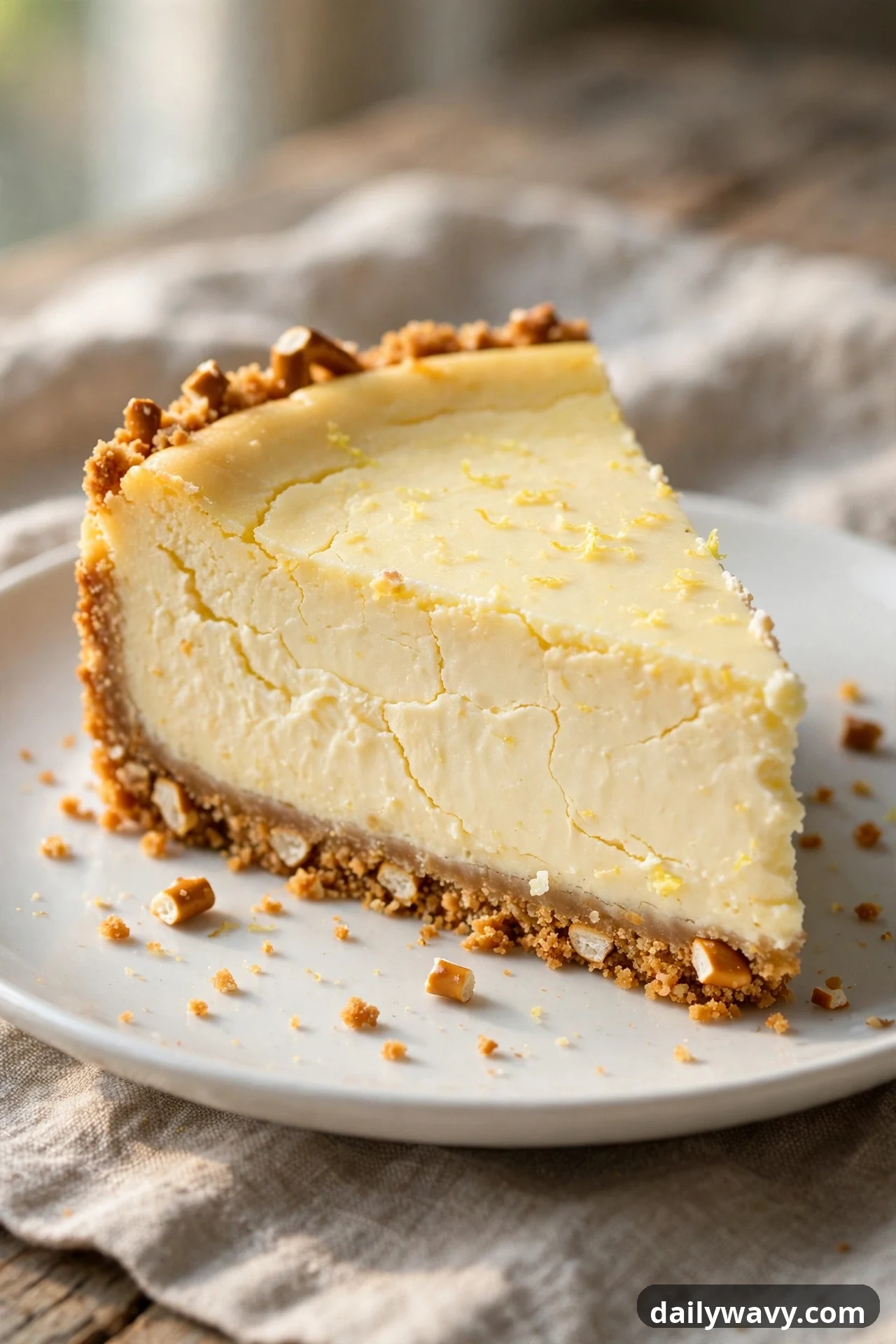
Sweet and salty is a combination that rarely misses, and a pretzel crust proves it with lemon. The crushed pretzels bake into a crisp, golden base with real salt flavor, and that saltiness makes the lemon filling taste sweeter and brighter. Use the thin, stick-style pretzels or the mini twists, whichever you have; both crush well.
Method: baked. Setting agent: eggs. Pan: 9-inch springform. Chill: 6 hours minimum, overnight is better.
You need (serves 10 to 12): For the crust, 2 cups finely crushed pretzels, 1/2 cup sugar, 8 tablespoons (1 stick) melted butter. For the filling, 32 ounces full-fat cream cheese at room temperature, 1 cup sugar, 3 large eggs at room temperature, 1/2 cup sour cream, 1/3 cup fresh lemon juice, 2 tablespoons finely grated lemon zest, 1 teaspoon vanilla extract, 2 tablespoons all-purpose flour.
Method: Heat the oven to 325°F. Mix the pretzel crumbs, sugar, and melted butter and press firmly into the bottom and halfway up the sides of the springform. Bake 10 minutes and cool. Beat the cream cheese and sugar smooth, add the eggs one at a time on low, then mix in the sour cream, lemon juice, zest, vanilla, and flour. Pour into the crust and bake 60 to 70 minutes until the edges are set and the center wobbles slightly. Cool 1 hour in the turned-off oven with the door cracked, then refrigerate at least 6 hours.
Troubleshooting: Pretzel salt levels vary by brand, so taste a crumb before adding sugar; if your pretzels are very salty, cut the sugar in the crust to 1/3 cup. The crust softens slightly after a day in the fridge.
Storage: Refrigerate within 2 hours; keeps 3 to 4 days. Freeze slices wrapped tightly for up to 2 months.
13. Lemon Cheesecake With Citrus Curd Topping
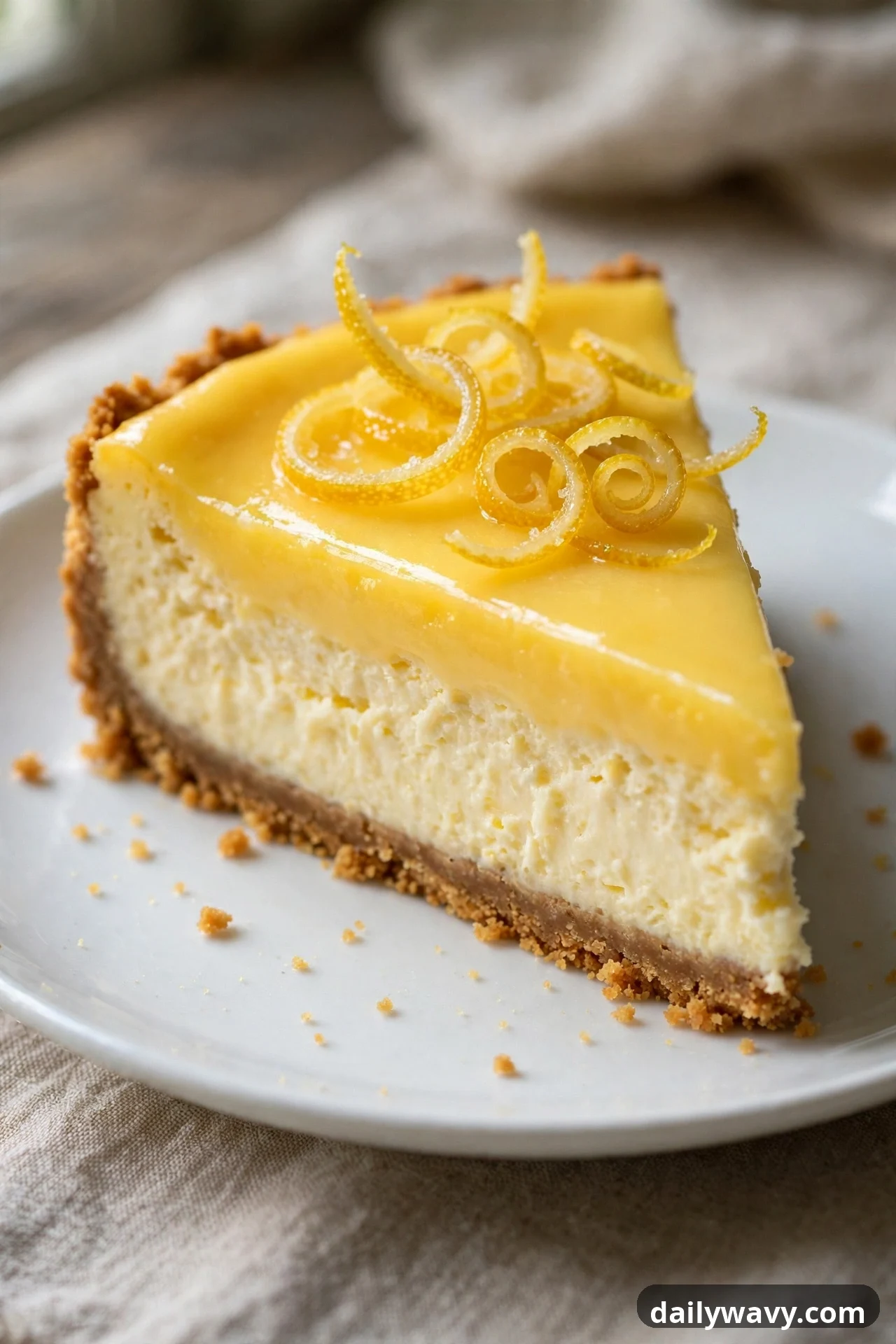
This version changes the finish instead of the crust: a classic baked lemon cheesecake under a glossy layer of citrus curd. The curd doubles down on the citrus, so the flavor is one of the most lemon-forward versions in the roundup, and the shiny yellow top with a few candied zest curls looks like it came from a bakery case. Use a mix of lemon and orange in the curd for extra depth.
Method: baked, then topped. Setting agent: eggs for the cake; the curd thickens with egg yolks on the stove. Pan: 9-inch springform. Chill: bake and chill 6 hours, then top and chill 2 more hours.
You need (serves 10 to 12): For the crust, 1 1/2 cups graham cracker crumbs, 5 tablespoons melted butter, 2 tablespoons sugar. For the filling, 32 ounces full-fat cream cheese at room temperature, 1 cup sugar, 3 large eggs at room temperature, 1/2 cup sour cream, 1/3 cup fresh lemon juice, 2 tablespoons finely grated lemon zest, 1 teaspoon vanilla extract, 2 tablespoons all-purpose flour. For the curd, 1/2 cup fresh lemon juice, 1/4 cup fresh orange juice, 1/2 cup sugar, 3 large egg yolks, 6 tablespoons cold butter cut into pieces, 1 teaspoon lemon zest.
Method: Heat the oven to 325°F. Press the graham mixture into the springform, bake 10 minutes, and cool. Beat the cream cheese and sugar smooth, add the eggs one at a time on low, then mix in the sour cream, lemon juice, zest, vanilla, and flour. Bake 60 to 70 minutes until the edges are set and the center wobbles slightly. Cool 1 hour in the turned-off oven with the door cracked, then refrigerate at least 6 hours. For the curd, whisk the juices, sugar, yolks, and zest in a saucepan over medium-low heat, stirring constantly, until it thickens enough to coat a spoon, about 8 minutes; do not let it boil. Take it off the heat and whisk in the cold butter until smooth. Cool 20 minutes, spread over the chilled cheesecake, and refrigerate 2 more hours until the curd is set.
Troubleshooting: Curd goes from perfect to scrambled fast, so keep the heat at medium-low and stir without stopping. If it does get lumpy, push it through a fine strainer before spreading.
Storage: Refrigerate within 2 hours; keeps 3 to 4 days. The curd keeps the cake moist, so cover it loosely rather than tight.
14. Lemon Cheesecake With Dark Chocolate Ganache

A layer of dark chocolate ganache over lemon cheesecake tastes like a fancy chocolate-dipped lemon bar, and the slight bitterness of dark chocolate balances the sweet-tart filling beautifully. This is the showstopper version, with a glossy ganache top.
Method: baked, then topped. Setting agent: eggs for the cake; the ganache sets as it cools. Pan: 9-inch springform. Chill: bake and chill 6 hours, then top and chill 2 more hours.
You need (serves 10 to 12): For the crust, 1 1/2 cups graham cracker crumbs, 5 tablespoons melted butter, 2 tablespoons sugar. For the filling, 32 ounces full-fat cream cheese at room temperature, 1 cup sugar, 3 large eggs at room temperature, 1/2 cup sour cream, 1/3 cup fresh lemon juice, 2 tablespoons finely grated lemon zest, 1 teaspoon vanilla extract, 2 tablespoons all-purpose flour. For the ganache, 8 ounces dark chocolate (60 to 70 percent), chopped, 1/2 cup heavy cream, 1 tablespoon butter, pinch of flaky sea salt for the top.
Method: Heat the oven to 325°F. Press the graham mixture into the springform, bake 10 minutes, and cool. Beat the cream cheese and sugar smooth, add the eggs one at a time on low, then mix in the sour cream, lemon juice, zest, vanilla, and flour. Bake 60 to 70 minutes until the edges are set and the center wobbles slightly. Cool 1 hour in the turned-off oven with the door cracked, then refrigerate at least 6 hours. For the ganache, heat the cream until it just starts to simmer, pour it over the chopped chocolate, and let it sit 2 minutes. Stir from the center outward until glossy, then stir in the butter. Cool 10 minutes, pour over the chilled cheesecake, and tilt the pan to spread it to the edges. Sprinkle with flaky sea salt and refrigerate 2 more hours until the ganache is set.
Troubleshooting: Pour the ganache onto a well-chilled cake or it slides off the sides. If the ganache looks dull, the cream was too hot; aim for barely simmering next time.
Storage: Refrigerate within 2 hours; keeps 3 to 4 days. Freeze slices wrapped tightly for up to 2 months; the ganache survives freezing well.
15. Lemon Cheesecake With A Biscuit Crust
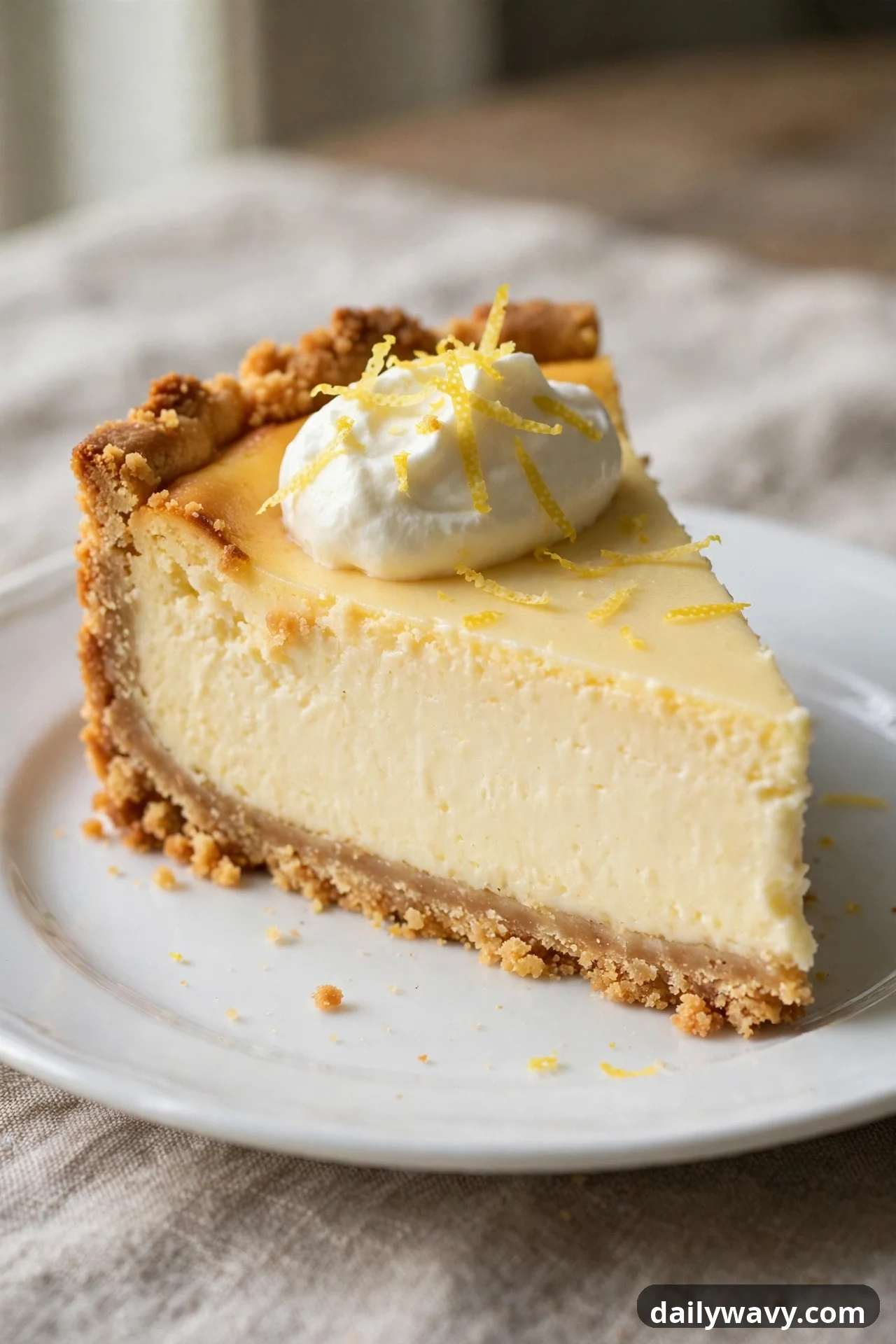
Digestive biscuits are the British answer to graham crackers, and they make a crust that is a little maltier and a little less sweet. This is the honest, no-tricks version: a classic baked lemon cheesecake on a straightforward biscuit base, done right. When you want lemon cheesecake without any gimmicks, this is where you land.
Method: baked. Setting agent: eggs. Pan: 9-inch springform. Chill: 6 hours minimum, overnight is better.
You need (serves 10 to 12): For the crust, 1 1/2 cups digestive biscuit crumbs (about 12 biscuits), 6 tablespoons melted butter, 2 tablespoons sugar. For serving (optional), lightly sweetened whipped cream. For the filling, 32 ounces full-fat cream cheese at room temperature, 1 cup sugar, 3 large eggs at room temperature, 1/2 cup sour cream, 1/3 cup fresh lemon juice, 2 tablespoons finely grated lemon zest, 1 teaspoon vanilla extract, 2 tablespoons all-purpose flour.
Method: Heat the oven to 325°F. Mix the biscuit crumbs, melted butter, and sugar and press firmly into the bottom and halfway up the sides of the springform. Bake 10 minutes and cool. Beat the cream cheese and sugar until completely smooth, add the eggs one at a time on low, then stir in the sour cream, lemon juice, zest, vanilla, and flour. Pour into the crust and bake 60 to 70 minutes until the edges are set and the center still wobbles slightly. Turn off the oven, crack the door, and cool 1 hour inside. Refrigerate at least 6 hours.
Troubleshooting: Digestive biscuits vary in sweetness, so if yours taste very sweet, cut the sugar to 1 tablespoon. Serve with a dollop of lightly sweetened whipped cream and a little extra zest on top.
Storage: Refrigerate within 2 hours; keeps 3 to 4 days. Freeze slices wrapped tightly for up to 2 months.
Lemon cheesecake questions, answered
Why did my cheesecake crack?
Cracks almost always come from overbaking or cooling too fast. Pull the cake when the center still wobbles a little, cool it gradually in the turned-off oven, and refrigerate only after it reaches room temperature. A topping like curd or ganache also hides any crack that does appear.
How much lemon is too much?
For the classic baked filling, 1/3 cup of juice and 2 tablespoons of zest is the sweet spot. The chilled versions use a little less: 1/4 cup juice and 1 tablespoon zest. More juice than that can make the filling too thin to set properly. If you want stronger lemon flavor, add zest rather than juice.
Can I make a chilled cheesecake without gelatin?
You can, but be honest about the result. Without gelatin, a chilled cheesecake sets soft and mousse-like, which is delicious but will not give you clean, tall slices. The gelatin versions in this roundup (ideas 6 and 11) exist for people who want real slice structure.
Do I really need a water bath?
No. A water bath gives a slightly creamier texture and fewer cracks, but every baked version here is written to work without one. Gentle oven temperature and slow cooling do most of the work.
Can I freeze cheesecake?
Yes. Baked cheesecakes freeze beautifully for up to 2 months when wrapped tightly in plastic and foil, except the mascarpone version, which keeps up to 1 month in the freezer. Thaw overnight in the refrigerator. Skip freezing for the two chilled versions (yogurt filling and caramel biscuit base); their textures do not bounce back.
How do I get clean slices?
Use a long, thin knife dipped in hot water and wiped dry between every cut. Cold cheesecake cuts much cleaner than room-temperature cheesecake, so slice straight from the fridge.
Pick your crust, then make it yours
Fifteen ideas, one dessert, endless small decisions. The ginger crust for spice lovers, the pretzel for the sweet-salty crowd, the chilled yogurt version for anyone who wants dessert without the oven. Whichever you choose, give it the full chill time, cut it cold, and serve it with confidence.
For more treats to round out your dessert table, try our blueberry muffin recipes, or make breakfast ahead with our apple cinnamon overnight oats, a make-ahead favorite for busy mornings. And if you want the full sweet collection in one place, browse the Food & Drink category.