
14 Coconut Cake Recipes for Celebrations and Coffee Breaks
Coconut cake is the rare dessert that works for a birthday party and a quiet coffee break in equal measure….
Coconut cake is the rare dessert that works for a birthday party and a quiet coffee break in equal measure. It smells like a bakery from the next room, slices into clean layers, and keeps well enough that leftovers are a genuine pleasure rather than a sad afterthought. The recipes below all start from one coconut cake base, then branch into real variations: different frostings, fillings, pan shapes, and toppings that change the eating experience rather than just the photograph. Each one includes exact ingredient amounts, timing, and storage so you can bake with confidence on a Saturday morning and serve something worth remembering.
Jump to a recipe
- Coconut Cake With Raspberry Buttercream
- Coconut Cake With Hazelnut Topping
- Coconut Cake With Orange Curd
- Coconut Cake With Cinnamon Crumbs
- Coconut Cake With Ganache
- Coconut Cake With Whipped Cream And Fruit
- Coconut Cake With Maple Walnut Topping
- Coconut Cake With Cardamom Glaze
- Coconut Cake With Cream-Cheese Frosting
- Coconut Cake Loaf With Citrus Glaze
- Coconut Cake Sheet Cake With Vanilla Icing
- Coconut Cake Layer Cake With Berry Filling
- Coconut Cake Bundt With Chocolate Drizzle
- Coconut Cake With Toasted Almond Crust
The Coconut Cake Rules Before You Start
Before you pick a recipe, a few fundamentals will make every cake on this list better. Use full-fat canned coconut milk, not the carton drink, and shake the can well before measuring; the carton version is too thin and will give you a pale, underflavored crumb. Sweetened shredded coconut folded into the batter adds chew and moisture, while unsweetened is better for toasting and pressing onto the sides because it browns more evenly. Toast shredded coconut at 325°F for 5 to 7 minutes, stirring once, and watch it closely in the last two minutes because it goes from golden to scorched fast.
For pan conversions, the base recipe below makes two 9-inch round layers. It also fits one 9×13-inch sheet pan (bake 35 to 40 minutes) or one 10-cup bundt pan (bake 50 to 60 minutes, grease and flour every crease) with the same 350°F oven; for a 9×5-inch loaf pan, halve the recipe and bake 55 to 65 minutes, because the full batch overflows a loaf pan. Cool layers 10 minutes in the pan, then turn out onto a rack and cool completely before frosting; frosting a warm cake melts the buttercream and slides the layers apart. Cakes with buttercream or ganache keep 1 day at room temperature under a dome and up to 4 days refrigerated, while anything with cream-cheese frosting, whipped cream, curd or fresh fruit must be refrigerated (up to 4 to 5 days) and comes out of the fridge 30 minutes before serving. Cakes freeze well unfrosted for up to 3 months, wrapped in two layers of plastic and then foil. And because this is a dessert roundup, remember the food-safety basics: cream-cheese frosting, whipped cream, curds and fresh-fruit fillings should not sit out longer than 2 hours at room temperature.
The base coconut cake (used in recipes 1 through 9 and 12 through 14, with pan notes)
- 2 1/2 cups (312 g) all-purpose flour
- 2 1/2 tsp baking powder
- 1/2 tsp baking soda
- 1/2 tsp fine salt
- 1 3/4 cups (350 g) granulated sugar
- 1/2 cup (115 g) unsalted butter, room temperature
- 1/2 cup (120 ml) neutral oil (canola or coconut)
- 4 large egg whites, room temperature
- 1 cup (240 ml) full-fat canned coconut milk, well shaken
- 1 tsp pure vanilla extract
- 1/2 tsp coconut extract
- 1 cup (85 g) sweetened shredded coconut
Whisk the flour, baking powder, baking soda, and salt. Beat the butter and sugar until pale and fluffy, 3 to 4 minutes, then beat in the oil. Add the egg whites two at a time, then the extracts. Add the dry ingredients in three additions, alternating with the coconut milk, starting and ending with dry; mix just until combined. Fold in the shredded coconut. Divide between two parchment-lined 9-inch round pans and bake at 350°F for 25 to 30 minutes, until the tops spring back and a toothpick comes out with moist crumbs. This makes 12 to 16 servings.
1. Coconut Cake With Raspberry Buttercream
This is the celebration cake of the bunch, and the one I would make for a birthday without hesitation. Two snowy coconut layers wrapped in pale-pink raspberry buttercream, with fresh raspberries scattered over the top and a ring of toasted coconut around the base. The raspberry cuts through the richness of the cake in the best way: bright, a little tart, and unmistakably festive. It photographs beautifully, but more importantly it tastes like someone planned ahead, because the tart-sweet frosting genuinely balances the sweet cake instead of just adding more of the same.
For the buttercream, beat 1 cup (225 g) unsalted butter until creamy, then add 4 cups (480 g) powdered sugar a cup at a time, 1/3 cup (about 10 g) freeze-dried raspberry powder, 2 to 3 Tbsp heavy cream, 1 tsp vanilla, and a pinch of salt. Freeze-dried raspberry powder gives you real berry flavor and that pink color without the water that fresh puree would add, which matters because extra liquid can turn buttercream soupy. Bake the base cake in two 9-inch rounds, level the tops with a serrated knife if they dome, and fill with 1 cup of the buttercream plus 1 cup of fresh raspberries. Frost the outside with a thin crumb coat, chill 20 minutes, then apply the final coat. Press 3/4 cup toasted unsweetened coconut around the base and top with another cup of fresh raspberries.
Timing: about 35 minutes of active work plus 30 minutes baking and 1 hour cooling. Yield: 12 to 16 servings. Troubleshooting: if your buttercream looks curdled after adding the raspberry powder, keep beating; it comes together after another minute or two. Storage: refrigerate the frosted cake up to 5 days because of the fresh raspberries, and bring slices to room temperature for 30 minutes before serving. The raspberries stay freshest for the first 2 days, so if you are making it ahead, add them the day you serve.

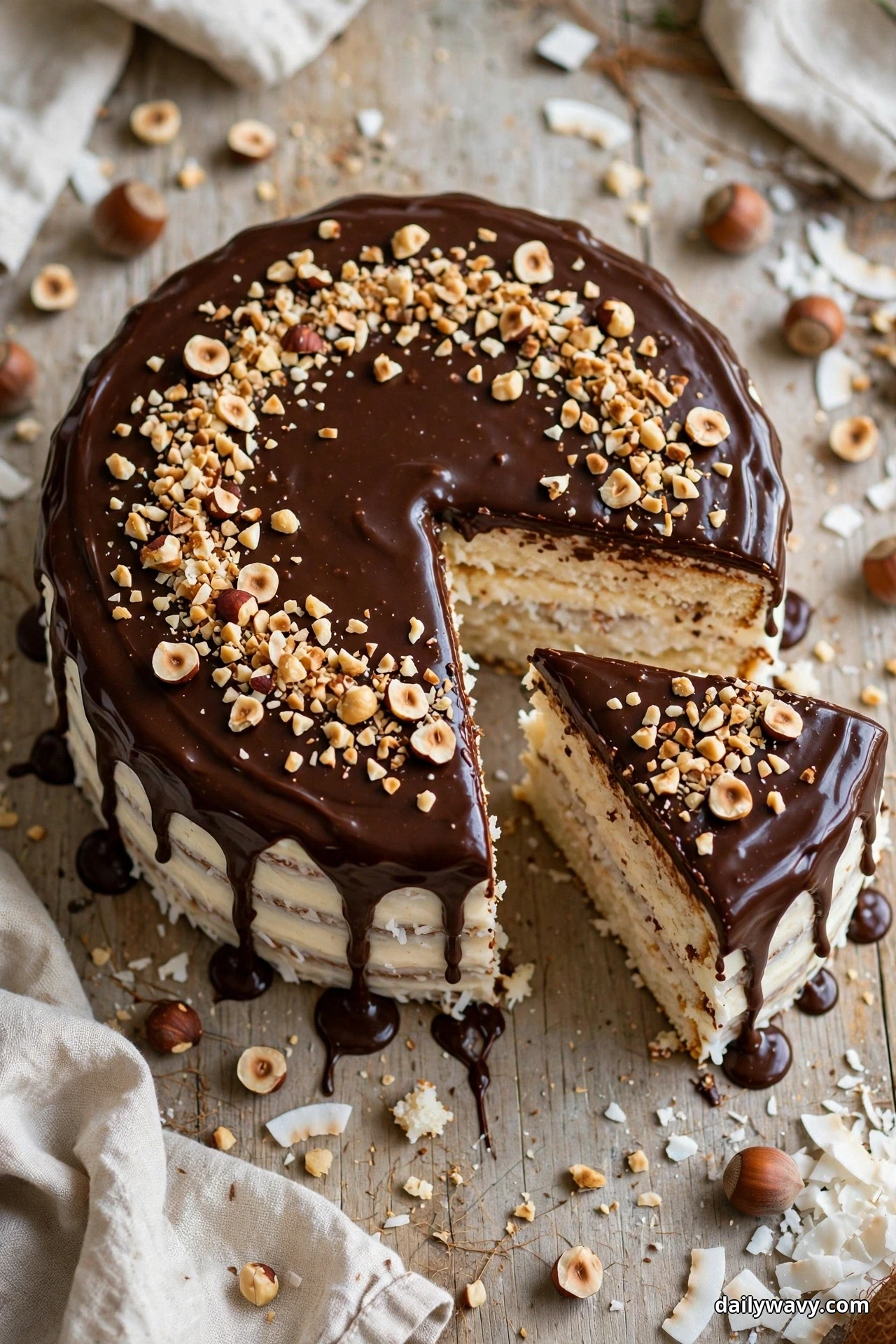
2. Coconut Cake With Hazelnut Topping
Chocolate and hazelnut over coconut cake tastes like a candy bar grew up and put on a good suit. The base cake stays the same, but instead of buttercream you pour a glossy chocolate-hazelnut ganache over the top and scatter it with chopped toasted hazelnuts while the ganache is still soft. The drip down the sides does most of the decorating for you, and the toasted nuts add the crunch that a frosted layer cake usually lacks. This is a strong pick for a dinner party dessert because it slices cleanly and the flavors read as rich and adult rather than birthday-sweet.
Make the ganache with 6 oz (170 g) chopped dark chocolate and 3/4 cup (180 ml) heavy cream: heat the cream to a bare simmer, pour over the chocolate, wait 2 minutes, then stir from the center until glossy. Stir in 2 Tbsp chocolate-hazelnut spread for that nutty depth. Bake the base in two 9-inch rounds, sandwich with 3/4 cup of the ganache, then pour the rest over the top and nudge it to the edges with an offset spatula so it drips. Immediately press 1 cup of chopped toasted hazelnuts onto the top edge and scatter a handful across the surface. Let the ganache set 30 minutes before slicing.
Timing: 30 minutes active plus baking and cooling. Yield: 12 to 16 servings. Troubleshooting: if your ganache looks grainy, the chocolate was too hot or seized from a drop of water; start over with dry bowls because there is no reliable fix for seized ganache. Storage: 1 day at room temperature under a dome or up to 4 days refrigerated. The hazelnuts lose a little crunch after day two but the flavor stays excellent.
3. Coconut Cake With Orange Curd
Orange and coconut is a combination that sounds like a candle until you taste it in cake form, at which point it becomes something you want again. A bright, sharp orange curd between the layers keeps the rich coconut cake from feeling heavy, and a thin layer of coconut buttercream on the outside seals in the moisture. The curd needs to be made ahead so it can chill firm, which makes this a genuinely good plan-ahead cake for a spring gathering.
For the curd, whisk 3/4 cup (150 g) sugar with 2 large eggs and 2 yolks, then whisk in 1/2 cup (120 ml) fresh orange juice, 1 Tbsp orange zest, and a pinch of salt. Cook over medium heat, stirring constantly, until it coats the back of a spoon and reaches about 170°F, 6 to 8 minutes; do not let it boil. Off the heat, stir in 6 Tbsp (85 g) cold butter a piece at a time, strain, and chill at least 4 hours. You need about 1 1/2 cups of curd. Bake the base in two 9-inch rounds. Pipe a buttercream dam around the edge of the bottom layer, spread the chilled curd inside the dam, and frost the whole cake with coconut buttercream (the base buttercream recipe with 1/2 tsp coconut extract and no raspberry powder).
Timing: 45 minutes active plus baking, cooling, and 4 hours for the curd to set. Yield: 12 to 16 servings. Troubleshooting: if the curd looks lumpy, it got too hot; strain it through a fine sieve and it will be silky again. Storage: refrigerate up to 4 days because of the curd. Serve at room temperature after a 30-minute rest on the counter.

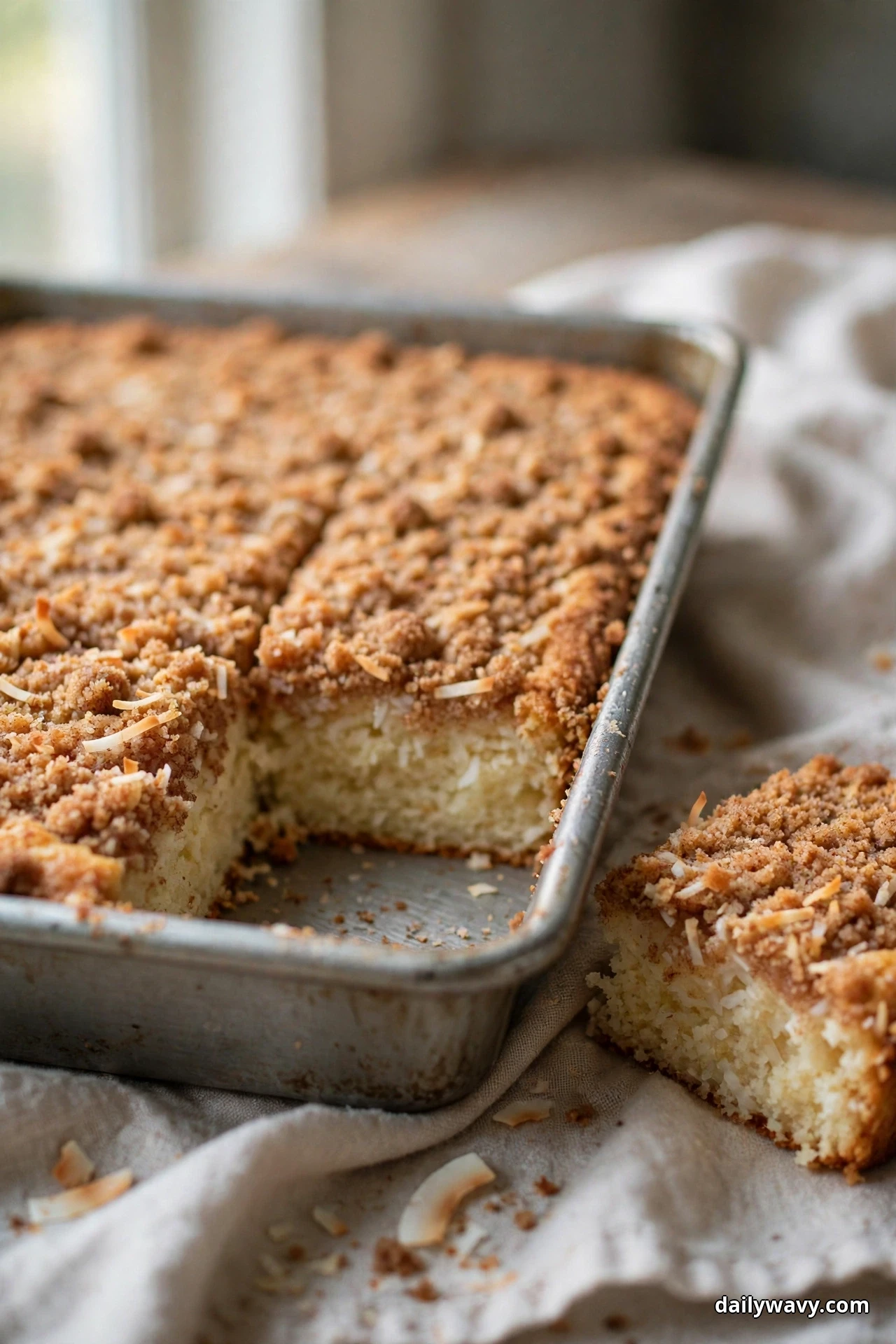
4. Coconut Cake With Cinnamon Crumbs
This is the coffee-break cake of the list: less formal, warmly spiced, and the one most likely to disappear from the office kitchen by noon. The coconut base gets a thick layer of buttery cinnamon streusel crumbs pressed into the top before baking, so they bake right into the surface and go golden and crisp. It eats like a coffee cake but keeps the coconut identity, and it needs no frosting at all, which makes it the easiest cake here by a wide margin.
Make the crumbs by rubbing together 1 cup (125 g) flour, 1/2 cup (100 g) brown sugar, 2 tsp ground cinnamon, a pinch of salt, and 1/2 cup (115 g) cold cubed butter until clumps form; chill while the oven heats. Bake the coconut batter in a parchment-lined 9×13-inch pan at 350°F for 35 to 40 minutes, adding the crumb topping generously over the raw batter before it goes in the oven. The crumbs sink slightly and the batter bakes up around them, giving you a crunchy top and a tender interior. Cool at least 30 minutes before cutting; it is best served barely warm or at room temperature.
Timing: 20 minutes active plus baking. Yield: 15 to 18 servings. Troubleshooting: if your crumbs melt flat instead of staying crumbly, the butter was too soft; use cold butter straight from the fridge and work quickly. Storage: 3 to 4 days at room temperature under a dome or wrapped. The crumb top stays crisp for the first 2 days.
5. Coconut Cake With Ganache
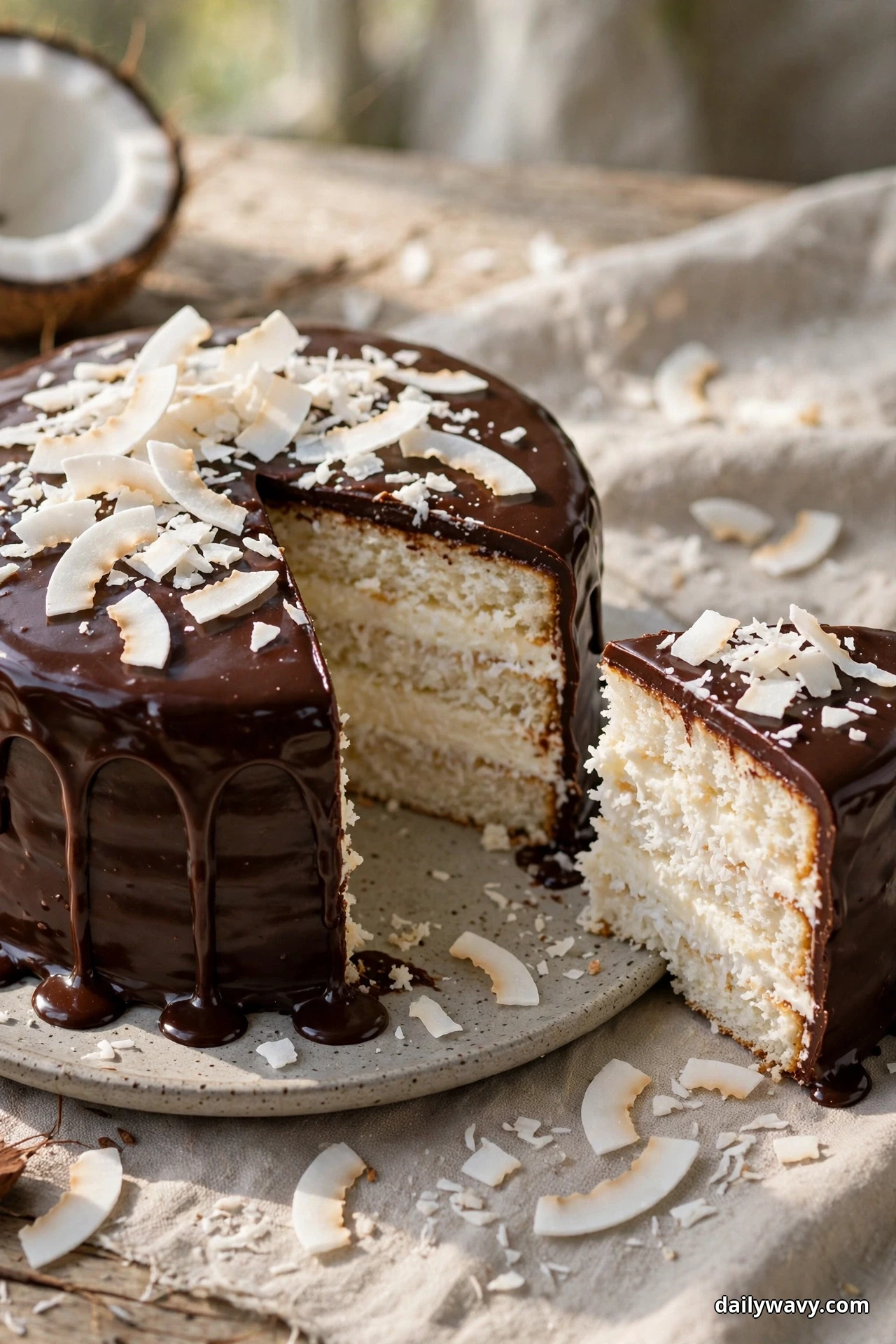
When you want coconut cake to feel like a restaurant dessert, pour ganache over it and stop there. The contrast of a dark, glossy chocolate shell against the white coconut crumb is dramatic with almost no effort, and the slight bitterness of dark chocolate is the perfect foil for the sweet cake. This is also the fastest decorated cake on the list because the ganache is the whole presentation; a few coconut shavings on top and you are done.
Bake the base in two 9-inch rounds and fill with 1 cup of plain coconut buttercream for structure. Make the ganache with 8 oz (225 g) chopped dark chocolate (60 to 70 percent) and 1 cup (240 ml) heavy cream, following the same method as the hazelnut version but skipping the spread. Let it cool until it is pourable but not hot, about 10 minutes, then pour over the chilled frosted cake, nudging it over the edges. Finish with 1/2 cup of large coconut flakes scattered on top. The ganache sets to a soft, sliceable shell rather than a hard crack, which is exactly what you want for clean servings.
Timing: 30 minutes active plus baking and cooling. Yield: 12 to 16 servings. Troubleshooting: if the ganache runs off the cake too fast, it is too warm; wait 5 minutes and pour again. If it is too thick and gloopy, it cooled too long; warm the bowl gently for 10 seconds. Storage: 1 day at room temperature or up to 4 days refrigerated. The shell keeps the cake remarkably fresh.
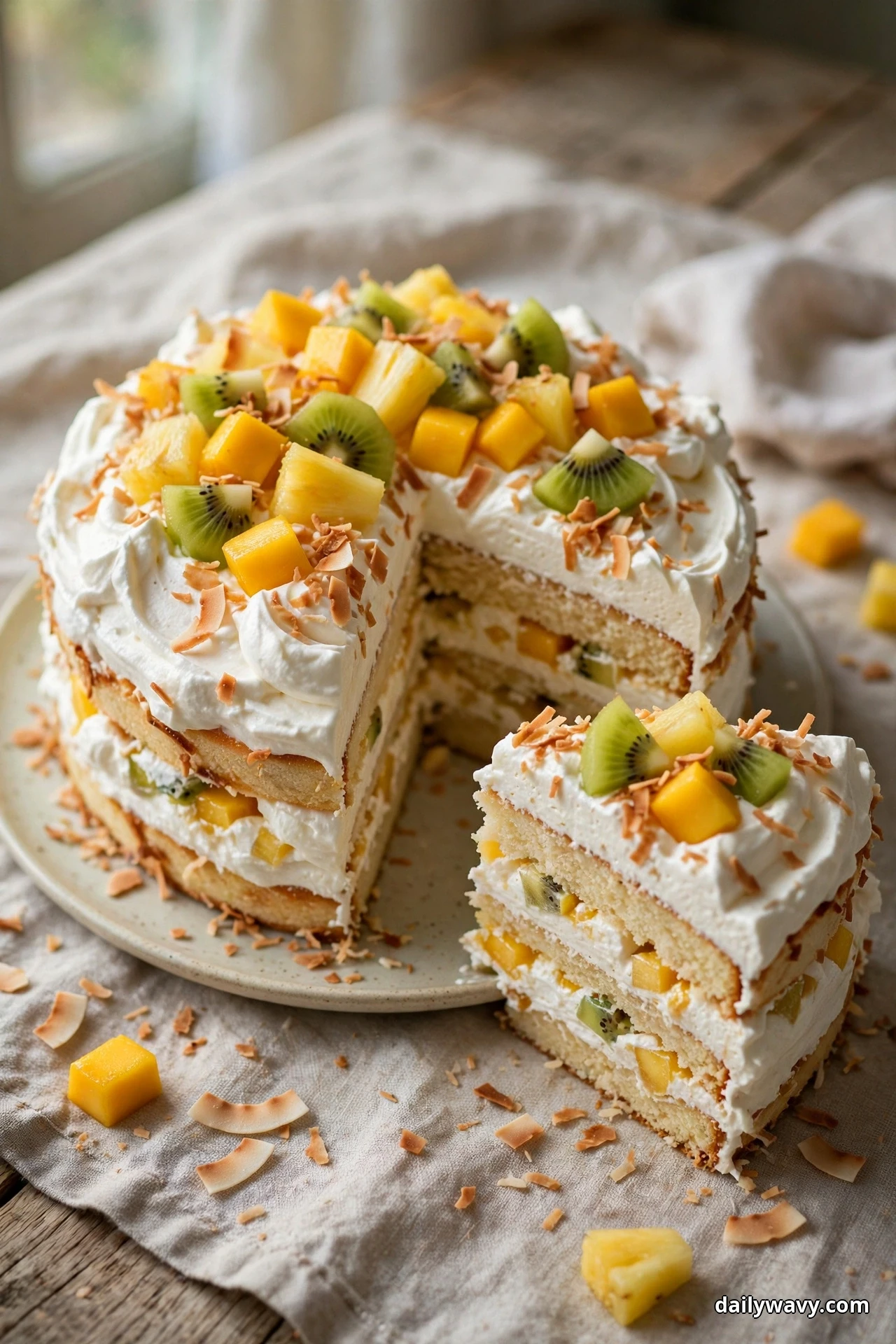
6. Coconut Cake With Whipped Cream And Fruit
This is the summer birthday cake, the one you bring when the weather is warm and nobody wants a heavy buttercream. The coconut base gets split and filled with billowy stabilized whipped cream and a tumble of fresh tropical fruit, and the whole thing tastes light even though it is a full layer cake. Stabilizing the whipped cream matters because plain whipped cream weeps within hours; a little mascarpone fixes that without any gelatin fuss.
For the filling, beat 1 1/2 cups (360 ml) cold heavy cream with 1/2 cup (60 g) powdered sugar and 1 tsp vanilla to soft peaks, then beat in 8 oz (225 g) cold mascarpone until it holds firm peaks. Do not overbeat or it turns grainy. Bake the base in two 9-inch rounds. Spread half the cream over the bottom layer, pile on 2 cups of diced mango, pineapple, and kiwi plus a handful of toasted coconut, then add the top layer and spread with the remaining cream. Decorate with more fruit and coconut flakes. Because of the fresh cream and fruit, this cake must be refrigerated and is best within 24 hours, though it keeps 2 days.
Timing: 30 minutes active plus baking and cooling. Yield: 12 to 16 servings. Troubleshooting: if the cream looks curdled after adding mascarpone, it was overbeaten; next time stop at firm peaks and add the mascarpone in two additions. Storage: refrigerate up to 2 days in a tall container; do not freeze. The fruit releases juice after the first day, which is why the short window matters.
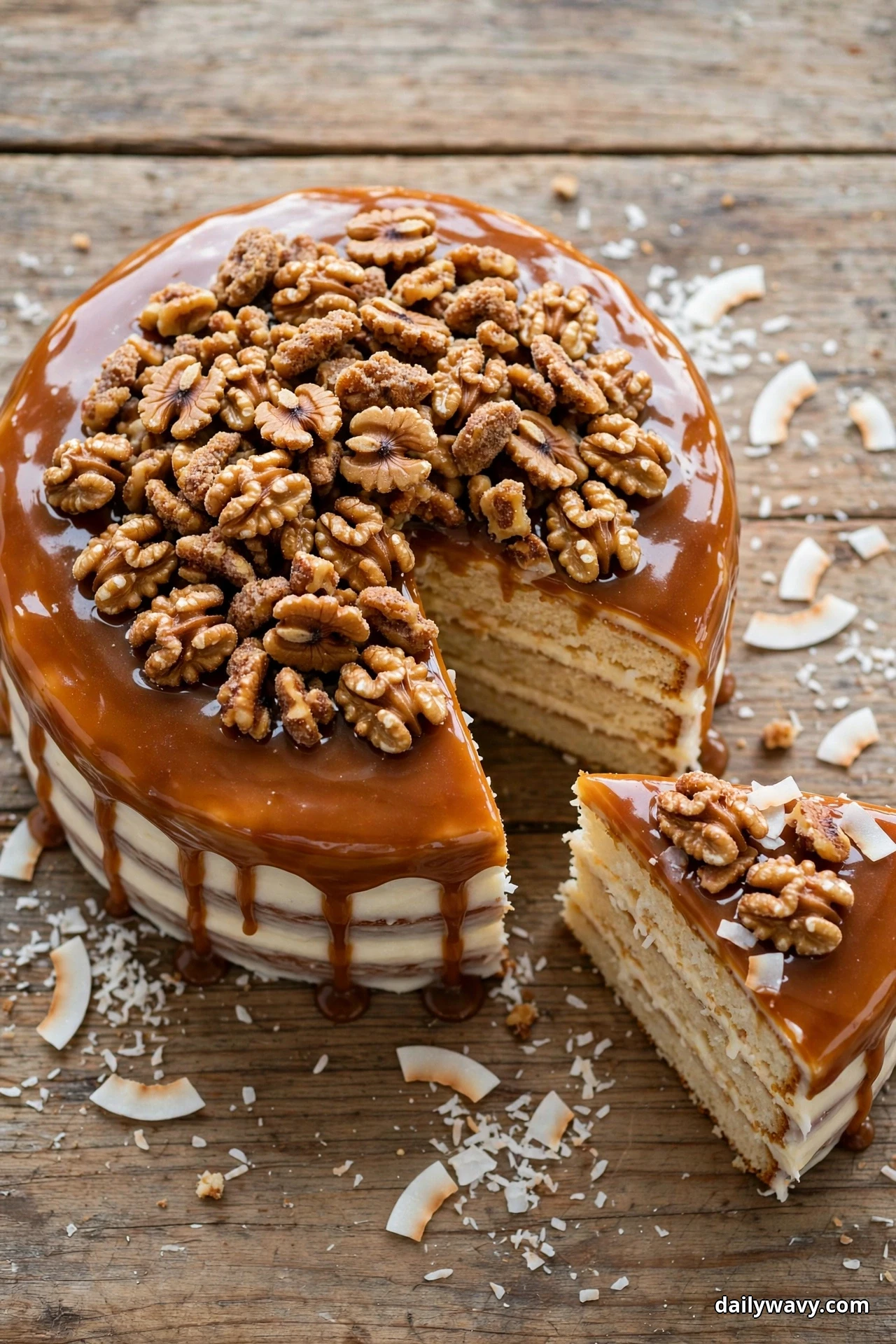
7. Coconut Cake With Maple Walnut Topping
Maple and walnut give coconut cake a distinctly autumn mood, the kind of dessert that belongs next to coffee on a cool afternoon. Here the warm cake itself stays classic coconut, but the top gets a sticky maple glaze and a generous layer of candied walnuts that crackle when you bite them. It is sweet, but the bitterness of the walnuts and the depth of the maple keep it interesting all the way through the slice.
Candy the walnuts by tossing 1 1/2 cups (170 g) walnut halves with 1/3 cup (80 ml) pure maple syrup, 1 Tbsp butter, and 1/4 tsp salt, spreading on a parchment-lined sheet, and baking at 350°F for 10 to 12 minutes until bubbling; cool completely so they crisp. Bake the base in two 9-inch rounds and fill with plain coconut buttercream. For the glaze, simmer 1/2 cup (120 ml) maple syrup with 2 Tbsp butter for 2 minutes, cool 5 minutes, and drizzle over the top of the frosted cake. Pile the candied walnuts on while the glaze is tacky.
Timing: 35 minutes active plus baking and cooling. Yield: 12 to 16 servings. Troubleshooting: if the candied walnuts are chewy instead of crisp, they were underbaked; give them the full 12 minutes and let them cool completely on the sheet, where they harden. Storage: 1 day at room temperature or up to 4 days refrigerated. The walnuts soften slightly by day three but stay tasty.
8. Coconut Cake With Cardamom Glaze
Cardamom does something quietly remarkable to coconut cake: it makes it taste more like itself. A thin, pourable cardamom glaze over a simple single-layer coconut cake is understated, fragrant, and just sweet enough for a coffee break, and it takes a fraction of the effort of a frosted layer cake. This is the recipe for someone who wants homemade cake on a Tuesday without a project.
Halve the base recipe and bake the batter in a greased 9-inch square or round pan at 350°F for 25 to 30 minutes; a single layer is the whole point here. For the glaze, whisk 1 1/2 cups (180 g) powdered sugar with 3 to 4 Tbsp coconut milk, 1/2 tsp ground cardamom, 1 tsp vanilla, and a pinch of salt until it flows in a thick ribbon. Pour over the completely cooled cake and spread to the edges, letting it drip naturally. Scatter 1/3 cup toasted coconut over the wet glaze. The glaze sets in about 20 minutes into a thin, crackly shell.
Timing: 20 minutes active plus baking and cooling. Yield: 9 to 12 servings. Troubleshooting: if the glaze is too thin and disappears into the cake, add powdered sugar a tablespoon at a time; if it is too thick to pour, add coconut milk a teaspoon at a time. Storage: 3 to 4 days at room temperature under a dome. The glaze keeps the crumb moist longer than an unfrosted cake.

9. Coconut Cake With Cream-Cheese Frosting
This is the classic for a reason. Tangy cream-cheese frosting against sweet coconut cake is a combination that never gets old, and it is the version most people picture when they hear the words coconut cake. The frosting is softer than buttercream, so the cake looks a little more rustic, but the flavor is the payoff: every bite has that cool, tangy contrast. Because cream cheese is perishable, this cake lives in the refrigerator, which is worth knowing before you promise it for a picnic.
For the frosting, beat 12 oz (340 g) room-temperature cream cheese with 1/2 cup (115 g) room-temperature butter until completely smooth, then beat in 4 cups (480 g) powdered sugar, 1 tsp vanilla, and a pinch of salt. Cold cream cheese lumps, so this is one frosting where room temperature genuinely matters. Bake the base in two 9-inch rounds, fill with 1 cup of frosting, and frost the outside. Press 1 1/2 cups sweetened shredded coconut (untoasted, for the classic snowy look) all over the sides and top. The soft frosting makes the coconut stick easily.
Timing: 30 minutes active plus baking and cooling. Yield: 12 to 16 servings. Troubleshooting: if the frosting is runny, the cream cheese was too warm or a low-fat tub version was used; use full-fat brick cream cheese and chill the frosted cake 30 minutes to firm it. Storage: refrigerate up to 5 days; serve after 30 minutes at room temperature so the frosting softens. Do not leave out longer than 2 hours.

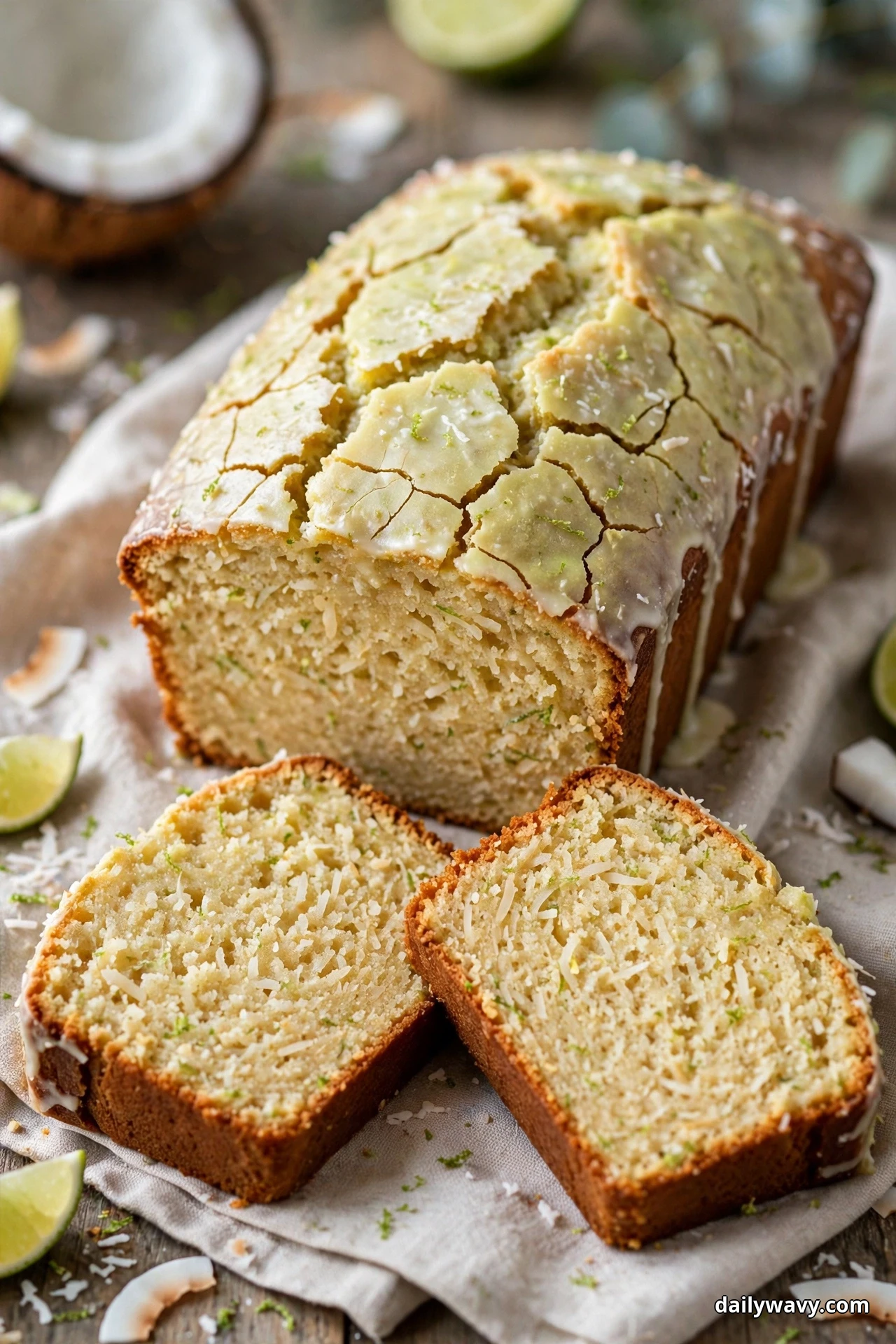
10. Coconut Cake Loaf With Citrus Glaze
A loaf cake is the most giftable format on this list, and this citrus-glazed version is the one to bake for a neighbor or tuck into a weekend care package. The same coconut batter baked in a 9×5-inch loaf pan comes out with a fine, tight crumb that slices beautifully, and a sharp lemon-lime glaze soaked into the warm top keeps every slice moist. It is unfussy, travels well, and tastes like sunshine.
Halve the base recipe, pour the batter into a greased and parchment-lined 9×5-inch loaf pan, and bake at 350°F for 55 to 65 minutes, until a skewer comes out with moist crumbs. While it bakes, whisk 1 cup (120 g) powdered sugar with 3 Tbsp fresh lemon juice, 1 Tbsp fresh lime juice, and 1 tsp zest of each. As soon as the loaf comes out, poke it all over with a skewer and pour half the glaze over the hot cake so it soaks in; once cool, drizzle the rest over the top. The glaze crackles into a thin shell as it sets. Cool completely in the pan on a rack before lifting out by the parchment.
Timing: 20 minutes active plus about 1 hour baking and cooling. Yield: 10 to 12 slices. Troubleshooting: if the loaf sinks in the middle, the oven was too cool or it was underbaked; check with a skewer, not just the timer, since loaf pans vary. Storage: 4 to 5 days at room temperature, tightly wrapped. The glaze acts as a moisture seal, which is why this loaf keeps so well.
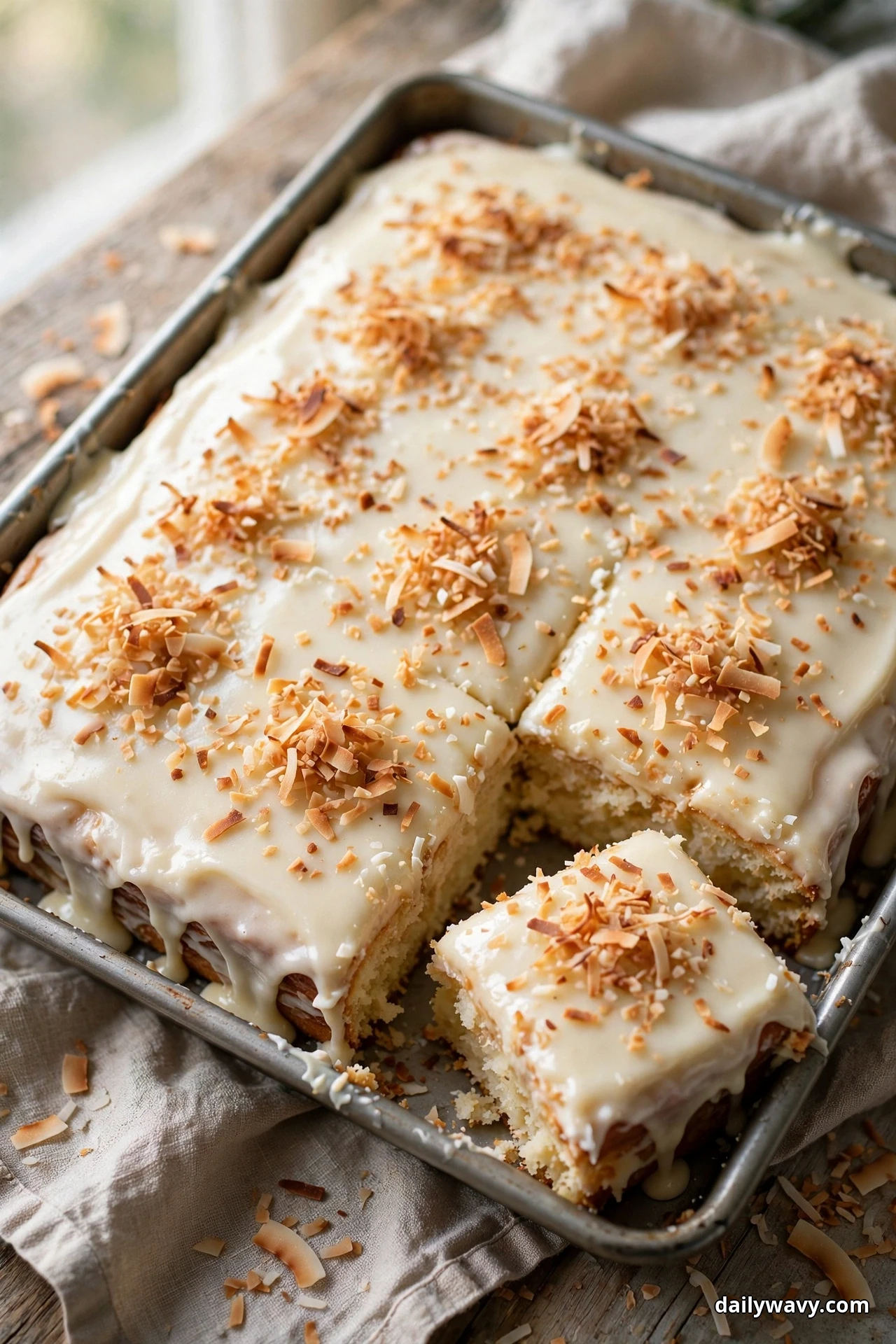
11. Coconut Cake Sheet Cake With Vanilla Icing
Sheet cake is the answer when you need to feed a crowd without fussing over layers, and a poured vanilla icing is the laziest, most satisfying finish there is. The coconut batter bakes into one big 9×13-inch slab with maximum golden top surface, and the warm icing poured over the warm cake melts into every pore before setting into a sweet, crackly coat. Kids love it, adults take seconds, and there is no crumb coat, no leveling, and no stress.
Bake the base batter in a greased 9×13-inch pan at 350°F for 35 to 40 minutes. While it bakes, melt 1/2 cup (115 g) butter with 1/3 cup (80 ml) coconut milk in a saucepan, then whisk in 3 1/2 cups (420 g) powdered sugar and 2 tsp vanilla until smooth. Pour the warm icing over the warm cake and spread quickly; it sets as it cools. Scatter 1 cup toasted coconut over the top before the icing firms. Cut into 15 to 18 squares right in the pan.
Timing: 20 minutes active plus baking and cooling. Yield: 15 to 18 servings. Troubleshooting: if the icing is lumpy, the powdered sugar was not sifted; whisk vigorously or strain it, and sift next time. Storage: 3 to 4 days at room temperature, covered. The icing seals in moisture, so this cake stays soft longer than a frosted layer cake.
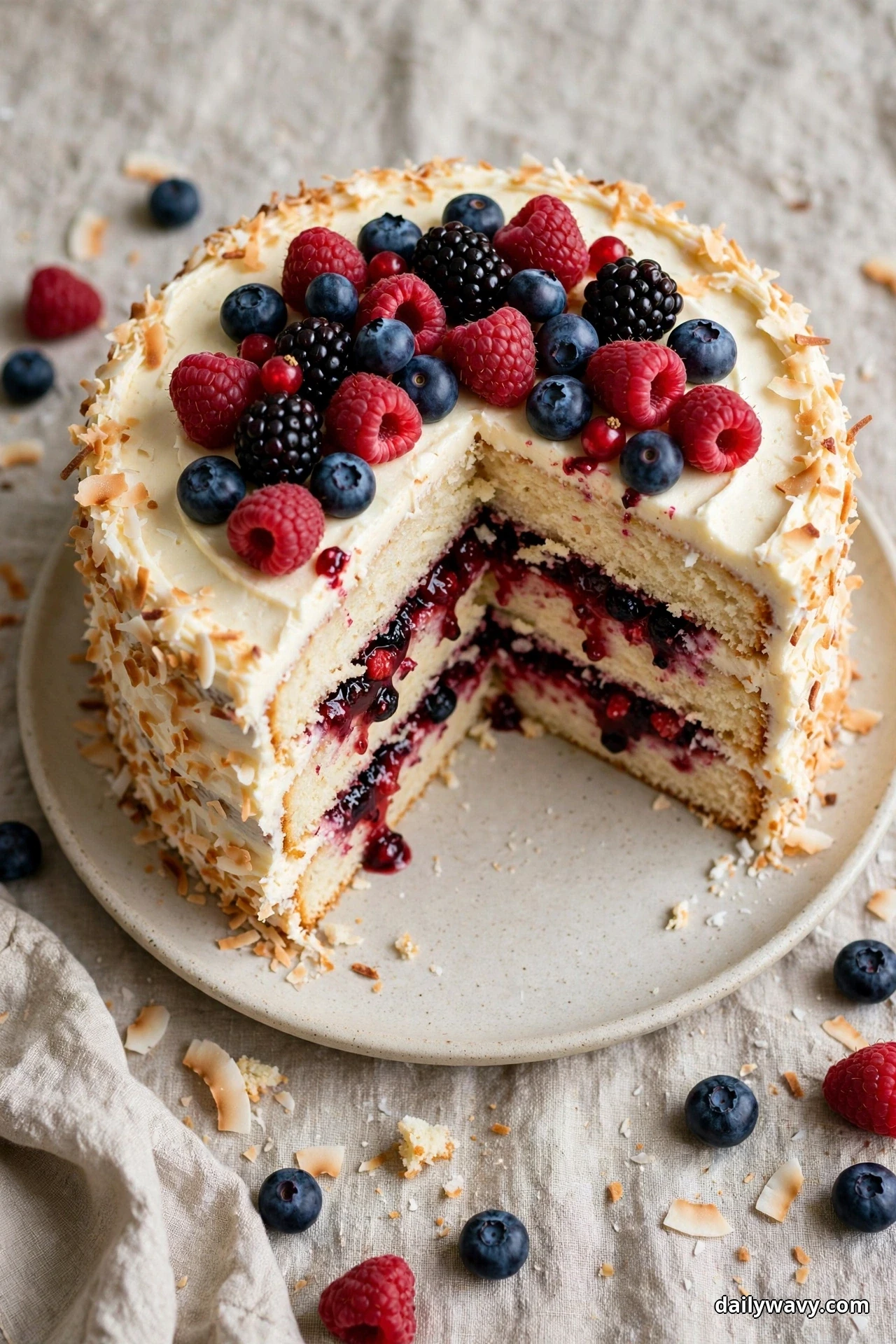
12. Coconut Cake Layer Cake With Berry Filling
This is the showpiece: three thinner layers of coconut cake with a jammy mixed-berry filling between them, finished with coconut buttercream and a crown of fresh berries. It looks like a bakery window cake and tastes like summer, and the berry filling means every slice has a bright, juicy layer that keeps the whole thing from feeling rich. The trick is cooking the berries down first so the filling is thick enough to stay put instead of sliding out.
For the filling, simmer 3 cups (about 450 g) mixed fresh or frozen berries with 1/3 cup (65 g) sugar and 1 Tbsp lemon juice until thick and jammy, 10 to 12 minutes; stir 1 tsp cornstarch mixed with 1 Tbsp water in at the end and simmer 1 minute more. Cool completely; you need about 1 1/2 cups. Bake the base batter in three 8-inch round pans (divide evenly) at 350°F for 20 to 25 minutes. Pipe a buttercream dam on the bottom two layers, fill with the cooled berry mixture, stack, and frost the outside with coconut buttercream. Press toasted coconut around the sides and top with fresh berries.
Timing: 50 minutes active plus baking, cooling, and filling prep. Yield: 12 to 16 servings. Troubleshooting: if the filling oozes out, it was too thin or the buttercream dam was too low; cook the berries until a spoon leaves a clear trail, and make the dam at least 1/2 inch tall. Storage: refrigerate up to 4 days because of the fruit filling. Bring to room temperature 30 minutes before serving.
13. Coconut Cake Bundt With Chocolate Drizzle
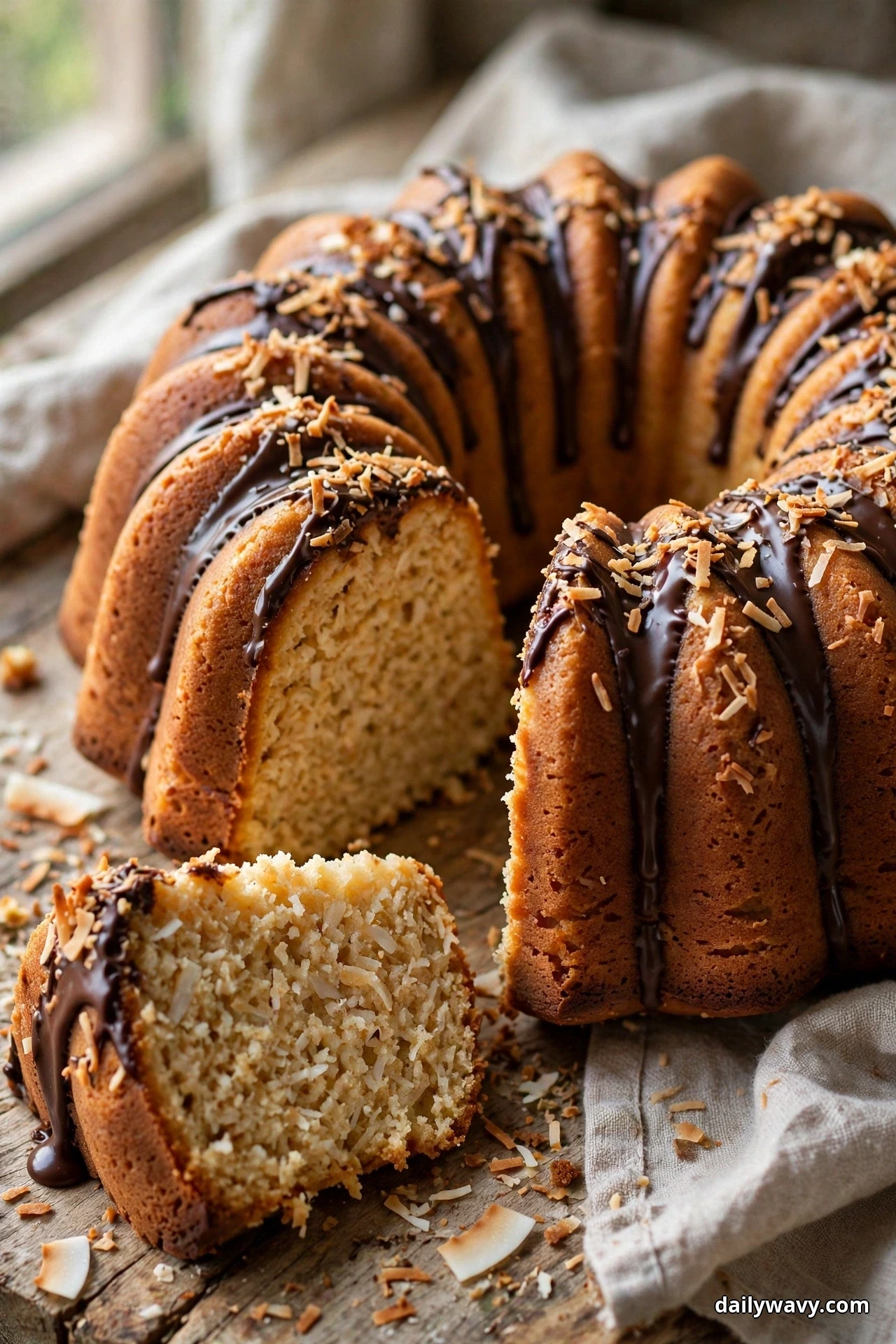
A bundt pan does the decorating for you, which makes this the highest-impact, lowest-effort cake here. The fluted ridges catch a dark chocolate drizzle in all the right places, and a shower of toasted coconut settles into the grooves. The crumb is a little denser than the layer version because bundt batter needs the structure, so the recipe below adjusts the base slightly. One pan, no stacking, no crumb coat, and it still looks like you tried very hard.
Use the base batter but reduce the coconut milk to 3/4 cup (180 ml) and add 1/4 cup (60 g) sour cream for a sturdier crumb. Grease a 10-cup bundt pan thoroughly with baking spray, getting into every crease, and dust lightly with flour. Bake at 350°F for 50 to 60 minutes, until a skewer comes out clean. Cool in the pan exactly 15 minutes, then invert onto a rack; too soon and it breaks, too late and it sticks. Drizzle with the chocolate ganache from recipe 5 (halved: 4 oz chocolate, 1/2 cup cream) and scatter 3/4 cup toasted coconut over the top.
Timing: 25 minutes active plus baking and cooling. Yield: 12 to 14 servings. Troubleshooting: if the cake sticks, the pan was under-greased; a thorough coat of baking spray with flour is the reliable fix, and cooling exactly 15 minutes matters more than people think. Storage: 1 day at room temperature under a dome or up to 4 days refrigerated. The drizzle keeps the top from drying out.
14. Coconut Cake With Toasted Almond Crust
This last one is for the texture lovers. The coconut cake and a simple vanilla buttercream stay familiar, but the entire outside gets pressed with a crust of chopped toasted almonds, so every slice has a nutty crunch from edge to edge. It looks impressive, tastes like a European bakery cake, and the almond crust hides any frosting imperfections, which makes it secretly one of the most forgiving decorated cakes on this list.
Toast 2 cups (about 220 g) sliced or chopped almonds at 350°F for 6 to 8 minutes until golden and fragrant; cool completely. Bake the base in two 9-inch rounds and frost with coconut buttercream using a slightly thicker than usual coat, about 1 1/4 cups for the outside. While the frosting is still soft, press the cooled almonds all over the sides and top with your hands or a bench scraper, working in sections. Chill 20 minutes to set. The almonds stick best to fresh, soft frosting, so do not chill before pressing.
Timing: 35 minutes active plus baking and cooling. Yield: 12 to 16 servings. Troubleshooting: if almonds fall off, the frosting had started to crust; work quickly right after frosting, and press firmly. Storage: 1 day at room temperature under a dome or up to 4 days refrigerated. The almonds stay crunchy for the first 2 to 3 days.

Frequently asked questions
Can I use coconut flour instead of all-purpose flour?
No, not as a straight swap. Coconut flour absorbs far more liquid than wheat flour and would turn this batter into a brick. If you want a gluten-free coconut cake, use a 1:1 gluten-free flour blend labelled for baking in place of the all-purpose flour and keep everything else the same; the batter ratios were built for wheat flour.
Why did my coconut sink to the bottom of the cake?
Sweetened shredded coconut is heavy, and in a thin batter it sinks. Tossing the coconut in a tablespoon of the measured flour before folding it in gives it something to grip, which keeps it suspended. It also helps to make sure the batter is not over-thinned; measure the coconut milk carefully.
How do I keep coconut cake from drying out?
Do not overbake; start checking 5 minutes before the timer. Cool layers only 10 minutes in the pan, since a hot pan keeps cooking the edges. Frost or wrap the cake the same day, because an unwrapped crumb loses moisture fast. The glaze and icing versions on this list (recipes 8, 10, and 11) are naturally the moistest keepers.
Can I make coconut cake ahead of time?
Yes. Bake the layers up to 2 days ahead, wrap tightly in plastic, and refrigerate, or freeze unfrosted for up to 3 months. Buttercream and ganache versions assemble well a day ahead and actually slice more cleanly after an overnight chill. Whipped-cream and fresh-fruit versions should be assembled the day you serve.
My buttercream is too sweet. How do I fix it?
Add a pinch more salt first; salt suppresses the perception of sweetness without changing the recipe. A teaspoon of lemon juice or a tablespoon of cream cheese beaten in also cuts the sweetness. For future cakes, the cream-cheese frosting in recipe 9 is naturally less sweet than American buttercream.
Can I use fresh coconut instead of shredded bagged coconut?
You can, but know the trade-offs. Fresh coconut has more water and a milder flavor, so the cake will be a little less sweet and a little wetter; reduce the coconut milk by 2 tablespoons to compensate. Bagged sweetened shredded coconut is more consistent for these recipes, which is why it is specified.
The takeaway
Coconut cake rewards a good base recipe and a little imagination, and now you have both. Whether you go for the raspberry buttercream showpiece, the low-effort cardamom glaze, or the giftable citrus loaf, the method is the same: a moist coconut crumb, a topping or filling that adds contrast, and honest storage so the second-day slice is as good as the first. If you are in a baking mood beyond cake, the carrot cake roundup is the closest cousin in the cake family, and our blueberry muffin roundup covers another weekend classic, and the apple cinnamon overnight oats guide is the make-ahead breakfast that pairs perfectly with a slice of cake and coffee. For the full collection of sweet ideas, browse the Food & Drink category.