
13 Carrot Cake Recipes for Celebrations and Coffee Breaks
Carrot cake is the rare dessert that works as hard at a birthday party as it does next to a…
Carrot cake is the rare dessert that works as hard at a birthday party as it does next to a Tuesday afternoon coffee. The crumb stays moist for days, the warm spice plays well with almost any frosting, and one reliable base recipe can turn into a dozen different cakes with nothing more than a new topping. Below you will find that base recipe, the pan conversions that make it fit any pan you own, and 13 flavor-led variations, each with its own frosting, glaze, or topping.
In This Guide
- Carrot Cake with Coconut Cream
- Carrot Cake with Mascarpone Frosting
- Carrot Cake with Browned-Butter Icing
- Carrot Cake with Raspberry Buttercream
- Carrot Cake with Hazelnut Topping
- Carrot Cake with Orange Curd
- Carrot Cake with Cinnamon Crumbs
- Carrot Cake with Ganache
- Carrot Cake with Whipped Cream and Fruit
- Carrot Cake with Maple Walnut Topping
- Carrot Cake with Cardamom Glaze
- Carrot Cake with Cream-Cheese Frosting
- Carrot Cake Loaf with Citrus Glaze
The Carrot Cake Rules Before You Bake
Every variation below starts from the same base. Bake it once, and the only thing that changes from cake to cake is the frosting, glaze, or topping. This keeps the results consistent and saves you from learning 13 different batters.
The base batter (makes two 9-inch layers, one 9×13-inch sheet, one 12-cup Bundt, or two 9×5-inch loaves):
Dry: 2 cups (250 g) all-purpose flour, spooned into the cup and leveled; 2 tsp baking soda; 2 tsp ground cinnamon; 1/4 tsp ground nutmeg; 1/2 tsp fine salt.
Wet: 1 cup (200 g) granulated sugar; 1/2 cup (100 g) packed light brown sugar; 1 1/4 cups (300 ml) neutral oil such as canola; 4 large eggs at room temperature; 2 tsp vanilla extract; 3 cups (about 330 g) finely grated carrots, from about 5 medium carrots; 1 cup (100 g) chopped toasted walnuts or pecans (optional); 3/4 cup (110 g) raisins (optional).
Heat the oven to 350°F (175°C). Grease the pans and line the bottoms with parchment. Whisk the dry ingredients in a large bowl. In a second bowl, whisk the sugars, oil, eggs, and vanilla until smooth and slightly thickened. Pour the wet into the dry and stir until just combined, then fold in the carrots, nuts, and raisins. Do not overmix. Divide between the pans and bake until a toothpick in the center comes out clean and the top springs back when lightly pressed: two 9-inch rounds, 28 to 33 minutes; one 9×13-inch sheet, 35 to 40 minutes; one 12-cup Bundt, 50 to 58 minutes; two 9×5-inch loaves, 50 to 60 minutes. Cool in the pan 15 minutes, then turn out onto a rack and cool completely before frosting. Careful measuring pays off in our blueberry muffins too, and it matters most here, because too much flour is the fastest way to a dry carrot cake.
Pan conversions that actually work. The batter is forgiving, but bake time changes with depth. Shallow 9-inch layers bake fastest; deep Bundt and loaf pans need the full time and a foil tent if the top browns early. For cupcakes, line standard tins and fill two-thirds full, baking 18 to 22 minutes, which makes about 24.
Fresh carrots, always. Pre-shredded bagged carrots are cut thick and dry out, which gives you a chewy, pale crumb. Grate fresh carrots on the small holes of a box grater or in a food processor for fine, moist shreds that melt into the batter.
Storage and food safety. Unfrosted layers keep at room temperature, tightly wrapped, for up to 2 days. Any cake with cream cheese, mascarpone, whipped cream, or curd must be refrigerated and is best within 4 days. Follow the standard 2-hour rule: do not leave frosted cake at room temperature longer than 2 hours (USDA). Unfrosted layers freeze beautifully for up to 3 months when double-wrapped; thaw overnight in the fridge.
1. Carrot Cake with Coconut Cream

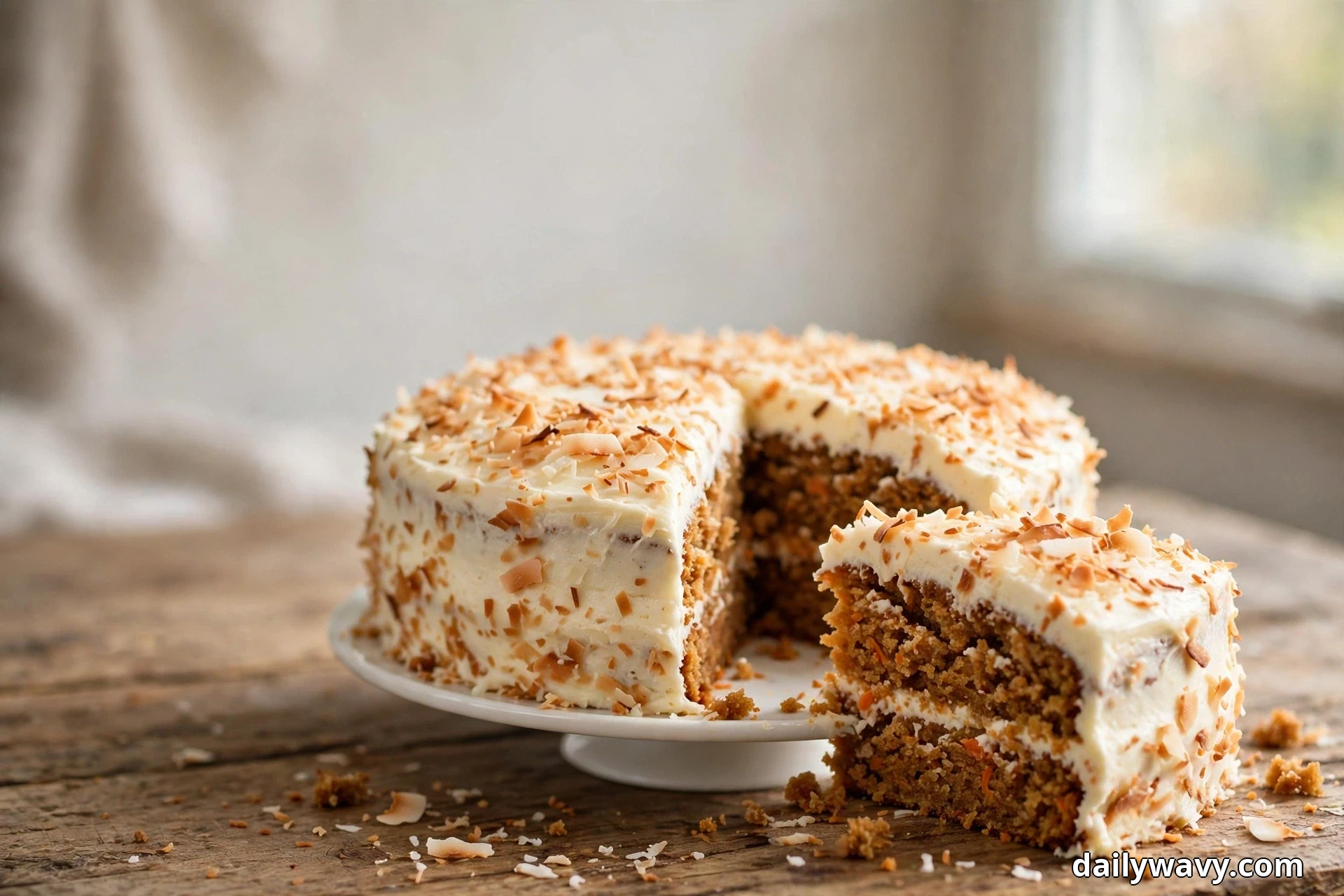
This is the tropical-leaning version, and it is the one I reach for when the cake needs to feel light rather than rich. Coconut cream frosting is less sweet than buttercream and has a soft, almost mousse-like texture that pairs beautifully with the warm cinnamon in the crumb. Toasted coconut on top adds the crunch the soft frosting needs.
You need (frosts one 9×13-inch sheet generously, or fills and frosts two 9-inch layers thinly): 1 1/2 cups (360 ml) cold heavy cream; 1/3 cup (80 ml) cream of coconut, well stirred; 1/4 cup (30 g) powdered sugar; 1/2 tsp vanilla extract; 3/4 cup (60 g) sweetened shredded coconut, toasted.
Method: Toast the coconut first. Spread it on a lined sheet and bake at 350°F for 5 to 7 minutes, stirring once, until golden at the edges. Cool completely. Beat the cream, cream of coconut, powdered sugar, and vanilla to medium peaks. Spread over the completely cooled cake and scatter the toasted coconut over the top.
Timing: Frosting takes about 10 minutes plus toasting.
Troubleshooting: If the frosting looks soft, the cream was not cold enough. Chill the bowl and beaters for 15 minutes and try again; coconut cream frosting never gets as stiff as buttercream, and that is normal.
Storage: Refrigerate and eat within 3 days. The toasted coconut stays crispest if you add it just before serving.
2. Carrot Cake with Mascarpone Frosting
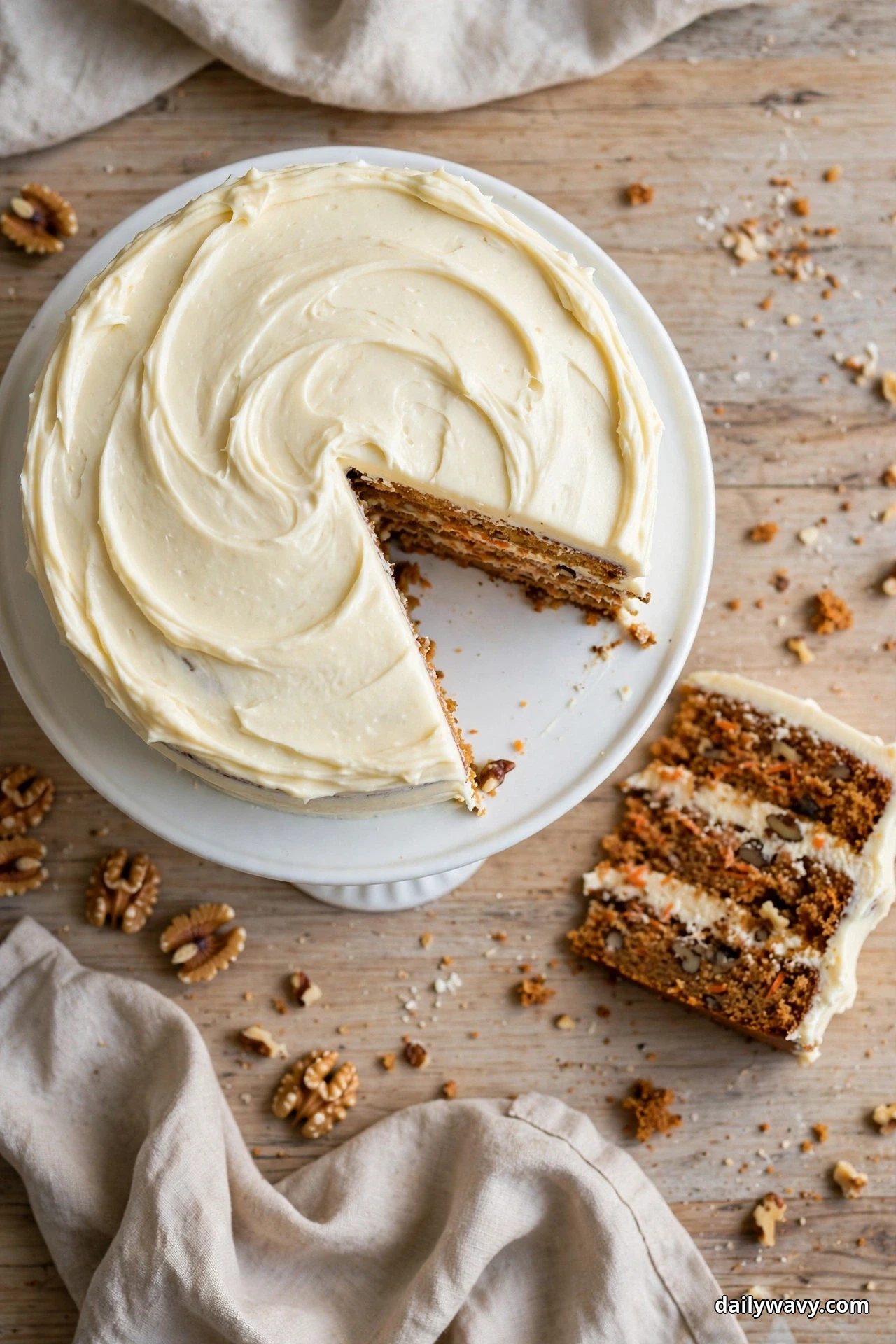
Mascarpone frosting tastes like the silkier, more grown-up cousin of cream cheese frosting. It is rich without tang, which lets the carrot and spice flavors sit front and center. This is the version for people who find classic cream cheese frosting a little too sharp.
You need (fills and frosts two 9-inch layers): 8 oz (225 g) mascarpone, at room temperature; 1 cup (240 ml) cold heavy cream; 1/2 cup (60 g) powdered sugar; 1 tsp vanilla extract; pinch of fine salt.
Method: Beat the mascarpone, powdered sugar, vanilla, and salt until smooth. In a separate bowl, whip the cream to soft peaks. Fold the whipped cream into the mascarpone in two additions. Use immediately; this frosting firms up as it sits.
Timing: About 10 minutes.
Troubleshooting: Mascarpone curdles if overbeaten or if it is too cold. Keep the beating gentle and make sure the cheese is genuinely at room temperature before you start.
Storage: Refrigerate and eat within 4 days. Bring slices to cool room temperature, about 20 minutes, before serving for the best texture.
3. Carrot Cake with Browned-Butter Icing
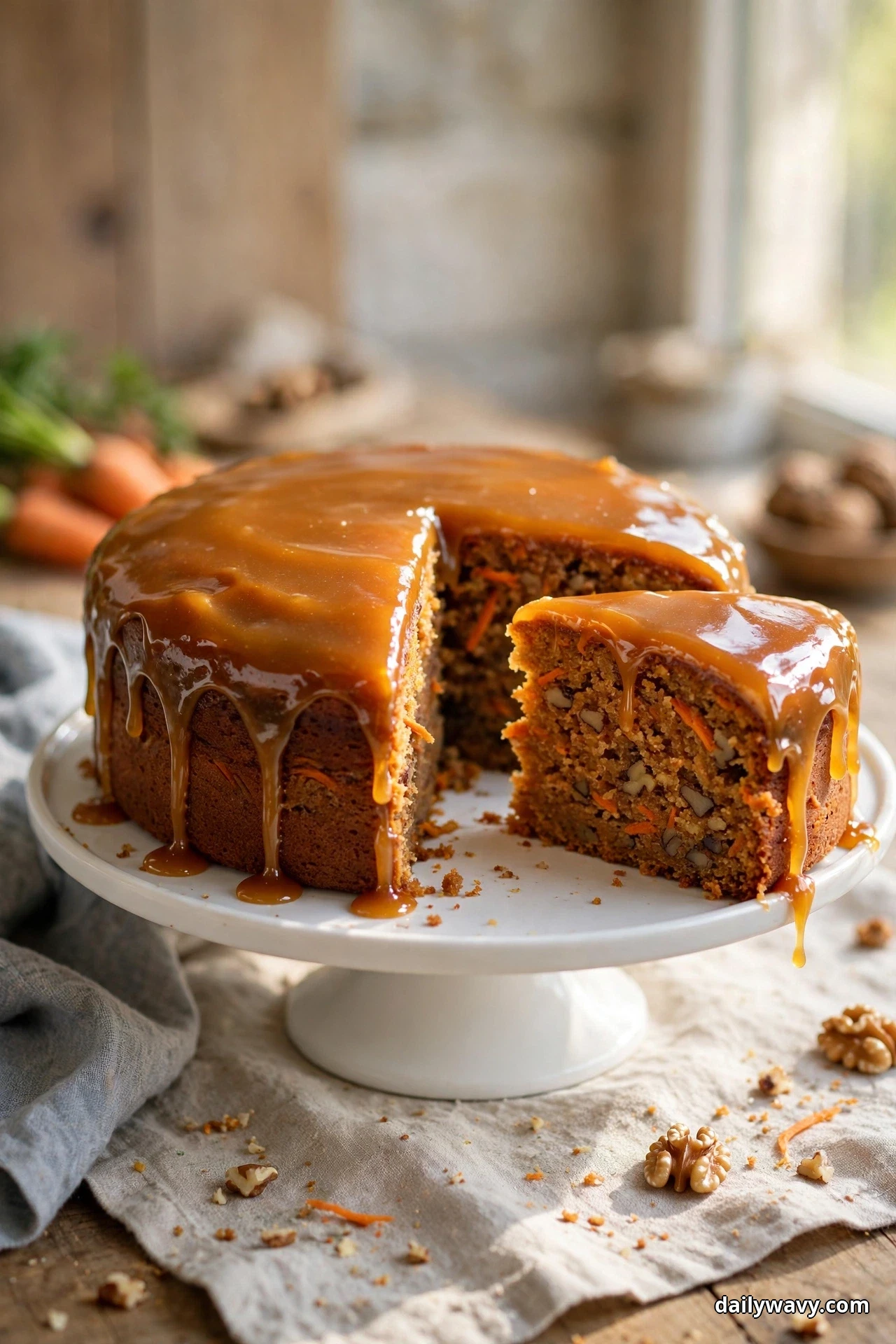
Browning the butter first gives this icing a nutty, almost toffee-like depth that plain buttercream never reaches. It pours over a warm sheet cake and sets into a thin, glossy shell. This is the lowest-effort variation here and one of the most impressive tasting.
You need (covers one 9×13-inch sheet): 3/4 cup (170 g) unsalted butter; 2 1/2 cups (300 g) powdered sugar, sifted; 2 to 3 tbsp milk; 1 tsp vanilla extract; pinch of fine salt.
Method: Melt the butter in a light-colored pan over medium heat, swirling, until it foams, then turns amber and smells nutty, about 5 to 7 minutes. Pour into a bowl, including the browned bits, and cool 10 minutes. Whisk in the powdered sugar, 2 tbsp milk, vanilla, and salt until smooth, adding the last tbsp of milk if needed for a pourable consistency. Pour over the warm (not hot) sheet cake and spread to the edges.
Timing: About 15 minutes.
Troubleshooting: If the icing seizes or looks grainy, the butter was too hot when the sugar went in. Let it cool a full 10 minutes; warm is fine, hot is not.
Storage: Keeps at room temperature for 1 day, refrigerated for 4 days.
4. Carrot Cake with Raspberry Buttercream

The tartness of real raspberries cuts through the sweetness of both the frosting and the cake, and the pale pink color makes this the natural choice for spring celebrations. Use real berry puree, not extract, because the flavor difference is enormous.
You need (fills and frosts two 9-inch layers): 1 cup (225 g) unsalted butter, at room temperature; 3 1/2 cups (420 g) powdered sugar, sifted; 6 oz (170 g) fresh or frozen raspberries, simmered and strained to 1/4 cup seedless puree; 1 tsp lemon juice; pinch of fine salt.
Method: Simmer 6 oz (170 g) fresh or frozen raspberries for 5 minutes, press through a fine sieve, and cool; you need 1/4 cup. Beat the butter until pale and fluffy, about 3 minutes. Add the powdered sugar one cup at a time, then beat in the raspberry puree, lemon juice, and salt. If it is too soft, chill 20 minutes before frosting.
Timing: About 20 minutes including the puree.
Troubleshooting: Specks of seeds mean the puree was not strained well enough. Strain twice through a fine-mesh sieve, pressing firmly.
Storage: Refrigerate and eat within 4 days. The color deepens slightly overnight, which is normal.
5. Carrot Cake with Hazelnut Topping

This one is about texture. A classic cream cheese frosted cake gets a thick coat of chopped toasted hazelnuts pressed into the frosting, so every bite has crunch against the soft crumb. It looks like a bakery cake and tastes like one too.
You need: One batch of the cream-cheese frosting from idea 12; 1 1/2 cups (200 g) hazelnuts.
Method: Toast the hazelnuts at 350°F for 8 to 10 minutes until fragrant, then rub them in a clean kitchen towel to remove most of the skins. Chop coarsely. Frost the cooled cake with the cream-cheese frosting, then press the chopped hazelnuts firmly onto the top and sides with your hands. A few will fall; scoop them up and press again.
Timing: About 20 minutes plus frosting time.
Troubleshooting: If the nuts slide off, the frosting layer is too thin. Use a generous coat so the nuts have something to grip.
Storage: Refrigerate and eat within 4 days. The nuts soften slightly by day 3 but still taste good.
6. Carrot Cake with Orange Curd

Orange and carrot are a natural pairing, and a bright curd layer between the cake layers makes the whole dessert taste fresher and less heavy. The curd also soaks very slightly into the crumb, which keeps the cake moist for days.
You need (fills two 9-inch layers): 1/2 cup (120 ml) fresh orange juice; 1 tbsp finely grated orange zest; 1/2 cup (100 g) granulated sugar; 3 large egg yolks; 6 tbsp (85 g) cold unsalted butter, cubed; pinch of salt.
Method: Whisk the juice, zest, sugar, yolks, and salt in a heatproof bowl set over gently simmering water. Cook, whisking constantly, until thick enough to coat the back of a spoon, 8 to 10 minutes. Off the heat, whisk in the butter one cube at a time. Strain, press plastic wrap directly on the surface, and chill at least 2 hours. Spread between the cooled layers before frosting the outside with cream-cheese frosting.
Timing: About 20 minutes plus chilling.
Troubleshooting: Lumps mean the heat was too high. Keep the water at a bare simmer and whisk constantly; if lumps form, strain the curd and it will be fine.
Storage: Refrigerate and eat within 4 days. Do not leave curd-filled cake at room temperature more than 2 hours.
7. Carrot Cake with Cinnamon Crumbs
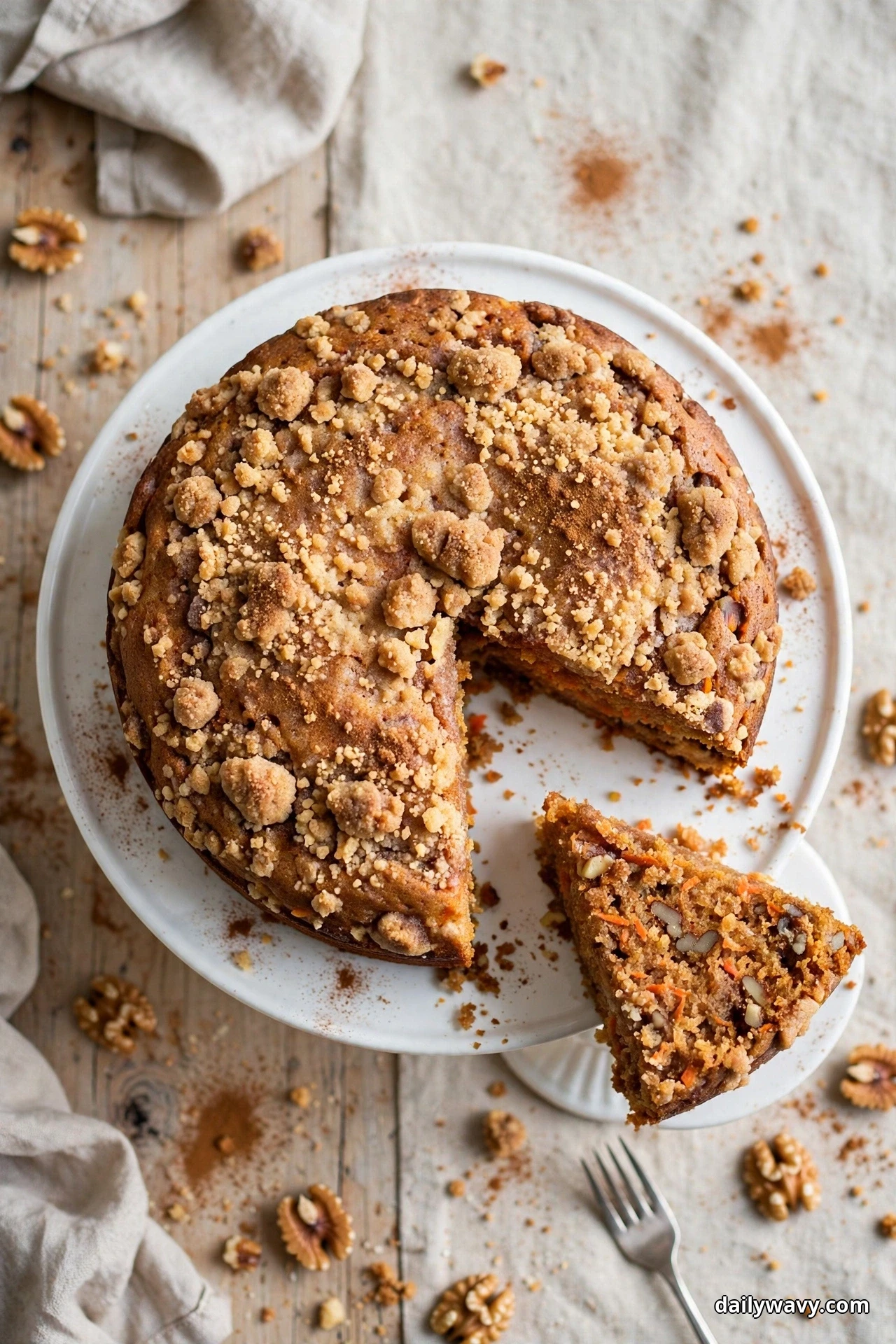
A buttery cinnamon crumb scattered over frosted cake gives you the flavor of a coffee cake married to a layer cake. It is also the most forgiving decoration in this roundup: crumbs hide every frosting mistake.
You need: One batch of cream-cheese frosting (idea 12) or browned-butter icing (idea 3); for the crumbs: 3/4 cup (95 g) all-purpose flour; 1/3 cup (70 g) packed light brown sugar; 1 tsp ground cinnamon; 1/4 tsp fine salt; 5 tbsp (70 g) cold unsalted butter, cubed.
Method: Rub the flour, sugar, cinnamon, salt, and butter together with your fingertips until clumpy crumbs form. Spread on a lined baking sheet and bake at 350°F for 12 to 15 minutes, stirring once, until crisp and golden. Cool completely. Frost the cake, then pile the crumbs generously over the top.
Timing: About 25 minutes.
Troubleshooting: If the crumbs melt into a flat sheet, the butter was too warm. Start with truly cold butter and chill the crumbs 10 minutes before baking.
Storage: Refrigerate and eat within 4 days. Add the crumbs within a few hours of serving for maximum crunch.
8. Carrot Cake with Ganache
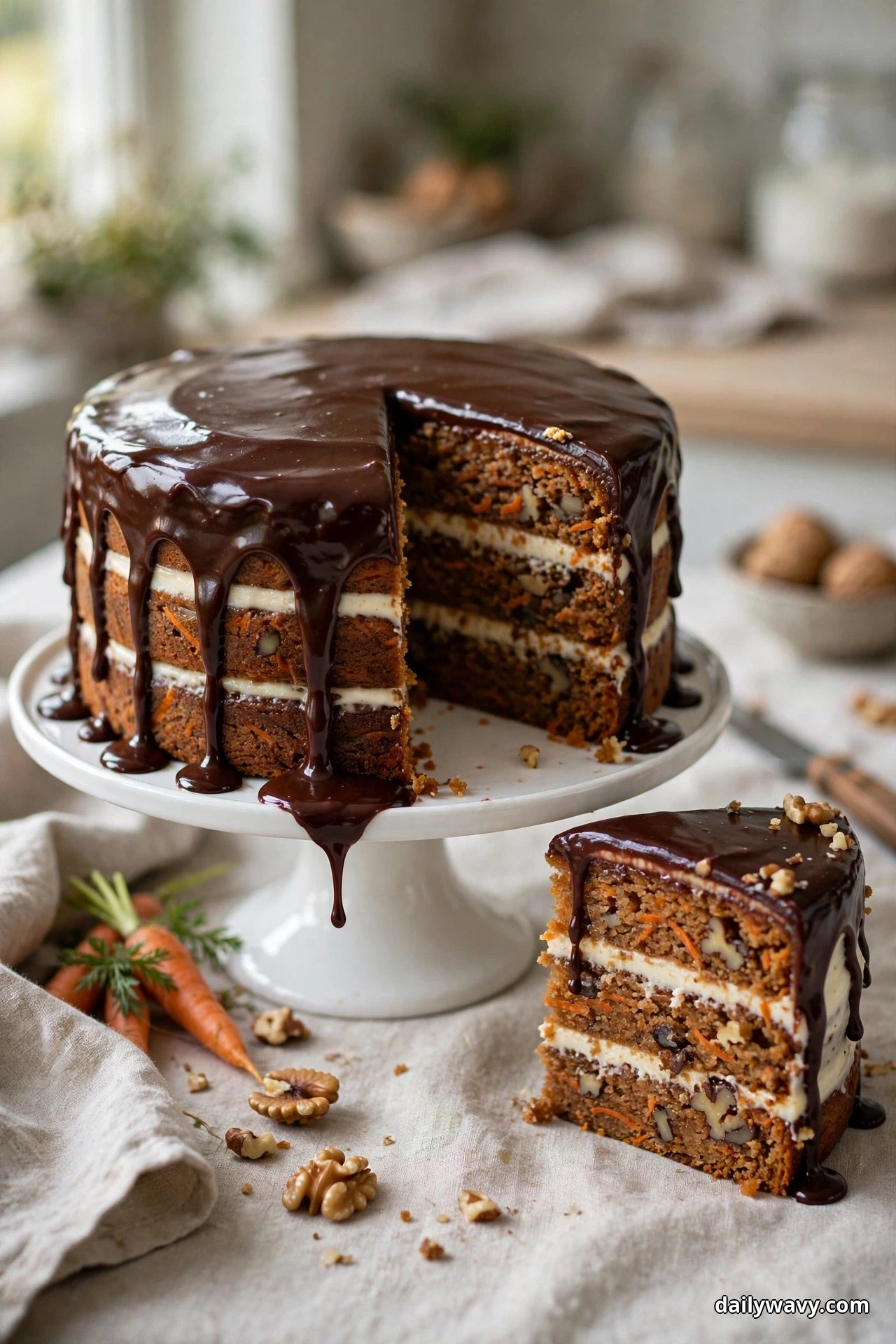
Chocolate and carrot cake is an underrated combination. A dark chocolate ganache poured over the chilled cake gives you a glossy, dramatic finish and a slight bitterness that balances the sweet crumb. Serve small slices; this one is rich.
You need (covers two 9-inch layers or one 9×13-inch sheet): 6 oz (170 g) semisweet chocolate, finely chopped; 3/4 cup (180 ml) heavy cream; 1 tbsp unsalted butter (optional, for shine).
Method: Heat the cream in a small pan until steaming, not boiling. Pour over the chopped chocolate, rest 2 minutes, then stir from the center outward until smooth. Stir in the butter if using. Cool until thickened but still pourable, about 85 to 90°F, then pour over the chilled, frosted or unfrosted cake, nudging it over the edges with a spatula. Chill 30 minutes to set.
Timing: About 15 minutes plus setting.
Troubleshooting: If the ganache looks oily or split, it got too hot. Whisk in 1 tbsp of warm milk a little at a time and it will come back together.
Storage: Refrigerate and eat within 4 days.
9. Carrot Cake with Whipped Cream and Fruit

This is the summer-party version: barely sweet whipped cream and a tumble of fresh berries instead of a heavy frosting. It is best assembled the day you serve it, which makes it ideal for gatherings where the cake bakes ahead and the topping goes on at the last minute.
You need: 1 1/2 cups (360 ml) cold heavy cream; 1/4 cup (30 g) powdered sugar; 1 tsp vanilla extract; 2 cups mixed fresh berries (strawberries, blueberries, raspberries), rinsed and dried.
Method: Beat the cream, powdered sugar, and vanilla to medium peaks. Spread or pipe over the completely cooled cake and top with the berries just before serving.
Timing: About 10 minutes.
Troubleshooting: Weeping whipped cream usually means it was underwhipped or sat too long. Whip to firm medium peaks and add the topping within 4 hours of serving.
Storage: Refrigerate and eat within 2 days. Keep berries dry until serving so the cream stays billowy.
10. Carrot Cake with Maple Walnut Topping

Maple and walnut taste like autumn in topping form, and the candied nuts stay crunchy for days on top of frosting. This is the version I make for Thanksgiving when the dessert table needs something that reads as seasonal without any extra decorating skill.
You need: One batch of cream-cheese frosting (idea 12) or browned-butter icing (idea 3); 1 1/2 cups (150 g) walnut halves; 1/3 cup (80 ml) pure maple syrup; pinch of fine salt.
Method: Toss the walnuts with the maple syrup and salt. Spread on a lined baking sheet and bake at 350°F for 10 to 12 minutes, stirring once, until the syrup is bubbling and the nuts smell toasty. Cool completely; they crisp as they cool. Frost the cake and pile the maple walnuts over the top.
Timing: About 20 minutes plus frosting time.
Troubleshooting: If the nuts are sticky rather than crisp, they needed another 2 minutes in the oven or more cooling time. They firm up considerably off the heat.
Storage: Refrigerate and eat within 4 days.
11. Carrot Cake with Cardamom Glaze
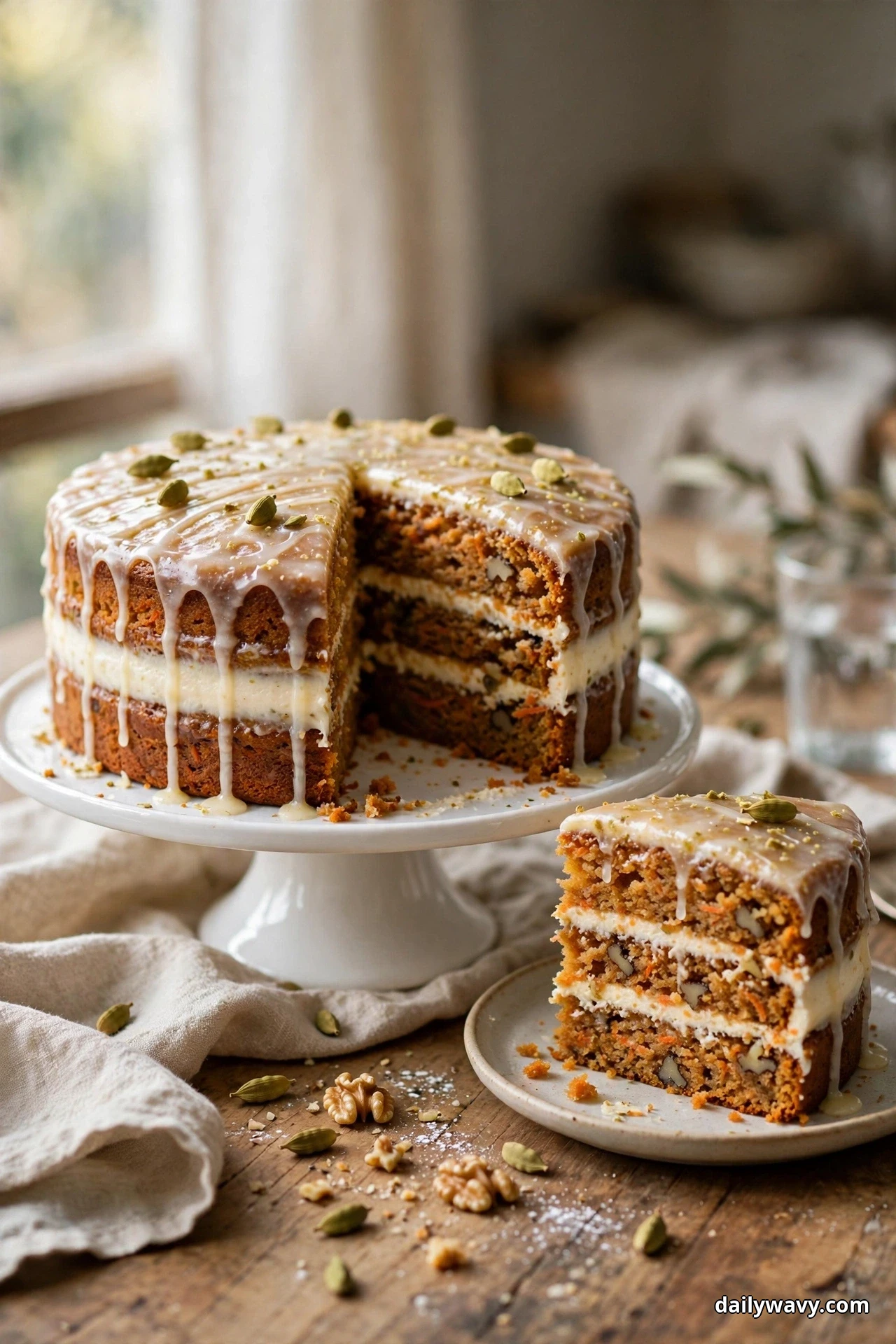
Cardamom gives carrot cake a slightly exotic, chai-like warmth that cinnamon alone never reaches. A thin glaze rather than a thick frosting keeps the focus on the spice. This version shines as a Bundt, where the glaze settles into every ridge.
You need (glazes one 12-cup Bundt or two loaves): 1 1/2 cups (180 g) powdered sugar, sifted; 1/2 tsp ground cardamom; 2 to 3 tbsp milk; 1/2 tsp vanilla extract; pinch of salt.
Method: Whisk the powdered sugar, cardamom, salt, vanilla, and 2 tbsp milk until smooth, adding the last tbsp of milk for a slow-drizzling consistency. Drizzle over the completely cooled Bundt or loaves with a spoon, letting it run down the sides.
Timing: About 5 minutes.
Troubleshooting: A glaze that disappears into the cake was applied to a warm cake. Cool the cake fully first so the glaze sits on the surface.
Storage: Keeps at room temperature for 1 day, refrigerated for 4 days.
12. Carrot Cake with Cream-Cheese Frosting

The classic, and still the standard every other version gets judged against. The slight tang of the frosting is the perfect counterpoint to the sweet, spiced crumb. If you only ever make one carrot cake, make this one, and get the frosting ratio right: too much sugar and it tastes like candy, too little and it will not hold its shape.
You need (fills and frosts two 9-inch layers): 8 oz (225 g) cream cheese, at room temperature; 1/2 cup (115 g) unsalted butter, at room temperature; 3 1/2 cups (420 g) powdered sugar, sifted; 1 tsp vanilla extract; pinch of fine salt.
Method: Beat the cream cheese and butter together until completely smooth, about 2 minutes, scraping the bowl once. Add the powdered sugar one cup at a time on low speed, then the vanilla and salt, and beat until fluffy. Frost the completely cooled layers, using about 1 cup between the layers and the rest on the top and sides.
Timing: About 10 minutes.
Troubleshooting: Lumpy frosting means the cream cheese was too cold. It must be genuinely soft at room temperature, and the powdered sugar should be sifted.
Storage: Refrigerate and eat within 4 days. Let slices stand 20 minutes at room temperature before serving so the frosting softens.
13. Carrot Cake Loaf with Citrus Glaze

The loaf version is the coffee-break hero of this roundup. It slices neatly, travels well, needs no plate, and the bright citrus glaze keeps it from ever tasting heavy next to an afternoon coffee. Bake two loaves and freeze one; future you will be grateful.
You need (makes two 9×5-inch loaves): One batch of the base batter; for the glaze: 1 cup (120 g) powdered sugar, sifted; 2 to 3 tbsp fresh lemon juice; 1 tsp finely grated lemon zest.
Method: Divide the base batter between two greased and parchment-lined 9×5-inch loaf pans. Bake at 350°F for 50 to 60 minutes, until a toothpick in the center comes out clean. Cool 15 minutes in the pans, then turn out and cool completely. Whisk the powdered sugar with 2 tbsp lemon juice and the zest, adding the last tbsp of juice for a thick but drizzling consistency. Drizzle over the completely cooled loaves.
Timing: About 1 hour 15 minutes including baking.
Troubleshooting: A cracked loaf top is normal and gives the glaze somewhere to settle. If the center sinks, the loaves were underbaked; add 5 minutes next time and check with a toothpick.
Storage: Wrapped tightly, keeps at room temperature 2 days or refrigerated 5 days. Loaves freeze well for up to 3 months.
Frequently Asked Questions
Can I make carrot cake ahead of a party?
Yes. Bake the layers up to 2 days ahead, cool completely, wrap tightly, and refrigerate. Frost the day of serving for the freshest look and texture. Unfrosted layers also freeze for up to 3 months.
Why is my carrot cake dry?
The usual suspects are too much flour from scooping the cup, overbaking, or using dry pre-shredded carrots. Spoon and level the flour, grate fresh carrots finely, and start checking for doneness 5 minutes before the timer.
Can I leave out the nuts and raisins?
Absolutely. Both are optional in the base recipe and the cake bakes up just as moist without them. If you want crunch without nuts, try the cinnamon crumb topping from idea 7.
How do I store cake with cream cheese frosting safely?
Refrigerate it. Dairy-based frostings should not sit at room temperature more than 2 hours (USDA guidance). The cake keeps 4 days refrigerated and tastes best when slices rest about 20 minutes at room temperature before serving.
Can I turn these into cupcakes?
Yes. Line standard muffin tins, fill two-thirds full, and bake 18 to 22 minutes at 350°F. This batter makes about 24 cupcakes. Any of the frostings here pipe beautifully onto cupcakes.
My layers domed in the middle. What went wrong?
An oven running hot is the most common cause. An oven thermometer is a cheap fix worth having. You can also level the layers with a long serrated knife before stacking, which gives you flat layers and a chef’s snack.
A Cake for Every Occasion
That is the whole idea behind this roundup: one dependable batter, 13 different finishes, and a cake for every kind of gathering on your calendar. Bake the celebration layer cakes when you want a showpiece, and keep the loaf version in your back pocket for quieter coffee breaks. If you are planning a full celebration menu, my lemon garlic chicken skillet makes an easy dinner before the cake course, and for a slow brunch morning the apple cinnamon overnight oats pair nicely with a slice of the citrus-glazed loaf. Browse the rest of the Food and Drink collection for more baking ideas worth saving.

One Comment