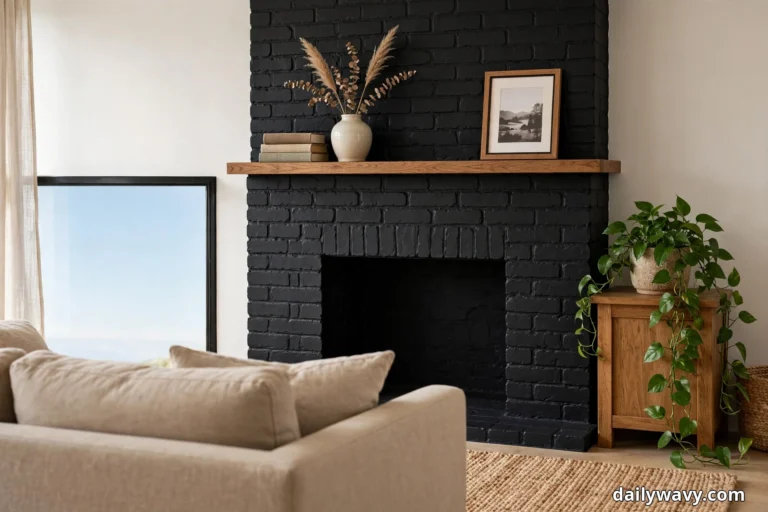
14 Covered Front Porch Decor Ideas for a Welcoming Entrance
A covered front porch is a gift. The roof already protects everything on it from the worst of the rain…
A covered front porch is a gift. The roof already protects everything on it from the worst of the rain and sun, so you get far more decorating freedom than an open stoop allows, but the porch still has a job to do. It is the first thing guests see, the place where packages land, and the path everyone walks every day. The best porches feel welcoming without turning into an obstacle course. Below you will find 14 complete ideas, each built around a single move you can recreate in a weekend. Every idea lists what you need, how to place it, and the small details that keep the entrance safe and tidy.
Jump to an idea
- A Modest Outdoor Cushion
- A House-Number Display
- A Plant Grouping Beside The Door
- A Low Basket With Outdoor-Safe Contents
- A Repeated Metal Finish
- A Single Accent Color
- A Hanging Decoration Secured Appropriately
- A Short Row Of Small Pots
- A Simple Door-Side Wall Accent
- A Compact Chair Angled Toward The Garden
- A Textured Outdoor Runner
- A Small Watering-Can Vignette
- A Planter With Local Seasonal Foliage
- A Clear Landing Area At The Entrance

Covered porch rules before you start
A covered porch is sheltered, not sealed. Rain still blows sideways onto the edges, morning sun still hits the east side, and humidity still settles on every surface. Choose pieces rated for outdoor use even under a roof: outdoor-rated fabrics, powder-coated or stainless metal, ceramic or resin planters, and finishes made to handle moisture. A cushion that is fine in a living room will go flat and musty on a porch within a season, so check the tag before you buy.
Keep the path sacred. Steps, handrails, and the door swing area must stay completely clear, always. Guests arrive with arms full of groceries, kids charge through with backpacks, and a wheelchair or stroller needs a straight, unblocked run. Give the walking route at least 36 inches of clear width from the last step to the door. Nothing lives in that lane: no baskets, no planters, no chair legs. Decorate the sides and let the middle breathe.
Everything on the porch needs to be stable. Wind gusts love porches, especially ones that face the prevailing wind. Low, wide, heavy bases beat tall and tippy every time. Hang things from ceiling joists or solid framing, never from gutter, trim, or electrical fixtures, and use outdoor-rated hardware with a real load rating. If an item could blow over and hurt someone or block the door, it does not belong outside.
Choose plants that are happy in your actual climate. A plant grouping looks lush for exactly one season if the plants cannot handle your winters or your dry summers. Native and locally proven plants survive with far less fuss, less water, and fewer replacements, and your local nursery can tell you what thrives within a few miles of your house. Match the plant to the porch’s light, not to a photo.
Renters have one extra rule: everything must be removable without damage. Freestanding pieces, command-style hooks on removable strips rated for the weight, pots instead of drilled planters, and no screws in the siding, door frame, or porch posts without written permission. When every piece can leave with you, decorating is risk-free.
1. A Modest Outdoor Cushion
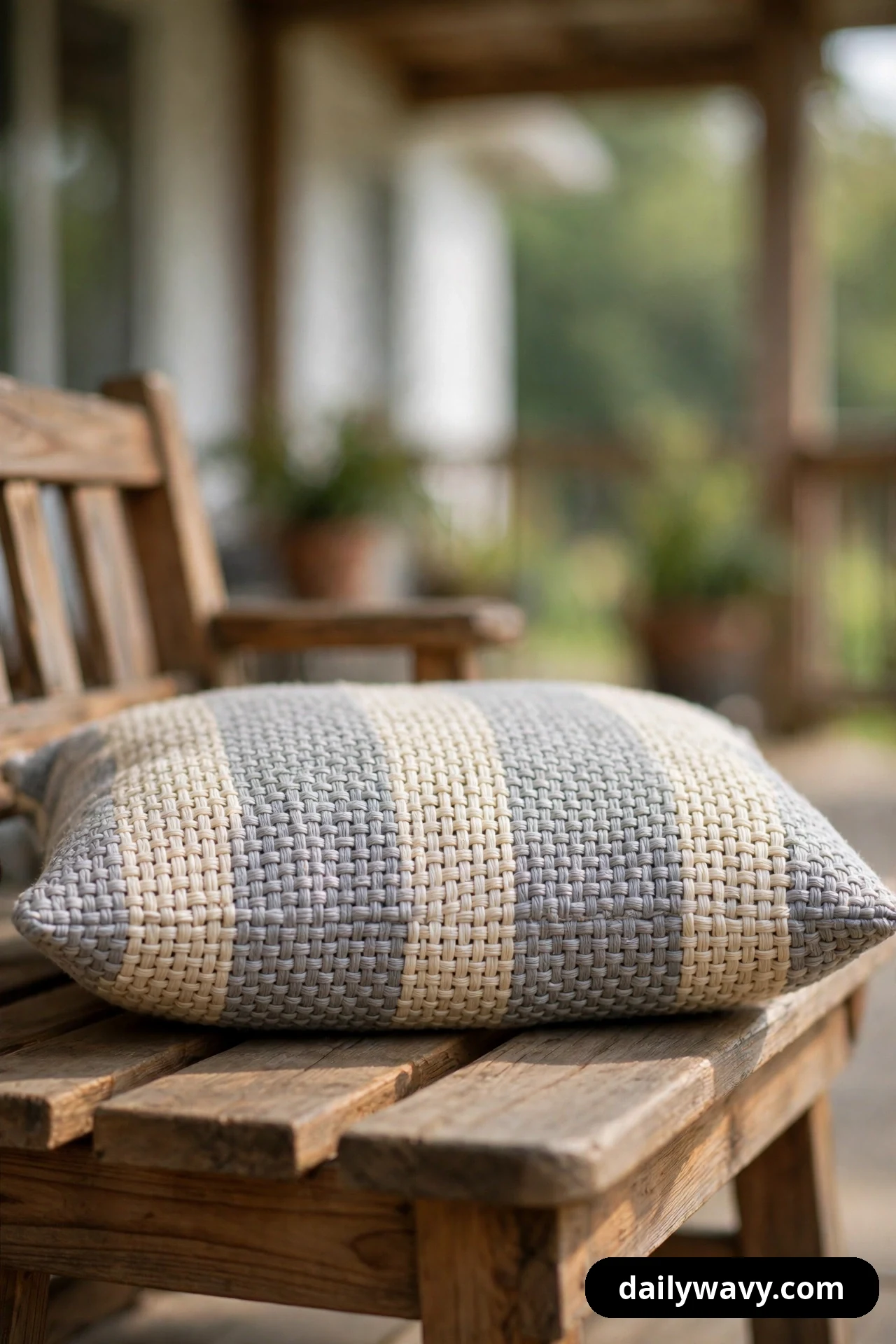
One good cushion changes a porch bench from storage furniture into a place someone actually wants to sit. Choose an outdoor-rated cushion, around 18 to 20 inches square and 3 to 4 inches thick, in a solid warm neutral like oatmeal, sand, or soft gray. A single solid color reads calmer than a busy pattern and lets the plants and door color do the talking. The cushion goes on a bench, a glider, or a low wall-side stool, anywhere that does not narrow the walking path.
Measure the seat first and leave 2 inches of the cushion inside the seat edges on all sides so it does not overhang and snag passing bags. Look for a cushion with a zippered cover, a solution-dyed acrylic or polyester fabric, and ties on the back corners. The ties matter more than they seem: without them the first real wind gust folds the cushion into the yard. Keep the ties snug and check them once a month.
A modest cushion costs little and transforms the bench, but it needs a little care. Brush off dust weekly, wipe spills the same day, and bring the cushion under cover or into a storage box during heavy storm weeks and for winter. When the cover wears out, replace just the cover instead of the whole cushion; most standard sizes stay available for years.
Lower-cost alternative: a standard square throw pillow in an outdoor pillow cover, swapped in from the closet instead of buying a full bench cushion. The look is the same from the street, and the cover is washable.
2. A House-Number Display

Clear house numbers are decor that works for a living. Delivery drivers, guests, and emergency responders all need to read them, and a handsome display next to the door anchors the whole entrance. Mount modern block numerals, 4 to 6 inches tall, on a stained wood plaque or directly on the siding beside the door. Matte black metal numerals on a warm walnut board look sharp against almost any house color.
Place the plaque at eye level, around 60 inches from the porch floor, on the door’s handle side so it reads naturally from the walkway. The numerals need good contrast with their background: dark numbers on light siding, light numbers on a dark door. Keep it at least 6 inches from the door frame so the door trim never crowds it.
Mount with two or three exterior screws driven into solid wood or masonry anchors rated for the surface, never into just vinyl siding. Level it with a small torpedo level before you commit. The screws should be stainless or coated for outdoor use so they do not streak the plaque with rust lines in a year.
Lower-cost alternative: large weatherproof adhesive numerals applied directly to the door or a glass sidelight. They cost a fraction of a plaque and come off cleanly when you move.
3. A Plant Grouping Beside The Door
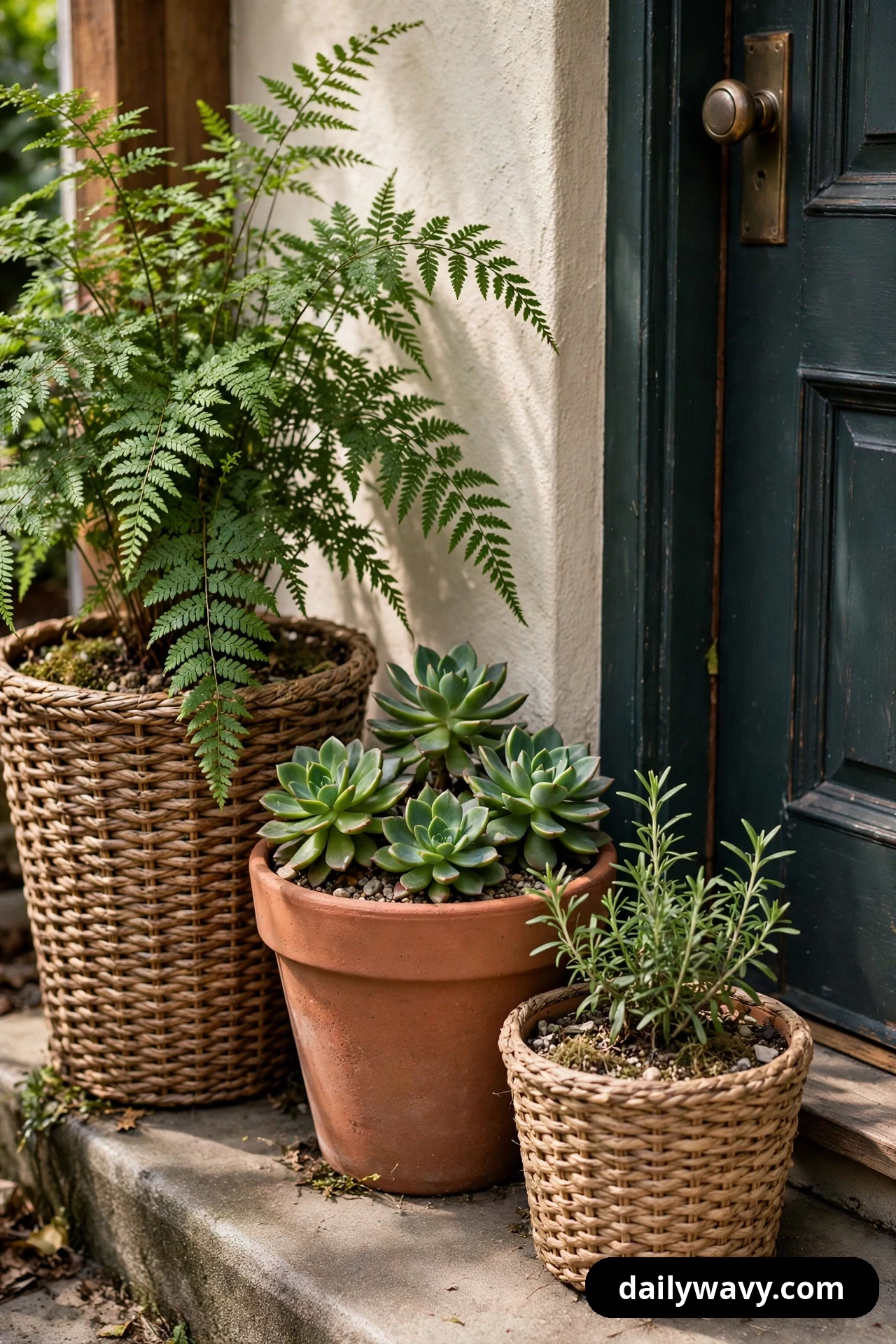
Plants are the fastest way to make a porch feel cared for, and a grouping reads better than one lonely pot. Cluster three planters at the side of the door that is opposite the handle: one tall, one medium, one low. A 20-inch tall ceramic pot with a small shrub, a 14-inch pot with a flowering plant, and a low 10-inch bowl with trailing greenery gives you the classic thriller, filler, spiller shape. Keep the whole group at least 12 inches from the door swing so petals never brush visitors.
Choose the plants for your porch’s light and your climate, then buy the biggest pots you can comfortably carry when full of wet soil. Large pots dry out slower, which matters enormously on a covered porch where rain barely reaches them. Stick a finger an inch into the soil before watering; water only when it feels dry. Set the pots on saucers or risers so wet bases never stain the porch floor, and spin the pots a quarter turn every two weeks so growth stays even.
A grouping like this takes about an hour to assemble and lasts the whole season with a short weekly watering routine. Feed the plants with a half-strength liquid fertilizer every two weeks through the growing season, and deadhead spent blooms so the display keeps looking intentional instead of tired.
Lower-cost alternative: start with three inexpensive nursery pots in one color family instead of decorative planters. From the walkway, a unified color reads as designed, and you can upgrade to ceramic over time.
4. A Low Basket With Outdoor-Safe Contents
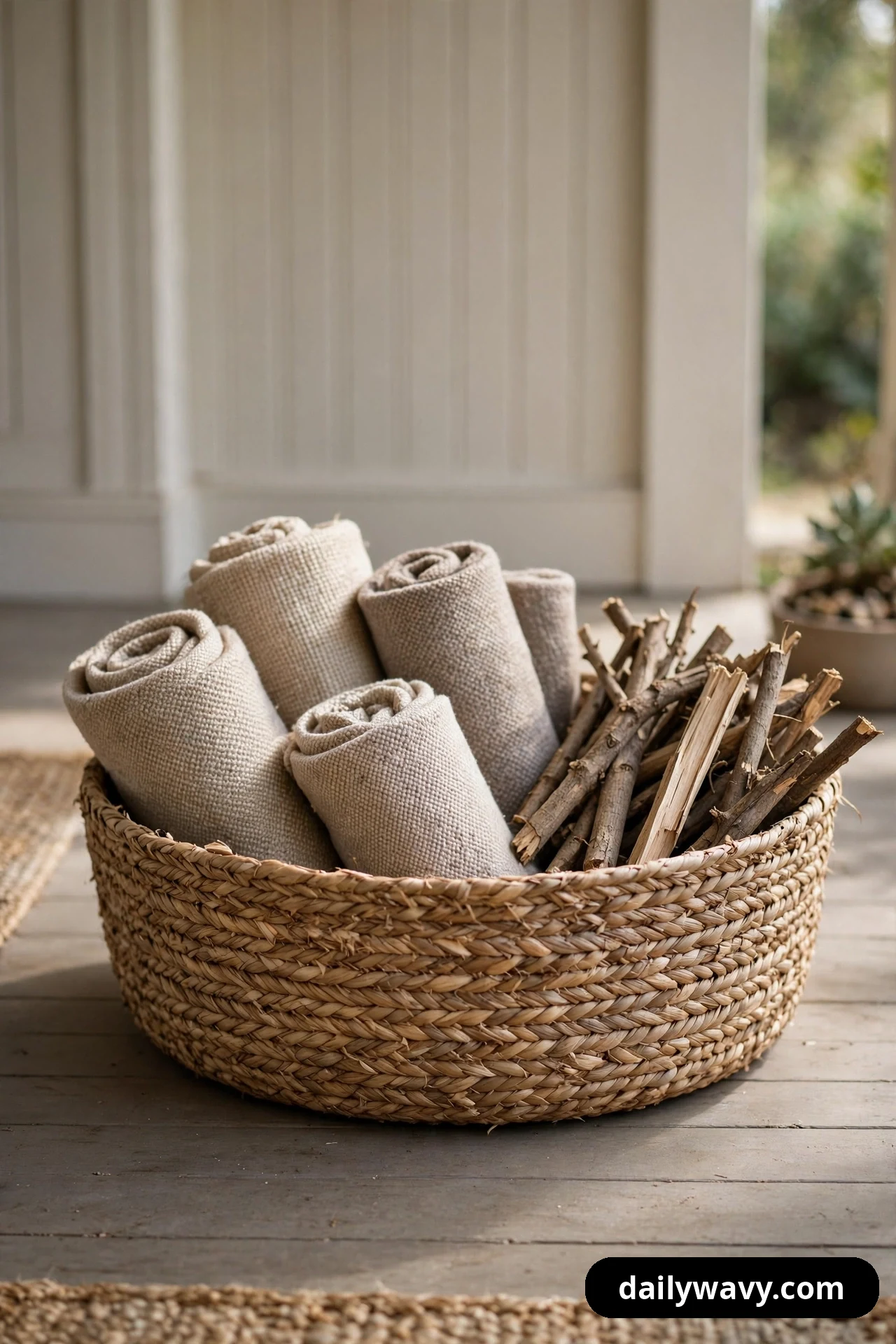
A low basket softens the hard edges of a porch and gives the eye a warm texture to land on. Choose a woven basket, roughly 18 inches wide and 12 inches tall, made for outdoor use: resin wicker, sealed seagrass, or treated willow. Fill it with things weather cannot hurt: a folded outdoor throw, a rolled doormat waiting for duty, or kindling stacked for the fire pit. Never store anything absorbent or perishable; this is decoration, not a pantry.
Set the basket tight against the wall, on the same side as the plant grouping or under a bench, well outside the 36-inch walking lane. The low height matters: a basket under 15 inches tall sits below sightlines and never blocks the door or the house numbers. In windy areas, weight the bottom with a couple of bricks tucked under the contents so the whole thing stays put.
Baskets fade slowly in daylight, so rotate the basket a quarter turn each season for even color, and bring it under deeper cover for winter. Shake out dust monthly and spot-clean with a damp cloth. If the weave starts to fray at the rim, wrap it with jute twine for a repair that looks like a style choice.
Lower-cost alternative: any sturdy woven tote or market basket you already own, lined with a plastic bag if the contents might be damp. The texture reads the same from the door.
5. A Repeated Metal Finish
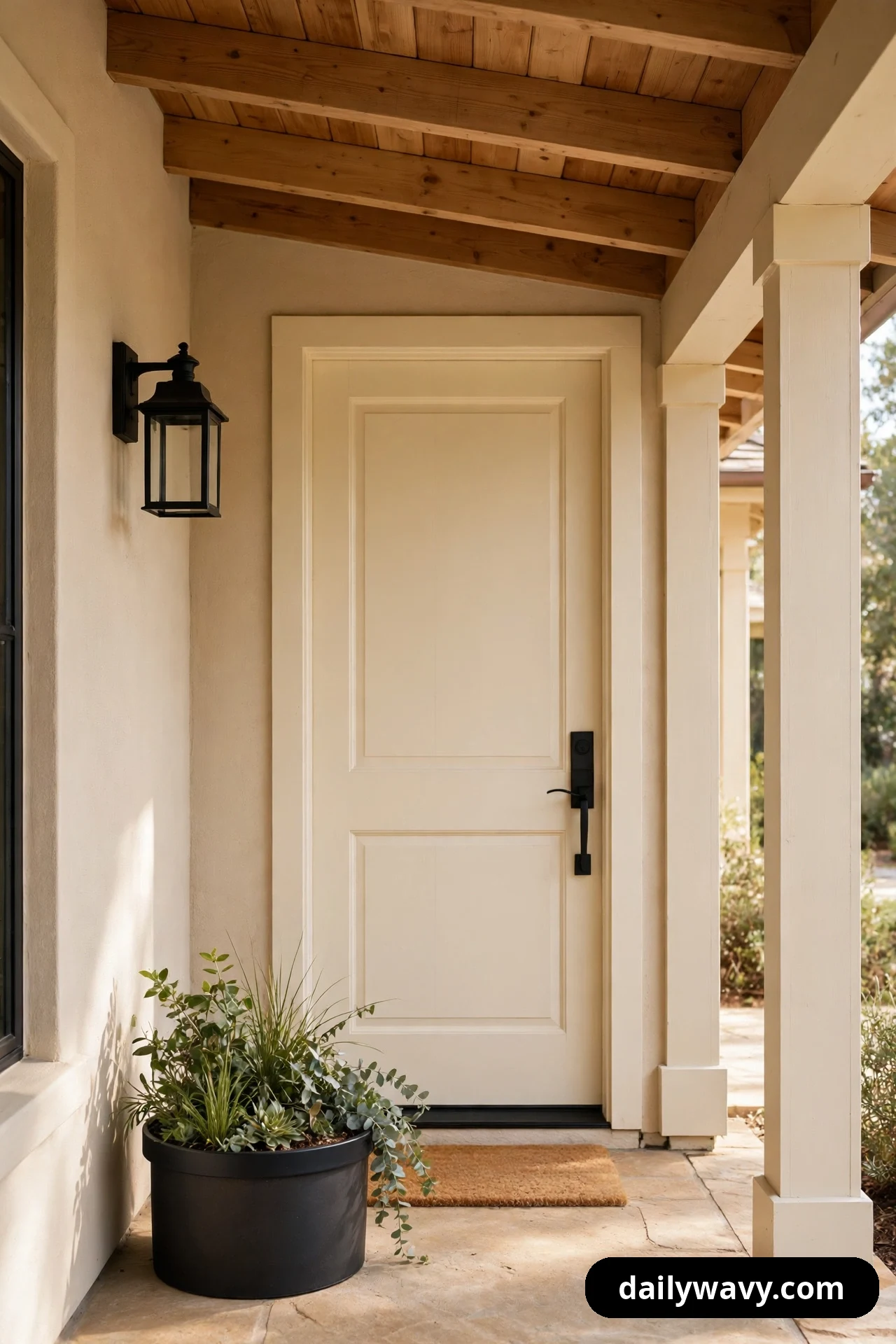
Repeat one metal finish across the porch and everything looks coordinated without matching sets. Matte black is the easy winner: it pairs with every house color and hides dirt well. Carry it through three to four touches: the lantern sconce beside the door, the planter rims, the door handle, and maybe the welcome mat frame. When the same finish appears in small doses all over the porch, the whole space reads as designed.
Start with the pieces you touch most, because you see them most. A matte black door handle and a black lantern sconce set the tone, then echo the finish in lighter items: planter bands, a wall hook, the edges of a small sign. Keep the finishes close to each other in tone; mixing glossy chrome with matte black reads as accidental. One finish, repeated quietly, is the whole trick.
Check that every piece is actually rated for outdoor use. Powder-coated metal holds up for years, while painted steel chips and rusts within a season on a humid porch. Wipe the pieces down twice a year with a damp cloth and touch up any chips with exterior metal paint in the same finish so rust never gets a start.
Lower-cost alternative: spray paint existing pieces in one outdoor-rated matte black metal paint. A can of outdoor-rated matte black metal paint transforms a mismatched lantern, old planter rim, and faded hook into a coordinated set in an afternoon.
6. A Single Accent Color

One strong color, used once or twice, gives a neutral porch personality without chaos. Pick your accent from something that already lives near the house: a terracotta pot that echoes the brick, a deep teal cushion that picks up the shutters, a warm mustard that answers the front door. The accent should appear in exactly two or three small spots, never more. A single colored planter plus one matching cushion is enough; a fourth item tips the porch from lively to busy.
Keep everything else restrained. When the walls, floor, bench, and plants stay in warm neutrals, the accent color does its job with very little effort. This is why the rule works: contrast needs quiet around it. If you ever feel the porch looks flat, the answer is almost never a second accent color. It is usually better plants or better lighting.
Test the color before you commit. Bring home a paint chip or a small pot and look at it on the porch at morning and evening light; colors shift dramatically under a roof. Choose an outdoor-rated finish so the accent survives the season, and store the colored pieces under cover for winter since strong pigments fade fastest.
Lower-cost alternative: one flowering plant in your chosen color, swapped each season. The color arrives naturally, costs a few dollars, and never needs storage.
7. A Hanging Decoration Secured Appropriately
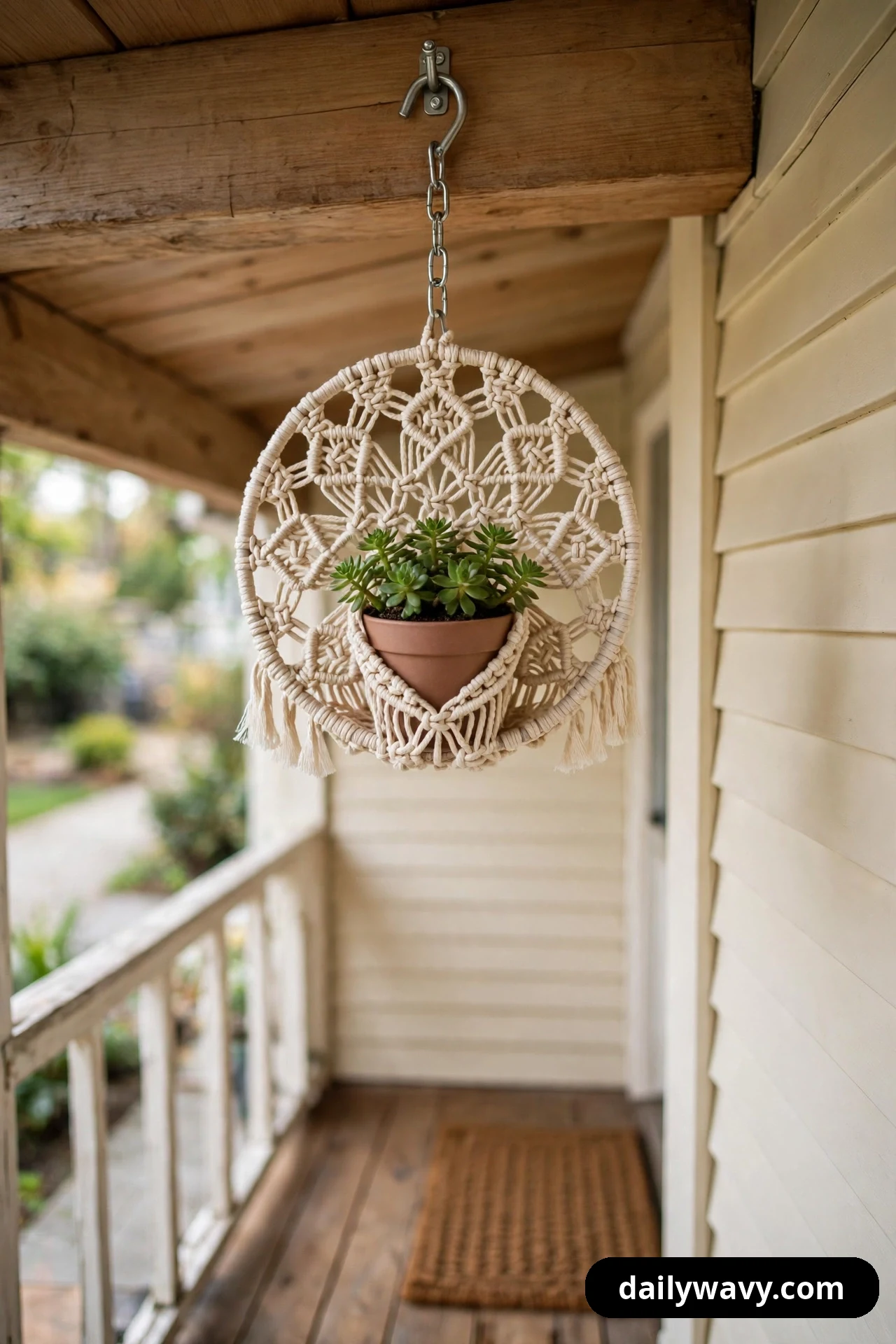
Something overhead gives a porch a finished, ceilinged feeling: a small lantern, a wooden bead garland, or a seasonal wreath on a wreath hanger. The key word is secured. Hang only from solid structure, a ceiling joist or a beam, using a screw-in hook or bracket rated for at least three times the item’s weight. Never hang from gutters, fascia boards, trim, or light fixtures. A porch decoration that falls can break, block the door, or hit someone, so the hardware is the whole project.
Hang the piece high enough that no one brushes it: at least 7 feet above the porch floor, and well to the side of the door swing. Use outdoor-rated chain, wire, or rope, and add a second backup attachment for anything heavier than a few pounds. Twist the hanger closed with pliers so wind cannot work it loose. Give the hanging piece a firm tug test after installation and again each season.
Choose weatherproof materials: powder-coated metal, sealed wood, resin, or outdoor fabric. Paper, untreated wood, and glass ornaments do not survive a humid porch season. When the season ends, take the decoration down, clean it, and store it dry; hardware left in place can stay if it is stainless or powder-coated.
Lower-cost alternative: a simple loop of jute twine with dried flowers or eucalyptus, hung from an existing hook. It costs very little, weighs almost nothing, and the scent is a bonus.
8. A Short Row Of Small Pots
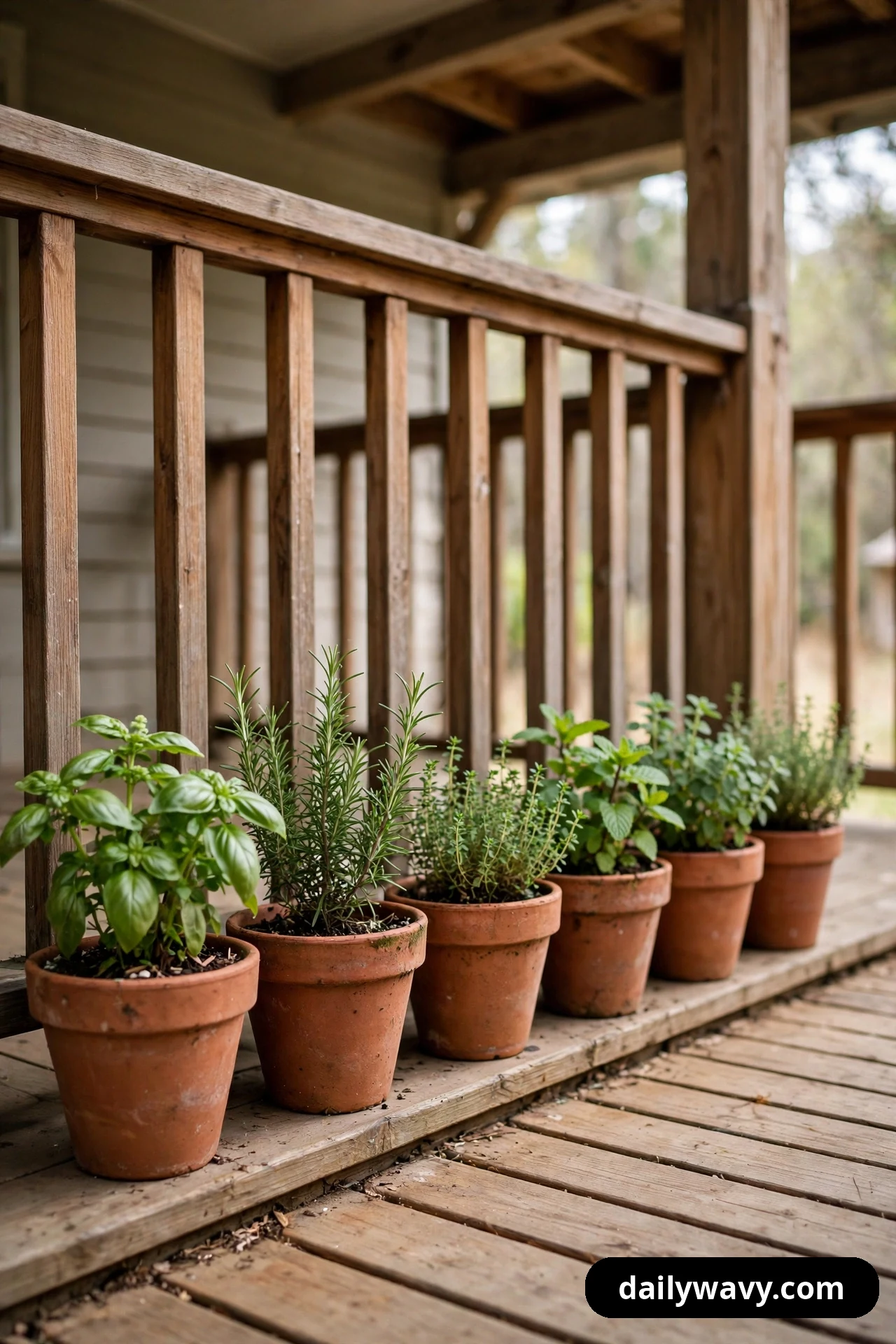
Five or six small pots in a neat row do what one big pot cannot: they trace a line along the porch edge and give the entrance rhythm. Use small terracotta pots, 4 to 6 inches across, planted with herbs or small annuals, and space them evenly along the porch’s outer edge or along the top step’s side. The repetition is calming, and the small scale suits a modest porch perfectly.
Line the pots up with a string or a long board as a guide so the row runs truly straight, then set each pot 2 to 3 inches apart. Keep the row at least 6 inches back from the step edge so a misstep never kicks a pot down the stairs. Because small pots dry out fast on a covered porch, check the soil daily in hot weather and water when the top inch is dry. Grouping them together slows the drying, which is half the point of the row.
Terracotta breathes, which plants love but which means frequent watering. If you travel, swap in glazed or plastic pots in the same size; they hold moisture days longer. Feed the herbs with half-strength fertilizer every three weeks, and harvest often. Frequent snipping keeps herbs bushy instead of leggy.
Lower-cost alternative: start the herbs from seed in the same pots. A packet of seeds costs less than one transplant, and watching them grow becomes part of the porch’s charm.
9. A Simple Door-Side Wall Accent

One modest piece on the wall beside the door fills the empty space between the door frame and the porch corner without competing with anything. A small framed weatherproof print, a simple wooden sign, or a shallow wall basket works. Keep it modest: around 12 to 16 inches wide and no more than 20 inches tall. This is an accent, not a gallery wall.
Center the accent at eye level, about 60 inches from the floor, on the wall section with the most uninterrupted space. Leave at least 12 inches between the accent and the door trim so it reads as its own piece. For renters, choose a lightweight piece hung from a removable adhesive hook rated for outdoor use and for the piece’s weight; test the hook’s hold for 24 hours before hanging anything you would miss.
Weatherproof the piece itself. A framed print needs a sealed back and UV-resistant glazing or it will warp and fade within months; a wooden sign needs exterior paint or spar urethane on all sides. Check the wall surface first: brick and stucco need masonry anchors, while wood and fiber-cement siding take stainless screws. Seal any new holes with exterior caulk.
Lower-cost alternative: a flat woven wall basket from a thrift store, sealed with a clear exterior spray. It brings texture for a few dollars and weighs almost nothing.
10. A Compact Chair Angled Toward The Garden
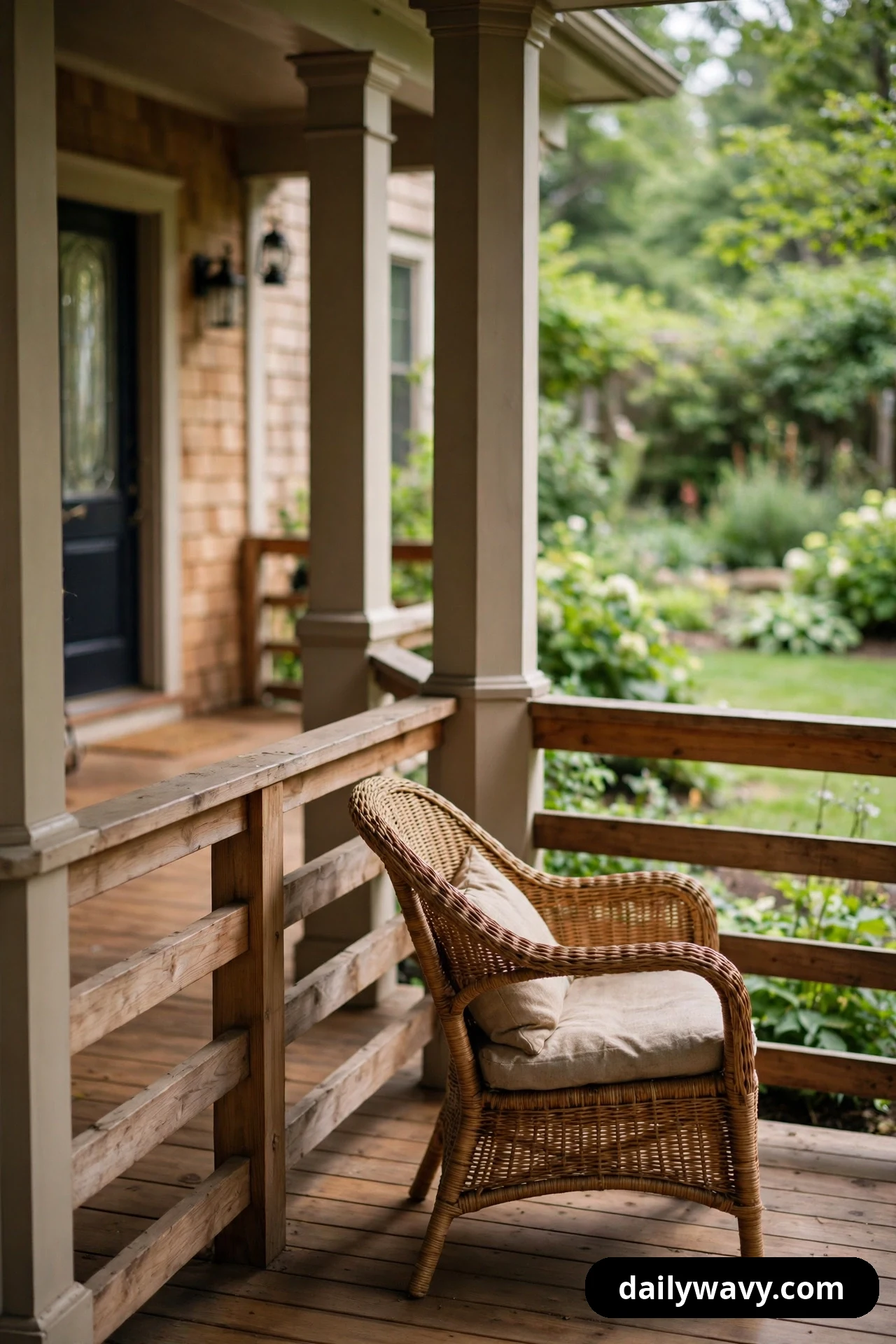
A single chair turned toward the yard says this porch is for lingering, not just passing through. Choose a compact armchair or woven accent chair, no more than 26 inches wide, in an outdoor-rated weave or treated wood. Angle it about 30 degrees toward the garden view rather than facing the street; the angle feels conversational and relaxed instead of formal. Place it against the wall opposite the door, completely clear of the walking lane and the door swing.
Give the chair a purpose: a small side table or a wall-mounted folding shelf within arm’s reach holds coffee, a book, or reading glasses. A seat pad in outdoor fabric makes a hard woven seat comfortable, and one small outdoor cushion ties the chair to the bench cushion for a coordinated look. Keep the chair’s footprint within about a 36-inch square so the chair never crowds the path.
Anchor the chair against wind by choosing a heavier piece or setting the legs on an outdoor rug; lightweight chairs slide and tip on smooth porch floors. Bring cushions in during storms, and store the whole chair under cover or indoors for winter. Wipe the weave down each spring before the season starts.
Lower-cost alternative: a sturdy folding camp chair in a neutral canvas, kept tucked against the wall. It offers the seat for almost nothing and folds away when guests arrive with strollers.
11. A Textured Outdoor Runner
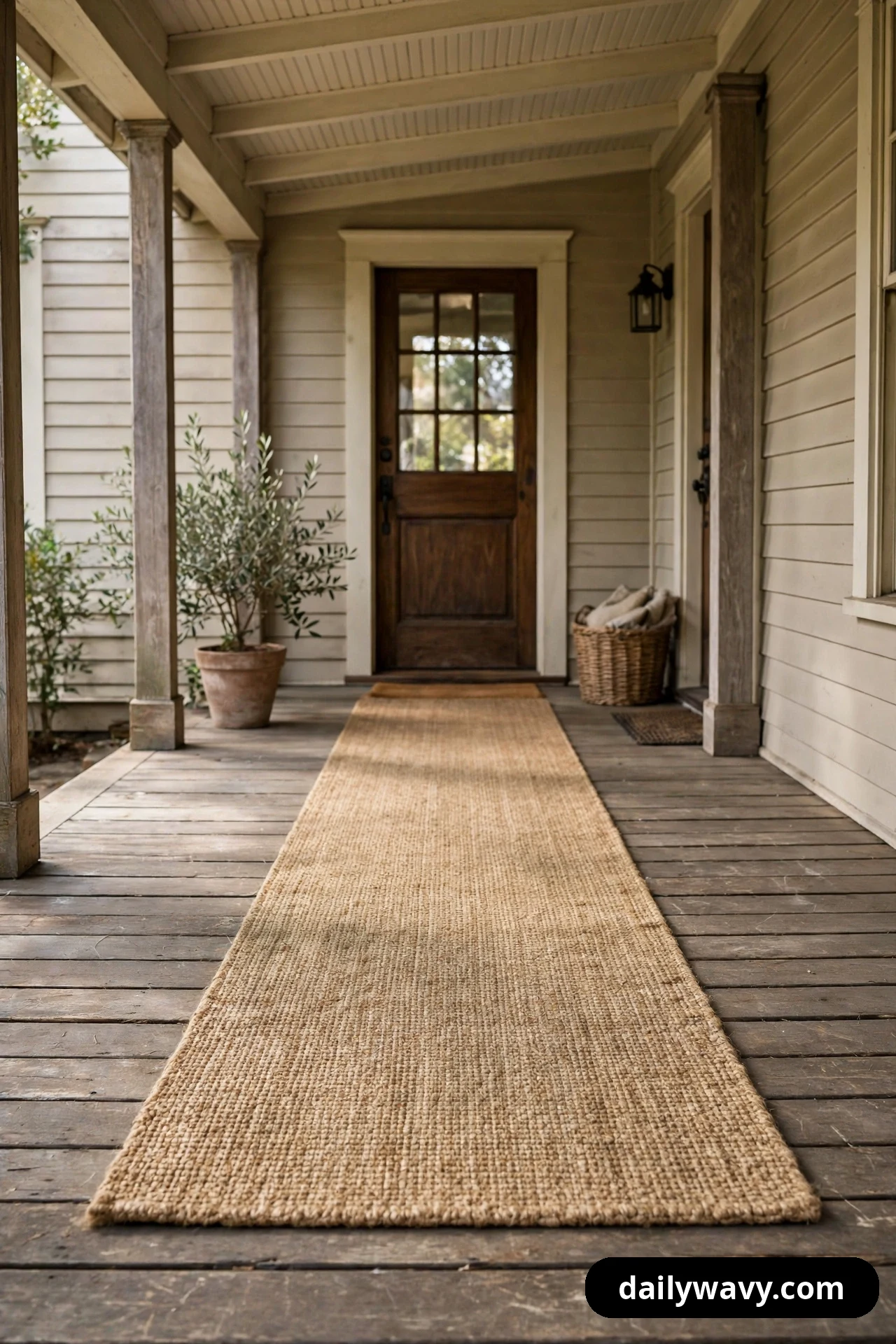
A runner defines the path from the steps to the door and warms up a hard porch floor in one move. Choose a flat-weave outdoor runner, 2 to 3 feet wide and 5 to 8 feet long, in a natural fiber look: polypropylene woven to look like sisal or jute, with a low profile that doors clear easily. The runner should sit centered on the walking route, starting 6 inches inside the top step and ending 12 inches before the door swing begins.
Measure the door clearance before you buy. Open the door fully and mark where the bottom of the door passes; the runner must stay clear of that arc or the door will catch and buckle it. A flat weave under a quarter inch thick almost always clears, which is why thick shaggy rugs never belong at an entrance. Tape the runner’s ends down with outdoor rug tape or use a non-slip outdoor rug pad cut to size so it never creeps.
Shake the runner out weekly and hose it down monthly; polypropylene dries in an hour in sun. Flip it end to end once a season so the wear evens out. When winter comes, roll it up and store it dry, and the porch floor gets a fresh start each spring.
Lower-cost alternative: two standard outdoor doormats laid end to end in matching patterns. The look is close, the cost is lower, and each mat is easier to shake out.
12. A Small Watering-Can Vignette
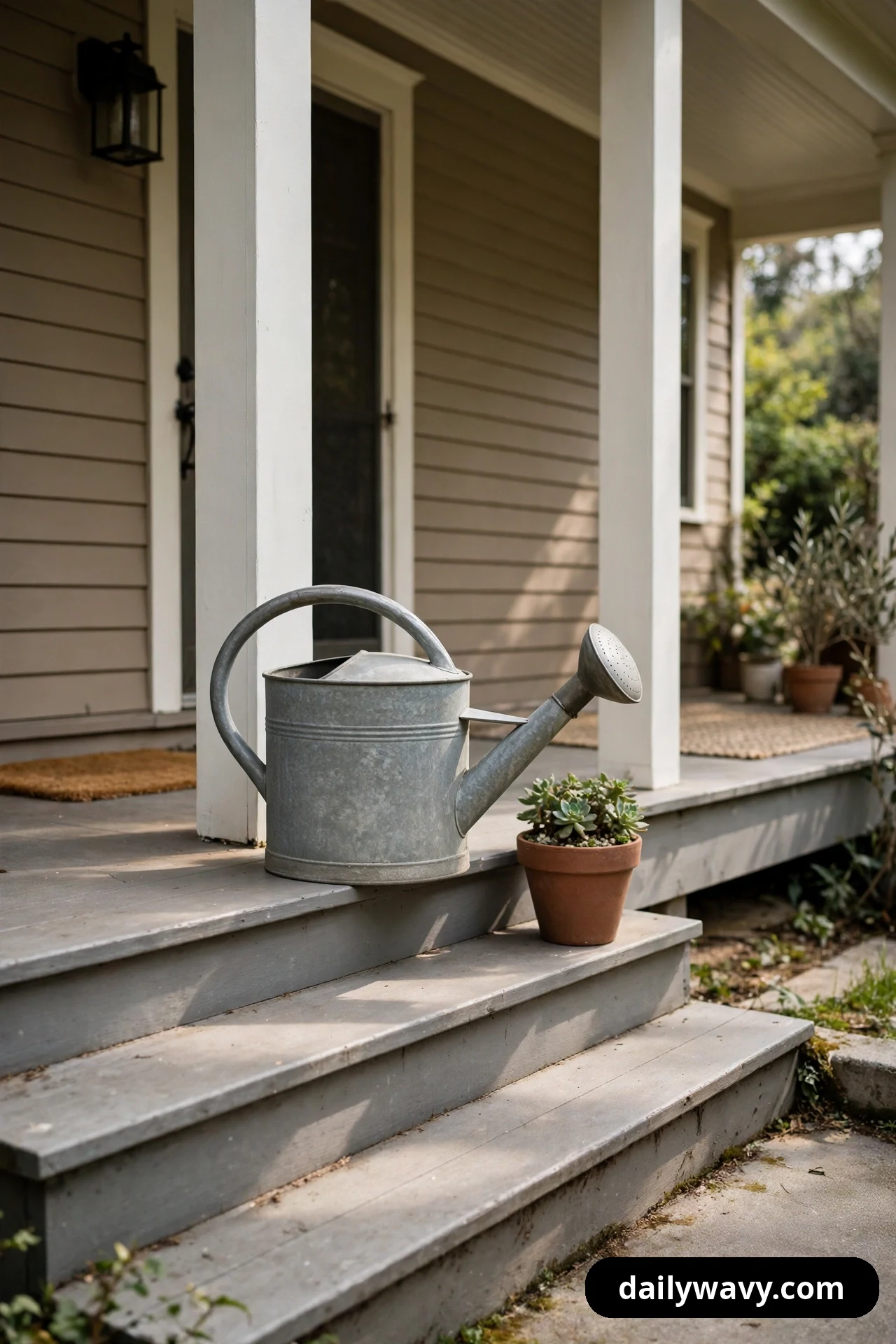
A watering can beside a plant tells a little story: someone tends this porch. Set a small galvanized metal watering can, about a gallon size, on a wide porch step or beside the plant grouping, with a small potted herb tucked next to it. The metal’s soft gray-green patina plays beautifully against terracotta and warm wood, and the vignette reads as charming rather than cluttered because it has a clear job.
Keep the vignette compact and off the walking path. One step’s corner or the end of a bench holds it perfectly; never the middle of a step where feet land. Empty the can after watering so it does not breed mosquitoes, and tip it on its side during long rainy stretches so it does not become a puddle holder. The can itself is the decoration, so choose one with a shape you like even when it is dry.
Galvanized metal handles porch life well, but standing water stains it and the porch floor. Set the can on a small saucer or a flat stone, and rinse it out monthly to keep it clean. In winter, bring the can indoors; repeated freeze-thaw cycles eventually split the seams.
Lower-cost alternative: any metal pitcher or old coffee pot from a thrift store. The vintage shape reads the same, and the price is pocket change.
13. A Planter With Local Seasonal Foliage
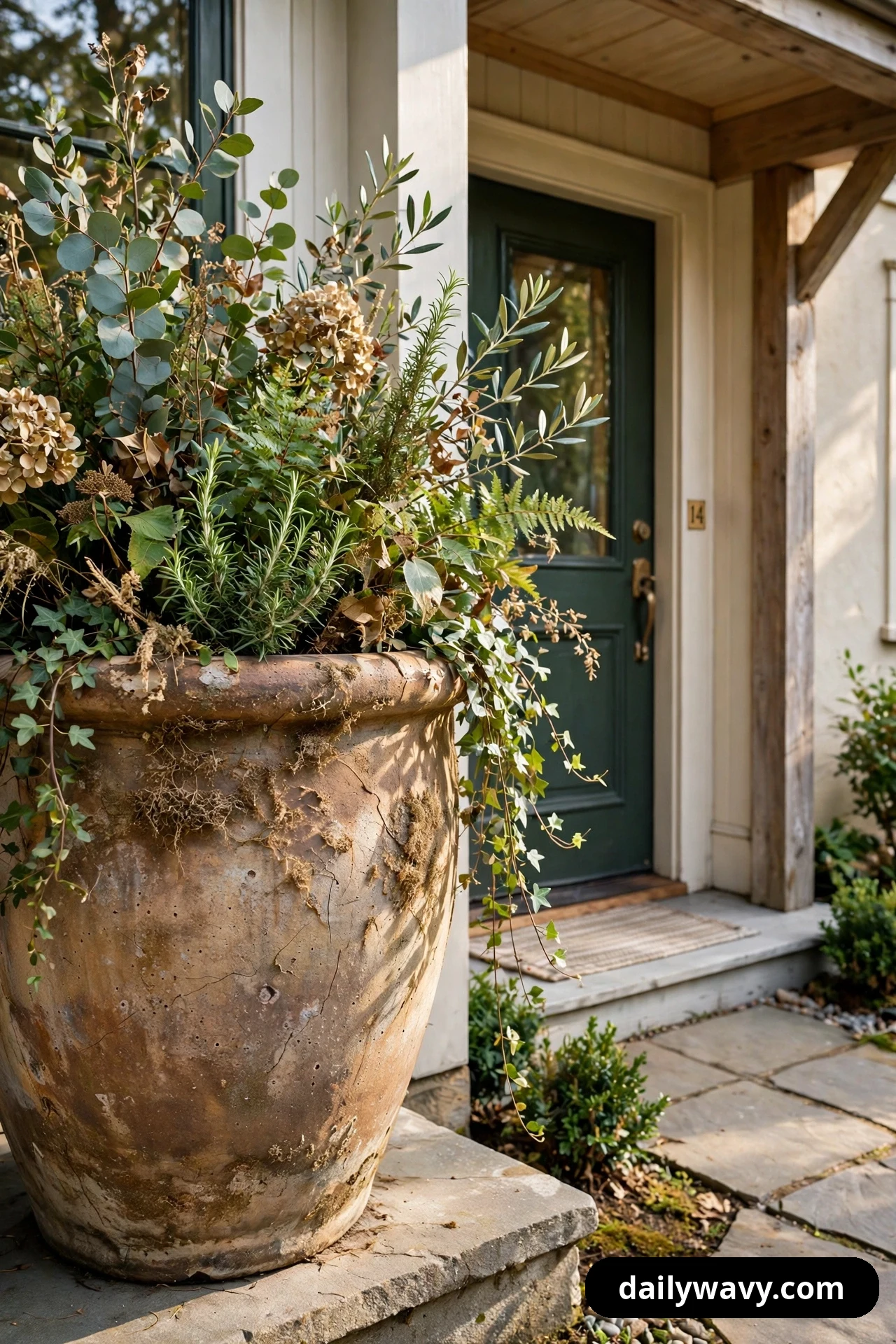
One generous planter with plants that belong in your region is the anchor of a welcoming porch. Choose a weathered ceramic or concrete planter, 18 to 24 inches across, and fill it with foliage suited to your season and climate: evergreen boughs and berries in winter, lush ferns in spring, heat-tolerant grasses in summer, ornamental cabbage and mums in fall. A single large planter always looks more expensive than several small ones, and one big root zone is far easier to keep watered.
Place the planter on the door’s hinge side or the handle side, whichever keeps it fully clear of the door swing and the walking lane. Fill the bottom third with lightweight filler like empty plastic bottles or foam so the planter is not impossibly heavy, then top with potting mix. Water deeply until it drains from the bottom, then water only when the top two inches are dry. Feed seasonally with a slow-release fertilizer so the display stays full.
Refresh the planting four times a year and the porch never looks tired. Pull spent plants, top up the soil, and replant; the whole swap takes under an hour. Store the empty planter upside down for winter if you live where freeze-thaw cracks ceramic, and use a frost-proof pot if you want it out year-round.
Lower-cost alternative: a large plastic nursery pot slipped inside a woven basket. The basket gives the look, the plastic gives the durability, and the combination costs a fraction of a ceramic planter.
14. A Clear Landing Area At The Entrance
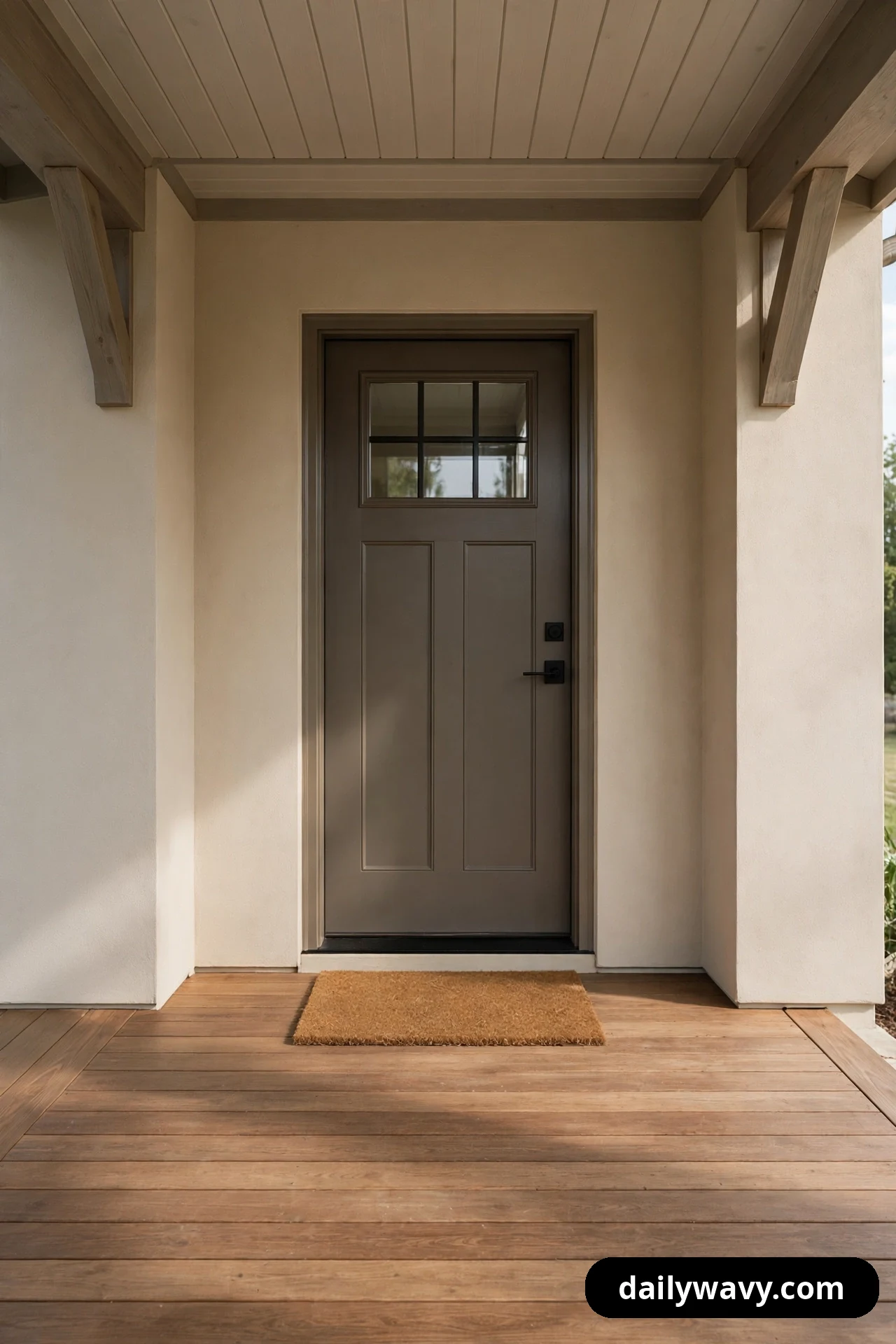
The most welcoming thing a porch can offer is space. A clear landing area, a clean rectangle of porch floor in front of the door with nothing in it but a single doormat, tells every visitor exactly where to stand, where to put down bags, and where the door swings. It is the one idea on this list that costs nothing and improves everything else. If your porch feels cluttered, start here before buying a single thing.
Define the landing with a doormat sized to the door: for a standard 36-inch door, a mat 24 to 30 inches deep and at least as wide as the door. Center the mat on the door and keep everything else at least 18 inches back from its edges. The door swing needs its full arc with nothing in it, and the path from the steps needs its straight run. Sweep the landing weekly; a clean floor reads as cared for all by itself.
Resist the urge to fill this space. The plants, the chair, the basket, and the watering can all live at the porch’s edges, and the landing stays empty by design. This is also a safety rule: in icy weather or at night, a clear landing with a grippy doormat is the difference between a confident step and a slip.
Lower-cost alternative: there is none needed, and that is the point. Moving what you already have to the porch’s edges costs nothing and makes the whole entrance feel larger and calmer.
Porch questions, answered
Does a covered porch still need outdoor-rated furniture?
Yes. A roof blocks direct rain, but humidity, sideways rain, temperature swings, and UV bouncing off the walls all reach the porch. Outdoor-rated materials last years longer than indoor pieces in the same spot, and they are usually no more expensive.
How do I keep the porch safe for kids and older visitors?
Keep the walking route 36 inches clear, secure every hanging item, avoid trip hazards like curled rug edges, and never place anything fragile or tippy where a bump could topple it. Good lighting matters too: a bright, warm porch light makes steps and edges visible after dark.
What if I rent?
Choose freestanding pieces, removable adhesive hooks rated for the weight, and planters instead of anything screwed down. Get written permission before drilling into siding, posts, or the door frame. Everything on this list can be done renter-friendly with the right hardware.
How often should I water porch plants?
Covered porches block most rain, so the plants are entirely your job. Check the soil with a finger an inch deep: water only when it feels dry. Small pots may need daily water in summer heat, while large planters often need it only twice a week.
What is the best low-maintenance look?
One large planter with local evergreen foliage, a repeated metal finish, a textured runner, and a clear landing area. Four moves, almost no upkeep, and the porch reads as polished in every season.
How do I decorate a very small covered porch?
Pick three ideas at most: the house-number display, one plant grouping tucked tight to the wall, and the clear landing area. Small porches fail when they are crowded, and they succeed when every piece has a clear job and clear space around it. Our small front porch decor ideas collect more scaled-down combinations that keep that breathing room.
Start with the path, then add one layer
A welcoming covered porch is built in the right order. First, clear the landing area and the walking route so the entrance is safe and easy to use. Then add one layer at a time: the house numbers, the plants, the runner, the cushion, the chair. Stand at the street after each layer and look back; when the porch feels finished, stop. The goal is an entrance that says someone cares, not an entrance that shouts.
If the porch is one part of a bigger small-space refresh, the storage thinking in our small entryway decor ideas carries the same calm-inside logic to your front hall, and the layout sense in our narrow living room layout guide helps when porch furniture and indoor furniture need to feel like one home. For more room-by-room inspiration, browse the full Home & Decor collection.