20 Casual Brunch Table Setting Ideas with Simple Styling Details
Brunch tables do not need a florist or a formal dining room to feel special. They need a few honest…
Brunch tables do not need a florist or a formal dining room to feel special. They need a few honest materials, a little breathing room, and arrangements low enough that everyone can talk across them. This roundup collects twenty casual brunch table settings built from things you probably already own: plain plates, linen napkins, a wooden tray, a bowl of fruit. Each idea tells you exactly what to measure, what to buy, how long it takes, and how to do it cheaper. No candles, no fuss, nothing that blocks the coffee pot. Just simple styling details that make an ordinary Saturday morning feel a little bit considered.
Jump to an idea
- A narrow runner and plain plates
- A potted herb centerpiece
- A low mixed-flower arrangement
- Woven placemats with clear glasses
- A row of tiny ceramic vessels
- A wood tray with small plants
- A single wide shallow bowl
- Patterned napkins with solid dinnerware
- A subtle contrasting charger plate
- A small bread board as a shared focal point
- Clear bottles holding green cuttings
- A compact dried-stem arrangement
- A handwritten place card
- A bowl of citrus and leaves
- A folded fabric strip beneath each setting
- A low grouping of stoneware
- A platter of seasonal produce
- Single stems in low bud vases
- A bowl of seasonal fruit
- Folded linen napkins with simple rings

The ground rules before you set anything down
Every idea below works because of the same handful of rules, so get them straight first and everything else gets easier. First, these are everyday brunch ideas, not holiday tables. A holiday table leans on matching sets, height, and formality; these settings lean on texture, breathing room, and things you already own. A few of them (the charger plates, the place cards, the linen napkins with rings) dress up nicely for a special occasion, and the notes below say so when they do, but most of them are built for a regular Saturday.
Second, keep everything low. A centerpiece taller than about 12 inches turns a table into two separate parties, because nobody can talk across it. Every arrangement below sits at or below that line. Third, keep every place setting usable: allow 24 inches of elbow room per person and 15 inches of table depth, keep the center third of the table clear for serving dishes, and put serving pieces at both ends of a long table so nobody has to pass a platter six hands. Fourth, set cutlery the standard way even at a casual table, because muscle memory makes a meal feel easy: fork on the left, knife on the right with the blade facing the plate, spoon to the right of the knife, water glass at the top right above the knife, napkin on the plate or to the left of the fork. Finally, this whole roundup is candle-free by design. You get height and warmth from plants, bowls, bottles, and bread instead, which also means nothing drips wax on your runner and nothing needs relighting.
1. A narrow runner and plain plates

A table runner is one of the fastest ways to tell a brunch table you meant it, and a narrow one keeps the look calm instead of busy. Standard runners run 16 to 18 inches wide; choose 12 to 14 inches instead so plates, glasses, and serving bowls still have real estate on either side. For a 72-inch dining table, a 90-inch runner leaves a 9-inch drop on each end, which is the classic proportion. Lay it down the center, then set plain white or cream 10.5-inch dinner plates about 24 inches apart.
What to measure: Your table width first. On a 36-inch-wide table, a 14-inch runner leaves only 11 inches per side for glassware, which works but leaves no room for error. Materials: A linen or cotton runner in a warm neutral, plus plain dinnerware. Placement: Runner centered, ends hanging 8 to 10 inches over each end. Approximate effort: 10 minutes and about $15 to $25 for a ready-made runner. Lower-cost alternative: A length of kraft paper or a folded flat bedsheet strip does the same job for pennies and looks intentional with the plain plates.
2. A potted herb centerpiece

Few centerpieces earn their keep the way potted herbs do, because they smell good, look alive, and end up in the food. Cluster three to five 4-inch terracotta pots of basil, rosemary, thyme, or mint down the center of the table, each on a small saucer so watering never reaches the tablecloth. Keep every pot under 10 inches tall so the arrangement stays below the sightline.
What to measure: The center third of your table; on a 72-inch table that gives you about 24 inches of cluster length, which fits four 4-inch pots with breathing room. Materials: Terracotta or ceramic pots, saucers, and live herb plants. Placement: A loose cluster in the center, tallest plant in the middle, smaller ones flanking it. Approximate effort: 10 minutes and about $4 to $6 per potted herb. Lower-cost alternative: Set grocery-store herb bunches in water for a day to perk them, then tuck them into whatever small pots you own, or propagate cuttings from your garden.
3. A low mixed-flower arrangement

A low flower arrangement gives you all the color of a bouquet with none of the sightline problems. The trick is a wide, low vessel, a bowl or a short compote, with stems cut to 6 to 8 inches so the whole thing sits well under 12 inches. Skip floral foam; a crisscross of clear floral tape across the bowl mouth, or a ball of chicken wire inside it, holds stems at any angle and can be reused.
What to measure: The bowl mouth, so your tape grid squares are about 2 inches; stems get cut to roughly twice the vessel height. Materials: A wide low bowl, floral tape or chicken wire, and mixed stems, garden roses, ranunculus, and a filler like waxflower work well. Placement: Center of the table, pushed slightly to one side if a serving platter needs the middle. Approximate effort: 20 minutes and about $12 to $18 for stems. Lower-cost alternative: Buy one inexpensive grocery bouquet and split it across the grid; three colors from one bunch reads as mixed if you cut stems at different heights.
4. Woven placemats with clear glasses

Woven placemats bring instant warmth and texture, and they forgive crumbs in a way a bare table never does. Use round 13-inch seagrass, rattan, or water hyacinth mats, one per setting, spaced 24 inches apart. Pair them with clear glassware, because the transparency keeps a textured table from feeling heavy, and set the water glass at the top right of each plate as usual.
What to measure: Your table length against 24 inches per person; six settings need 12 feet of table edge, so a 72-inch table seats three per side comfortably. Materials: Woven placemats and clear drinking glasses. Placement: Mats centered on each setting with the plate on top, glasses top right. Approximate effort: 10 minutes and about $8 to $15 for a set of four mats. Lower-cost alternative: Paper placemats in a natural weave print, or skip mats and let a runner do the textural work. This is a solid everyday setup, and it is one of the easiest ideas here to repeat weekly.
5. A row of tiny ceramic vessels
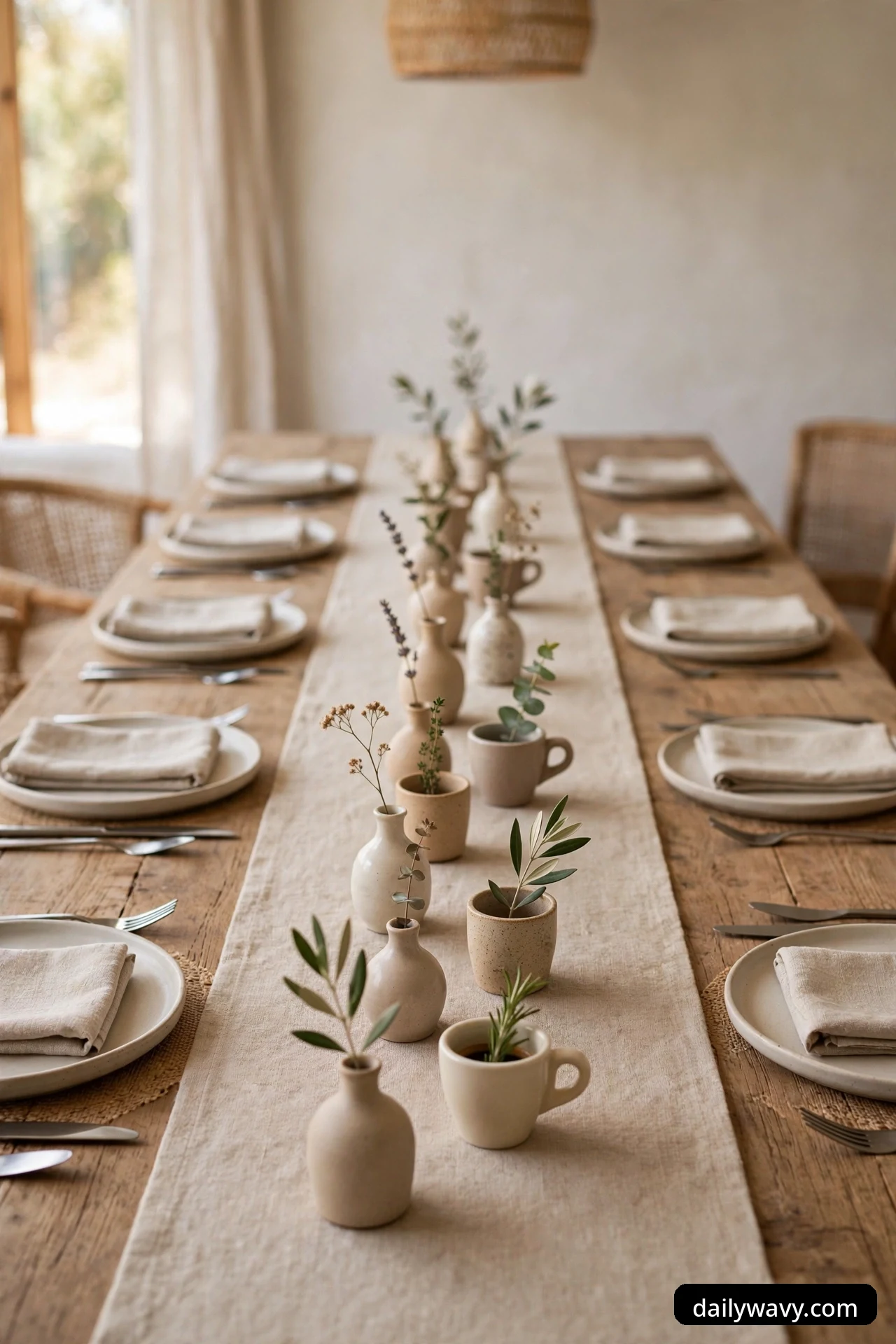
A row of tiny vessels down the center of the table is the minimalist’s centerpiece: almost no visual weight, almost no cost, and endlessly rearrangeable. Collect bud vases, espresso cups, shot glasses, or small cream pitchers, whatever you have, and line five to seven of them down the middle, 8 to 10 inches apart, each holding a single stem, a sprig, or even nothing at all.
What to measure: The center line of the table; keep vessels at least 6 inches from any plate edge so elbows never catch them. Materials: Small ceramic or glass vessels and single stems, garden clippings, or dried grasses. Placement: A loose straight row down the center, varying heights slightly for rhythm. Approximate effort: 15 minutes and essentially free if you shop your cabinets. Lower-cost alternative: Cleaned spice jars and jam jars work perfectly and look charming in a row. For a holiday table, add a second row slightly offset and fill every vessel.
6. A wood tray with small plants
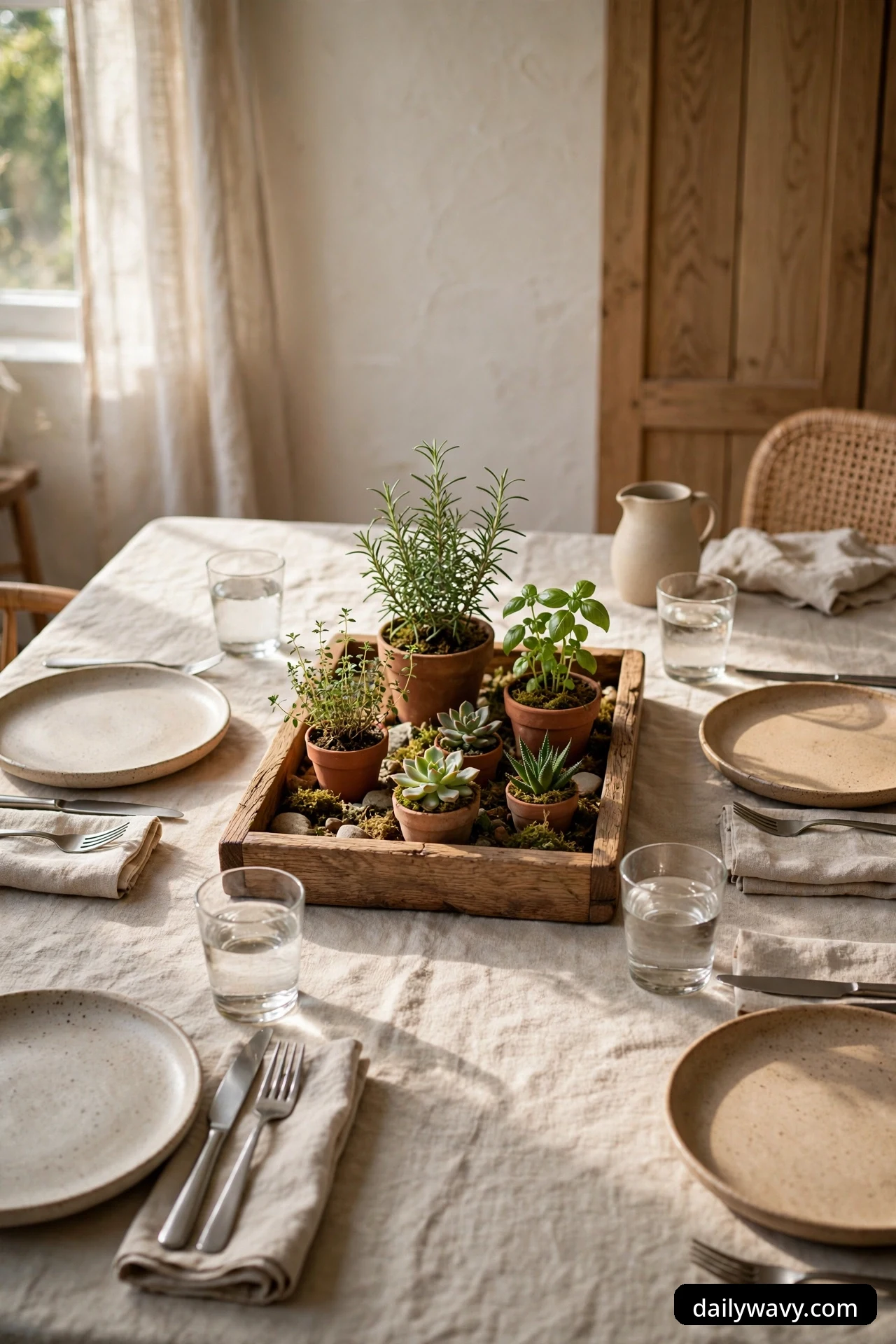
A tray turns a scattered centerpiece into one moveable unit, which matters when the serving dishes arrive and everything needs to shift. Choose a wood tray that fits the center third of your table, about 18 to 24 inches long for a standard table, and fill it with small potted plants, succulents, or herb starts. The tray catches water drips and soil, and you can lift the whole thing off when you need the space.
What to measure: Your table’s center third; the tray should leave at least 12 inches of clear table on each side for serving bowls. Materials: A wood serving tray and three to five small potted plants. Placement: Centered on the table, plants clustered with the tallest in the middle, keeping every plant under 12 inches tall. Approximate effort: 10 minutes and about $15 to $25 for a tray if you do not own one. Lower-cost alternative: A large wooden cutting board works as a tray and you already own it. This is a great everyday setup for small tables, since the whole centerpiece lifts away in one motion.
7. A single wide shallow bowl
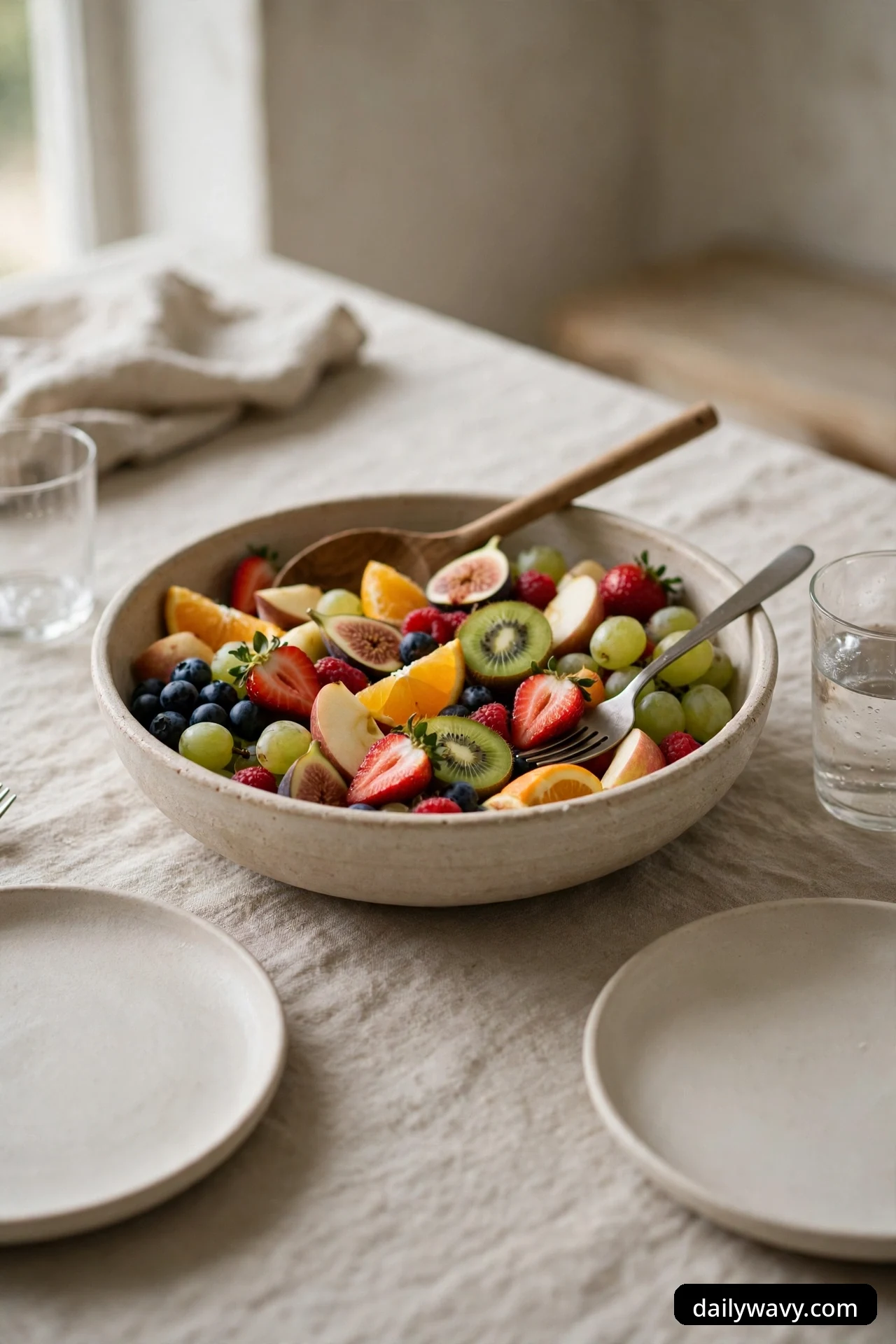
One generous bowl, well chosen, can carry an entire table. Use a 12- to 14-inch wide, shallow serving bowl as your centerpiece and fill it with something from the meal: citrus, mixed fruit, a green salad, or even just lemons and leaves. It reads as styling, but it is really just serving, which is exactly the point of a casual table.
What to measure: The bowl diameter against your table width; it should occupy no more than a third of the table’s width so settings fit on both sides. Materials: One large shallow bowl and its fill, fruit, salad, or greenery. Placement: Dead center, with serving utensils resting inside. Approximate effort: 5 minutes and free if the bowl and fruit come from your kitchen. Lower-cost alternative: Few options cost less; this idea is the lower-cost alternative. It works for holidays too if you fill the bowl with something seasonal and polish the bowl first.
8. Patterned napkins with solid dinnerware
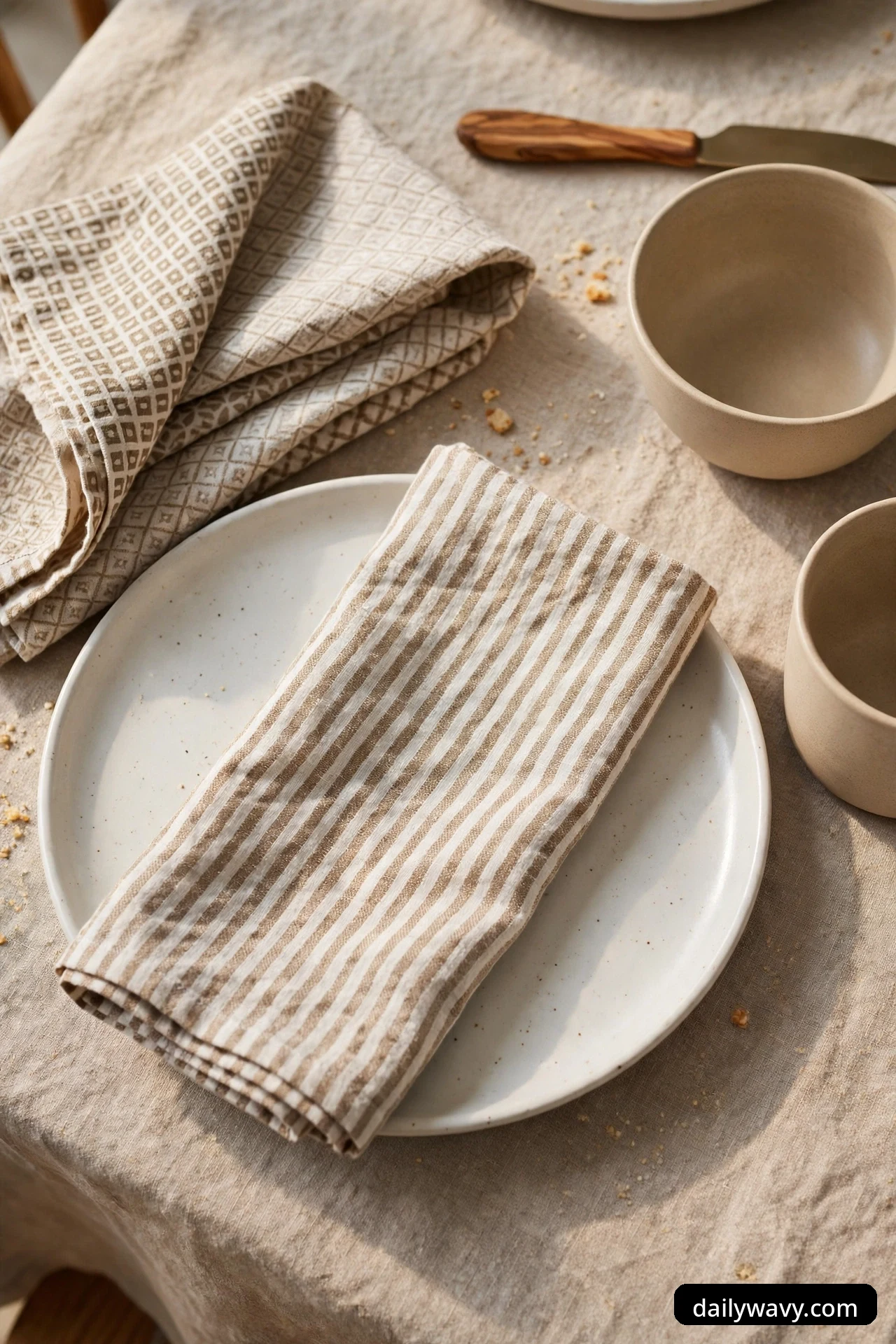
Patterned napkins are one of the easiest ways to add personality to a table of plain dishes, because the pattern lives on the smallest surface and never overwhelms. Use 20-inch square cotton napkins in a stripe, check, block print, or small floral, folded once into a rectangle and laid across each solid plate or to the left of the fork. Keep the dinnerware solid white, cream, or stoneware so the napkin is the only pattern talking.
What to measure: Nothing much; standard 20-inch napkins suit standard place settings. Materials: Patterned cotton or linen napkins, solid dinner plates. Placement: Folded napkin on the plate or left of the fork, consistent at every setting. Approximate effort: 10 minutes and about $12 to $20 for a set of four napkins. Lower-cost alternative: Bandanas, fabric remnants, or tea towels cut and hemmed, a yard of quilting cotton makes four napkins for a few dollars. This is a pure everyday upgrade; save the matching formal sets for the holidays.
9. A subtle contrasting charger plate
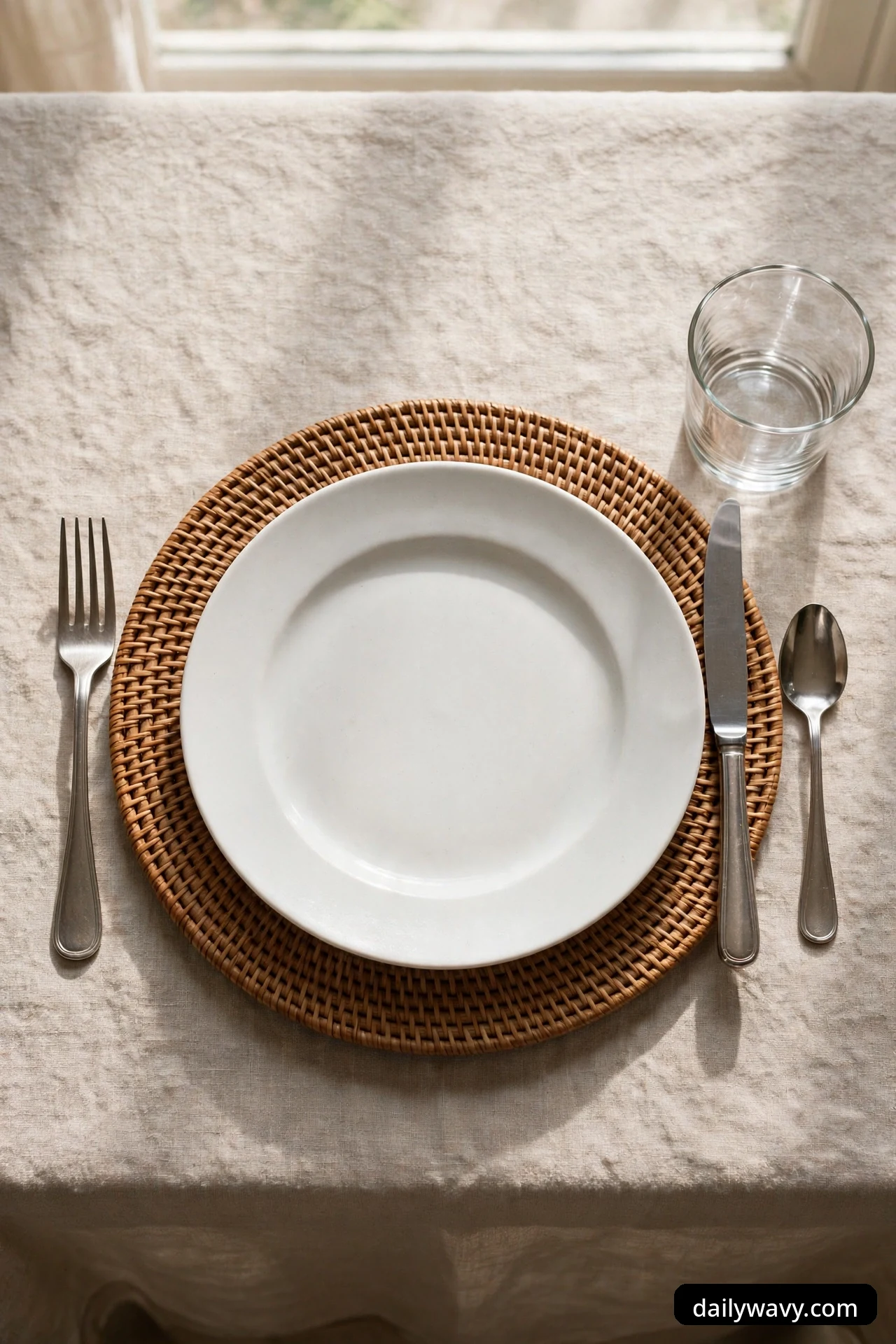
A charger is a large decorative plate that sits under the dinner plate, and a subtly contrasting one adds polish without shouting. Choose 13-inch chargers in a material that contrasts your plates: woven rattan under white porcelain, dark wood under cream stoneware. The dinner plate sits on top and gets lifted away with each course, while the charger stays put through the meal.
What to measure: Your table depth; a 13-inch charger plus a glass at top right needs at least 15 inches of setting depth. Materials: 13-inch chargers in a contrasting material. Placement: Charger centered on each setting, dinner plate on top. Approximate effort: 10 minutes and about $3 to $8 per charger. Lower-cost alternative: A 13-inch round placemat under each plate reads almost identically from across the table. Chargers skew a little formal, so this is one of the ideas that genuinely bridges everyday brunch and a holiday table.
10. A small bread board as a shared focal point
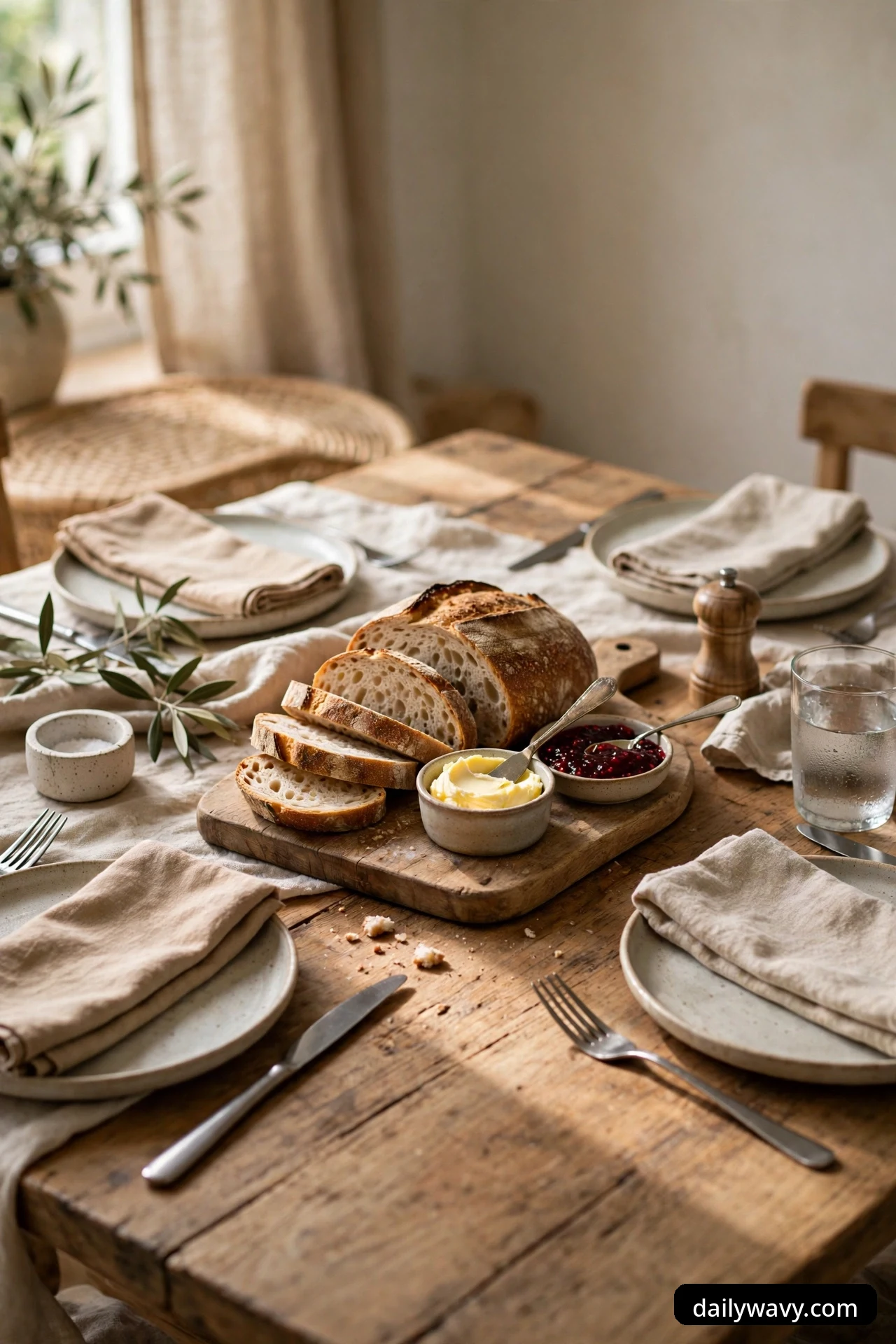
A bread board in the middle of the table says brunch is happening before anyone sits down. Use a 12- to 16-inch wooden board, pile it with a sliced loaf, a small dish of butter, and maybe jam, and set it in the center where everyone can reach. It is a centerpiece you eat, which keeps the table honest and the styling budget at zero.
What to measure: Reach distance; on a table wider than 40 inches, use two smaller boards instead of one so nobody stretches. Materials: A wooden bread or cutting board, a loaf, butter, and jam. Placement: Center of the table, or two boards spaced evenly on a long table. Approximate effort: 5 minutes plus the cost of the bread. Lower-cost alternative: Any wooden cutting board you own, with whatever bread is in the house. Pair this with the single wide shallow bowl idea and your centerpiece is entirely edible.
11. Clear bottles holding green cuttings

Glass bottles with green cuttings are the tablescape equivalent of a deep breath: simple, fresh, and a little bit sculptural. Save clear glass bottles from the pantry, olive oil bottles, tonic bottles, simple bud vases, fill each with water, and add a cutting of eucalyptus, olive branch, rosemary, or whatever is growing nearby. Group three to five bottles of different heights in the center, keeping every stem under 12 inches.
What to measure: Bottle heights against the 12-inch sightline rule; most pantry bottles are 9 to 11 inches, which is perfect. Materials: Clear glass bottles, water, and green cuttings. Placement: A tight cluster in the center, tallest bottle in the middle. Approximate effort: 10 minutes and free. Lower-cost alternative: This is already the budget option. Change the cuttings with the seasons and the same bottles look new every time.
12. A compact dried-stem arrangement
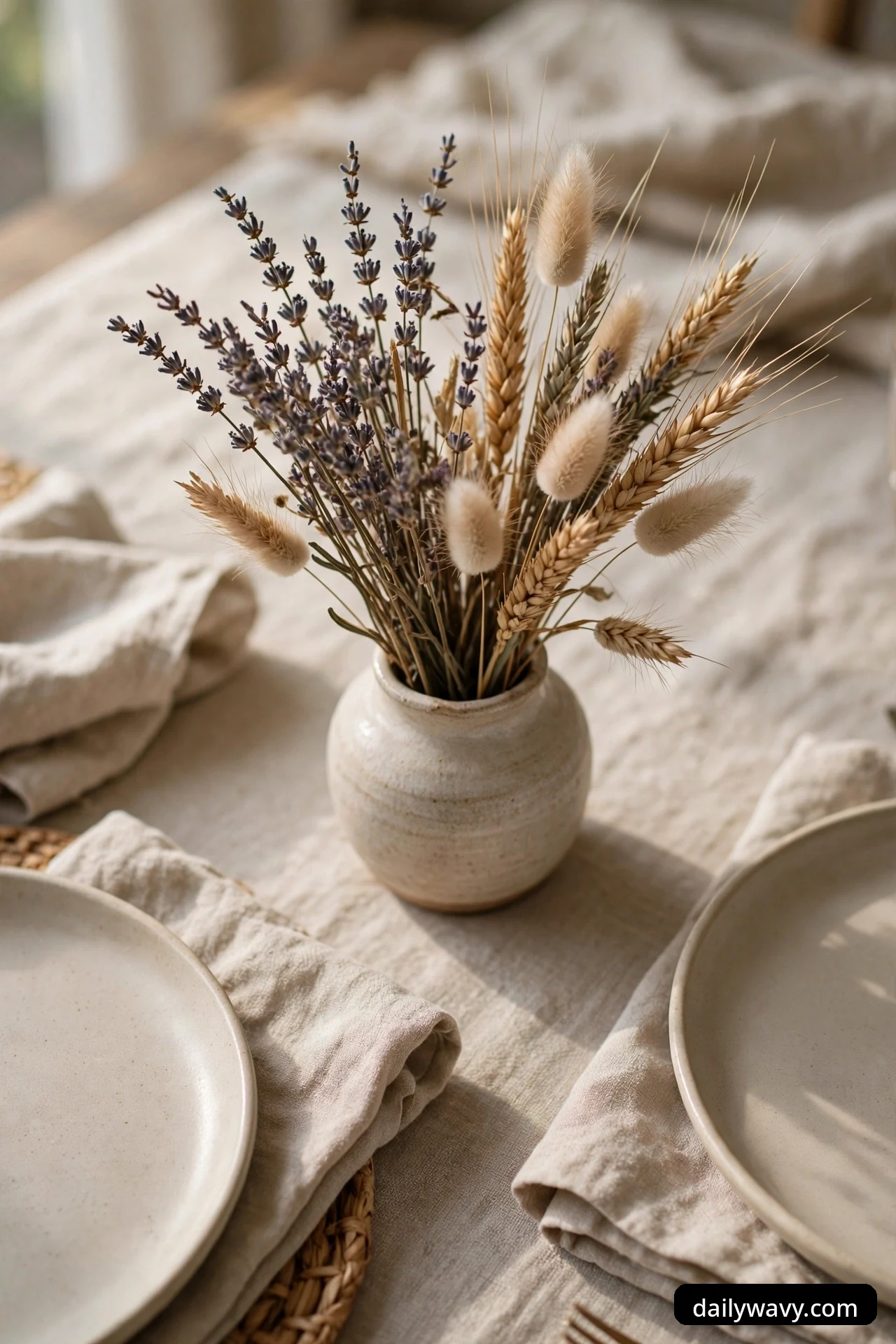
Dried stems are one of the lowest-maintenance centerpieces: no water, no wilting, no last-minute grocery run. Choose a small vase, 6 to 8 inches tall, and fill it with dried lavender, wheat, bunny tail grass, or dried eucalyptus, trimmed so the whole arrangement stays under 12 inches. It suits brunch particularly well because the muted colors read calm in morning light.
What to measure: The vase plus stems against the sightline; dried stems are easy to trim, so cut generously and test. Materials: A small vase and one to two bunches of dried stems. Placement: Center of the table, or slightly off-center if a serving dish claims the middle. Approximate effort: 10 minutes and about $8 to $12 for dried stems. Lower-cost alternative: Dry your own: hang garden herbs, grasses, or wildflowers upside down in a dark closet for two weeks. Dried arrangements also work beautifully for a holiday table, where their longevity is an asset.
13. A handwritten place card

A handwritten place card turns an ordinary brunch into an occasion, because it tells each guest the seat was meant for them. Cut card stock into 2-by-3.5-inch rectangles, fold each in half to make a tent, and hand-letter names with a brush pen or a good gel pen. Prop one on each plate or lean it against a glass. Imperfect lettering is part of the charm; this is not calligraphy class.
What to measure: Card size against your plates; the tent should sit comfortably on a 10.5-inch plate without overhanging. Materials: Card stock, scissors or a paper trimmer, and a pen. Placement: On each plate or leaning against the water glass. Approximate effort: 20 to 30 minutes for eight cards, and about $3 for card stock. Lower-cost alternative: Cut cards from brown paper bags or the blank backs of old greeting cards. Place cards are one of the clearest everyday-to-holiday signals on this list; use them when the brunch matters a little more.
14. A bowl of citrus and leaves
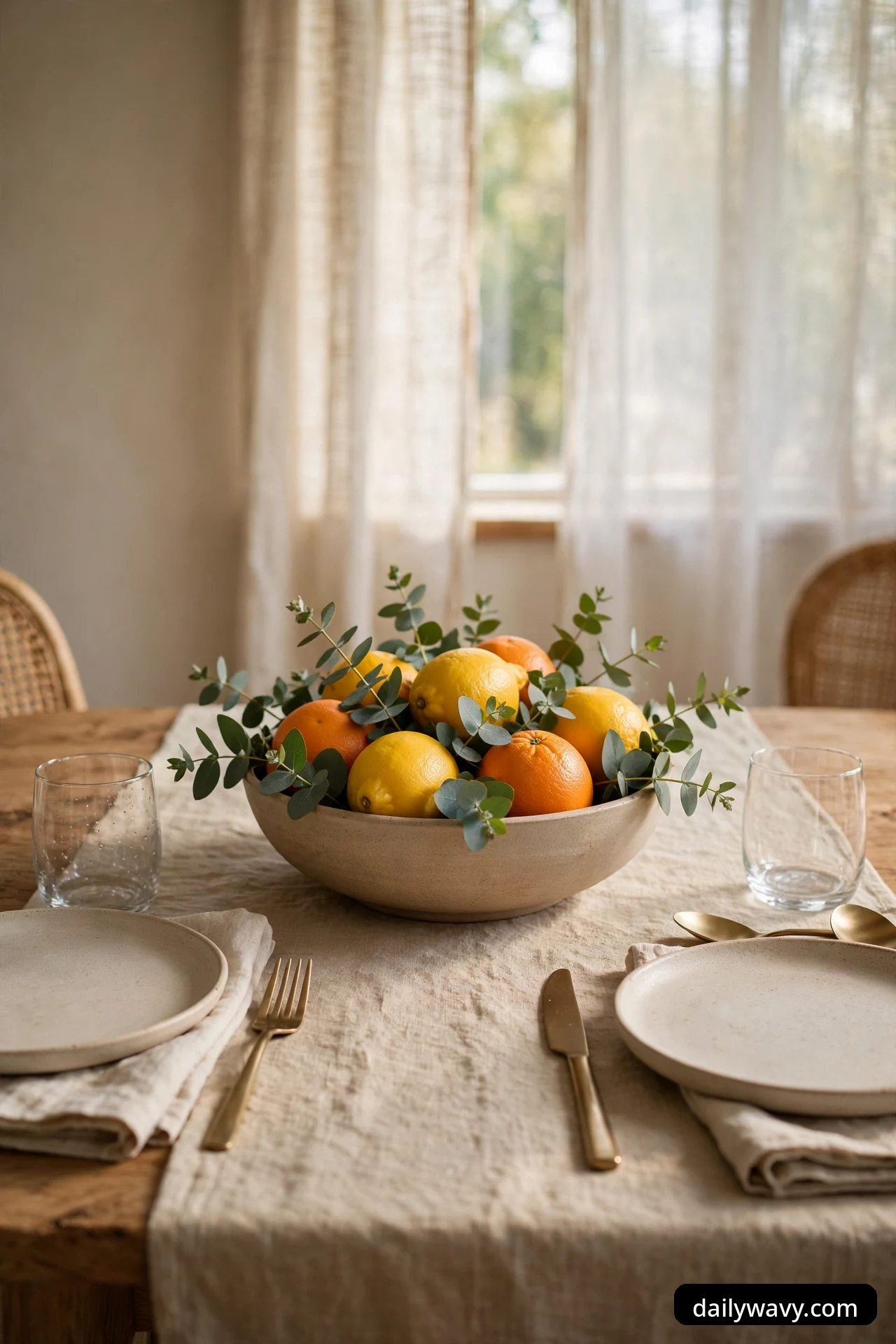
A bowl of citrus tucked with leaves photographs well and costs little. Fill a low, wide bowl with lemons, oranges, or grapefruits, then tuck in sprigs of olive or bay leaves from the garden. The yellow and green against a neutral tablecloth is the whole styling trick, and the fruit goes into drinks and cooking afterward, so nothing is wasted. Wash the fruit before it goes into drinks or cooking, and keep display leaves off fruit you plan to eat.
What to measure: The bowl against the 12-inch height rule; a 4-inch-tall bowl plus fruit stays comfortably low. Materials: A low bowl, 6 to 10 pieces of citrus, and leafy sprigs. Placement: Center of the table. Approximate effort: 10 minutes and the cost of the fruit you were buying anyway. Lower-cost alternative: Use whatever fruit is in season and cheapest; in autumn, apples and pears work the same way. This is a morning-light idea through and through, best for spring and summer brunches.
15. A folded fabric strip beneath each setting
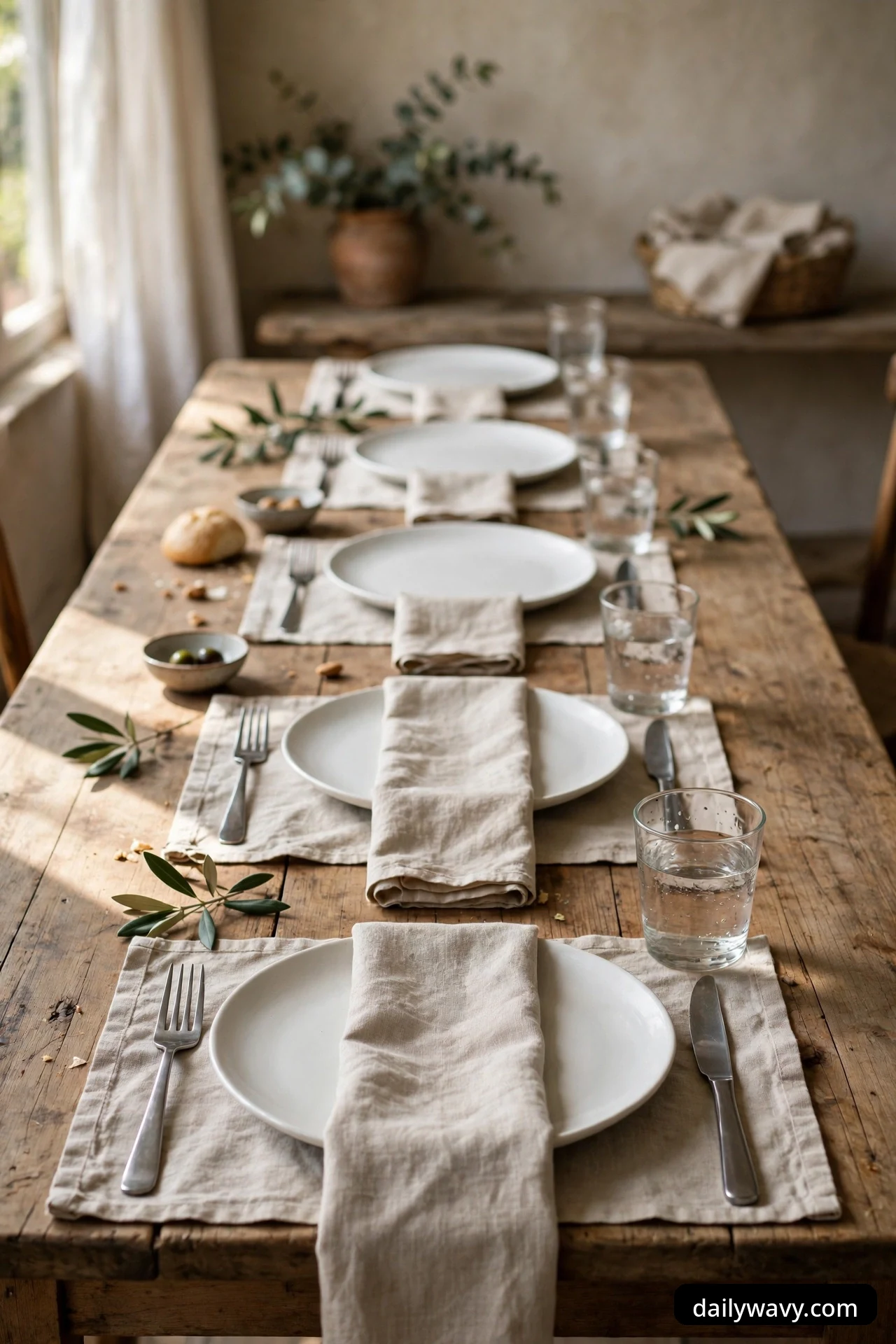
Instead of one long runner, give each setting its own strip of fabric. Cut or fold linen, cotton, or gauze into 6-inch-wide strips about 30 inches long, and lay one under each plate running front to back. The effect is tailored and graphic, like individual place runners, and it uses far less fabric than a full table runner.
What to measure: Strip length against your table depth; 30 inches suits a 36- to 40-inch-wide table with a little overhang at the front edge. Materials: Linen or cotton fabric, about a sixth of a yard per setting. Placement: One strip per setting, centered under each plate, front to back. Approximate effort: 20 minutes of cutting and folding, about $10 to $15 for fabric. Lower-cost alternative: Unfolded tea towels or cloth napkins laid flat under each plate give the same layered look. Press the strips once and they look crisp all brunch.
16. A low grouping of stoneware

A cluster of small stoneware pieces, a creamer, a sugar bowl, a jam pot, a tiny pitcher of syrup, does double duty as styling and service. Group three to five pieces in the center of the table, all under 8 inches tall, in tones that echo your plates. Guests reach for what they need, and the table looks styled without a single purely decorative object.
What to measure: The cluster footprint; keep it inside the center third so settings keep their 24 inches. Materials: Small stoneware serving pieces you already own. Placement: A tight cluster in the center, tallest piece in the middle. Approximate effort: 10 minutes and free. Lower-cost alternative: Mismatched small bowls and a mason jar of syrup are perfectly in keeping with a casual table. This is one of the most practical ideas on the list, and one likely to survive contact with actual brunch.
17. A platter of seasonal produce
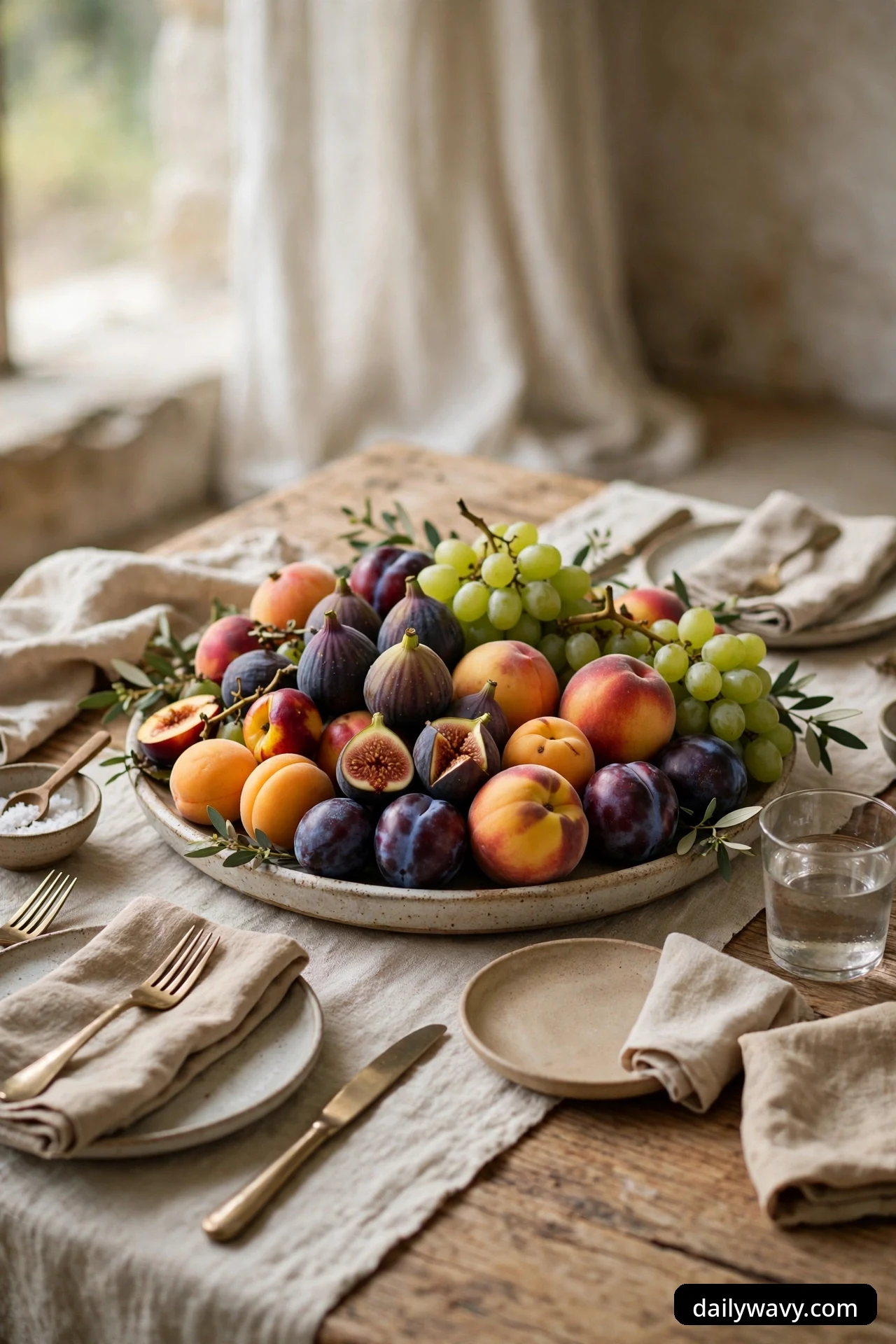
A large platter of seasonal produce is a centerpiece that doubles as the first course. Wash the produce first, since guests will eat from the platter, then arrange whatever is at its peak, spring asparagus and radishes, summer tomatoes and stone fruit, autumn figs and grapes, on your largest platter and set it in the middle of the table. It looks abundant, it starts conversations, and it gets eaten, which is more than most centerpieces can say.
What to measure: The platter against your table; a 16- to 18-inch platter suits a standard table and leaves room for settings. Materials: One large platter and seasonal produce. Placement: Center of the table, with small plates nearby for nibbling. Approximate effort: 10 to 15 minutes of arranging, plus the produce cost. Lower-cost alternative: Shop the reduced produce rack or your garden; slightly imperfect fruit arranges beautifully. Change the produce with the seasons and repeat this idea all year.
18. Single stems in low bud vases

One stem in one small vase, repeated down the table, is quietly one of the most elegant settings here. Use low bud vases, 4 to 6 inches tall, and scatter five to eight of them down the center, each holding a single stem: a ranunculus, a sprig of stock, a garden rose, a piece of greenery. The repetition is what makes it work; uniformity of vases, variety of stems.
What to measure: Spacing of 8 to 10 inches between vases so the row reads as a row, not a crowd. Materials: Low bud vases and single stems. Placement: A straight or gently wandering line down the center of the table. Approximate effort: 15 minutes and about $10 to $15 for stems if you buy them. Lower-cost alternative: Thrifted bud vases cost a dollar or two each, and garden stems are free. Keep every vase the same color family so the stems, not the vessels, carry the variety.
19. A bowl of seasonal fruit
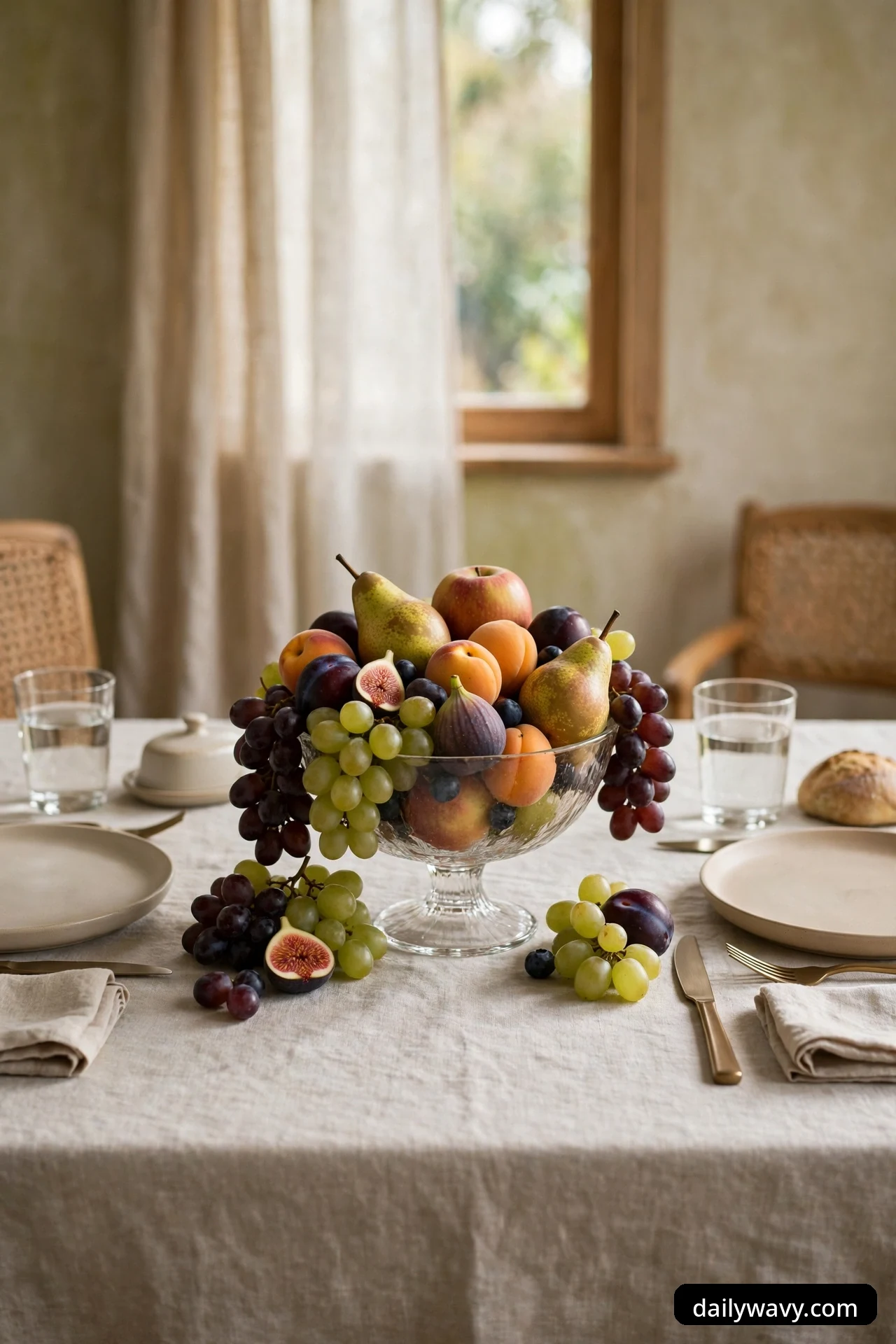
A footed bowl or compote piled with seasonal fruit is the classic brunch centerpiece for a reason: height without bulk, color without effort. Fill a 9- to 12-inch compote with whole fruit, grapes spilling over the edge, a few figs, whatever is ripe, and set it in the center. The foot lifts the fruit above the plates so it reads as an arrangement, not a serving dish.
What to measure: The compote height; bowl plus foot plus fruit should stay under 12 inches for the sightline. Materials: A footed bowl or compote and mixed whole fruit. Placement: Center of the table. Approximate effort: 10 minutes and the fruit budget. Lower-cost alternative: A cake stand works as a compote in a pinch. This is the holiday-friendly version of the citrus bowl idea; swap in pomegranates and persimmons in winter and it dresses up instantly.
20. Folded linen napkins with simple rings
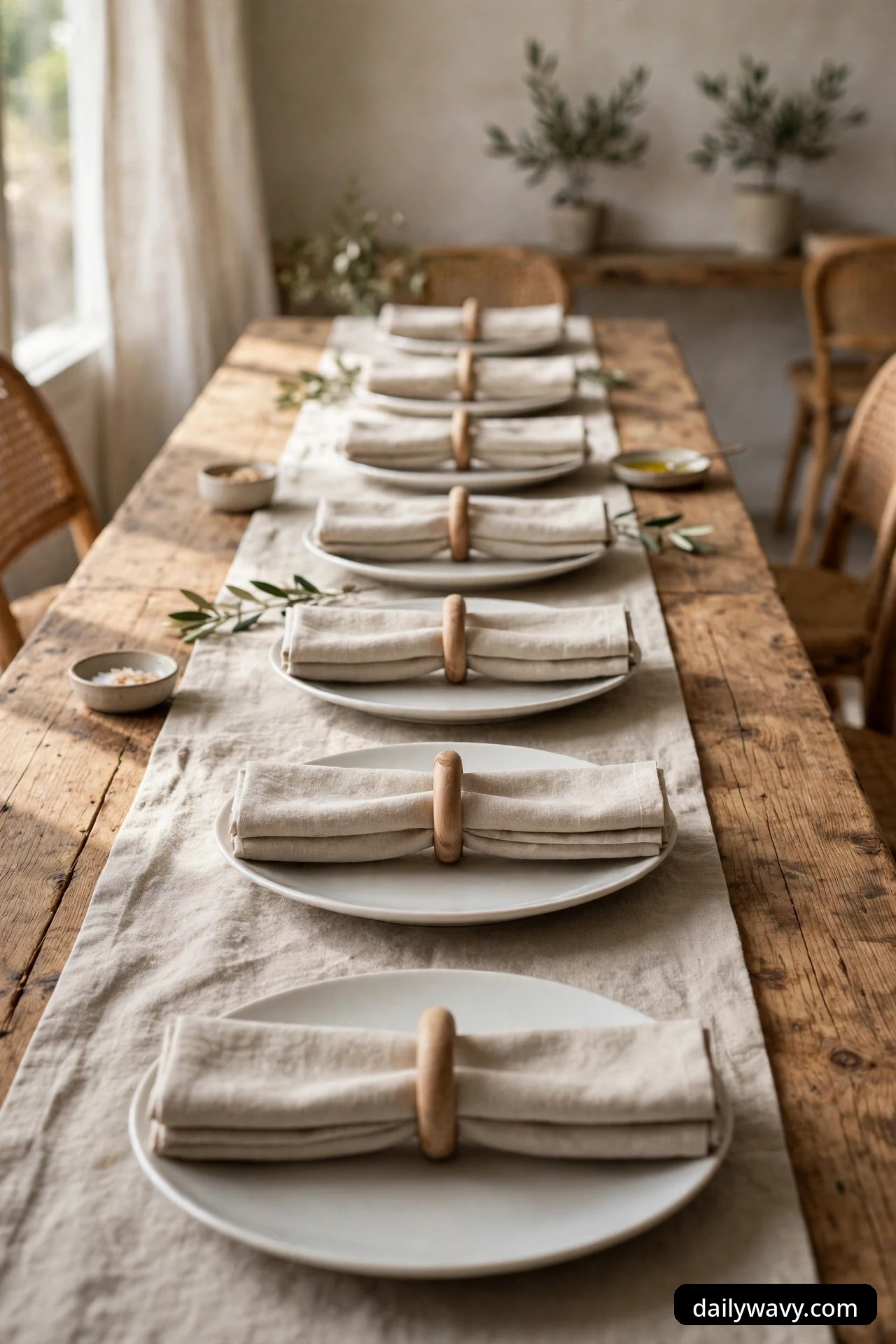
A linen napkin slipped through a simple ring is the finishing touch that makes plain dinnerware look deliberate. Fold 20-inch linen napkins in thirds lengthwise, slide each through a wood, brass, or rattan napkin ring, and lay one on each plate or to the left of the fork. The ring adds a small vertical accent at every setting, which gives the table rhythm without adding clutter.
What to measure: Napkin ring diameter, standard rings are about 2 inches, which fits a folded linen napkin snugly. Materials: Linen napkins and simple napkin rings. Placement: One per setting, on the plate or left of the fork. Approximate effort: 10 minutes and about $10 to $15 for a set of four rings. Lower-cost alternative: Tie each napkin with twine, ribbon, or a strip of fabric instead of a ring. Of everything here, this and the place cards are two details that clearly signal a special occasion, so save them for the brunches that count.
Frequently asked questions
How much space does each person need at a brunch table?
Plan on 24 inches of table edge per person for elbow room and about 15 inches of table depth for the setting itself. That means a 72-inch table seats three per side comfortably, and a 48-inch round table seats four. Crowding settings closer than that makes every idea above harder, because serving dishes and centerpieces have nowhere to go.
What is the correct cutlery placement for a casual brunch?
The same as any table: fork on the left of the plate, knife on the right with the blade facing the plate, spoon to the right of the knife, water glass at the top right above the knife, napkin on the plate or to the left of the fork. Casual does not mean random; consistent placement at every setting is what makes a table feel calm.
How tall should a brunch centerpiece be?
Keep it at or under 12 inches so guests can see and talk across the table. Every arrangement in this roundup follows that rule. If you love a tall piece, put it on a sideboard behind the table instead of in the middle of it.
How do I keep the table usable once everything is set?
Reserve the center third of the table for shared dishes and the centerpiece, and put serving pieces at both ends of a long table so nobody passes a platter six hands. Choose centerpieces you can lift away in one motion, like the wood tray or the bread board, for the moment the food arrives.
Can these ideas work for a holiday brunch?
Most of them are designed for everyday brunch, but several dress up well: the charger plates, the handwritten place cards, the linen napkins with rings, and the footed fruit bowl all read more formal with no changes. For a true holiday table you would add matching dinnerware and a stricter color palette, which is a different article.
How do I style a brunch table without candles?
Get your height and warmth from plants, bowls, bottles, and bread instead. A potted herb, a low flower arrangement, a cluster of bottles, or a bread board all give the table a focal point with no flame, no wax, and nothing to relight. Morning light does the rest.
A table worth lingering at
None of these ideas asks for much: a runner, a bowl, a few stems, a folded napkin. That is the whole point. A casual brunch table works when the styling gets out of the way of the meal and the conversation, and every setting above was built around that test. Pick one idea for this weekend, add a second when it feels easy, and let the table grow with the habit. For more rooms that invite lingering, see our narrow living room layout ideas and small entryway decor ideas, and browse the full Home & Decor collection.