12 English Cottage Living Room Ideas to Make the Style Your Own
There is a particular kind of calm that an English cottage living room gives you. It is not showroom calm….
There is a particular kind of calm that an English cottage living room gives you. It is not showroom calm. It is the calm of a room that has been lived in well: paint that has softened, cotton that has been washed a hundred times, wood that carries a few marks of a long life. This guide walks through twelve ideas that build that feeling piece by piece. Each one names what to measure, what materials to look for, and a lower-cost way to get the same effect, so you can plan the room with confidence instead of guessing.
Jump to an idea
- Curtains framing one generous window
- Reading chair with a side table
- Open shelving with a restrained display
- Textured cushions on a compact sofa
- Large artwork above the main seating
- Natural woven basket for blankets
- Paired lamps beside a balanced sofa
- Layered rug beneath a nesting table
- Vintage cabinet used as a focal point
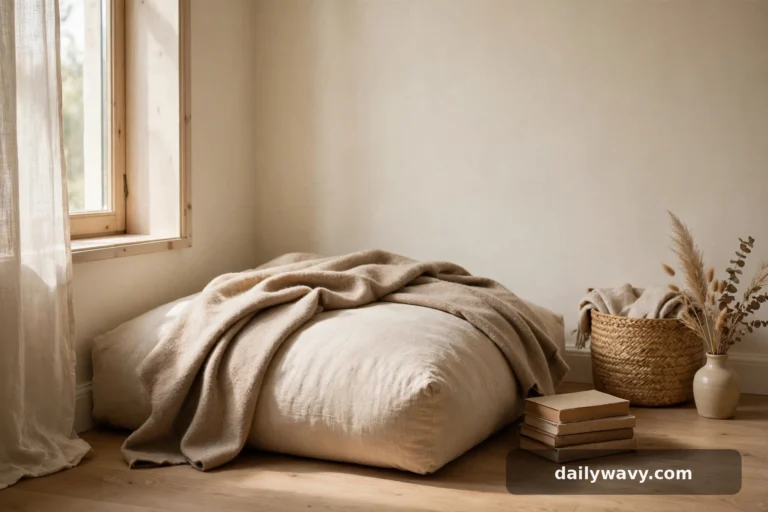
- Soft ottoman replacing a sharp table
- Window seat with tailored cushions
- A floor lamp beside a book stack
What makes a living room English cottage
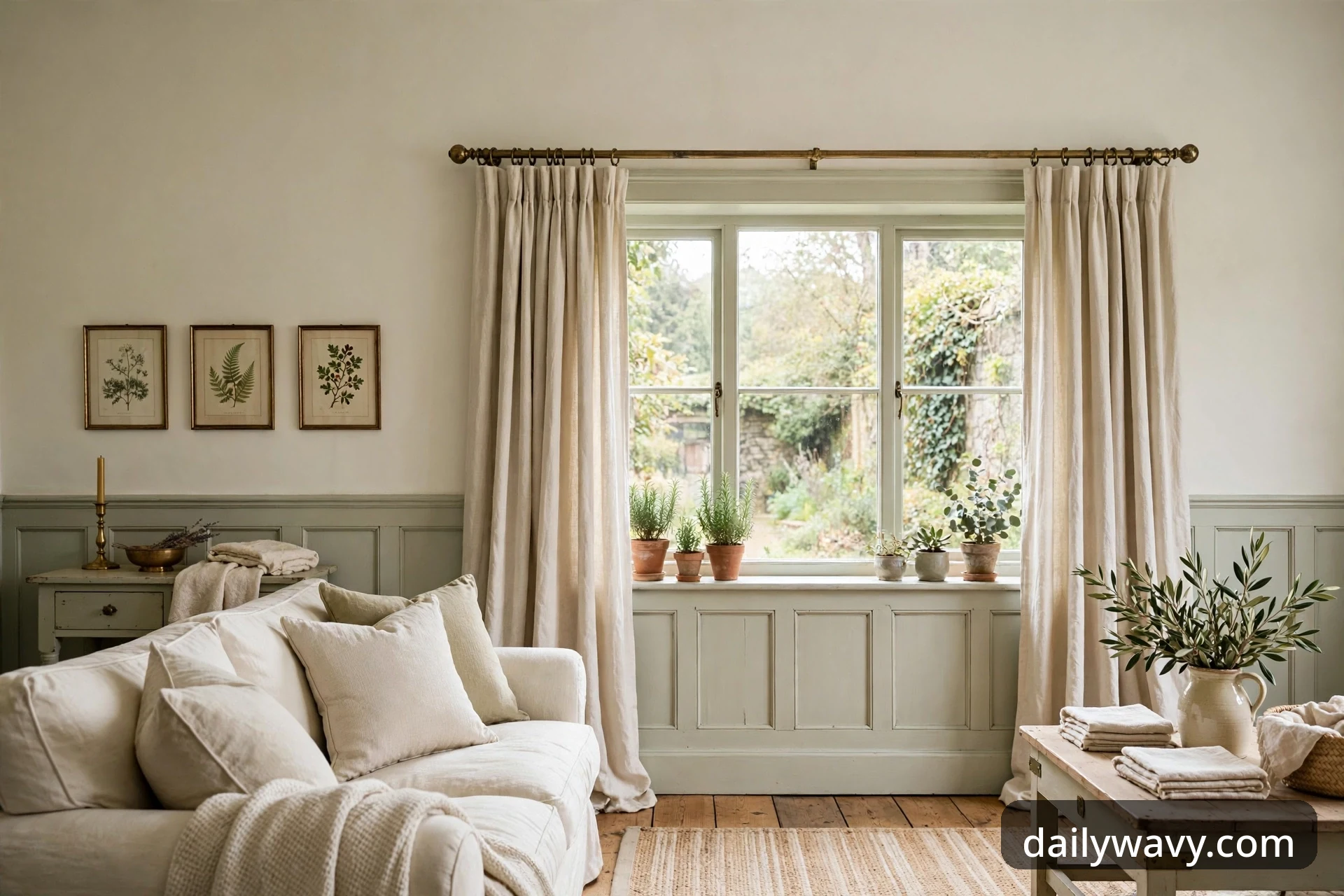
Before the twelve ideas, it helps to name the style in plain terms, because every decision below traces back to it. English cottage is defined by four materials more than by any single piece of furniture: painted wood, small botanical prints, aged brass, and comfortable cotton. Painted wood softens edges and hides mismatched eras, so a dresser from one decade sits happily beside a chair from another. Small botanical prints, florals and leaf sprigs at a modest scale, keep patterns from overwhelming a small room. Aged brass adds warmth without shine, on lamp bases, picture lights, and cabinet knobs. Comfortable cotton, plain or gently patterned, covers the seating and softens the windows.
The color story stays quiet: warm white walls, muted sage or dusty rose, faded blue, and honey-toned wood. Silhouettes are gentle rather than sharp: rolled arms, turned legs, simple skirts, chairs that invite you to sink rather than perch. Nothing here needs to be antique or expensive. What matters is that the pieces share a relaxed attitude, and that every surface looks usable rather than staged.
1. Curtains framing one generous window
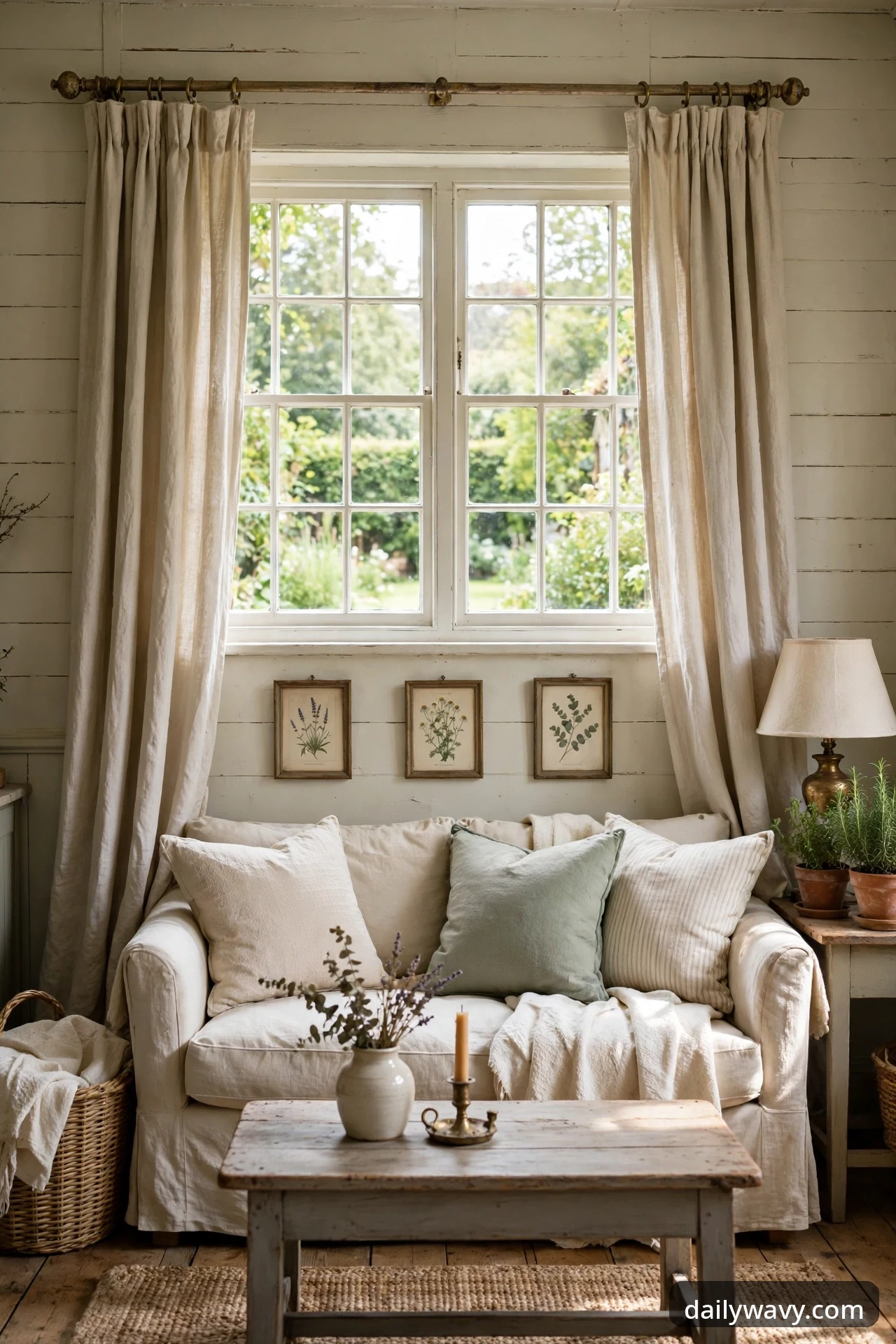
Nothing says English cottage quite like a window dressed with softness. The trick is proportion: curtains that just clear the edges of the frame make the window look bigger and the room feel calmer, while skimpy panels have the opposite effect. Choose a lightweight cotton or linen, plain or in a small botanical print, and let the fabric fall straight from a simple rod.
The practical decision: fabric weight. A midweight cotton holds a gentle fold and filters light without darkening the room. Sheers alone look thin here, and heavy lined drapes belong in bedrooms.
What to measure: the window width, then add 8 to 12 inches on each side for the rod so the panels can stack clear of the glass. For length, measure from the rod position down to 1 inch above the floor. Write both numbers down before you shop.
Materials and placement: a painted or dark wood rod with simple finials, and cotton or linen panels in a soft print or plain weave. Hang the rod 4 to 6 inches above the frame so the window reads taller.
Effort: one afternoon, including steaming the panels.
Lower-cost alternative: two ready-made cotton panels in white or natural instead of custom. Hemming tape can fix a length that runs a few inches long, and once hung, the fix is hard to spot.
2. Reading chair with a side table
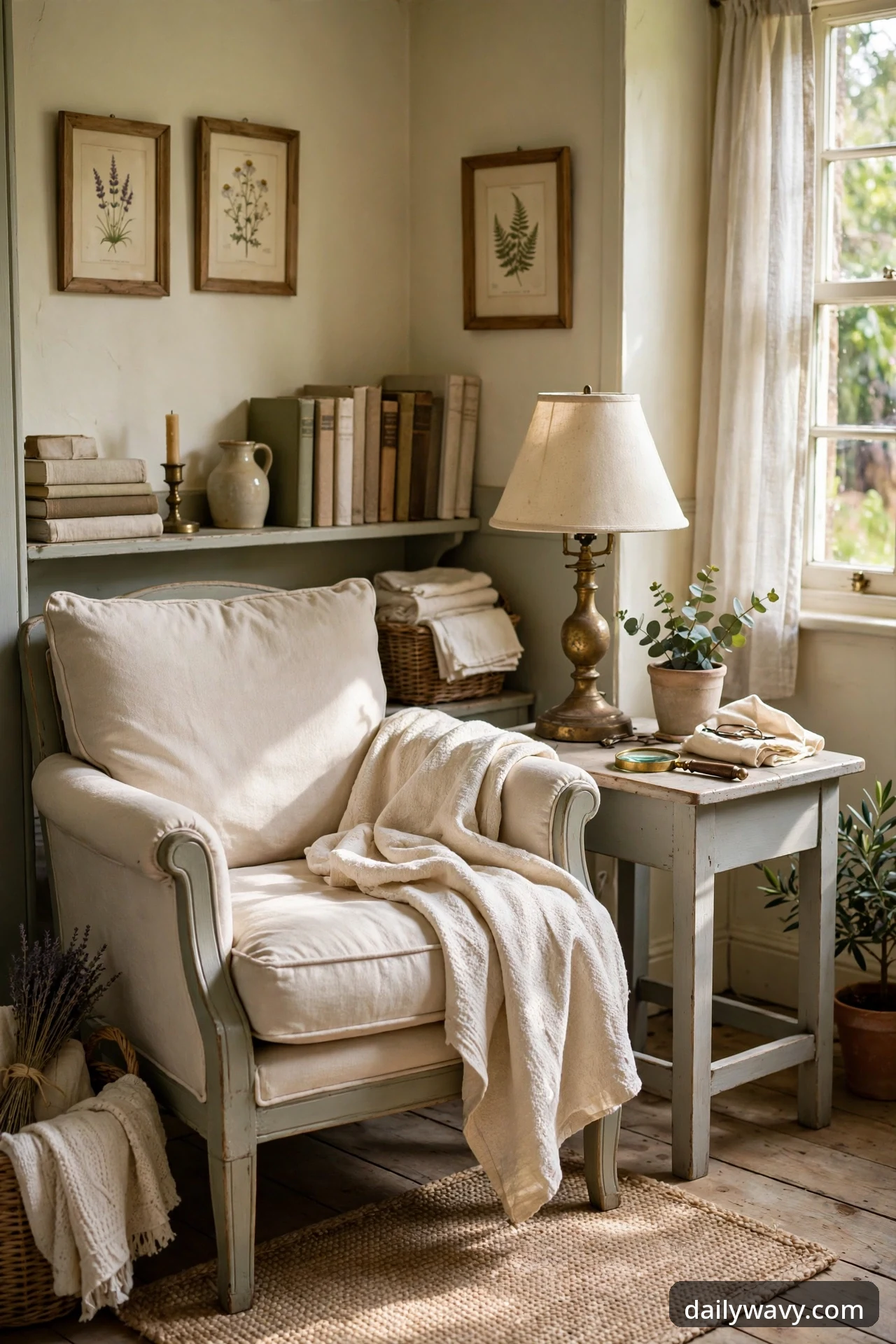
A cottage living room needs at least one corner that invites you to sit down with a book. A single comfortable chair with its own small table does that better than any amount of extra seating. Look for a low, deep chair with a soft silhouette: rolled arms, a simple skirt, or a wooden frame with a thick cushion all fit the style.
The practical decision: chair silhouette. A low armchair with rolled arms reads instantly cottage; a slipper chair without arms saves floor space and still takes a cushion well.
What to measure: the chair’s full footprint (most armchairs run 28 to 36 inches wide) plus 18 inches of clearance around it for comfortable access. Match the side table height to the chair arm, roughly 24 to 26 inches, so a cup of tea is always within reach.
Materials and placement: comfortable cotton upholstery in a small print or plain weave, with a painted wood or aged brass side table. Place the pair near a window or lamp for natural reading light.
Effort: a weekend of hunting and hauling if you buy secondhand, or one delivery day for new.
Lower-cost alternative: a sturdy wooden thrift-store chair with a new seat cushion and a fresh coat of paint, paired with a small painted stool as the side table.
3. Open shelving with a restrained display
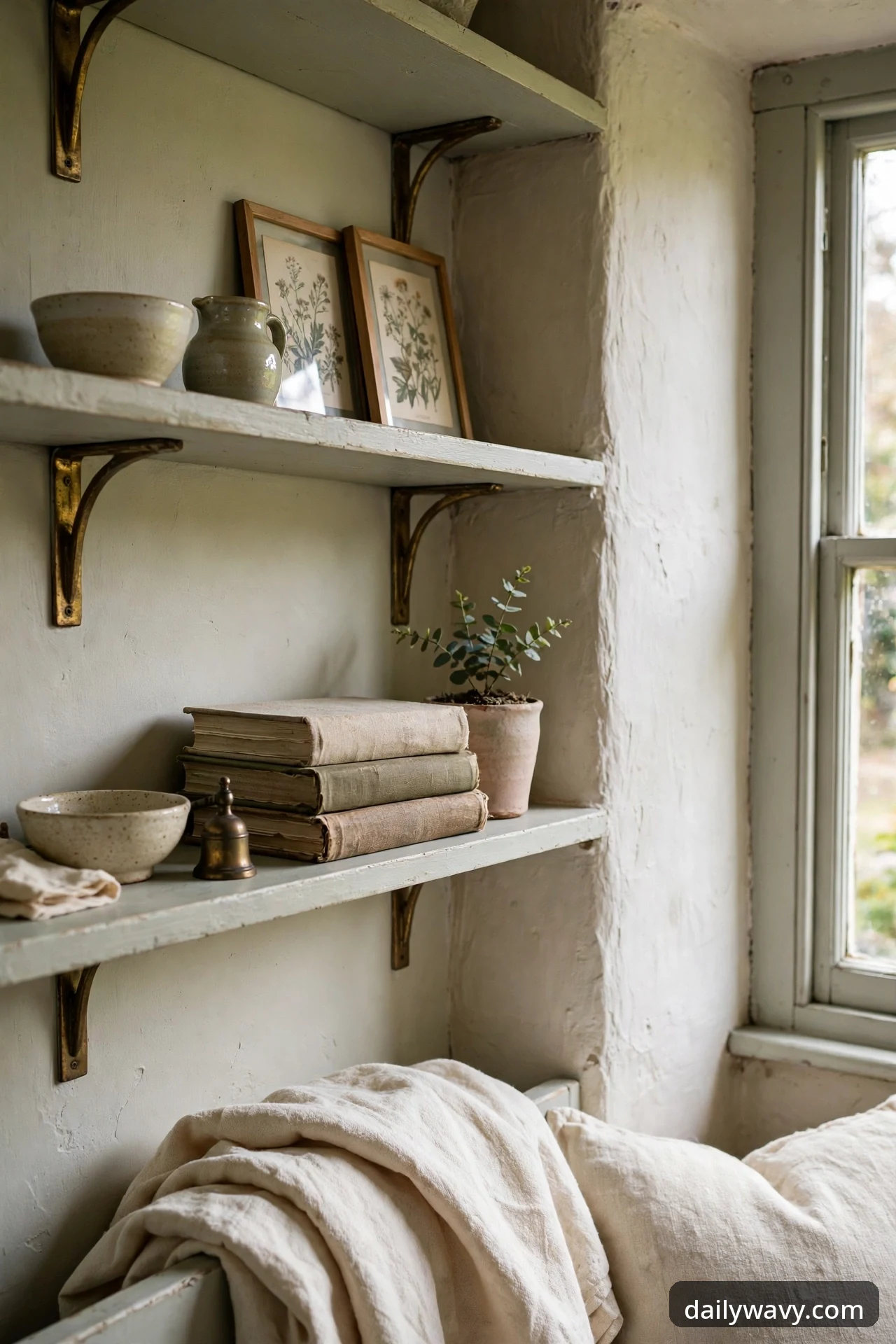
Open shelves are where cottage style shows its discipline. The look is not a shelf packed edge to edge; it is a few well-chosen things with air around them. Ironstone plates, a stack of old books, one small plant, and a brass candlestick will do more than a crowded row of knickknacks.
The practical decision: what earns a place. Keep display items to about one third of the shelf surface and leave the rest as breathing room. Group pieces in odd numbers and repeat one material across the groups.
What to measure: plan shelves 12 to 16 inches apart vertically so plates and books clear the shelf above. Mark the stud positions before drilling; any shelf longer than 36 inches needs a center bracket.
Materials and placement: painted wood boards, 10 to 12 inches deep, on simple brackets. Style with ceramics, books, and one or two natural pieces like a woven basket or a small framed print.
Effort: a few hours to hang, plus a relaxed afternoon of styling.
Lower-cost alternative: two painted pine boards from a hardware store on basic brackets, styled with pieces you already own. The restraint is the point, not the spending.
4. Textured cushions on a compact sofa
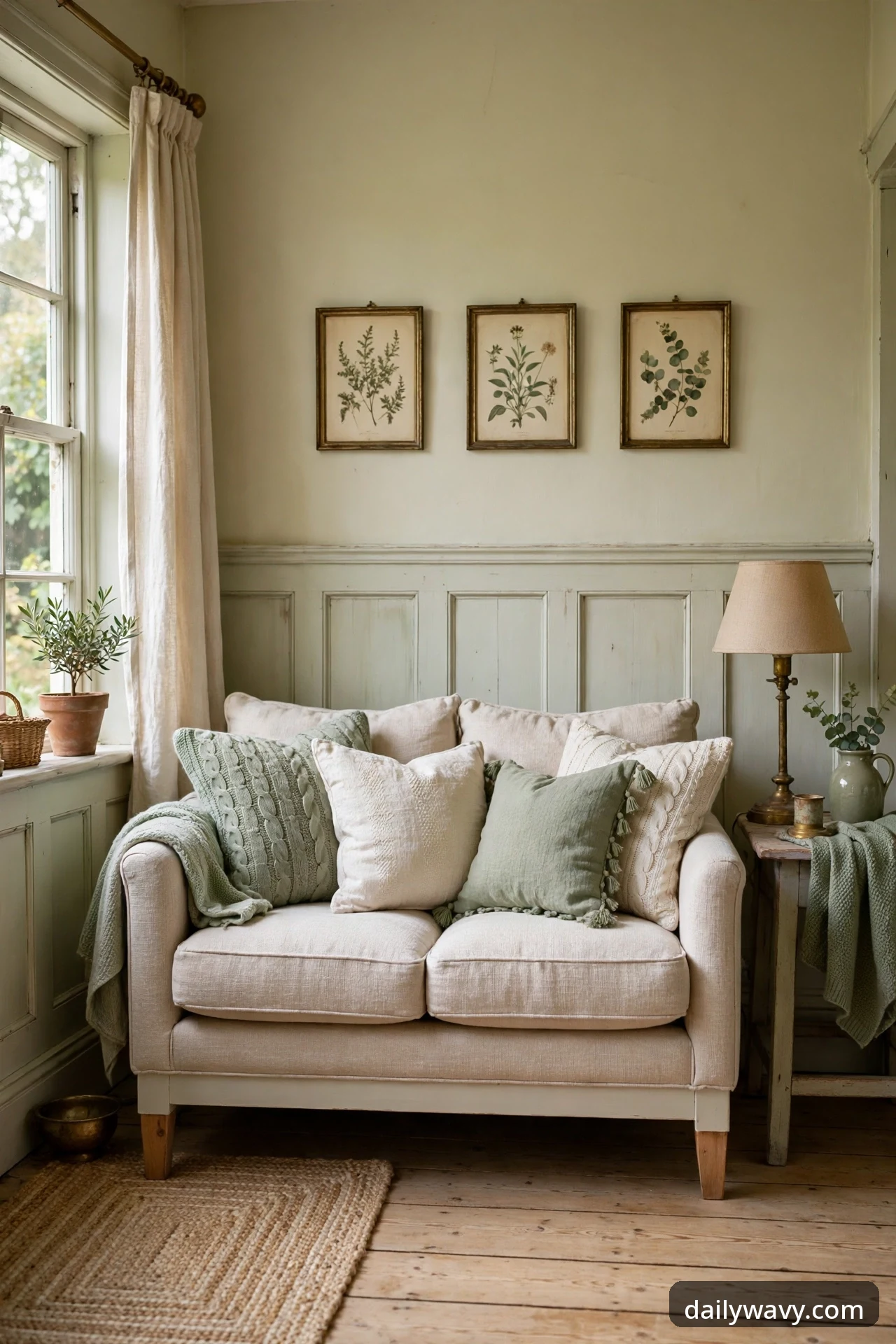
A compact sofa is a cottage classic, and cushions are how you keep it from looking plain. The secret is texture rather than color: linen, cotton knit, and a small hit of velvet in two or three close tones will look richer than five bright patterns fighting for attention.
The practical decision: the texture mix. Combine a nubby linen, a soft knit, and one smooth velvet in a tight palette of warm white, sage, and faded rose, and let the fabrics do the talking.
What to measure: your sofa’s seat depth and back height, then choose 18 to 20 inch square cushions for the corners and a 12 by 20 inch lumbar for the middle. Count what you need before buying; three to five cushions is plenty for a loveseat.
Materials and placement: removable covers in washable cotton and linen over feather or recycled-fill inserts. Place the largest cushions at the corners and angle them slightly inward.
Effort: one afternoon of shopping and arranging.
Lower-cost alternative: new cushion covers over your existing inserts. Covers cost a fraction of new cushions and let you change the palette with the seasons.
5. Large artwork above the main seating
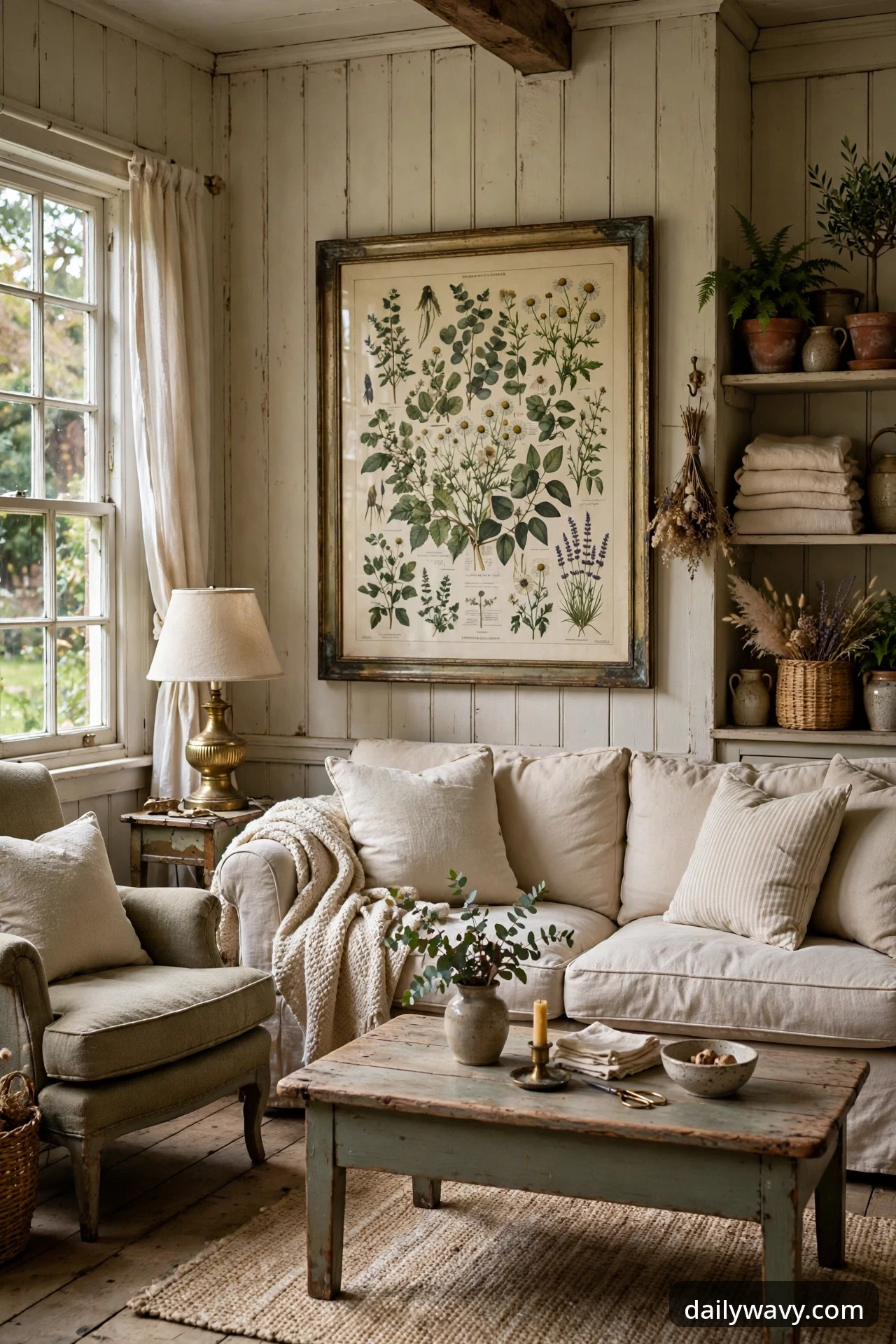
One generous piece of art above the sofa does the work of a whole gallery wall, and it suits the cottage preference for calm over clutter. A landscape, a large botanical print, or a quiet still life all belong here. The frame matters as much as the image: aged wood, slim brass, or a simple painted frame will keep it in the style’s family.
The practical decision: scale. Aim for art that spans roughly two thirds of the sofa’s width. A piece that is too small looks lost; a piece that is too large overwhelms the seating.
What to measure: the sofa width first, then the wall. Hang the center of the artwork 57 to 60 inches from the floor, and leave 6 to 8 inches between the top of the sofa back and the bottom of the frame.
Materials and placement: one large framed print or canvas with a natural wood or painted frame. Center it over the main seating and keep the surrounding wall clear so the piece can breathe. Use a hook and wall anchor rated for the frame’s weight.
Effort: one afternoon, including the trip to buy or frame the piece.
Lower-cost alternative: a large botanical print from a thrift store in a painted frame, or a framed panel of pretty wallpaper. Both read as intentional art at a fraction of the price.
6. Natural woven basket for blankets
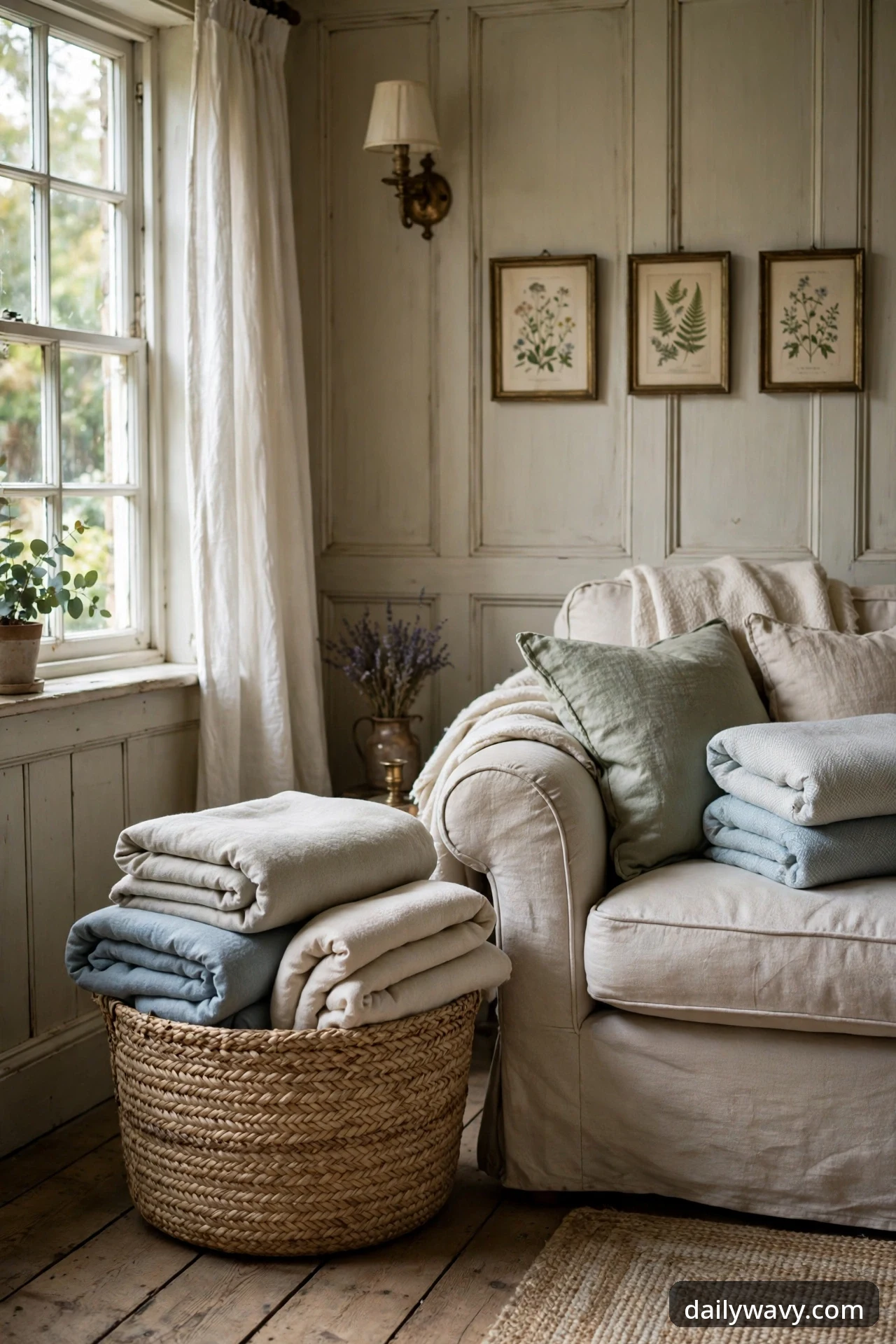
Many cottage living rooms keep a basket of blankets within arm’s reach, and it is one of the easiest ideas on this list. A tall seagrass or rattan basket beside the sofa keeps throws tidy, adds natural texture, and makes the room look like someone actually lives in it. Roll or fold the blankets so the tops show a little color.
The practical decision: basket size. One generous basket, roughly 18 to 22 inches tall and 14 to 18 inches across, holds four to six folded throws. A basket that is too small will overflow; one that is too large swallows the blankets.
What to measure: the floor space beside your sofa or chair, and the folded size of your throws. The basket should sit within a step of the seating, not across the room.
Materials and placement: natural woven seagrass, rattan, or wicker with a simple silhouette. Place it beside the main seating or near the fireplace, and line it with a cotton cloth if the weave snags delicate knits.
Effort: minimal. This is a shopping trip, not a project.
Lower-cost alternative: one large basket instead of several small ones, bought secondhand and wiped down. A coat of clear matte sealer can revive a tired weave.
7. Paired lamps beside a balanced sofa
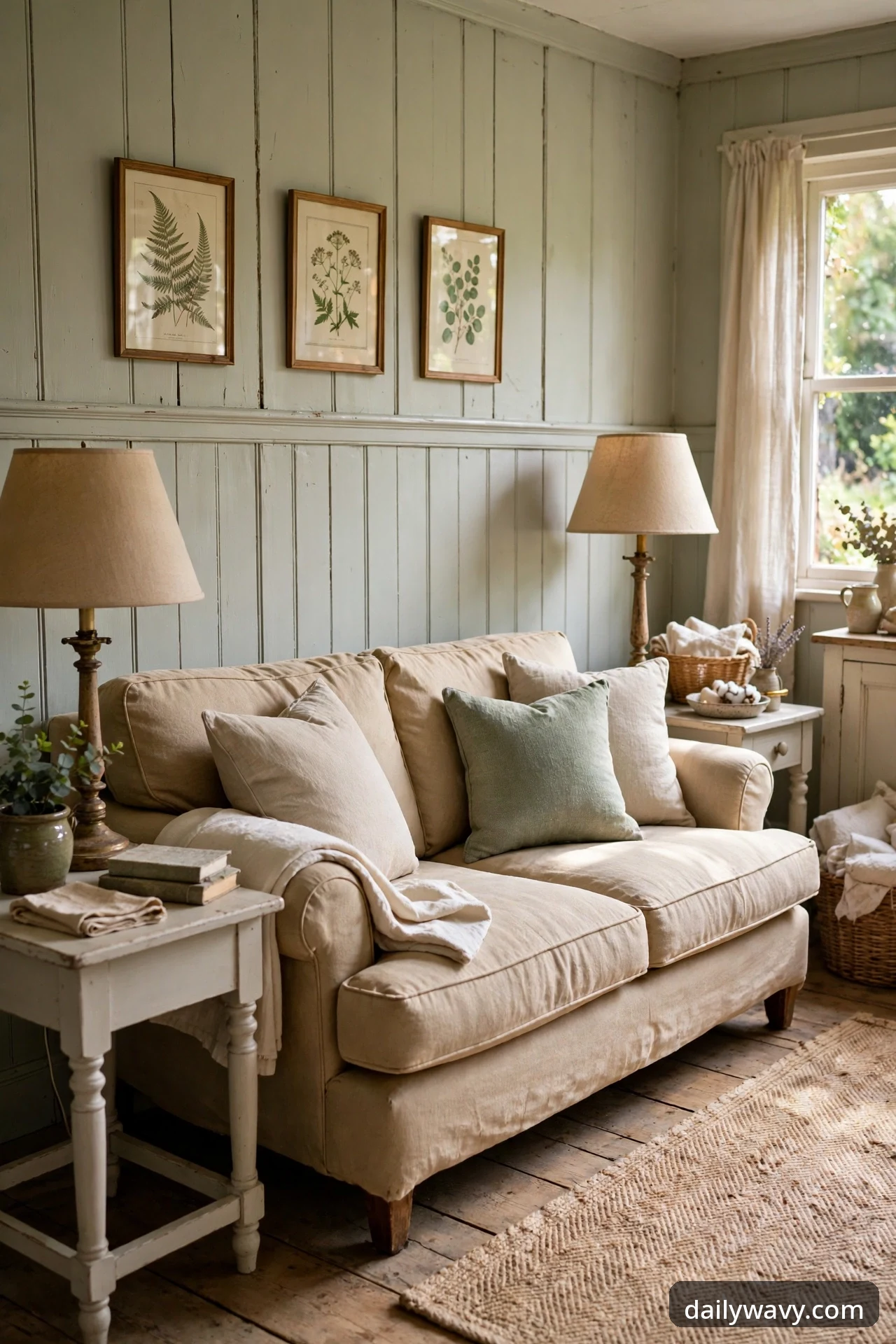
Symmetry is the quiet backbone of cottage rooms, and nothing delivers it like a matching pair of lamps flanking the sofa. The twin lamps give the seating a finished, balanced look even when everything else in the room is gently mismatched. Keep the bases in aged brass or painted ceramic and the shades in natural linen.
The practical decision: lamp proportions. The lamp’s total height should suit the table it sits on: on end tables, 26 to 32 inches overall reads right beside a standard sofa. The bottom of the shade should sit near the eye level of someone seated.
What to measure: your end table height and the sofa arm height. Add the lamp base and shade dimensions together and check that the shade’s lower edge lands within a few inches of seated eye level, about 42 to 46 inches from the floor.
Materials and placement: matching bases in aged brass or painted ceramic with drum shades in natural linen. Place one on each end table, equidistant from the sofa arms, and use warm bulbs in both.
Effort: one afternoon of shopping and placement.
Lower-cost alternative: two matching thrift-store lamps with new linen shades. Mismatched bases in the same finish family can work too, as long as the shades match exactly.
8. Layered rug beneath a nesting table
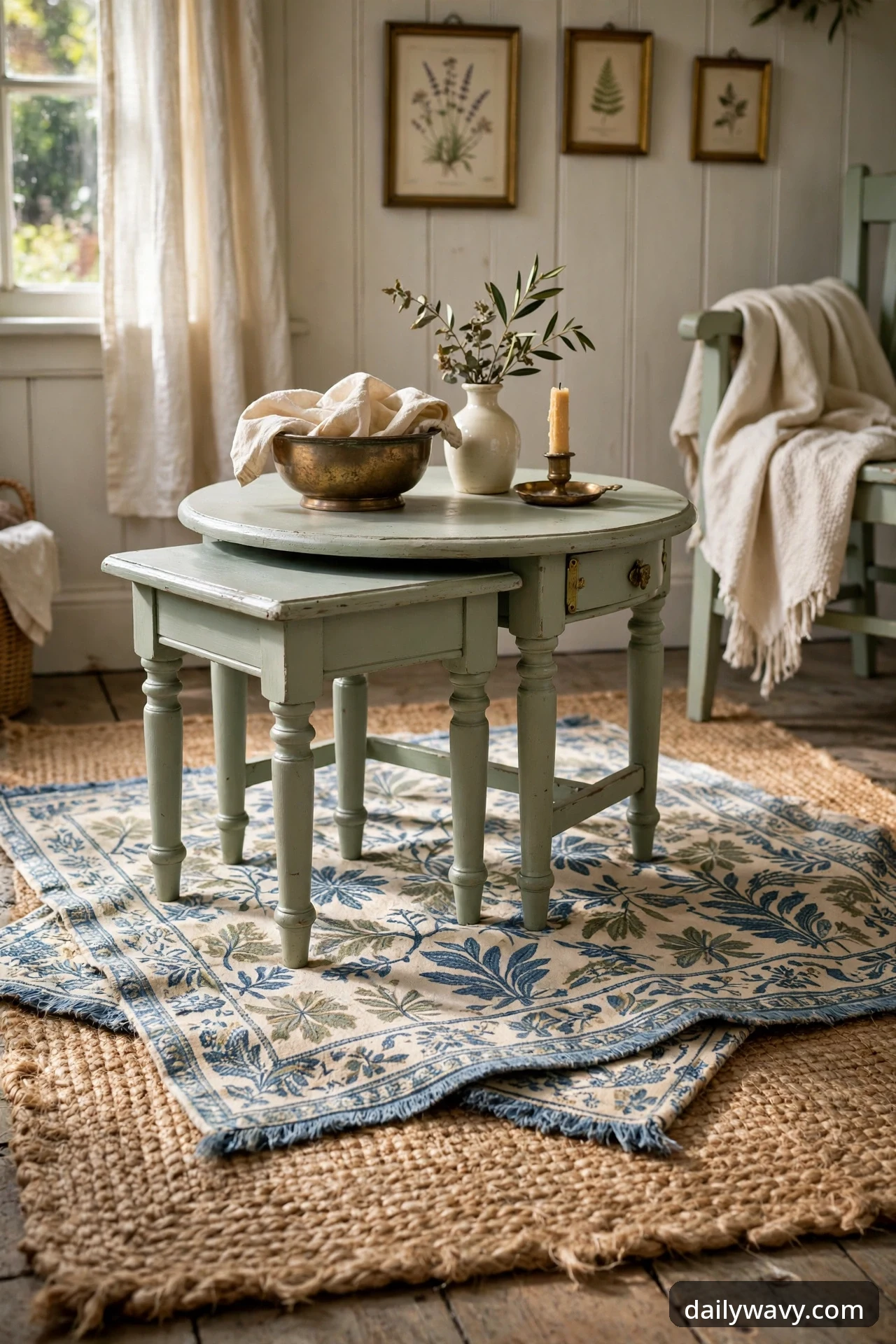
Layering rugs is the cottage answer to a floor that feels bare but a single large rug feels too formal. Start with a flat, natural-fiber base like jute or sisal, then lay a smaller patterned rug on top at a slight angle. The layers add warmth and pattern without committing to one expensive large piece.
The practical decision: the layer order. The larger, plainer rug goes underneath; the smaller, more patterned rug goes on top and slightly off-center. Two is the right number. Three starts to look fussy.
What to measure: the base rug should extend 6 to 12 inches beyond the front legs of the seating and the nesting table. The top rug should be roughly two thirds the size of the base layer so both borders show.
Materials and placement: a natural jute or sisal base with a cotton or low-pile wool rug on top in a small floral or stripe. Center the layers under the coffee or nesting table and let the edges peek out on all sides.
Effort: one afternoon, including moving the furniture twice.
Lower-cost alternative: a plain jute rug as the base layer (often the cheapest large rug available) with a smaller vintage-style rug on top. Washable cotton options keep the whole arrangement practical.
9. Vintage cabinet used as a focal point
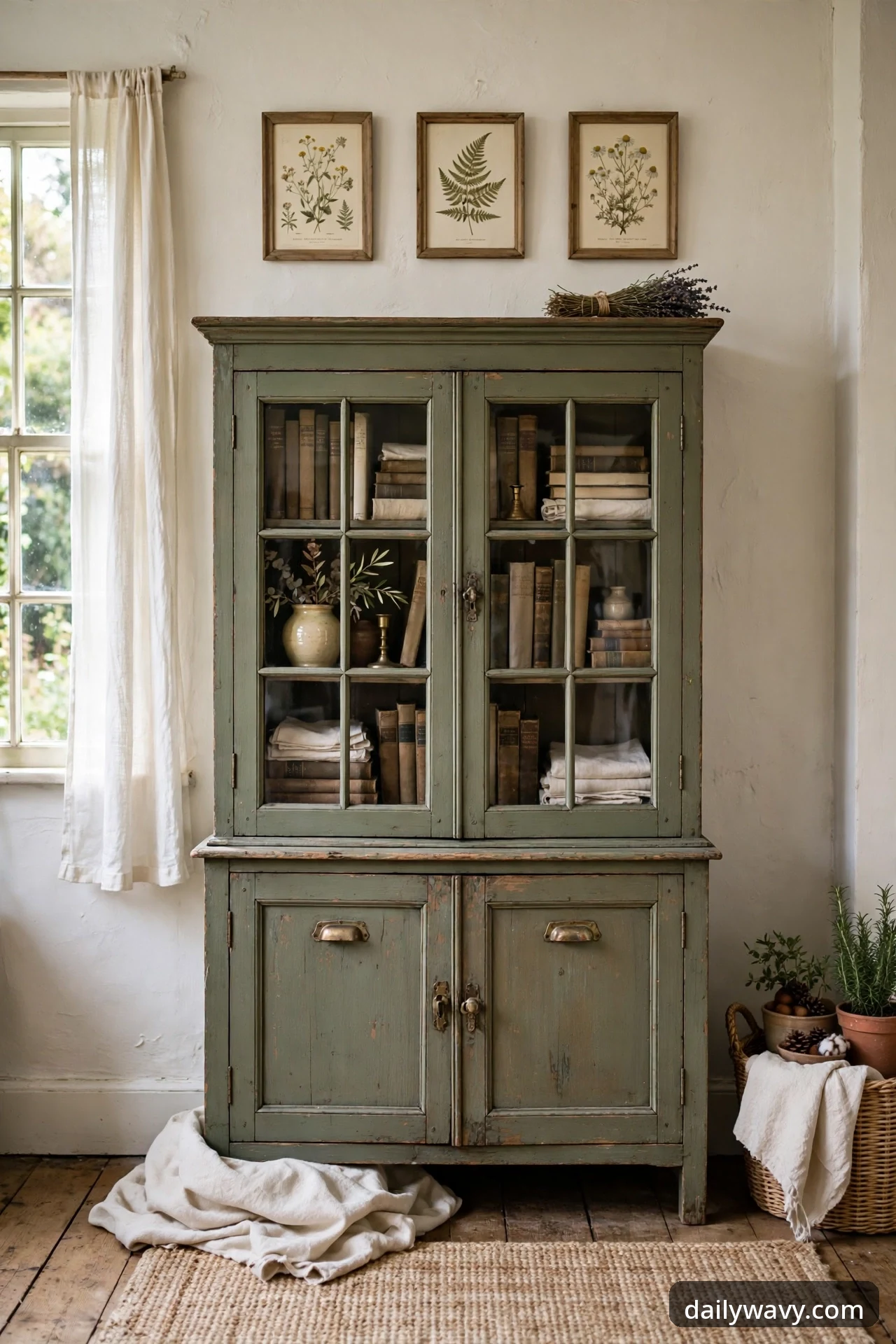
One good vintage cabinet can anchor a whole living room. Whether it is a glass-front bookcase, a small dresser, or a painted sideboard, a single piece with age and character gives the room its center of gravity. Style the top simply: a lamp, a small stack of books, and one natural element like a bowl of pinecones or a potted fern.
The practical decision: finish. Keeping the original patina preserves the character; painting it in a soft neutral like warm white or sage ties it to the room. Choose based on condition: sound wood with nice grain keeps its finish, while a battered surface earns a coat of paint.
What to measure: the cabinet’s height, width, and depth, plus the wall it will stand against. Aim for 30 to 36 inches of height for a sideboard and allow 3 feet of clearance in front so doors and drawers open freely.
Materials and placement: solid wood with simple hardware, swapped for aged brass knobs if the originals are missing. Place it on the longest clear wall or between two windows, and keep the styling on top to three or four items. Anchor a tall cabinet to the wall with a strap kit so it cannot tip.
Effort: a weekend if you paint and swap hardware; an afternoon if you buy it ready to go.
Lower-cost alternative: paint a dresser you already own and replace the knobs with aged brass pulls. A quart of paint and a set of knobs can transform a tired piece.
10. Soft ottoman replacing a sharp table
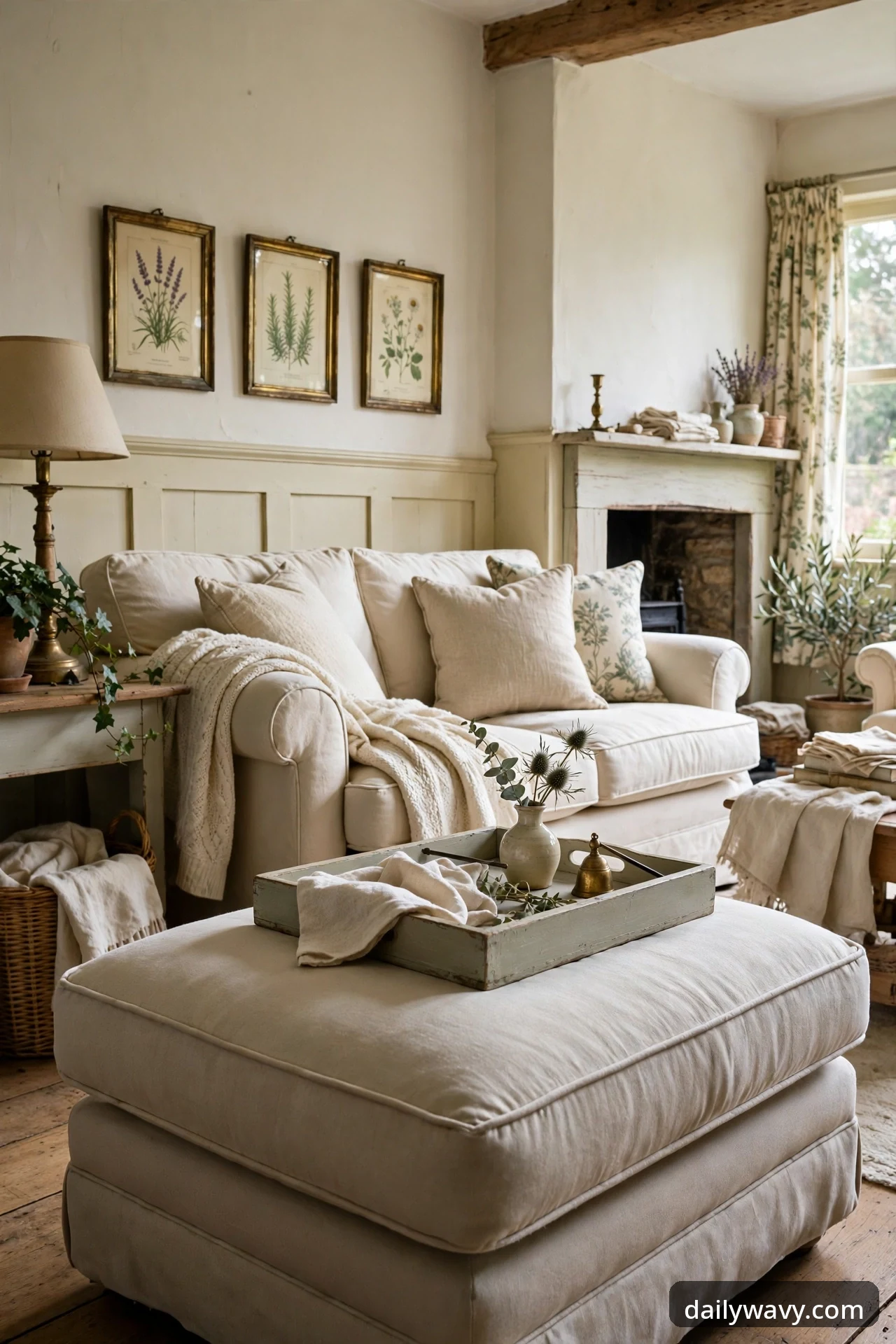
Swapping a hard-edged coffee table for a soft ottoman changes the whole feel of a living room. The room gets friendlier, safer for small children, and more flexible: the ottoman becomes a footrest, extra seating, or a surface for a tray of tea. Choose one firm enough that a tray sits level, in a washable cotton or a small print.
The practical decision: firmness and size. A medium-firm ottoman holds a tray without wobbling; too soft and everything slides. Size it to about two thirds of the sofa width, or use a round 36 inch ottoman in front of a loveseat.
What to measure: the distance between the sofa and the ottoman, 14 to 18 inches, so legs can stretch out but the tray stays reachable. Check that the ottoman top sits 1 to 2 inches below the sofa seat height for comfortable use.
Materials and placement: a cotton or linen-covered ottoman in a small print or plain weave, with a large wooden or rattan tray for drinks. Center it in front of the main seating.
Effort: one afternoon of shopping and arranging.
Lower-cost alternative: a storage ottoman or a large floor pouf in a neutral cotton. Both cost less than a framed upholstered piece and add hidden storage or easy portability.
11. Window seat with tailored cushions
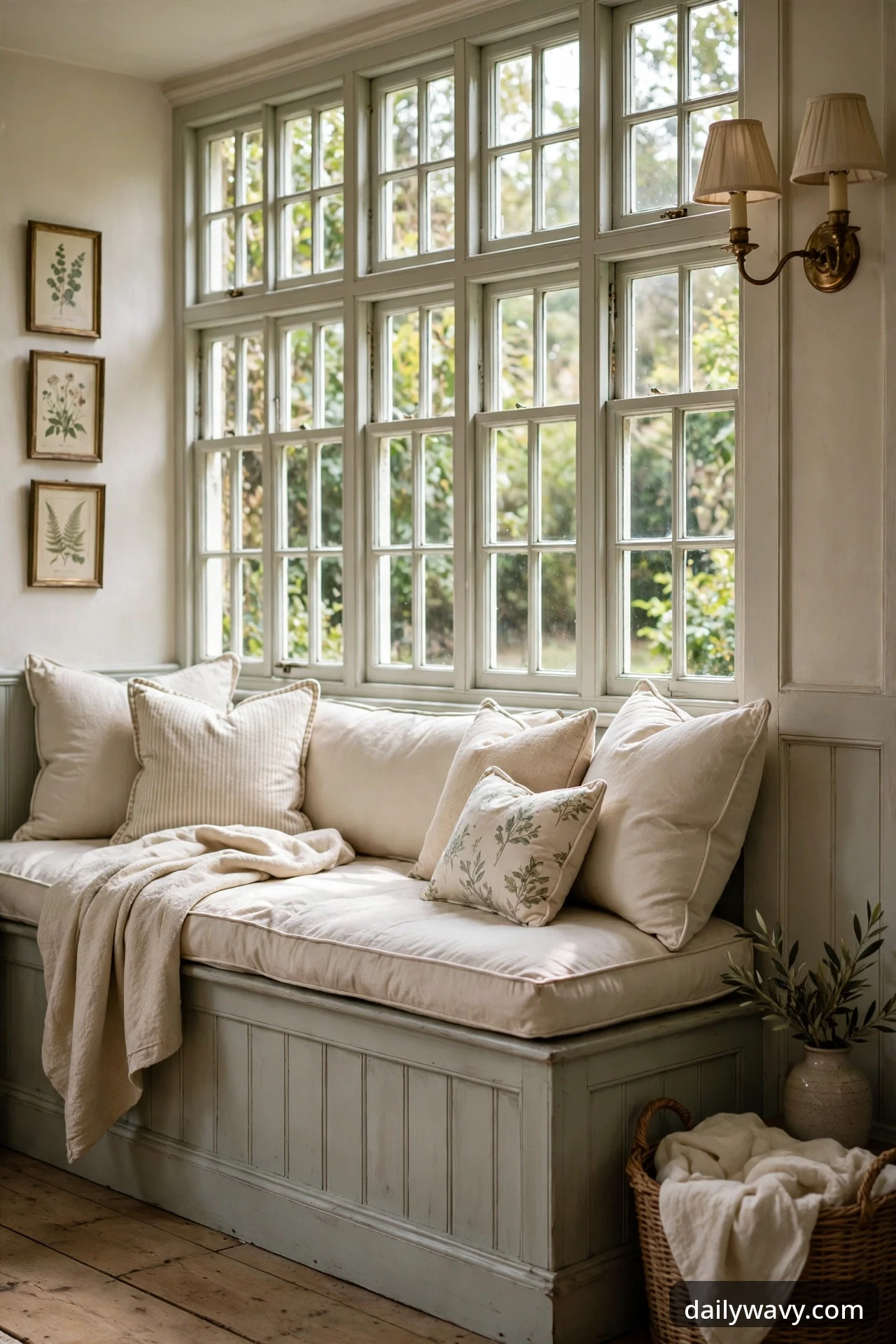
A window seat is the cottage dream, and it is more achievable than it looks. A low bench or a sturdy vented radiator cover under a wide window becomes a reading nook with the addition of a tailored cushion, a few pillows, and a throw. If you use a radiator cover, keep its vents clear so heat still circulates. The key word is tailored: a cushion that fits exactly, with piping and a washable cover, looks built-in rather than improvised.
The practical decision: cushion construction. A 4 inch high-density foam pad with a cotton slipcover gives the right sit without bottoming out. Piping around the edges keeps it looking crisp.
What to measure: the seat platform’s exact width, depth, and the window sill height. Ideal seat depth is 18 to 22 inches; measure twice and order the foam cut to size, leaving a quarter inch of ease for the cover.
Materials and placement: a wooden bench or built platform, foam cushion in a washable cotton cover, and two or three pillows in small prints. Place it under the widest window in the room and add a small side table or a stack of books nearby.
Effort: a weekend, including ordering the foam and sewing or ordering the cover.
Lower-cost alternative: foam cut at a fabric store with a ready-made bench cushion cover in the closest size, or a thick folded quilt over the bench as a temporary seat. Both get you the nook while you plan the permanent cushion.
12. A floor lamp beside a book stack
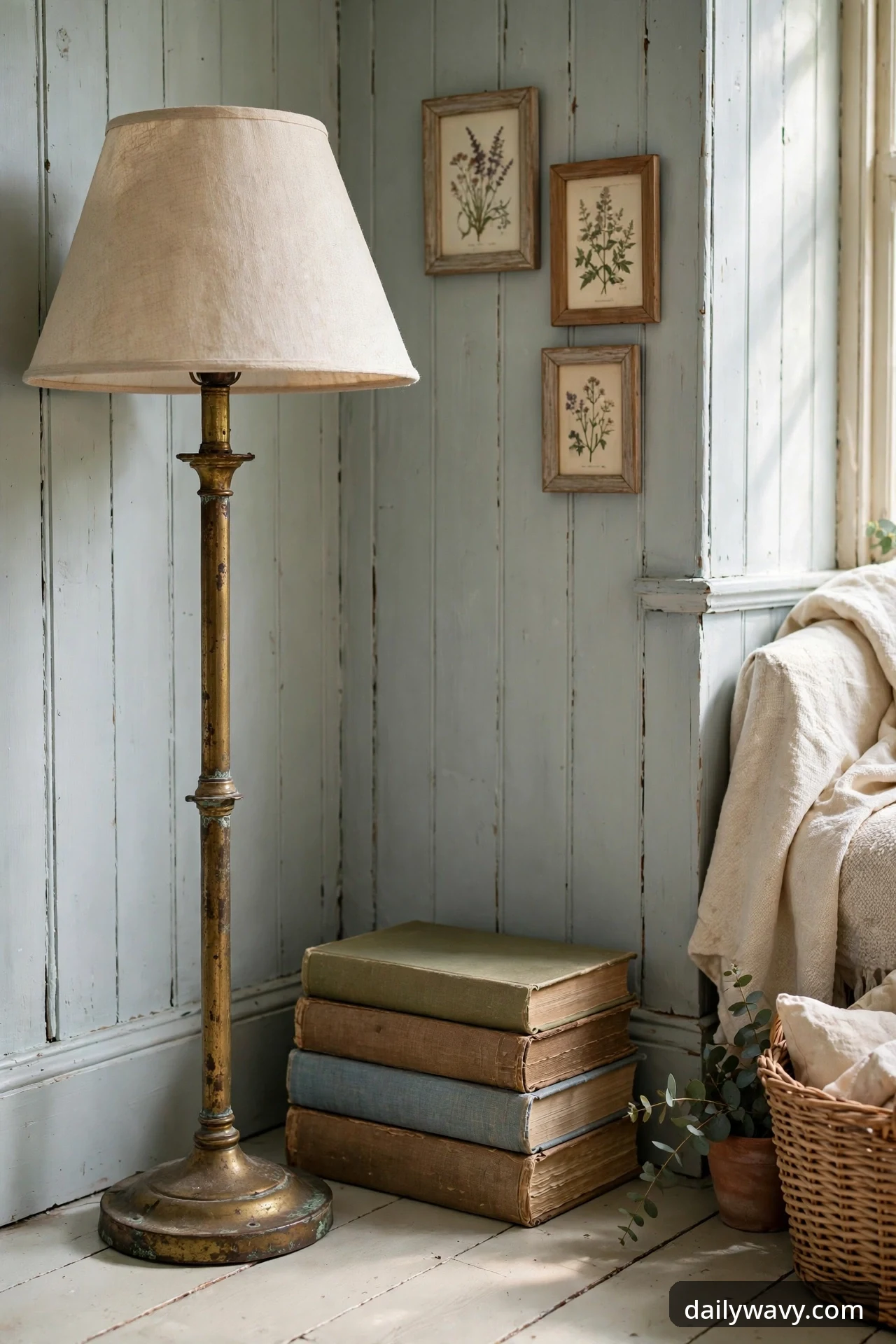
The last idea is the smallest, and it is a small idea that feels very much in the cottage spirit: a floor lamp standing guard beside a stack of books. It creates a lit corner for evening reading, adds height to a low arrangement of furniture, and costs less than almost anything else on this list. A straight pharmacy-style lamp or a simple arc in aged brass both fit.
The practical decision: lamp style. A pharmacy-style lamp with an adjustable shade directs light exactly onto the page; a slim arc lamp washes light over the chair more broadly. Pick based on whether the corner is for reading or for atmosphere.
What to measure: the chair’s position and the lamp’s reach. The bottom of the shade should sit 48 to 52 inches from the floor, roughly at the shoulder of someone seated, so light falls on the book without glare.
Materials and placement: an aged brass or painted metal floor lamp with a linen shade, beside a stack of 6 to 10 books on the floor or a low stool. Tuck it into the corner behind or beside the reading chair from idea 2.
Effort: one afternoon.
Lower-cost alternative: the simplest pharmacy-style floor lamp you can find, paired with books you already own. The stack itself is the styling; the lamp just needs to give good light.
Frequently asked questions
Is English cottage style expensive to get right?
No. The style actually rewards restraint and secondhand finds: painted wood, thrifted art, and simple cotton cost less than most modern looks. Spend on the pieces you touch daily, like seating and lighting, and save on baskets, prints, and accessories.
What colors work in an English cottage living room?
Warm white walls with muted sage, dusty rose, faded blue, and honey-toned wood. Keep the palette to three or four close tones and let texture, not bright color, carry the interest.
How do I keep a cottage living room from looking cluttered?
Follow the one-third rule from the open shelving idea: display about a third of what could fit, and give every surface some empty space. Closed storage like the vintage cabinet hides the rest.
Can I mix English cottage with modern pieces?
Yes, if the modern pieces share the quiet palette. A simple modern floor lamp in aged brass or a plain linen sofa works fine. What clashes is high shine, sharp angles, and loud patterns, so keep those out.
What is the easiest first step?
Curtains and cushions. They change the light and the comfort of the room in a single afternoon, and both are easy to reverse if you change your mind.
Do all the wood pieces need to match?
No, and they should not. Painted wood in one or two soft tones unifies mismatched pieces far better than matching stains. Aged brass hardware across different pieces ties them together.
Bringing it together
English cottage is not a shopping list. It is a set of decisions, made one idea at a time, that add up to a room that feels settled and kind. Start with the window and the seating, because those shape how the room feels every day. Add the shelves, the basket, and the lamp next, and let the cabinet or the window seat become the weekend project you look forward to.
If your living room is on the smaller side, the same principles apply at a tighter scale, and our guide to narrow living room layouts shows how to plan the footprint first. The doorway into the room matters too; a few ideas from small entryway decor can carry the cottage feeling right from the front door. For more rooms in the same spirit, browse the full Home & Decor collection.