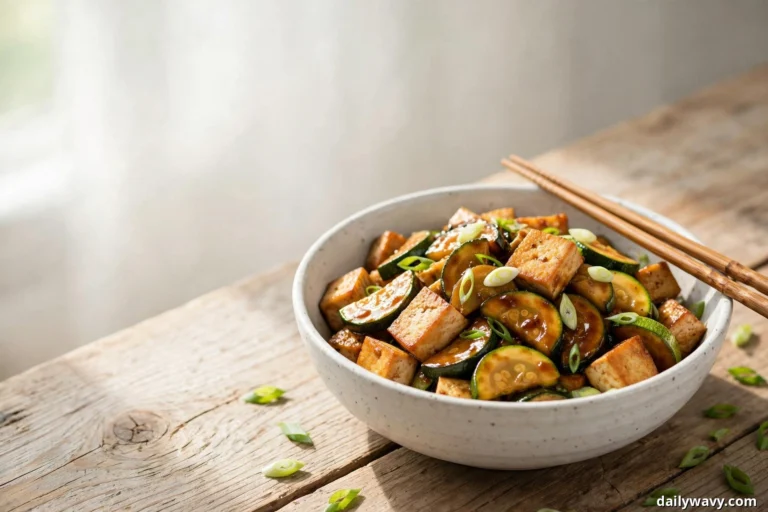
13 Roasted Tomato Pasta Recipes for Your Dinner Rotation
Roasting is one small decision that makes a big difference in a tomato pasta. Cherry tomatoes go into a hot…
Roasting is one small decision that makes a big difference in a tomato pasta. Cherry tomatoes go into a hot oven with olive oil, garlic and salt, and about twenty-five to thirty minutes later they come out collapsed, jammy and sweet, their edges caramelized to a deep amber. Tossed with hot pasta and a splash of the cooking water, they melt into a sauce that tastes like it simmered all afternoon, except most versions are on the table in about 35 minutes. These 13 recipes share that one roasted-tomato engine and change one pasta shape and one partner ingredient each time, so you can cook through the whole list without learning a new technique.
Jump to an idea
- Roasted Tomato Pasta With Orecchiette And Kale
- Roasted Tomato Pasta With Farfalle And Feta
- Roasted Tomato Pasta With Bucatini And Capers
- Roasted Tomato Pasta With Cavatappi And Roasted Garlic
- Roasted Tomato Pasta With Linguine And Olives
- Roasted Tomato Pasta With Gemelli And Artichokes
- Roasted Tomato Pasta With Gnocchetti And Chickpeas
- Roasted Tomato Pasta With Pappardelle And Thyme
- Roasted Tomato Pasta With Macaroni And Cheddar
- Roasted Tomato Pasta With Whole-Wheat Twists
- Roasted Tomato Pasta With Angel Hair And Basil
- Roasted Tomato Pasta With Paccheri And Mozzarella
- Roasted Tomato Pasta With Conchiglie And Spinach

The roasted tomato method: how every pasta below works
Learn this once and all thirteen recipes fall into place. You roast the tomatoes first, boil the pasta while they roast, then marry the two in the pan with starchy pasta water so the sauce turns glossy instead of watery.
Roast the tomatoes. Heat the oven to 425 degrees F. Put 2 pounds of cherry or grape tomatoes in a large rimmed sheet pan with 5 to 6 smashed garlic cloves, 1/4 cup olive oil, 1 teaspoon kosher salt and 1/2 teaspoon black pepper. Toss until everything shines, spread into a single layer, and roast 25 to 30 minutes, until the tomatoes burst and the juices look syrupy at the edges. Roasting concentrates the sugars as moisture cooks off, and the tomato skins char just enough to add a faint smokiness.
Cook the pasta in well-salted water. Bring a large pot of water to a rolling boil and salt it until it tastes like the sea, about 1 tablespoon per 4 quarts. Cook 12 ounces of dried pasta 1 minute shy of the package time. Before draining, scoop out at least 1 1/2 cups of the cooking water. That water is liquid gold: it carries dissolved starch that binds oil and tomato juices into a silky sauce. This binding is called emulsification, and it is the difference between a sauce that clings and a sauce that pools at the bottom of the bowl.
Marry them in the pan. Slide the roasted tomatoes and all their juices into the drained pasta pot (or a wide skillet if the recipe needs more room). Add 1/2 cup of the reserved pasta water and toss over medium heat for 1 to 2 minutes, shaking the pan, until the sauce thickens and coats every piece. Add more water a splash at a time if it looks dry.
The sauce-to-pasta ratio. For 12 ounces of dried pasta (which serves 4 as a main), start with roughly 2 pounds of cherry tomatoes before roasting, plus the oil and juices. If the pan looks crowded, you have too much sauce; if the pasta looks thirsty, add more water, not more tomatoes. If you are adding a protein like sliced chicken from our lemon garlic chicken skillet, fold it in at the very end so it warms through without overcooking.
Storage and food safety. Refrigerate leftovers within 2 hours; they keep 3 to 4 days in a covered container. Reheat gently in a skillet with a splash of water, because pasta absorbs sauce as it sits. Tomato sauces and cooked pasta do not freeze well for these recipes, so plan to eat the batch fresh.
1. Roasted Tomato Pasta With Orecchiette And Kale

Orecchiette are a natural partner for roasted tomatoes because their little cupped shape scoops up the burst juices like tiny bowls. Kale goes into the same oven pan for the last ten minutes, where its edges crisp into chips while the leaves stay tender underneath. This is the dish the hero photo shows, and it earns the spot: rustic, sturdy, and a bowl that is easy to keep eating.
You need (serves 4): 2 pounds cherry tomatoes, 5 smashed garlic cloves, 1/4 cup olive oil, 1 teaspoon kosher salt, 1/2 teaspoon black pepper, 12 ounces orecchiette, 4 cups chopped lacinato kale (stems removed), 1/2 cup grated Parmesan, 1 tablespoon olive oil for the kale, plus 1 1/2 cups reserved pasta water.
Method
- Roast the tomatoes and garlic per the base method. After 15 minutes, scatter the kale over the pan, tucking it under some tomatoes, drizzle with the extra tablespoon of olive oil, and return to the oven for 10 minutes until the kale edges crisp.
- Boil the orecchiette in salted water until 1 minute shy of done; reserve 1 1/2 cups of the water before draining.
- Slide the tomatoes, garlic and kale into the pasta pot with 1/2 cup of the reserved water. Toss over medium heat 2 minutes until glossy. Add the Parmesan and toss again, loosening with more water as needed.
Timing notes: Kale burns fast, so tuck it under some tomatoes rather than spreading it on bare hot pan. If your kale is curly rather than flat, use 3 cups; it shrinks less.
Troubleshooting: If the sauce feels thin, the tomatoes may have been under-roasted. Give the whole pot 2 more minutes over medium heat and the juices will reduce and coat.
Storage: Keeps 3 to 4 days refrigerated. The kale softens overnight, which is fine; revive with a splash of water when reheating.
2. Roasted Tomato Pasta With Farfalle And Feta
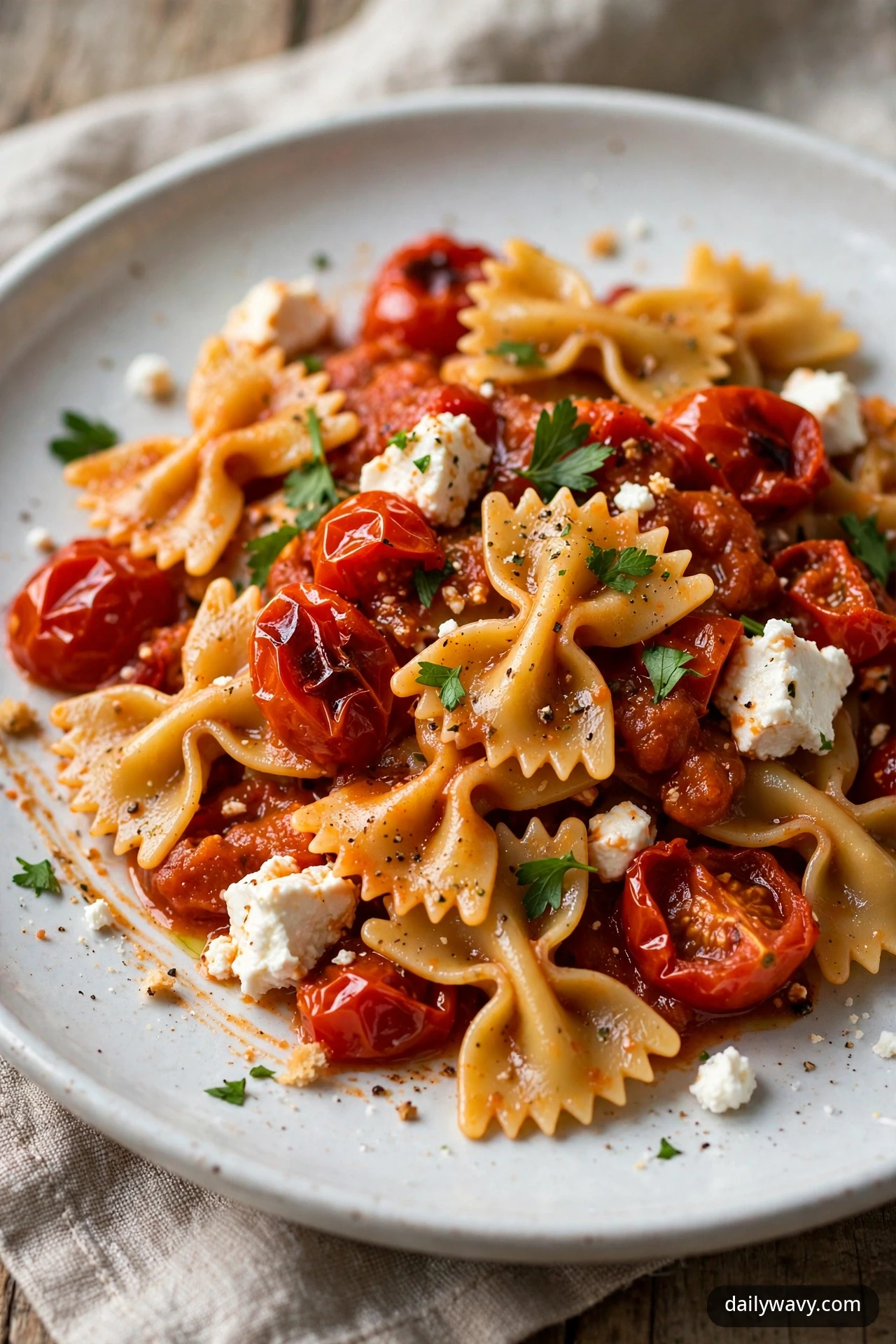
Farfalle, with its pinched centers and ruffled edges, catches bits of roasted tomato in every fold. Feta goes in off the heat so it softens into creamy pockets instead of vanishing. The contrast is the whole point: sweet roasted tomatoes against salty, tangy cheese, with the bow ties giving each bite a different balance of the two.
You need (serves 4): 2 pounds cherry tomatoes, 5 smashed garlic cloves, 1/4 cup olive oil, 1 teaspoon kosher salt, 1/2 teaspoon black pepper, 12 ounces farfalle, 6 ounces feta in a block, crumbled by hand, 1/4 cup chopped fresh parsley, plus 1 1/2 cups reserved pasta water.
Method
- Roast the tomatoes and garlic per the base method while the farfalle boils to 1 minute shy of done; reserve the pasta water.
- Combine the pasta, tomatoes and 1/2 cup of the reserved water in the pot and toss over medium heat 1 to 2 minutes until the sauce coats.
- Take the pot off the heat, wait a full minute, add the feta and parsley, and toss gently once. Serve immediately so the feta stays in soft chunks.
Timing notes: Crumble the feta while the pasta boils so it is ready the moment the heat goes off. Adding cheese over active heat makes feta gritty.
Troubleshooting: If the feta melts completely, the pot was still too hot. Next time, wait a full minute off the heat before adding it.
Storage: Keeps 3 to 4 days refrigerated. The feta firms up overnight; a splash of olive oil on reheating brings back the richness.
3. Roasted Tomato Pasta With Bucatini And Capers

Bucatini, the thick hollow spaghetti, is built for bold sauces: the tomato juices cling to the outside and the hollow center stays springy. Capers bring the briny punch that roasted tomatoes love, and a spoonful of lemon zest keeps the whole thing from feeling heavy. This is the grown-up, pantry-smart version of the roundup.
You need (serves 4): 2 pounds cherry tomatoes, 5 smashed garlic cloves, 1/4 cup olive oil, 1 teaspoon kosher salt, 1/2 teaspoon black pepper, 12 ounces bucatini, 3 tablespoons capers (rinsed and patted dry), 1 tablespoon olive oil for frying the capers, 1 tablespoon lemon zest, 1/4 teaspoon red pepper flakes, plus 1 1/2 cups reserved pasta water.
Method
- Roast the tomatoes and garlic per the base method. Five minutes before the pasta is done, heat the extra tablespoon of olive oil in a small skillet and fry the capers until they pop and crisp, about 2 minutes. Drain on a paper towel.
- Boil the bucatini 1 minute shy of done; reserve the water. Toss the pasta with the tomatoes and 1/2 cup of the water over medium heat 2 minutes until glossy.
- Fold in the lemon zest, red pepper flakes and half the crispy capers. Serve with the rest scattered on top.
Timing notes: Bucatini takes a few minutes longer than most shapes, so start the pot before the tomatoes come out. Fry the capers while the pasta boils and the timing lines up neatly.
Troubleshooting: If the capers do not crisp, they were not dry enough. Pat them well; wet capers steam instead of frying.
Storage: Keeps 3 to 4 days refrigerated. The capers soften overnight but the flavor deepens; add a few fresh crispy ones on top if you have the patience.
4. Roasted Tomato Pasta With Cavatappi And Roasted Garlic

Cavatappi, the corkscrew tubes, trap roasted tomato bits inside their curls, so no flavor escapes. A whole head of garlic roasts alongside the tomatoes until it turns to sweet paste, then gets squeezed over the pasta at the end. This is one of the mildest, most comforting recipes in the list: gentle, sweet and deeply savory without a single harsh edge.
You need (serves 4): 2 pounds cherry tomatoes, 1 whole head of garlic (top sliced off), 1/4 cup olive oil plus 1 tablespoon for the garlic, 1 teaspoon kosher salt, 1/2 teaspoon black pepper, 12 ounces cavatappi, 1/2 cup grated Pecorino Romano, plus 1 1/2 cups reserved pasta water.
Method
- Roast the tomatoes per the base method, adding the garlic head to the pan: drizzle it with the extra tablespoon of oil, wrap it loosely in foil, and roast 30 to 35 minutes until completely soft.
- Boil the cavatappi 1 minute shy of done; reserve the water. Squeeze the roasted garlic cloves out of their skins into the pasta pot.
- Add the tomatoes and 1/2 cup of the reserved water, toss over medium heat 2 minutes until the garlic melts into the sauce, then add the Pecorino and toss until it coats.
Timing notes: The garlic head needs the full 30 to 35 minutes; if the tomatoes finish first, pull them out and let the garlic go alone. Under-roasted garlic stays sharp and raw-tasting.
Troubleshooting: If the sauce tastes bland, it is often under-salted pasta water. Taste the finished dish before deciding it needs more cheese; salt first, cheese second.
Storage: Keeps 3 to 4 days refrigerated. The garlic flavor intensifies overnight.
5. Roasted Tomato Pasta With Linguine And Olives
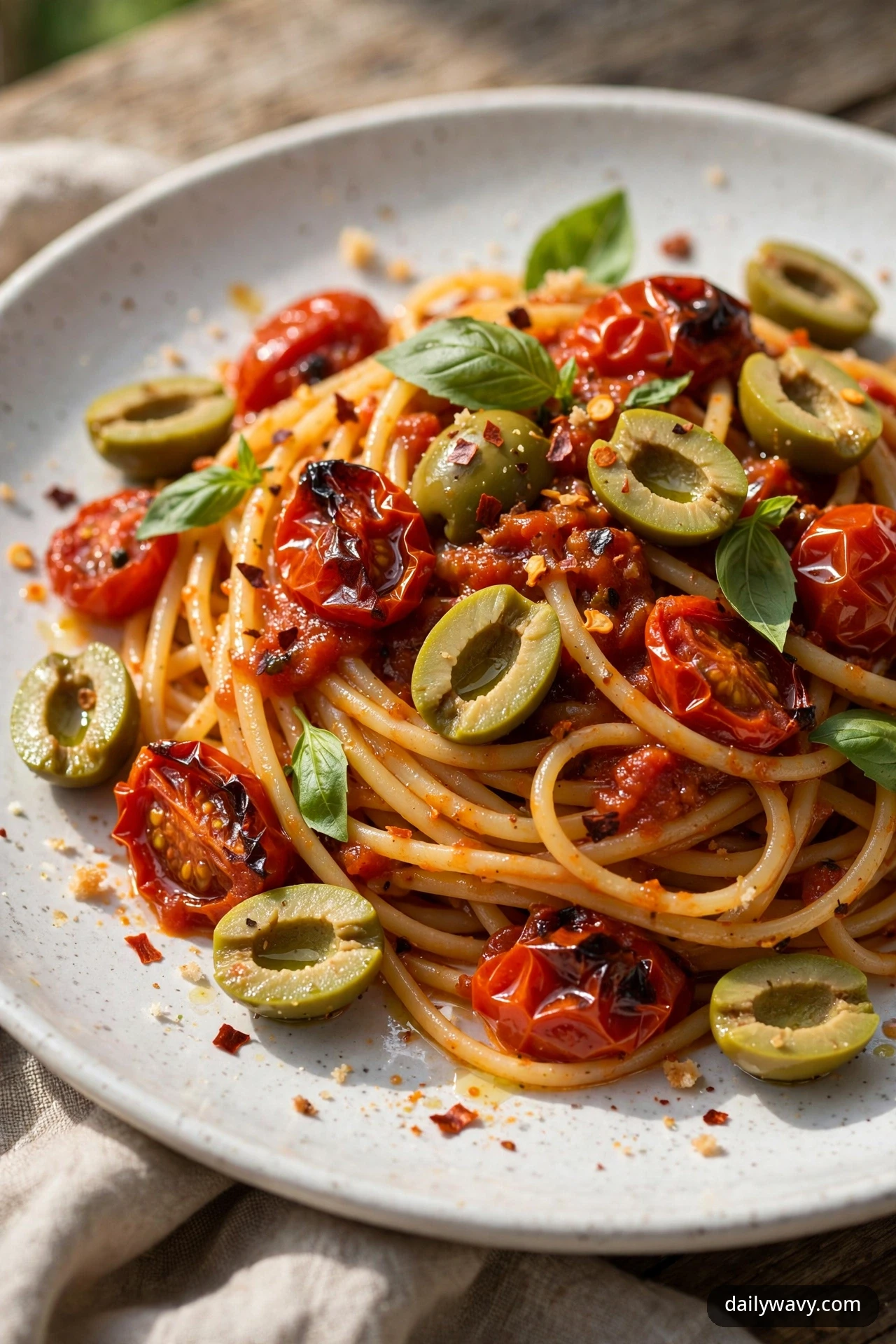
Linguine gives you the classic long-noodle twirl, and buttery Castelvetrano olives make this the Mediterranean-leaning member of the roundup. The olives go onto the roasting pan for the last 8 minutes so they warm and release a little of their oil into the tomato juices. Red pepper flakes add the warmth; the whole bowl tastes like a small coastal town.
You need (serves 4): 2 pounds cherry tomatoes, 5 smashed garlic cloves, 1/4 cup olive oil, 1 teaspoon kosher salt, 1/2 teaspoon black pepper, 12 ounces linguine, 1 cup Castelvetrano olives (pitted and halved), 1/2 teaspoon red pepper flakes, 1/4 cup chopped fresh basil, plus 1 1/2 cups reserved pasta water.
Method
- Roast the tomatoes and garlic per the base method. After 17 minutes, add the olives to the pan and roast 8 minutes more.
- Boil the linguine 1 minute shy of done; reserve the water.
- Toss the linguine with the tomatoes, olives and 1/2 cup of the reserved water over medium heat 2 minutes until the sauce shines. Fold in the red pepper flakes and basil off the heat.
Timing notes: Long pasta tangles, so stir it twice in the first minute of boiling and keep the water at a full rolling boil. Toss with tongs in the pan, lifting rather than stirring, to keep the linguine intact.
Troubleshooting: If the olives taste bitter, they were likely over-roasted. Eight minutes is the limit; add them even later next time.
Storage: Keeps 3 to 4 days refrigerated. The basil darkens overnight, so save a few fresh leaves for topping if serving the second day.
6. Roasted Tomato Pasta With Gemelli And Artichokes
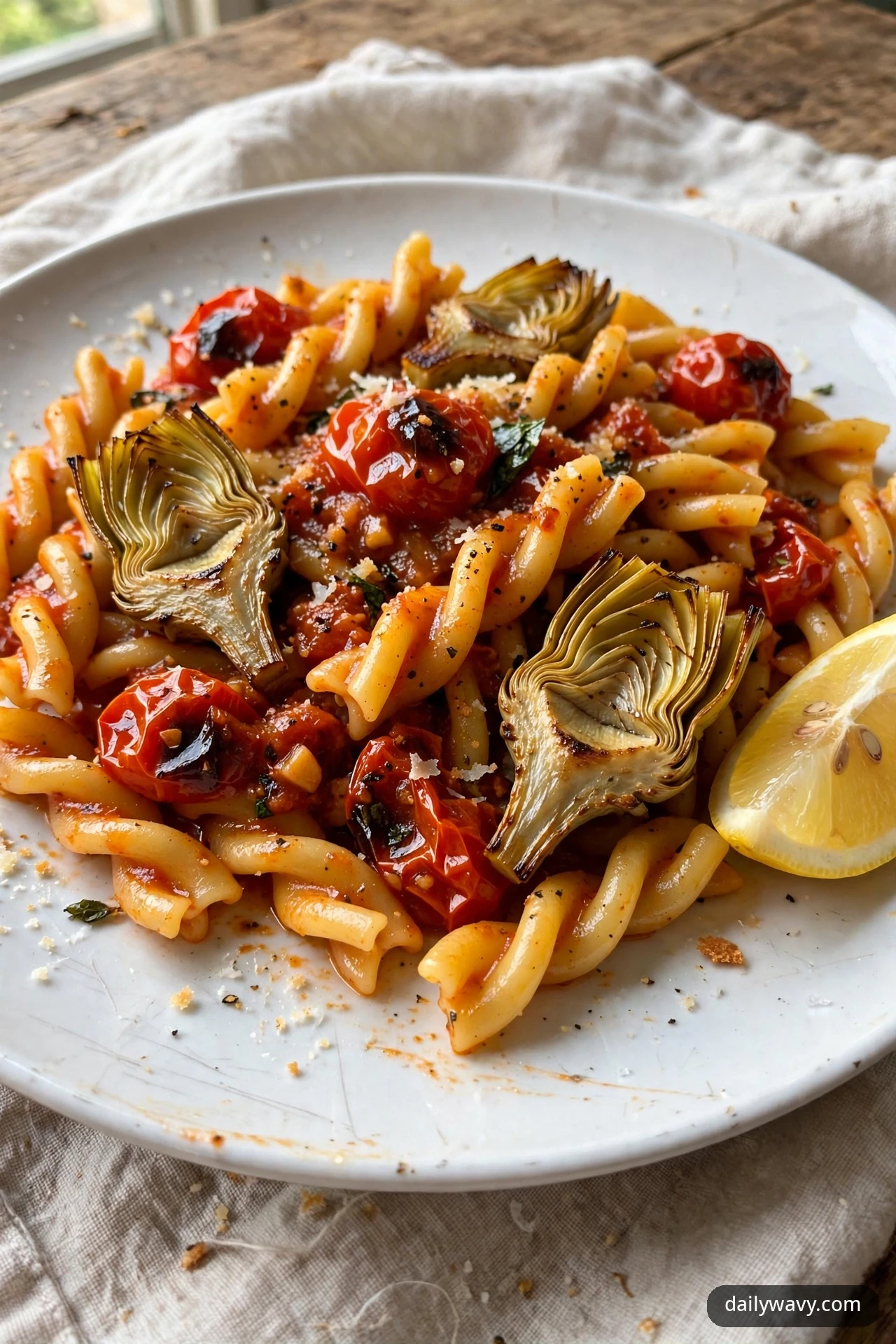
Gemelli, two strands twisted into one, has more surface texture than almost any short pasta, which means more sauce in every bite. Artichoke hearts roast alongside the tomatoes until their edges turn golden and crisp. The result tastes like an Italian deli counter in pasta form: briny, sweet, a little nutty, and completely satisfying.
You need (serves 4): 2 pounds cherry tomatoes, 5 smashed garlic cloves, 1/4 cup olive oil, 1 teaspoon kosher salt, 1/2 teaspoon black pepper, 12 ounces gemelli, one 14-ounce can artichoke hearts (drained, patted dry, halved), 1/3 cup grated Parmesan, 1 tablespoon lemon juice, plus 1 1/2 cups reserved pasta water.
Method
- Roast the tomatoes and garlic per the base method, adding the halved artichokes to the pan at the start so they get the full 25 minutes and caramelize at the edges.
- Boil the gemelli 1 minute shy of done; reserve the water.
- Toss the pasta, tomatoes and artichokes with 1/2 cup of the reserved water over medium heat 2 minutes until glossy. Fold in the lemon juice and Parmesan off the heat.
Timing notes: Canned artichokes vary in water content, so pat them genuinely dry; wet ones steam instead of caramelizing. Frozen hearts work too, thawed and patted dry.
Troubleshooting: If the artichokes taste tinny, the lemon juice was not enough. An extra teaspoon brightens them right up; canned artichokes need more acid than fresh ones.
Storage: Keeps 3 to 4 days refrigerated. The artichokes hold their texture well, which makes this one of the best next-day lunches in the list.
7. Roasted Tomato Pasta With Gnocchetti And Chickpeas

Gnocchetti, the small ridged shells sometimes called malloreddus, cup the sauce while their ridges grab onto every drop. Chickpeas split duty here: half get roasted on the pan until crisp and nutty for the topping, half go straight into the sauce. Two textures from one ingredient, and enough protein that the bowl stands on its own as dinner.
You need (serves 4): 2 pounds cherry tomatoes, 5 smashed garlic cloves, 1/4 cup olive oil, 1 teaspoon kosher salt, 1/2 teaspoon black pepper, 12 ounces gnocchetti, two 15-ounce cans chickpeas (drained, rinsed, patted very dry), 1 teaspoon smoked paprika, 1/2 cup grated Parmesan, 1 tablespoon olive oil for the chickpeas, plus 1 1/2 cups reserved pasta water.
Method
- Roast the tomatoes and garlic per the base method, adding half the chickpeas to the pan with the smoked paprika and the extra tablespoon of olive oil so they crisp over the full 25 minutes.
- Boil the gnocchetti 1 minute shy of done; reserve the water.
- Toss the pasta, tomatoes and the unroasted half of the chickpeas with 1/2 cup of the reserved water over medium heat 2 minutes until the sauce coats. Serve topped with the crispy chickpeas and Parmesan.
Timing notes: Chickpeas crisp only if they start dry, so drain and rinse them while the oven preheats and let them air-dry on a towel. A damp chickpea will not crisp well.
Troubleshooting: If the crispy chickpeas soften on the pasta, plate the pasta first and scatter them over the top at the table, not in the pot.
Storage: Keeps 3 to 4 days refrigerated. Store any extra crispy chickpeas separately in a jar at room temperature for up to 3 days so they stay crunchy.
8. Roasted Tomato Pasta With Pappardelle And Thyme
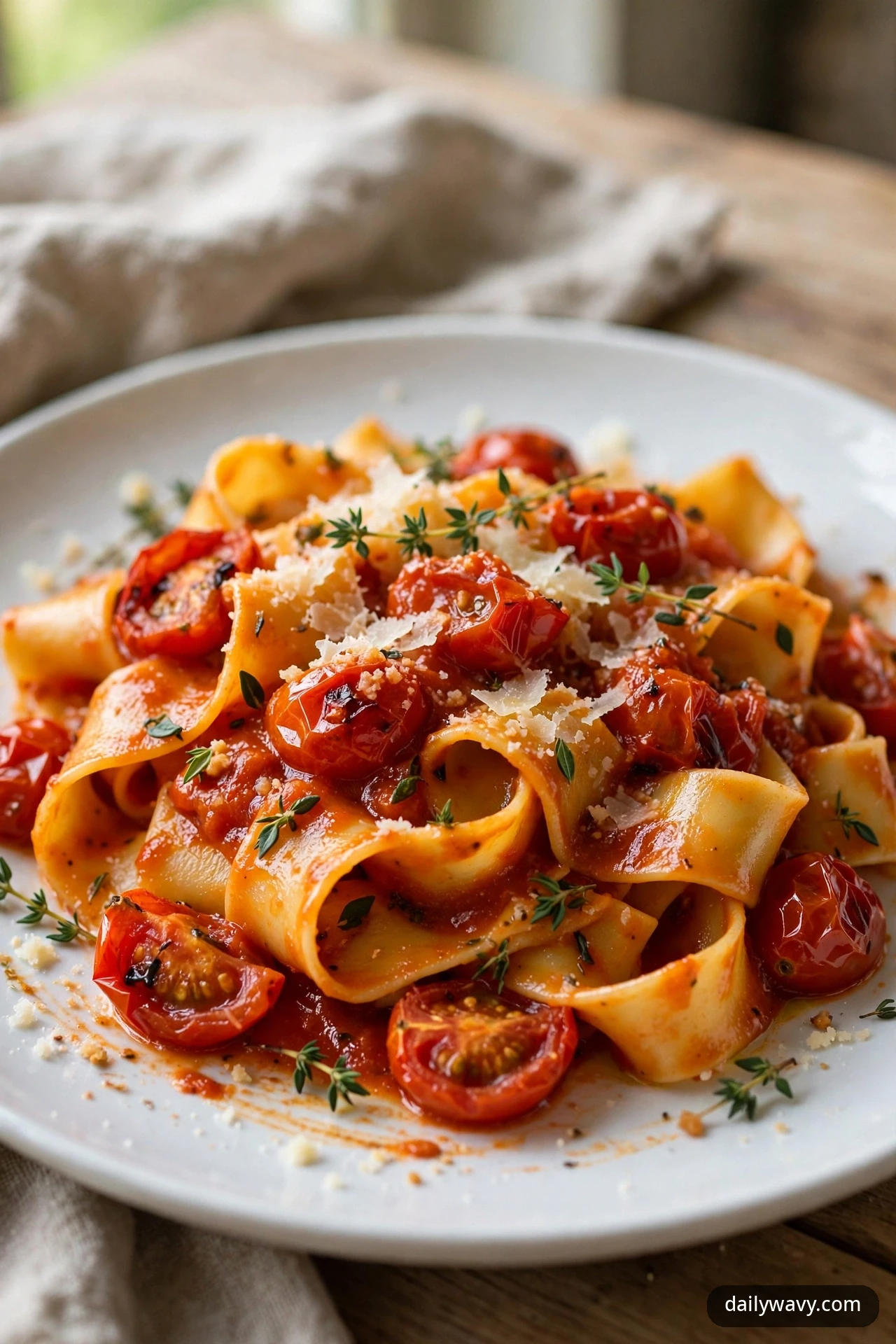
Pappardelle, the widest ribbon in the list, turns roasted tomato pasta into something that feels like a restaurant order. Fresh thyme goes onto the roasting pan with the tomatoes so its flavor perfumes the juices, and a knob of butter at the end gives the sauce a silkiness that olive oil alone does not give. This is the date-night recipe: simple technique, dramatic result.
You need (serves 4): 2 pounds cherry tomatoes, 5 smashed garlic cloves, 1/4 cup olive oil, 1 teaspoon kosher salt, 1/2 teaspoon black pepper, 8 sprigs fresh thyme, 12 ounces pappardelle, 3 tablespoons cold unsalted butter, 1/2 cup grated Parmesan, plus 1 1/2 cups reserved pasta water.
Method
- Roast the tomatoes, garlic and thyme sprigs per the base method. Strip the thyme leaves off the woody stems once roasted; discard the stems.
- Boil the pappardelle 1 minute shy of done; reserve the water. Long ribbons tangle, so stir them twice in the first minute of boiling.
- Toss the pasta, tomatoes and thyme leaves with 1/2 cup of the reserved water over medium heat 2 minutes. Take off the heat, add the cold butter and Parmesan, and toss until the sauce turns silky.
Timing notes: Cold butter matters. Warm butter melts into oil; cold butter emulsifies into a creamy sauce. Cut it into cubes while the pasta boils and keep it in the fridge until the moment it goes in.
Troubleshooting: If the sauce looks greasy, the butter went in too hot. Add a splash more pasta water and toss hard off the heat; the starch will pull it back together.
Storage: Keeps 3 to 4 days refrigerated. Reheat very gently, because the butter-based sauce can separate over high heat.
9. Roasted Tomato Pasta With Macaroni And Cheddar
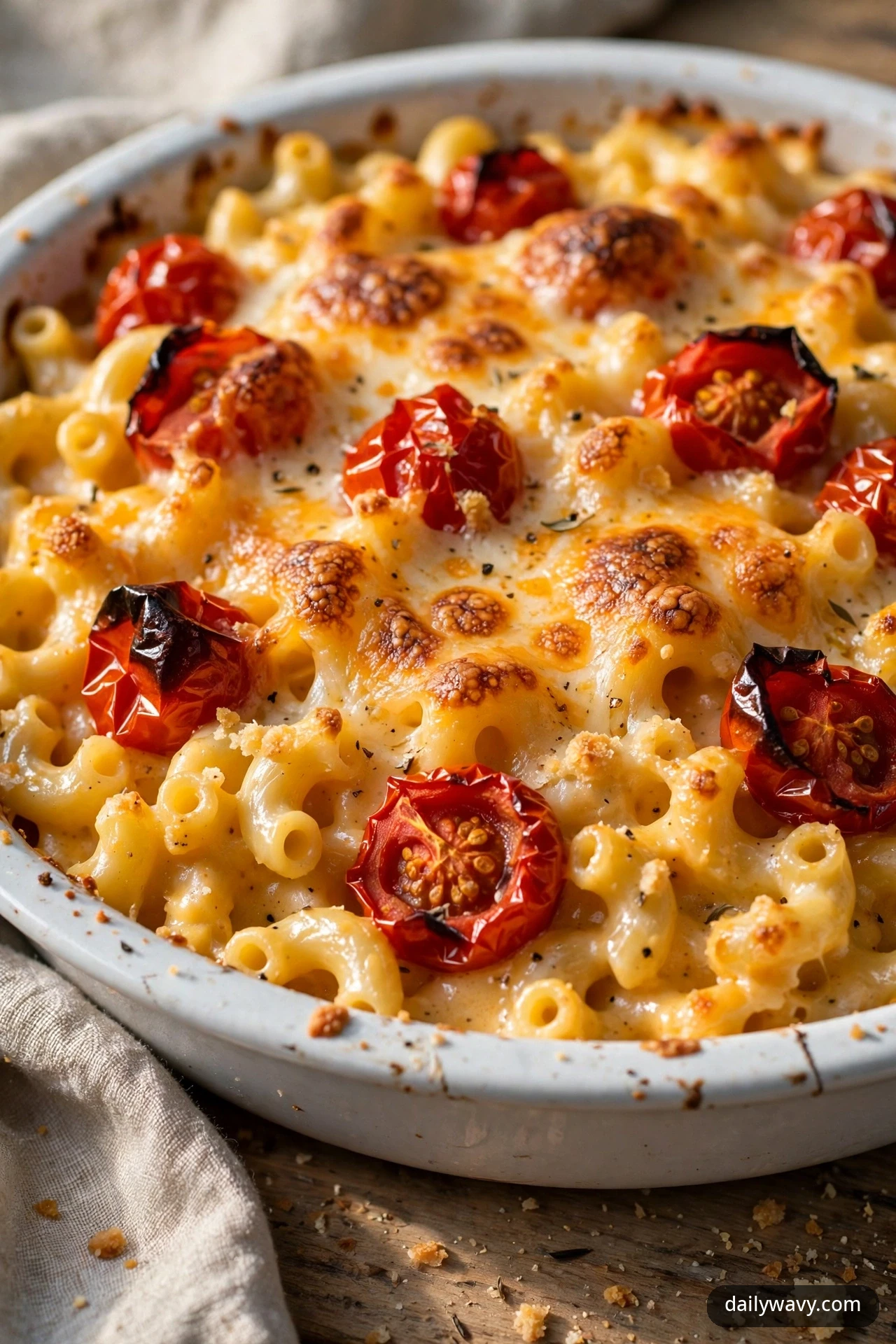
Yes, this is the roasted-tomato version of mac and cheese, and it works better than it has any right to. The burst tomatoes cut the richness of the cheddar so the dish stays balanced rather than heavy, and a brief trip under the broiler gives the top a bubbled, golden crust. It is an easy family bowl, and the leftovers reheat well.
You need (serves 4): 2 pounds cherry tomatoes, 5 smashed garlic cloves, 1/4 cup olive oil, 1 teaspoon kosher salt, 1/2 teaspoon black pepper, 12 ounces elbow macaroni, 2 cups shredded sharp cheddar, 1/2 cup whole milk, 1/4 cup grated Parmesan, plus 1 1/2 cups reserved pasta water.
Method
- Roast the tomatoes and garlic per the base method. Heat the broiler to high while the pasta boils.
- Boil the macaroni 1 minute shy of done; reserve the water. In the pasta pot, toss the macaroni, tomatoes and 1/2 cup of the reserved water over medium heat 1 minute.
- Take the pot off the heat. Add the milk and cheddar a handful at a time, stirring until melted and smooth. Transfer to a baking dish, top with Parmesan, and broil 3 to 4 minutes until the top bubbles and browns.
Timing notes: Shred the cheddar from a block. Pre-shredded cheese is coated with starch that keeps it from melting smoothly, and this dish is all about the melt.
Troubleshooting: If the sauce seizes into clumps, the heat was too high when the cheese went in. Take the pot off the heat before adding cheese and the sauce will stay silky.
Storage: Keeps 3 to 4 days refrigerated. Reheat covered with a splash of milk at 350 degrees F for 15 minutes, or microwave with a spoonful of water stirred in.
10. Roasted Tomato Pasta With Whole-Wheat Twists
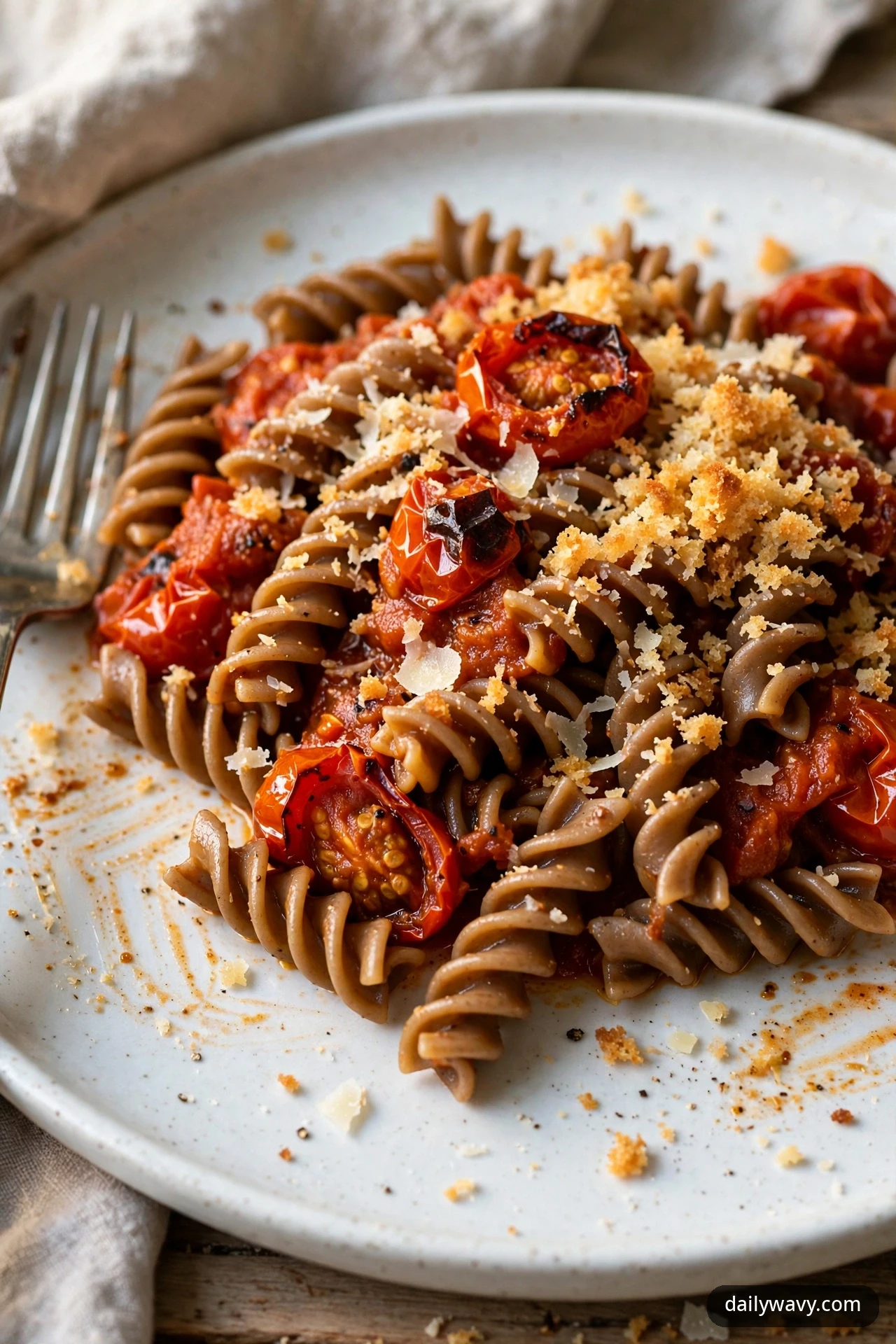
Whole-wheat pasta has a nuttier, heartier flavor that stands up to sweet roasted tomatoes instead of disappearing behind them. Toasted breadcrumbs, crisped in olive oil with a little garlic, give the crunch that whole-grain dishes benefit from. This is the sturdy, weeknight-workhorse recipe: filling, fast, and a good choice when you want something hearty.
You need (serves 4): 2 pounds cherry tomatoes, 5 smashed garlic cloves, 1/4 cup olive oil, 1 teaspoon kosher salt, 1/2 teaspoon black pepper, 12 ounces whole-wheat fusilli, 3/4 cup panko breadcrumbs, 2 minced garlic cloves for the crumbs, 1/2 cup grated Parmesan, 2 tablespoons olive oil for the crumbs, plus 1 1/2 cups reserved pasta water.
Method
- Roast the tomatoes and garlic per the base method. While they roast, toast the panko in a skillet with the 2 tablespoons of olive oil for the crumbs and the minced garlic over medium heat, stirring, 3 to 4 minutes until deep golden. Set aside.
- Boil the whole-wheat fusilli for the full package time; reserve the water. Whole-wheat pasta foams more, so use a big pot and skim the foam once.
- Toss the pasta and tomatoes with 1/2 cup of the reserved water over medium heat 2 minutes until glossy. Fold in the Parmesan, then serve with the toasted crumbs scattered over each bowl.
Timing notes: Whole-wheat pasta needs the full package time, so cook it to the package time rather than pulling it a minute shy; undercooked whole wheat tastes chalky. Do not rinse the pasta.
Troubleshooting: If the crumbs go soggy, they were added too early or the sauce was too loose. Spoon them over at the table, not in the pot.
Storage: Keeps 3 to 4 days refrigerated. Store the crumbs separately at room temperature in a jar for up to 4 days so they stay crisp.
11. Roasted Tomato Pasta With Angel Hair And Basil
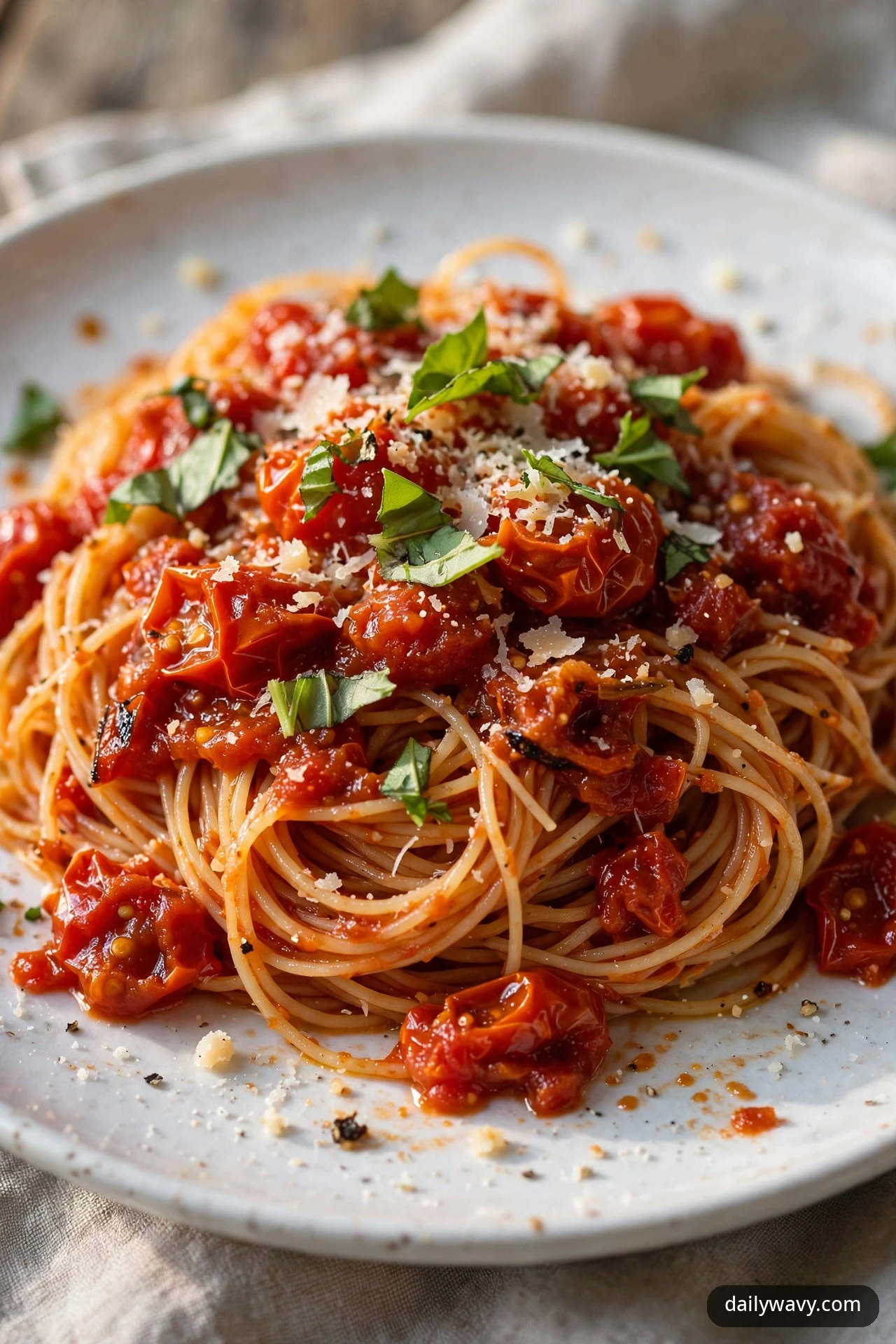
Angel hair cooks in about four minutes, which keeps the active work short. The tomatoes are roasted a little longer, until they are fully jammy, then crushed with a spoon so the sauce is almost smooth. Torn basil goes in at the table, never in the hot pan, because heat turns it black and bitter. Ten minutes of active work, dinner in about 30 minutes.
You need (serves 4): 2 pounds cherry tomatoes, 5 smashed garlic cloves, 1/4 cup olive oil, 1 teaspoon kosher salt, 1/2 teaspoon black pepper, 12 ounces angel hair (capellini), 1 cup loosely packed fresh basil leaves, torn, 1/2 cup grated Parmesan, plus 1 1/2 cups reserved pasta water.
Method
- Roast the tomatoes and garlic per the base method, giving them the full 30 minutes until very jammy. Crush half the tomatoes with the back of a spoon right on the pan.
- Boil the angel hair until 1 minute shy of done, about 3 minutes; reserve the water.
- Toss the pasta with the tomatoes and 1/2 cup of the reserved water over medium heat for just 1 minute. Off the heat, fold in the basil and Parmesan and serve immediately.
Timing notes: Angel hair waits for nothing, so have the roasted tomatoes ready before the pasta goes into the water. Cold pan, cold tomatoes, overcooked pasta: that is how this one fails.
Troubleshooting: If the angel hair clumps, stirring it well in the first minute helps, and so does not overcooking it. One minute past done and capellini goes gummy.
Storage: Keeps 3 to 4 days refrigerated. Angel hair is one of the least forgiving leftovers; reheat it only once and eat it promptly.
12. Roasted Tomato Pasta With Paccheri And Mozzarella

Paccheri, the giant tubes from Naples, turn roasted tomato pasta into a knife-and-fork meal. Fresh mozzarella goes in off the heat so it melts into stretchy ribbons without turning rubbery, and the tomatoes roast until they are deep red and sweet enough to need nothing else. This is the crowd-pleaser: dramatic, gooey, and easy to serve to a group.
You need (serves 4): 2 pounds cherry tomatoes, 5 smashed garlic cloves, 1/4 cup olive oil, 1 teaspoon kosher salt, 1/2 teaspoon black pepper, 12 ounces paccheri, 8 ounces fresh mozzarella (torn into bite-size pieces), 1/4 cup chopped fresh basil, plus 1 1/2 cups reserved pasta water.
Method
- Roast the tomatoes and garlic per the base method. Tear the mozzarella and let it sit at room temperature while the pasta boils; cold cheese does not melt well.
- Boil the paccheri until tender all the way through, about 2 minutes past the package time; reserve the water.
- Toss the pasta and tomatoes with 1/2 cup of the reserved water over medium heat 2 minutes until glossy. Off the heat, fold in the mozzarella and basil, cover the pot for 1 minute, then serve.
Timing notes: Paccheri is thick and needs a full 2 minutes longer than the package suggests to reach the center. Bite one before draining; the tube wall should be tender all the way through.
Troubleshooting: If the mozzarella turns rubbery, the pot was too hot when it went in. Wait a full minute off the heat, and cover instead of stirring, so the cheese melts in gentle steam.
Storage: Keeps 3 to 4 days refrigerated. The mozzarella firms up overnight; add a little fresh torn mozzarella on top when serving leftovers.
13. Roasted Tomato Pasta With Conchiglie And Spinach
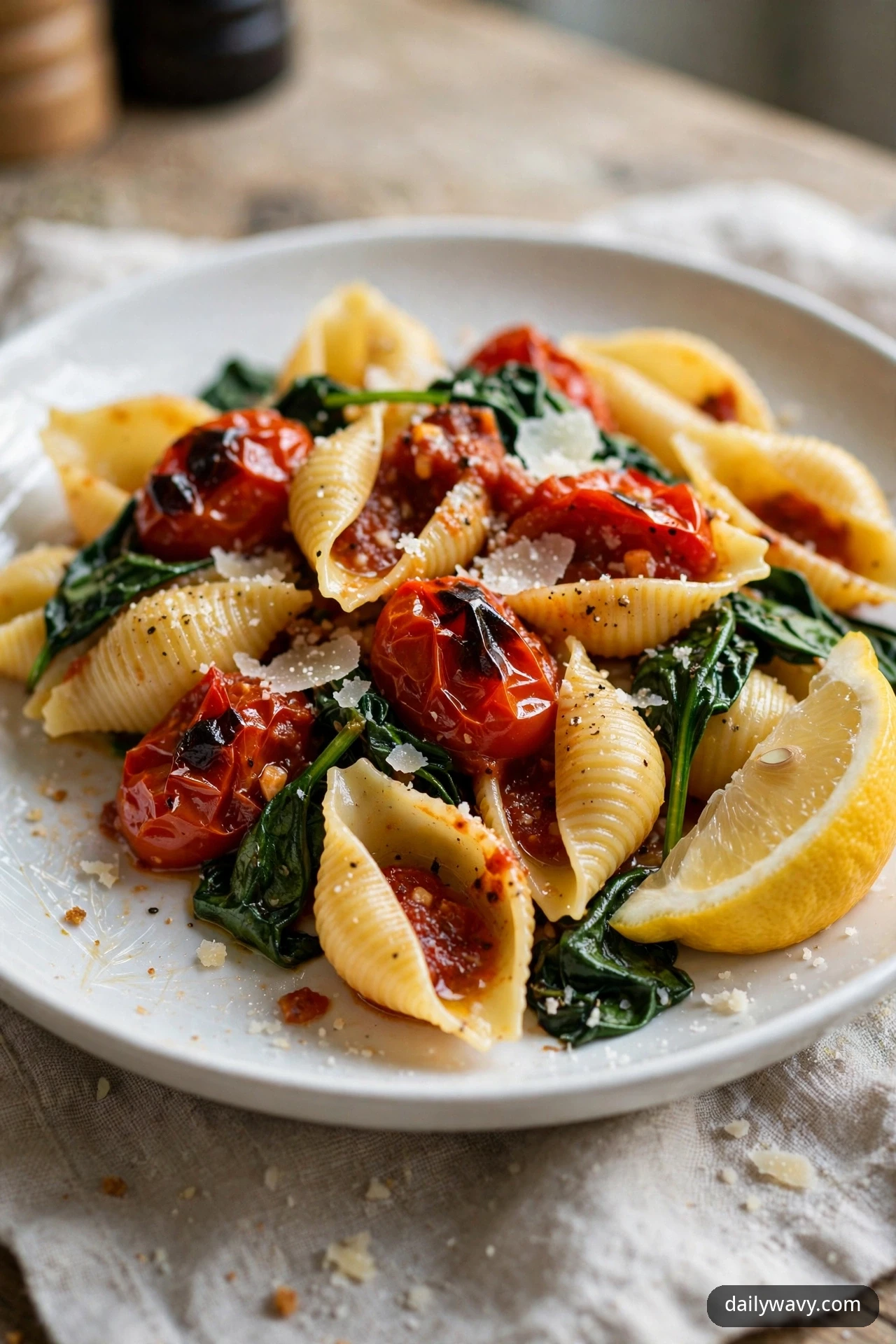
Conchiglie, the shells, are sauce traps by design: each one cradles a spoonful of roasted tomato. Spinach wilts into the hot pan at the very end, which means one pot and one pan for a complete meal with a vegetable built in. This is the everyday hero of the roundup, the one you make when the fridge is nearly empty and dinner still needs to be good.
You need (serves 4): 2 pounds cherry tomatoes, 5 smashed garlic cloves, 1/4 cup olive oil, 1 teaspoon kosher salt, 1/2 teaspoon black pepper, 12 ounces medium conchiglie, 5 ounces baby spinach, 1/2 cup grated Parmesan, 1 tablespoon lemon juice, plus 1 1/2 cups reserved pasta water.
Method
- Roast the tomatoes and garlic per the base method while the conchiglie boil to 1 minute shy of done; reserve the water.
- Toss the pasta, tomatoes and 1/2 cup of the reserved water over medium heat 2 minutes until the sauce coats the shells.
- Add the spinach in two handfuls, tossing until each wilts, about 1 minute total. Off the heat, fold in the Parmesan and lemon juice.
Timing notes: Baby spinach wilts in under a minute. If you use mature spinach, chop it and give it an extra minute; add it with the pasta instead of after.
Troubleshooting: If the finished dish tastes flat, it needs acid. The lemon juice is not optional in this one; spinach and tomatoes both brighten dramatically with it.
Storage: Keeps 3 to 4 days refrigerated. The spinach darkens overnight but the flavor holds; a fresh squeeze of lemon on reheating brings it back.
Frequently asked questions
Can I use canned tomatoes instead of fresh?
You can, but roast them anyway. Drain a 28-ounce can of whole peeled tomatoes, tear them in half, and roast exactly like fresh ones; the oven step is what makes this roundup work.
What is the best pasta water trick if my sauce is too thin?
Add it gradually, not all at once. Start with half a cup, toss for a full two minutes over medium heat, and only then decide. The sauce thickens in the pan, not in the bowl. If you have added water twice and it still pools, simmer the sauce alone for 2 more minutes before adding the pasta back.
Can I roast the tomatoes ahead of time?
Yes. Roast a double batch, refrigerate the extra in a sealed container for up to 4 days, and use it as the base for any recipe above. Cold roasted tomatoes go straight into the hot pasta pot; no need to reheat them first.
How do I make one of these gluten-free?
Use your favorite gluten-free pasta and boil it 1 minute less than the package says, because gluten-free shapes overcook fast. Reserve extra pasta water, since gluten-free starches behave differently; you may need a splash more to get the sauce glossy.
Can I add protein to any of these?
Absolutely. Fold in shredded rotisserie chicken, a can of drained white beans, or sauteed shrimp at the very end so they warm through without overcooking. For a full chicken-and-pasta dinner plan, our chicken thigh sheet pan dinner pairs well as a second main on busy weeks.
Why does my sauce taste sour even after roasting?
The tomatoes may have been under-ripe. Roasting fixes a lot, but it cannot create sugar that was never there. A pinch of sugar, about 1/4 teaspoon, stirred into the sauce fixes it honestly; so does a longer roast, up to 35 minutes, which caramelizes more of the natural sugars.
A rotation worth keeping
Thirteen recipes, one method, and a pan of tomatoes that does most of the work for you. Start with the orecchiette and kale, then work through the list in whatever order sounds good on a given weeknight. The technique never changes, so the cooking stays straightforward, and the variety keeps dinner interesting all season. For more weeknight ideas, browse the full Food & Drink collection on DailyWavy.