10 Mango Yogurt Bowl Ideas with Crunchy Toppings
A mango yogurt bowl is the kind of breakfast that looks like it took effort and takes about five minutes….
A mango yogurt bowl is the kind of breakfast that looks like it took effort and takes about five minutes. Cool, thick yogurt meets sweet, juicy mango, and then comes the best part: something crunchy on top. That contrast is what turns a plain bowl into a breakfast you actually look forward to. In this guide, you will find ten mango yogurt bowl ideas, each with a different crunchy topping, from toasted pumpkin seeds to maple pecan clusters. Every idea keeps the same simple base of creamy yogurt and ripe mango, with real quantities, honest prep steps, and storage tips so your crunch never goes soggy. Pick one to start, or work through all ten.
In This Guide
- Mango Yogurt Bowl With Pumpkin Seeds
- Mango Yogurt Bowl With Walnut Crumble
- Mango Yogurt Bowl With Orange Zest
- Mango Yogurt Bowl With Honey And Sesame
- Mango Yogurt Bowl With Cocoa Nibs
- Mango Yogurt Bowl With Pecan Clusters
- Mango Yogurt Bowl With Ginger Compote
- Mango Yogurt Bowl With Oat Biscuits
- Mango Yogurt Bowl With Almond Butter
- Mango Yogurt Bowl With Lemon Curd
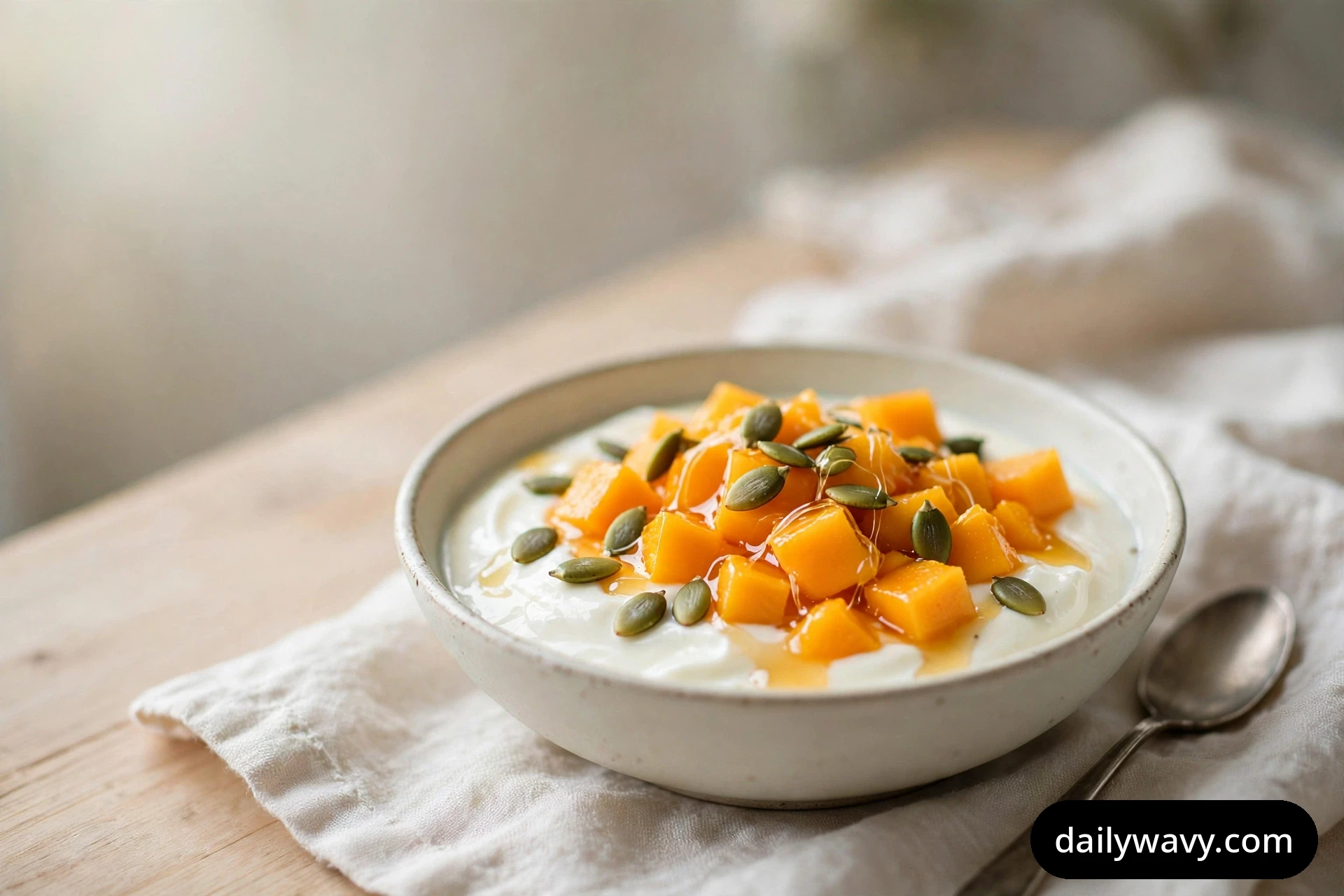
The Mango Yogurt Bowl Basics Before You Start
Before you pick a topping, it helps to get the base right. A great mango yogurt bowl has three layers working together: something creamy, something fruity, and something crunchy. Here is how to set up the first two so every idea below lands.
Choose a yogurt that holds its shape. Plain Greek yogurt, either 2% or full-fat, is the best base. It is thick enough to keep toppings sitting on top instead of sinking, and its mild tang balances the sweetness of mango. Nonfat Greek yogurt works too, but it tastes sharper and thinner, so add a little extra honey. Vanilla yogurt is fine if you like a sweeter bowl; just cut back on any added sweetener in the recipe. If you prefer a dairy-free bowl, use a thick coconut or almond-based yogurt. Check that it is the spoonable, Greek-style kind, not the thin drinkable kind, or your toppings will disappear into it.
Pick a ripe mango. A ripe mango gives slightly when you press near the stem end and smells sweet and fragrant at the stem. If your mango is still firm, leave it on the counter for a day or two. Rinse the mango before cutting. Cut it into neat cubes about half an inch across; they should be juicy but not mushy. Frozen mango absolutely works, especially out of season. Thaw it in the fridge overnight, then drain off the liquid before adding it to the bowl. Skipping the drain is the fastest way to water down your yogurt.
Follow the crunch rule. This is the single most important rule in this guide. Crunchy toppings go on at the last minute and are stored separately from the wet ingredients. Nuts, seeds, and crumbles turn soft within hours of touching yogurt. That is chemistry, not a flaw in your cooking. Every recipe below includes storage notes that follow this rule, so your crunch stays crunchy.
Add the pinch of salt. It sounds odd on a sweet breakfast, but a tiny pinch of flaky sea salt over the finished bowl wakes up the mango and deepens the honey. Use a light hand; you should not be able to taste the salt itself.
Refrigerate promptly. An assembled bowl should go straight into the fridge, and never sit at room temperature for more than two hours.
Prep for the week. You can portion the base ahead. Divide 3/4 cup yogurt and 1/2 cup diced mango among jars and refrigerate for up to three days. Keep each crunchy topping in its own small container at room temperature and add it right before eating. If you like prepping breakfast the night before, our apple cinnamon overnight oats use the same jar-ahead trick with a different flavor profile.
Each recipe below serves one generous bowl. The base is 3/4 cup plain Greek yogurt and 1/2 cup diced ripe mango, with idea 7 adding an extra cup of mango for its compote.
1. Mango Yogurt Bowl With Pumpkin Seeds
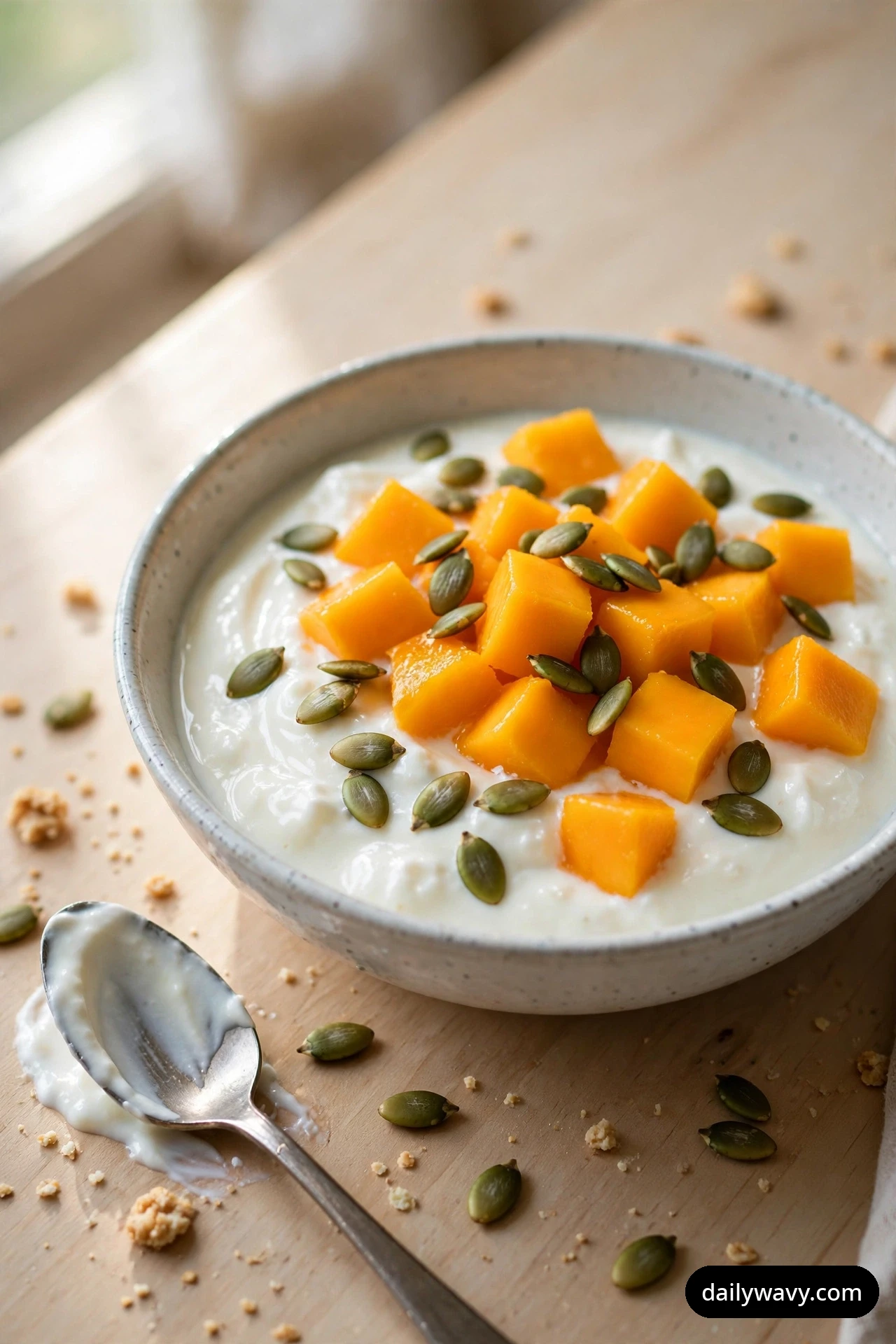
This is one of the simplest bowls in the guide and, on busy mornings, one you may reach for most often. Roasted pumpkin seeds bring a savory, almost buttery crunch that plays against the sweet mango beautifully. The honey drizzle ties it all together, and the pinch of salt makes the mango taste more like itself.
What you need: 3/4 cup plain Greek yogurt, 1/2 cup diced ripe mango, 2 tablespoons roasted salted pumpkin seeds (pepitas), 1 teaspoon honey, a tiny pinch of flaky sea salt.
How to make it: Spoon the yogurt into a shallow bowl and smooth the top with the back of the spoon. Arrange the mango cubes over one half of the bowl. Scatter the pumpkin seeds over the top, drizzle with the honey, and finish with the pinch of salt. Serve right away.
Why it works: Pumpkin seeds are dense and oily in the best way, so they stay crunchy longer than most toppings and add a savory note that keeps the bowl from tasting like dessert. The green color also makes the bowl look fresh and appealing.
If it goes wrong: Stale-tasting seeds are the only real risk here. If yours taste flat or chewy, spread them in a dry skillet over medium heat for 3 to 4 minutes, shaking often, until they smell toasty and a few start to pop. Let them cool before using.
Storage: An assembled bowl keeps up to 24 hours in the fridge, but add the seeds just before eating for the best crunch. Roasted pumpkin seeds keep for weeks in an airtight jar at room temperature.
2. Mango Yogurt Bowl With Walnut Crumble
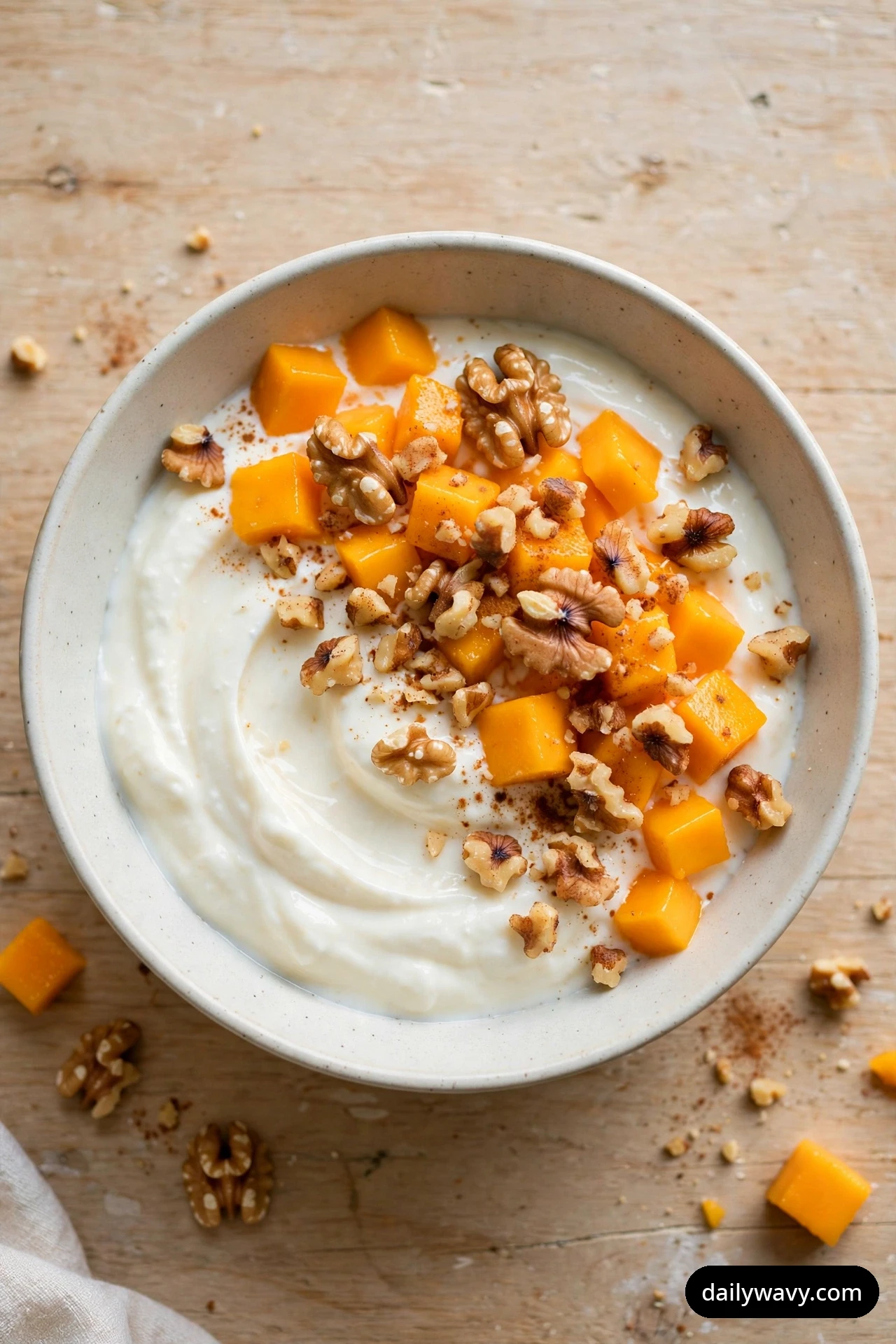
Walnut crumble is what happens when you give chopped walnuts a quick turn in a skillet with maple syrup and cinnamon. It comes out warm, fragrant, and clustered into little nuggets that crunch when you bite them. Over cool yogurt with sweet mango, the temperature and texture contrast is genuinely satisfying.
What you need: 3/4 cup plain Greek yogurt, 1/2 cup diced ripe mango, 1/4 cup walnuts (roughly chopped), 1 tablespoon maple syrup, 1/4 teaspoon ground cinnamon, a pinch of salt.
How to make it: Toss the walnuts, maple syrup, cinnamon, and salt in a small dry skillet. Cook over medium heat for 5 to 6 minutes, stirring often, until the walnuts smell fragrant and the maple has darkened and clings to the nuts. Spread the crumble on a plate to cool for a few minutes; it crisps as it cools. Assemble the yogurt and mango in a bowl, then spoon the crumble over the top.
Why it works: Walnuts are naturally rich and slightly bitter, and the maple-cinnamon coating turns that bitterness into something warm and caramel-like. The clusters give you big, satisfying bites of crunch between spoonfuls of creamy yogurt.
If it goes wrong: If the crumble turns sticky instead of crisp, the maple needed another minute or the nuts went in while the pan was too cool. Keep the heat at a steady medium and let the crumble cool completely on the plate; it firms up as it cools.
Storage: The crumble keeps up to 10 days in an airtight container at room temperature. Make a double batch and keep it on hand for weekday bowls. Assemble the bowl fresh and add the crumble at serving time.
3. Mango Yogurt Bowl With Orange Zest
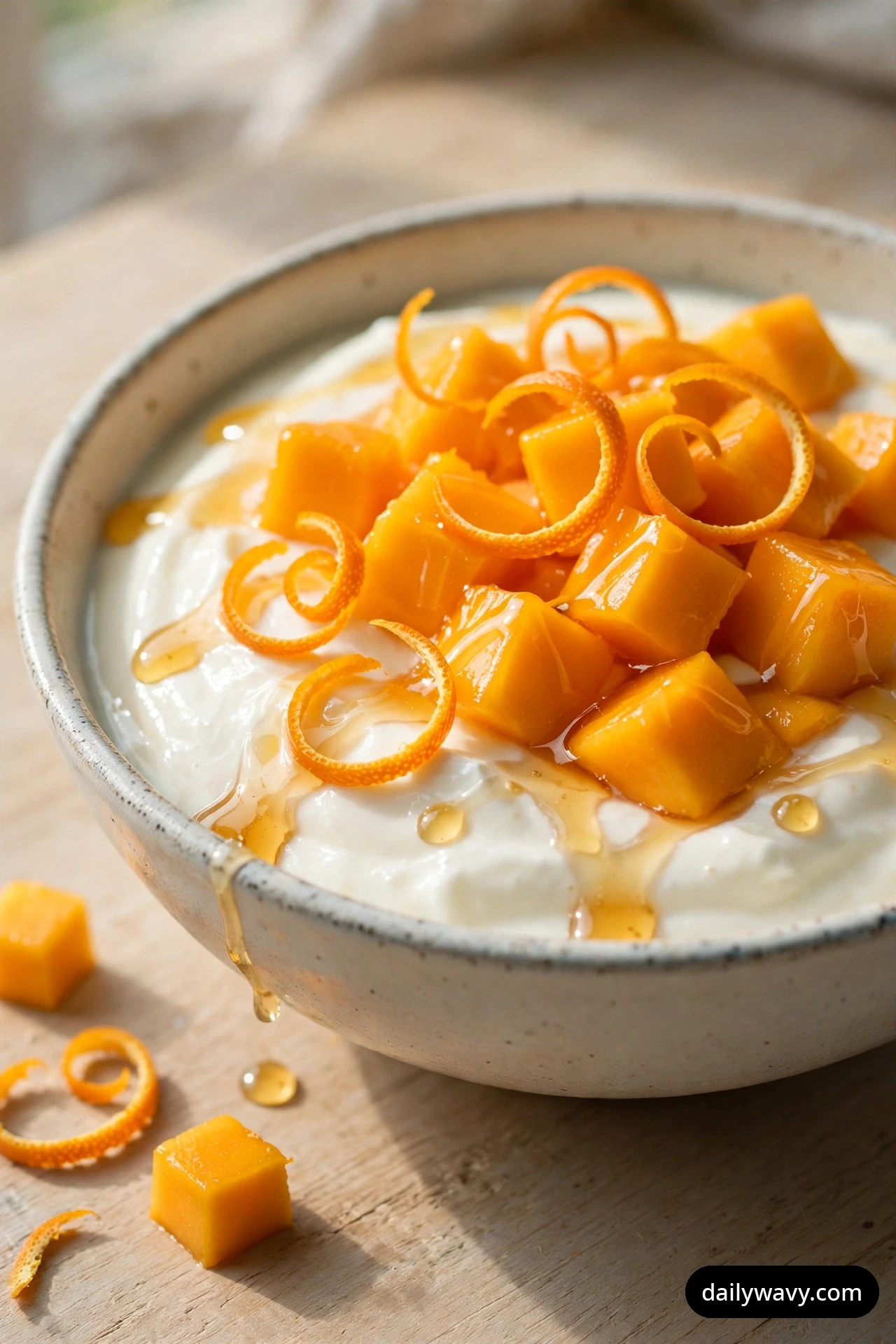
This is one of the brightest bowls in the lineup. Fresh orange zest adds a burst of citrus aroma that lifts the mango without adding any liquid or weight. A few chopped pistachios give it crunch and a pretty green color. It tastes like sunshine and takes about three minutes to make.
What you need: 3/4 cup plain Greek yogurt, 1/2 cup diced ripe mango, the zest of 1/2 orange, 1 teaspoon honey, 1 tablespoon chopped pistachios.
How to make it: Spoon the yogurt into a bowl and top with the mango. Zest the orange directly over the bowl so the fragrant oils land on the yogurt. Drizzle with honey and scatter the pistachios over the top.
Why it works: Mango and orange share tropical, floral notes, so the zest amplifies what is already there instead of competing with it. Pistachios add a mild, buttery crunch that does not overpower the delicate citrus. This is the bowl to make when your mango is perfectly ripe and you want to show it off.
If it goes wrong: The only mistake here is zesting too deep. The white pith under the orange peel is bitter, so use light pressure and stop when you see white. A microplane or the fine side of a box grater gives the best results.
Storage: Citrus zest loses its aroma quickly, so this bowl is best eaten fresh. Assemble it right before serving and do not store the finished bowl.
4. Mango Yogurt Bowl With Honey And Sesame

Honey and sesame is a classic pairing for a reason: floral sweetness, nutty crunch, and a whisper of salt. Toasting the sesame seeds takes two minutes and changes everything, turning them from bland to deeply nutty. This bowl has a quiet elegance to it, the kind of breakfast that feels calm.
What you need: 3/4 cup plain Greek yogurt, 1/2 cup diced ripe mango, 1 tablespoon sesame seeds, 1 tablespoon honey, a tiny pinch of flaky sea salt.
How to make it: Toast the sesame seeds in a dry skillet over medium heat for 2 to 3 minutes, shaking the pan constantly, until they turn golden and smell nutty. Tip them onto a plate to stop the cooking. Assemble the yogurt and mango in a bowl, drizzle with the honey in slow ribbons, scatter the sesame seeds over the top, and finish with the salt.
Why it works: Sesame seeds are small, so they distribute crunch evenly across every bite instead of landing in heavy clusters. The honey pools slightly into the yogurt, creating sweet streaks, and the salt keeps it all from tasting one-note.
If it goes wrong: Sesame seeds go from golden to burnt in under a minute. Do not walk away from the pan. The moment they smell strongly nutty and look pale gold, get them off the heat; they keep cooking in the hot pan.
Storage: Toasted sesame seeds keep for two weeks in an airtight jar at room temperature. Assemble the bowl fresh.
5. Mango Yogurt Bowl With Cocoa Nibs

Cocoa nibs are crushed cacao beans: intensely chocolatey, slightly bitter, and seriously crunchy. With sweet mango and creamy yogurt, they create the same flavor logic as a chocolate-dipped fruit, but in breakfast form. A little maple syrup rounds off the bitterness.
What you need: 3/4 cup plain Greek yogurt, 1/2 cup diced ripe mango, 2 tablespoons cocoa nibs, 1 teaspoon maple syrup, a pinch of ground cinnamon.
How to make it: Spoon the yogurt into a bowl and top with the mango. Scatter the cocoa nibs over the top, drizzle with the maple syrup, and dust with the cinnamon.
Why it works: The nibs are one of the crunchiest toppings in this guide, with a snap closer to a nut than a crumb. Their bitterness makes the mango taste sweeter by contrast, and the cinnamon bridges the chocolate and fruit flavors. If you like dark chocolate, this bowl will make sense immediately.
If it goes wrong: Cocoa nibs can taste harsh if you have never had them. Start with 1 tablespoon instead of 2 and add the full amount of maple syrup. The sweetness softens the bitter edge while you get used to the flavor.
Storage: Cocoa nibs keep for months in an airtight container at room temperature, so they are a great pantry staple for this bowl. Assemble the bowl the same day you plan to eat it for the best texture.
6. Mango Yogurt Bowl With Pecan Clusters

These maple pecan clusters are worth the small effort of turning on the oven. Baked low and slow with oats, maple syrup, and a little coconut oil, they come out as golden, caramelized nuggets with real staying power. One batch makes enough for three or four bowls, so your future self gets the reward too.
What you need: 3/4 cup plain Greek yogurt, 1/2 cup diced ripe mango, 1/3 cup pecan halves (roughly chopped), 2 tablespoons rolled oats, 1 tablespoon maple syrup, 1/2 tablespoon melted coconut oil, a pinch of salt.
How to make it: Heat the oven to 300°F. Toss the pecans, oats, maple syrup, coconut oil, and salt on a small parchment-lined baking sheet. Spread in a single layer and bake for 18 to 20 minutes, stirring once halfway through, until golden and fragrant. Cool completely on the pan; the clusters crisp as they cool. Assemble the yogurt and mango in a bowl and scatter a generous handful of clusters over the top.
Why it works: Baking drives off moisture, which is why these clusters stay crunchy for two weeks while a skillet crumble softens sooner. The oats toast into little golden bits that catch the maple, and pecans bring a rich, buttery flavor that loves mango.
If it goes wrong: If the clusters taste soft the next day, they needed a few more minutes in the oven or they were stored before cooling fully. They should feel dry and snap when you break one. When in doubt, bake 2 minutes longer; pale is worse than deeply golden here.
Storage: The clusters keep up to 2 weeks in an airtight container at room temperature. This recipe makes about 1/2 cup, enough for 3 to 4 bowls. Assemble each bowl fresh.
7. Mango Yogurt Bowl With Ginger Compote
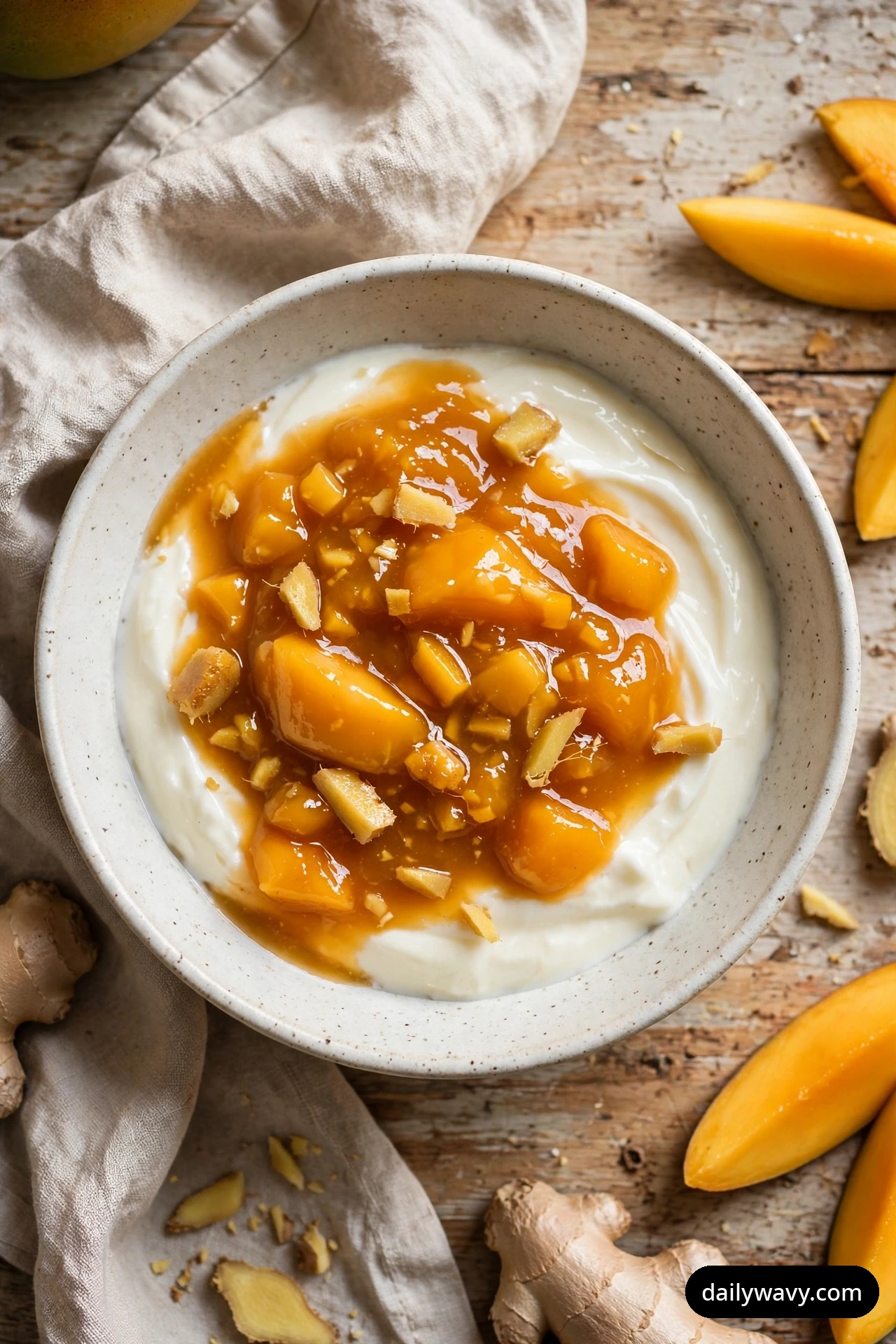
A warm compote over cool yogurt is one of those combinations that feels fancy but costs almost nothing. Fresh ginger brings gentle heat that cuts through the richness of the yogurt, and simmering the mango concentrates its flavor into something almost jammy. This is the bowl for slow weekend mornings.
What you need: 3/4 cup plain Greek yogurt, 1 1/2 cups diced ripe mango, divided (1 cup for the compote, fresh or thawed, plus 1/2 cup fresh for topping), 1 tablespoon grated fresh ginger, 1 tablespoon honey, 1 tablespoon water.
How to make it: Combine the 1 cup mango, grated ginger, honey, and water in a small saucepan. Simmer over medium-low heat for 8 to 10 minutes, stirring occasionally, until the mango softens and the liquid turns glossy and slightly thickened. Let it cool for at least 10 minutes; it should be warm, not hot. Spoon the yogurt into a bowl, top with the remaining 1/2 cup fresh diced mango, and spoon the compote over everything.
Why it works: Cooking mango breaks down its fibers and deepens its sweetness, so the compote tastes like a more intense version of the fresh fruit. Fresh ginger adds warmth without the harshness of dried ginger. The temperature contrast between the warm compote and the cool yogurt keeps every spoonful interesting.
If it goes wrong: If the compote tastes too gingery, you probably grated a heaping tablespoon. Ginger varies in strength, so start with 2 teaspoons, taste, and add more. If it is too thin, simmer 2 minutes longer; if too thick, stir in a teaspoon of water.
Storage: The compote keeps up to 5 days in a sealed jar in the fridge. This recipe makes about 3/4 cup, enough for 3 to 4 bowls. Serve it warm or at room temperature over freshly assembled yogurt.
8. Mango Yogurt Bowl With Oat Biscuits
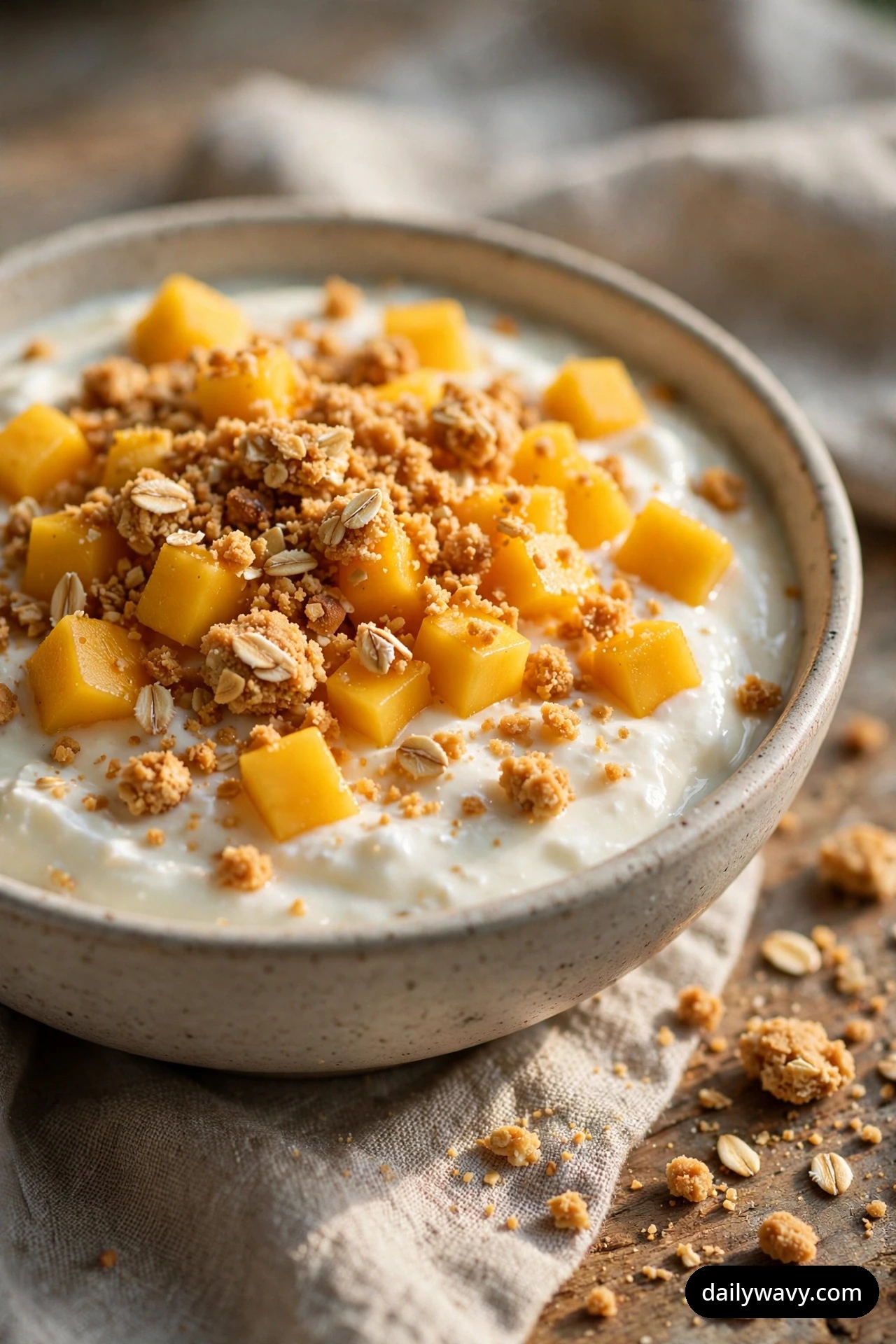
Crumbled oat biscuits over yogurt taste like the best part of a crumble topping met the best part of a cookie. They are buttery, oaty, and just sweet enough, with crisp edges that hold their crunch against the yogurt for a good while. Bake a batch on Sunday and your weekday breakfasts are sorted.
What you need: 3/4 cup plain Greek yogurt, 1/2 cup diced ripe mango, 1/2 cup rolled oats, 2 tablespoons all-purpose flour, 2 tablespoons brown sugar, 2 tablespoons melted butter, 1/4 teaspoon baking soda, a pinch of salt.
How to make it: Heat the oven to 350°F. Stir the oats, flour, brown sugar, baking soda, and salt in a bowl. Add the melted butter and mix until everything is coated and crumbly. Shape into 6 small, flat biscuits on a parchment-lined baking sheet. Bake 12 to 14 minutes, until golden at the edges. Cool completely on the pan. To serve, crumble 1 or 2 biscuits over a bowl of yogurt and mango.
Why it works: The butter and brown sugar bake into a toffee-like flavor that is wonderful with mango, and the biscuit structure gives you real, substantial crunch rather than loose crumbs. Because the biscuits are baked until dry, they resist softening better than unbaked oat toppings.
If it goes wrong: If the biscuits spread into thin lace, the butter was too hot when mixed in. Let melted butter cool for a few minutes before combining. If they taste bland, the salt was skipped; it matters more than you think in a sweet biscuit. These also pair nicely with weekend baking projects like our blueberry muffin for a full morning spread.
Storage: The biscuits keep up to 5 days in an airtight container at room temperature. This recipe makes 6 biscuits, enough for 3 to 6 bowls. Crumble them over the bowl just before eating.
9. Mango Yogurt Bowl With Almond Butter
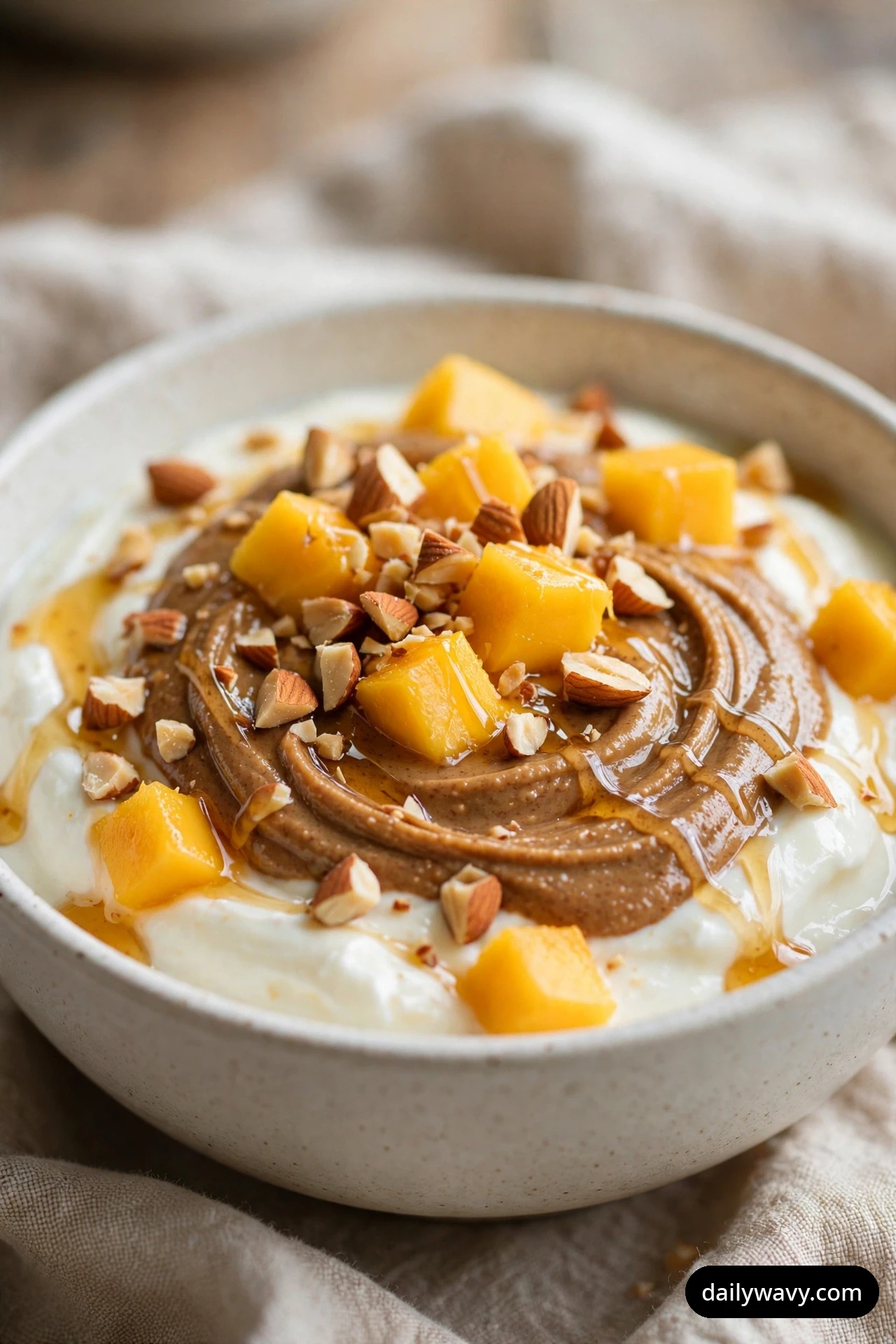
This is one of the most filling bowls in the guide. A generous swirl of almond butter melts slightly into the yogurt, creating marbled streaks of nutty richness, while chopped toasted almonds add the crunch. It eats like a dessert, and the almond butter makes it a substantial bowl.
What you need: 3/4 cup plain Greek yogurt, 1/2 cup diced ripe mango, 2 tablespoons almond butter, 1 tablespoon chopped toasted almonds, 1 teaspoon honey.
How to make it: Spoon the yogurt into a bowl and add the almond butter in a spoonful. Use the tip of the spoon to swirl it through the yogurt in two or three strokes; you want visible ribbons, not a uniform mix. Top with the mango, scatter the almonds over everything, and drizzle with the honey.
Why it works: Almond butter is rich in a way that complements rather than competes with mango; the two share a warm, almost tropical depth. The swirl technique matters because it gives you bites that are pure yogurt, bites that are pure almond butter, and bites where they meet. The chopped almonds on top echo the flavor in crunchy form.
If it goes wrong: Natural almond butter can be stiff straight from the fridge, which makes swirling impossible. Warm the measured amount for 10 seconds in the microwave, or let the jar sit at room temperature for 20 minutes first. If the almond butter sinks, your yogurt may be too thin; switch to a thicker Greek yogurt next time.
Storage: This bowl is best assembled and eaten the same morning. Chopped toasted almonds keep for two weeks in an airtight jar at room temperature.
10. Mango Yogurt Bowl With Lemon Curd
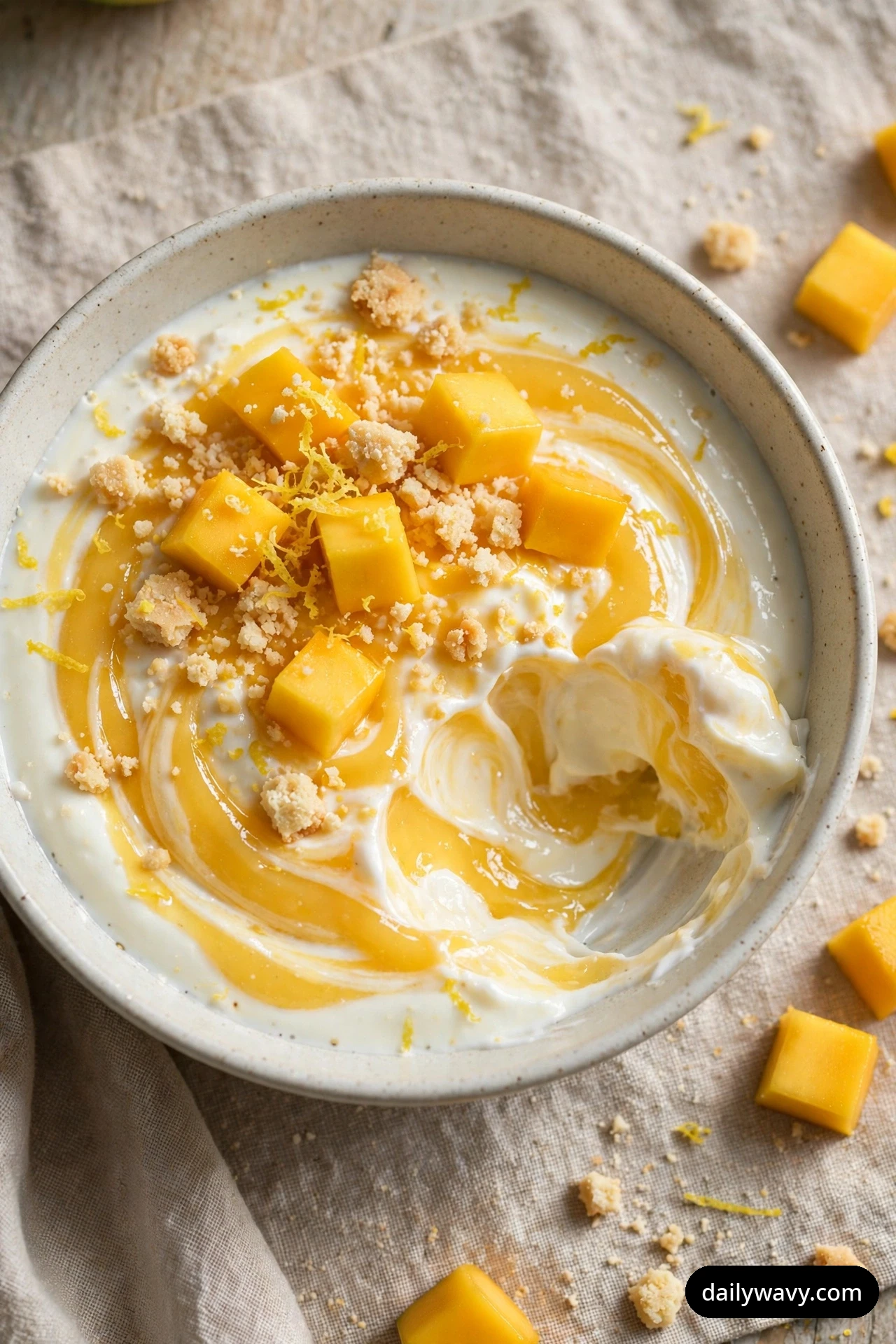
Lemon curd and mango is a pairing that surprises people once and then becomes a habit. The curd is glossy, tart, and intensely lemony, which makes the mango taste brighter and more tropical. Crushed shortbread adds a buttery crunch that turns the whole bowl into something reminiscent of a deconstructed tart.
What you need: 3/4 cup plain Greek yogurt, 1/2 cup diced ripe mango, 2 tablespoons good-quality lemon curd, 2 tablespoons crushed shortbread cookies or graham crackers, the zest of 1/4 lemon.
How to make it: Spoon the yogurt into a bowl. Add the lemon curd in dollops and swirl it lightly with the tip of a spoon, leaving visible streaks. Top with the mango, scatter the cookie crumbs over the top, and finish with the lemon zest.
Why it works: Lemon curd brings acidity, and acidity is what makes sweet fruit taste more alive. The shortbread crumbs add butter and crunch in one move, echoing a tart crust without any baking. This is one of the most dessert-like bowls in the guide.
If it goes wrong: A heavy hand with the curd can overwhelm the bowl. Two tablespoons is the right amount for one serving; more than that and the lemon takes over. If you make the curd yourself, cook it gently; overheated curd tastes eggy. A reliable quick version: whisk 1/4 cup lemon juice, 1/3 cup sugar, 1 egg plus 1 yolk in a small saucepan over low heat for about 8 minutes, stirring constantly, until it thickly coats the back of a spoon. Take it off the heat and whisk in 3 tablespoons of cold butter, one piece at a time. This makes about 3/4 cup.
Storage: Store-bought lemon curd keeps per the jar's instructions once opened, usually a few weeks refrigerated. Cookie crumbs keep for a week in an airtight container. Assemble the bowl fresh and swirl the curd just before serving.
Mango Yogurt Bowl FAQ
What is the best yogurt for a yogurt bowl?
Plain Greek yogurt, 2% or full-fat, is the best choice. It is thick enough to hold toppings on the surface, and its mild tang balances sweet fruit. Thin or drinkable yogurts let toppings sink and turn the bowl soupy.
How do I keep the crunchy toppings crunchy?
Store them separately from the yogurt and add them right before eating. Nuts, seeds, and baked crumbles absorb moisture within hours of touching yogurt. Every topping in this guide includes its own storage time, from a few days for oat biscuits to months for cocoa nibs.
Can I use frozen mango?
Yes. Thaw it in the fridge overnight and drain off the liquid before adding it to the bowl. Frozen mango is picked ripe and works well out of season, but the extra liquid will water down your yogurt if you skip the drain.
Can I meal prep these bowls for the week?
Prep the base, not the finished bowl. Portion 3/4 cup yogurt and 1/2 cup diced mango into jars and refrigerate for up to three days. Keep toppings in separate containers and add them at serving time. For a fully grab-and-go savory option later in the day, our chickpea wrap uses the same prep-ahead logic.
Is there a dairy-free option?
Use a thick, spoonable coconut or almond-based yogurt in the Greek style. Avoid thin, drinkable plant yogurts, which will not support toppings. The fruit and crunch components in every recipe are naturally dairy-free except where butter is used: swap coconut oil for the butter in the oat biscuits (idea 8), and for idea 10 use a dairy-free lemon curd and a dairy-free cookie crumb, since standard curd and shortbread both contain butter.
How long does an assembled bowl last in the fridge?
Up to 24 hours, but the texture is best within a few hours, and the orange-zest bowl in idea 3 should not be stored at all. After a day, even sturdy toppings soften and the mango releases juice into the yogurt. For the best experience, assemble the bowl the morning you plan to eat it.
Keep Exploring
Ten ideas is a good start, but the formula is endlessly flexible: creamy base, juicy fruit, something crunchy, added at the last minute. Try swapping the mango for whatever is in season, or raid your pantry for a new crunch. If yogurt bowls have become your morning ritual, our blueberry yogurt bowl ideas follow the same build with different fruit at the center. For more breakfast inspiration, browse the full Food & Drink collection on DailyWavy.