12 Cauliflower Soup Recipes to Cook at Home
Cauliflower soup is one of those quiet kitchen wins. A single head of cauliflower, an onion, some stock, and a…
Cauliflower soup is one of those quiet kitchen wins. A single head of cauliflower, an onion, some stock, and a little patience turn into a bowl that tastes like you planned dinner all week. It blends into silk, takes on whatever flavors you give it, and reheats beautifully, which makes it a genuine meal prep hero. This roundup gives you twelve distinct ways to make it: creamy without dairy, brightened with pesto, deepened with roasted garlic, and finished with toppings that add crunch and character. Every recipe below uses real quantities, honest steps, and careful logic. Pick one and start simmering.
In This Guide
- Cauliflower Soup With Pesto Drizzle
- Cauliflower Soup With Caramelized Onion
- Cauliflower Soup With Chili Oil
- Cauliflower Soup With Cashew Cream
- Cauliflower Soup With Cumin
- Cauliflower Soup With Sage
- Cauliflower Soup With Barley
- Cauliflower Soup With Thyme Biscuits
- Cauliflower Soup With Herb Croutons
- Cauliflower Soup With a Yogurt Swirl
- Cauliflower Soup With Roasted Garlic
- Cauliflower Soup With White Beans
The Cauliflower Soup Rules Before You Start
Every recipe here shares the same foundation, and a few habits make all twelve better.
Cut small and even. Break the cauliflower into 1 to 2 inch florets so every piece cooks at the same rate. Uneven chunks mean some pieces stay firm while others turn to mush, and your texture suffers.
Decide pale or golden. If you want a pale, elegant soup, sweat the onion and cauliflower in butter or olive oil over medium heat without browning. If you want deeper flavor, roast the florets at 425°F for 20 to 25 minutes until the edges catch color before they hit the pot.
Simmer until spoon-tender. Once the stock goes in, simmer 15 to 20 minutes until a floret crushes easily against the side of the pot with a spoon. Undercooked cauliflower blends grainy. The one exception is idea 5, where the cauliflower is roasted first and needs only 10 minutes in the stock.
Blend hot soup safely. Hot liquid expands and can blow the lid off a blender. Fill the jar no more than halfway, remove the center cap, cover the opening with a folded kitchen towel, and start on low speed. An immersion blender used right in the pot avoids the risk entirely.
Season in stages and finish with acid. Salt the aromatics, taste after blending, then add salt again. A squeeze of lemon juice or a small splash of white wine vinegar at the end brightens cauliflower in a way nothing else does.
Store it right. Each recipe makes about 6 to 8 cups of soup, roughly 4 servings. Cool the soup within 2 hours, then refrigerate up to 4 days or freeze up to 3 months in sealed containers. Leave about an inch of headspace in freezer containers because soup expands. Reheat gently until steaming throughout.
1. Cauliflower Soup With Pesto Drizzle
This is the baseline recipe of the whole roundup, the one every other idea builds on. The soup itself is simple and silky, and the pesto drizzle does all the talking: bright basil, garlic, and Parmesan against the mild sweetness of cauliflower.

Ingredients: 1 large head cauliflower (about 2 pounds), cut into florets; 1 medium yellow onion, diced; 2 celery ribs, diced; 3 garlic cloves, minced; 2 tablespoons butter or olive oil; 4 cups vegetable or chicken stock; 1 bay leaf; 3/4 teaspoon fine sea salt, plus more to taste; 1/4 teaspoon black pepper; 3 tablespoons basil pesto (homemade or store-bought); 1 tablespoon lemon juice.
Method: Melt the butter in a large pot over medium heat. Add the onion and celery with a pinch of salt and cook 6 to 8 minutes, stirring, until soft but not browned. Add the garlic and cook 1 minute more. Add the cauliflower, stock, bay leaf, salt, and pepper. Bring to a boil, then reduce to a gentle simmer, cover, and cook 18 to 20 minutes until the florets crush easily. Remove the bay leaf. Blend until completely smooth. Stir in the lemon juice, taste, and adjust the salt.
To serve: Ladle into warm bowls and spoon about 2 teaspoons of pesto over each serving. Drag the tip of a spoon through the pesto once or twice to make a swirl, and finish with a few torn basil leaves and a grind of pepper.
Troubleshooting: If the soup looks thin, simmer it uncovered for 5 minutes before blending. If it looks thick, whisk in warm stock a quarter cup at a time. If the pesto sinks, thin it with a teaspoon of olive oil so it floats.
Storage: Refrigerate up to 4 days. Freeze up to 3 months. Store the pesto separately and add it fresh when serving.
2. Cauliflower Soup With Caramelized Onion
Caramelized onions take this soup somewhere sweet and deep. They need about 40 minutes of slow cooking, so start them before you touch the cauliflower. Half go into the pot for body, and half stay on top as a jammy crown.

Ingredients: 2 large yellow onions (about 1 1/2 pounds), thinly sliced; 2 tablespoons butter; 1 tablespoon olive oil; 1/2 teaspoon sugar; 1 large head cauliflower, cut into florets; 4 cups vegetable or chicken stock; 1/2 cup heavy cream (optional); 3/4 teaspoon fine sea salt; 1/4 teaspoon black pepper; 1 teaspoon apple cider vinegar; fresh thyme leaves for serving.
Method: In a wide heavy skillet, melt the butter with the olive oil over medium-low heat. Add the onions, sugar, and a pinch of salt. Cook slowly, stirring every 5 to 7 minutes, for 35 to 45 minutes until deep golden and jammy. If they start to scorch, add a tablespoon of water and lower the heat. Meanwhile, simmer the cauliflower in the stock with the salt for 18 to 20 minutes until tender. Blend the cauliflower with half the caramelized onions until smooth, then blend in the cream if using. Stir in the vinegar and adjust salt.
To serve: Ladle into bowls and pile the remaining caramelized onions in the center of each. Scatter thyme leaves over the top.
Troubleshooting: Onions refusing to brown usually mean the heat is too high and they are steaming instead; spread them out and keep the heat gentle. If the soup tastes flat, the vinegar is not optional here. It balances the sweetness of the onions.
Storage: Refrigerate up to 4 days. The soup base freezes for up to 3 months (whisk well while reheating if it turns slightly grainy after thawing); keep the onion topping in the fridge and use within 4 days.
3. Cauliflower Soup With Chili Oil
A spoonful of chili oil turns mellow cauliflower soup into something with a pulse. The heat blooms in the warm soup and the red oil makes a dramatic finish. This version stays dairy free and vegan without trying.

Ingredients: 1 large head cauliflower, cut into florets; 1 medium yellow onion, diced; 4 garlic cloves, smashed; 3 tablespoons neutral oil; 4 cups vegetable stock; 3/4 teaspoon fine sea salt; 1/4 teaspoon black pepper; 2 to 3 tablespoons chili oil (store-bought or homemade), plus more for serving; 2 scallions, thinly sliced; 1 teaspoon toasted sesame seeds; 1 teaspoon rice vinegar.
Method: Heat the neutral oil in a large pot over medium heat. Add the onion with a pinch of salt and cook 6 to 8 minutes until soft. Add the garlic and cook 1 minute. Add the cauliflower, stock, salt, and pepper. Bring to a boil, reduce to a simmer, and cook 18 to 20 minutes until tender. Blend until completely smooth. Whisk in 2 tablespoons of the chili oil and the rice vinegar, then taste and adjust the salt and heat.
To serve: Ladle into bowls and drizzle about a teaspoon of chili oil over each. Finish with scallions and sesame seeds.
Troubleshooting: Chili oils vary wildly in heat. Start with 2 tablespoons in the pot and add more at the table. If you want to make your own quick chili oil, warm 1/3 cup neutral oil with 2 tablespoons red pepper flakes and 1 star anise over low heat for 5 minutes, then cool and strain.
Storage: Refrigerate up to 4 days. Freezes up to 3 months; whisk well while reheating if the texture turns slightly grainy after thawing. The scallions go soggy in storage, so add them fresh.
4. Cauliflower Soup With Cashew Cream
Soaked cashews blend into the richest dairy free cream you can make at home, and they make this soup taste indulgent without a drop of cream. Plan ahead for the soaking time, or use the quick soak shortcut below.
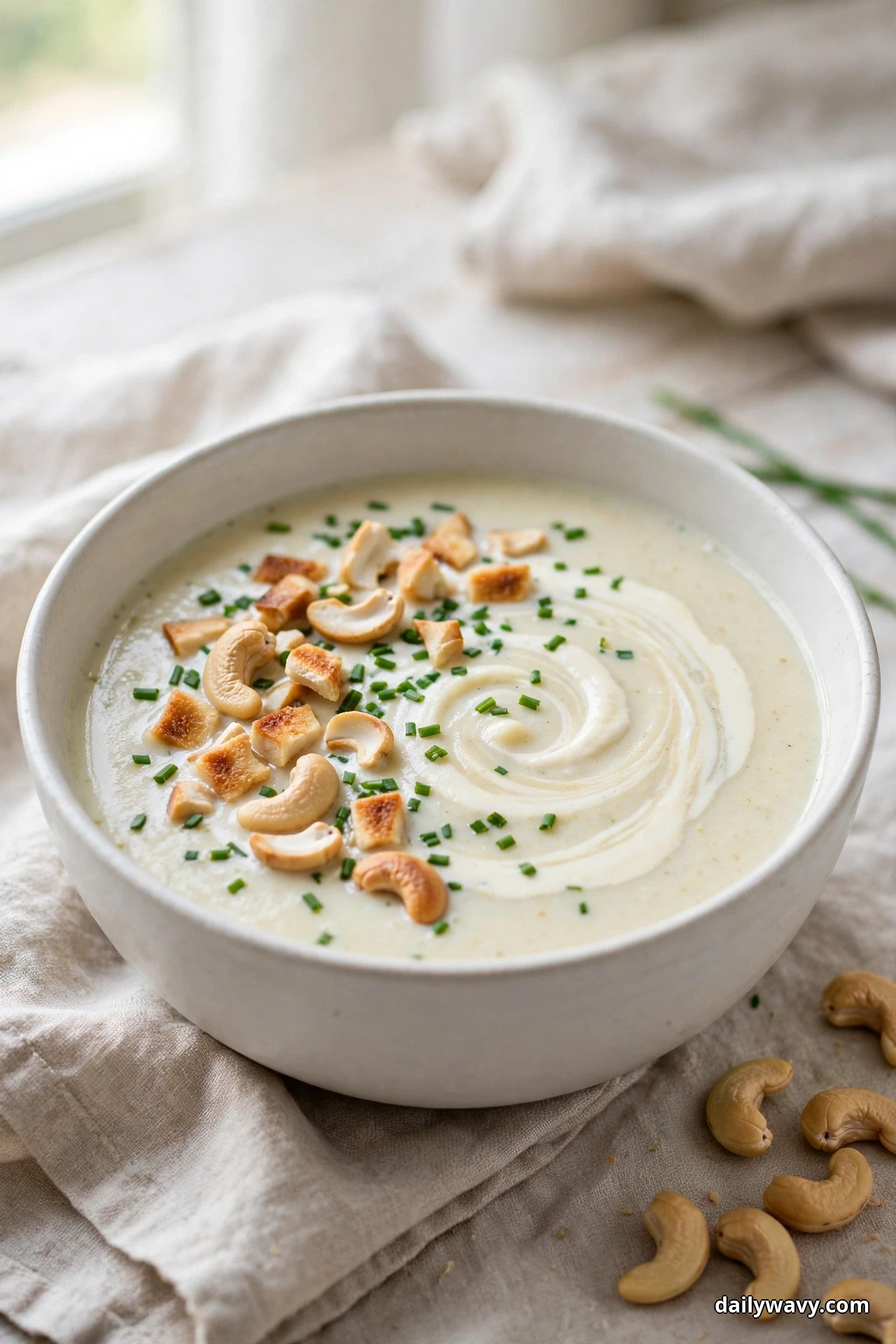
Ingredients: 1 cup raw cashews; 1 large head cauliflower, cut into florets; 1 medium yellow onion, diced; 2 celery ribs, diced; 3 tablespoons olive oil; 4 cups vegetable stock; 3/4 teaspoon fine sea salt; 1/4 teaspoon white or black pepper; 1 tablespoon lemon juice; chopped chives for serving.
Method: Soak the cashews in boiling water for 1 hour (or cold water for 4 hours). Drain and blend with 3/4 cup fresh water until completely smooth, stopping to scrape the sides. This is your cashew cream. Meanwhile, cook the onion and celery in the olive oil over medium heat for 6 to 8 minutes. Add the cauliflower, stock, and salt; simmer 18 to 20 minutes until tender. Blend the soup smooth. Set aside 3 tablespoons of the cashew cream for serving, then blend the rest into the soup. Stir in the lemon juice and adjust the salt.
To serve: Swirl a spoonful of the reserved cashew cream over each bowl and finish with chives.
Troubleshooting: Grainy cashew cream means it needed more blending time or a more powerful blender. Blend for a full 2 to 3 minutes, and add water a tablespoon at a time until it flows. If the soup is too thick, thin with warm stock.
Storage: Refrigerate up to 4 days. Freezes up to 3 months; the texture may separate slightly after thawing, but the cashew cream stirs back together as the soup warms.
5. Cauliflower Soup With Cumin
Toasted cumin gives this soup a warm, earthy backbone that tastes almost smoky. Roasting the cauliflower first deepens everything, so this version asks for one extra step and pays you back in flavor.

Ingredients: 1 large head cauliflower, cut into florets; 3 tablespoons olive oil, divided; 2 teaspoons ground cumin, divided; 1 teaspoon ground coriander; 1 medium yellow onion, diced; 3 garlic cloves, minced; 4 cups vegetable or chicken stock; 3/4 teaspoon fine sea salt; 1/4 teaspoon black pepper; 1 tablespoon lemon juice; plain yogurt and cilantro for serving (optional).
Method: Heat the oven to 425°F. Toss the florets with 2 tablespoons olive oil, 1 teaspoon cumin, the coriander, and a pinch of salt. Roast 20 to 25 minutes, turning once, until the edges are golden. Meanwhile, warm 1 teaspoon cumin in the remaining oil in a large pot over medium heat for 30 seconds until fragrant. Add the onion and cook 6 to 8 minutes until soft, then the garlic for 1 minute. Add the roasted cauliflower (reserve a few florets for garnish), stock, salt, and pepper. Simmer 10 minutes, then blend smooth. Stir in the lemon juice and adjust salt.
To serve: Ladle into bowls, top with the reserved roasted florets, a spoonful of yogurt if you like, and a pinch of cilantro.
Troubleshooting: Raw cumin tastes dusty and harsh, so never skip the toasting step. If the soup tastes one-dimensional, the lemon juice is doing more work than you think. Add it last and taste again.
Storage: Refrigerate up to 4 days. Freezes up to 3 months; whisk well while reheating if the texture turns slightly grainy after thawing. Add yogurt fresh at serving time, never before freezing.
6. Cauliflower Soup With Sage
This is the cozy sweater of the roundup. Brown butter and crisped sage leaves make it taste like the best parts of autumn, and a whisper of nutmeg ties it all together. It is rich, so keep the bowls modest and the bread basket close.

Ingredients: 1 large head cauliflower, cut into florets; 1 medium yellow onion, diced; 4 tablespoons butter, divided; 2 tablespoons olive oil; 4 cups chicken or vegetable stock; 3/4 teaspoon fine sea salt; 1/4 teaspoon black pepper; 12 fresh sage leaves; 1/8 teaspoon freshly grated nutmeg; 1/2 cup heavy cream; 1 teaspoon lemon juice.
Method: Melt 2 tablespoons butter with the olive oil in a large pot over medium heat. Add the onion with a pinch of salt and cook 6 to 8 minutes until soft. Add the cauliflower, stock, salt, and pepper. Simmer 18 to 20 minutes until tender, then blend smooth with the cream, nutmeg, and lemon juice. In a small skillet, melt the remaining 2 tablespoons butter over medium heat. Add the sage leaves in a single layer and cook 1 to 2 minutes until they stop sizzling and turn crisp. Spoon them onto a plate and keep the browned butter.
To serve: Ladle the soup into bowls, drizzle with a little of the browned butter from the skillet, and top with 2 to 3 crisp sage leaves per bowl.
Troubleshooting: Sage burns fast, so watch the skillet and pull the leaves the moment they crisp. If the soup is too rich, a squeeze of lemon juice (included above) cuts through the butter.
Storage: Refrigerate up to 4 days. Freeze the soup base up to 3 months without the sage garnish; crisp fresh leaves when serving.
7. Cauliflower Soup With Barley
Most cauliflower soups get blended smooth, but this one keeps its texture. Pearl barley simmers right in the pot and turns the soup into something hearty enough for dinner, with a pleasant chew in every spoonful.

Ingredients: 1 large head cauliflower, cut into small florets; 1 medium yellow onion, diced; 2 carrots, diced; 2 celery ribs, diced; 2 tablespoons olive oil; 3 garlic cloves, minced; 1/2 cup pearl barley, rinsed; 5 cups vegetable or chicken stock; 3/4 teaspoon fine sea salt; 1/4 teaspoon black pepper; 1 bay leaf; 1 teaspoon dried thyme; 2 tablespoons chopped fresh parsley; 1 teaspoon lemon juice.
Method: Heat the olive oil in a large pot over medium heat. Add the onion, carrots, and celery with a pinch of salt and cook 8 minutes until softened. Add the garlic, barley, thyme, and bay leaf; stir 1 minute. Pour in the stock and add the cauliflower, salt, and pepper. Bring to a boil, then reduce to a steady simmer, partially covered, for 30 to 35 minutes until the barley is tender and the cauliflower is soft. Remove the bay leaf. For a creamier texture, blend about 1 cup of the soup and stir it back in, or mash some florets against the pot with a spoon. Stir in the parsley and lemon juice.
To serve: Ladle into deep bowls and finish with extra parsley and cracked pepper. Crusty bread is practically required.
Troubleshooting: Barley absorbs liquid as it sits, so leftovers thicken overnight. Loosen with a splash of stock or water when reheating. If the barley is still firm after 35 minutes, give it 10 more; older barley takes longer.
Storage: Refrigerate up to 4 days (expect to thin when reheating). Freezes up to 3 months, though the barley softens slightly after thawing.
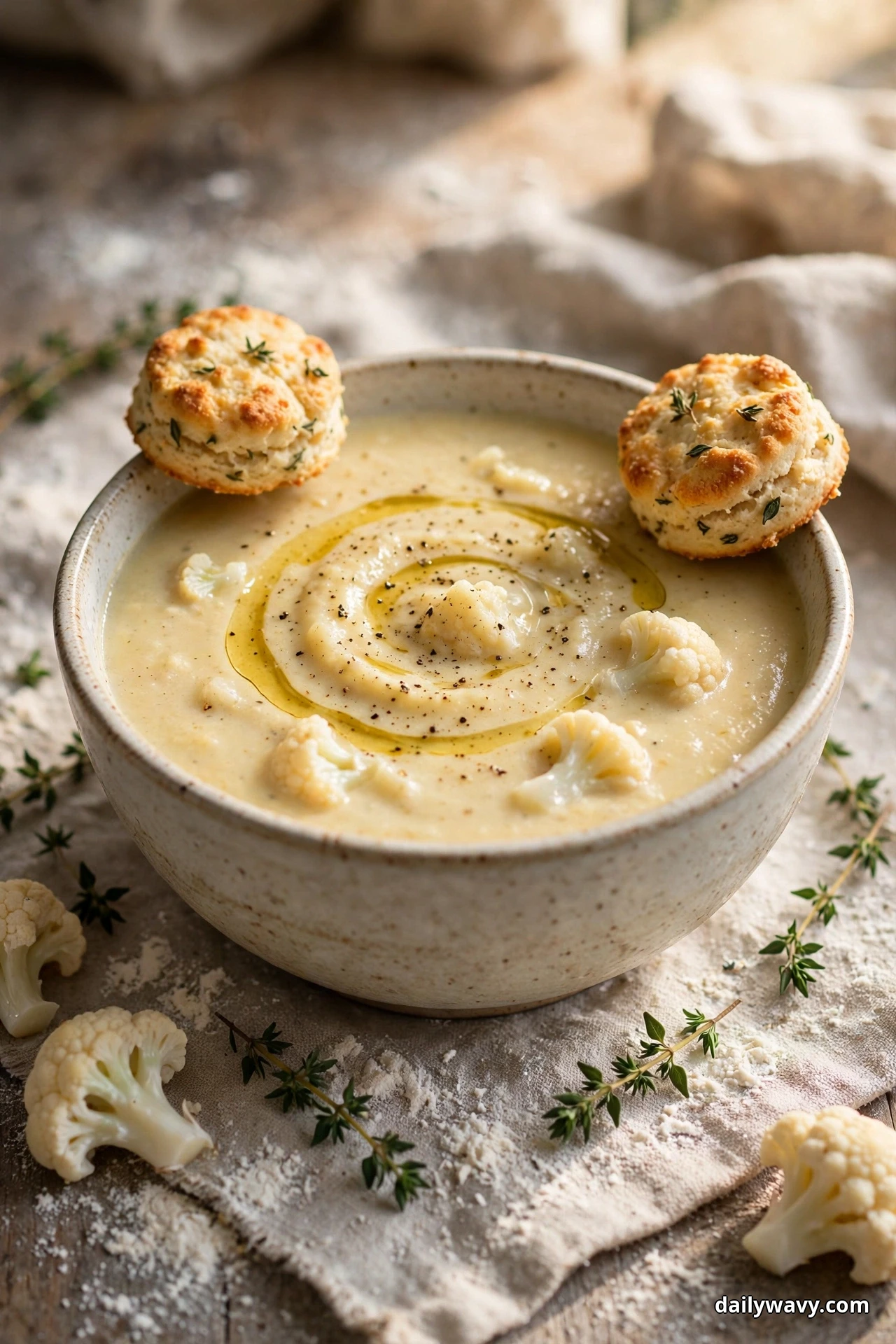
8. Cauliflower Soup With Thyme Biscuits
Creamy soup plus warm biscuits is a combination that never misses. These are simple drop biscuits, no rolling or cutting, studded with fresh thyme. Bake them while the soup simmers and everything lands on the table at once.
Ingredients for the soup: 1 large head cauliflower, cut into florets; 1 medium yellow onion, diced; 3 tablespoons butter; 4 cups vegetable or chicken stock; 3/4 teaspoon fine sea salt; 1/4 teaspoon black pepper; 1/2 cup heavy cream or half-and-half; 1 tablespoon lemon juice.
Ingredients for the biscuits (makes 8): 1 1/2 cups all-purpose flour; 1 tablespoon baking powder; 1 teaspoon sugar; 3/4 teaspoon fine sea salt; 1 tablespoon fresh thyme leaves; 6 tablespoons cold unsalted butter, cubed; 3/4 cup cold milk, plus more if needed.
Method: Start the biscuits. Heat the oven to 425°F. Whisk the flour, baking powder, sugar, salt, and thyme in a bowl. Cut in the cold butter with a pastry blender or your fingertips until pea-sized crumbs form. Stir in the milk just until a shaggy dough comes together. Drop 8 mounds onto a parchment-lined baking sheet and bake 13 to 15 minutes until golden. Meanwhile, melt the butter in a large pot, soften the onion 6 to 8 minutes, add the cauliflower and stock, and simmer 18 to 20 minutes. Blend smooth with the cream and lemon juice; adjust salt.
To serve: Split a warm biscuit and set it on the rim of each bowl, or serve a basket alongside. A little extra thyme over the soup echoes the biscuits.
Troubleshooting: Tough biscuits mean overmixed dough. Stop stirring the moment the dry bits disappear. If the butter warms up before baking, chill the tray for 10 minutes; cold butter is what makes them flaky.
Storage: Soup keeps 4 days refrigerated and 3 months frozen. Biscuits keep 2 days at room temperature in a sealed container; rewarm 5 minutes in a 350°F oven.
9. Cauliflower Soup With Herb Croutons
Texture is everything in a blended soup, and homemade croutons deliver it. Cubed bread tossed with olive oil and herbs bakes up golden and crunchy in about 15 minutes, and the soup beneath stays silky.

Ingredients for the soup: 1 large head cauliflower, cut into florets; 1 medium yellow onion, diced; 2 tablespoons olive oil; 4 cups vegetable or chicken stock; 3/4 teaspoon fine sea salt; 1/4 teaspoon black pepper; 1/2 cup heavy cream; 1 tablespoon lemon juice.
Ingredients for the croutons (makes about 2 cups): 4 cups cubed day-old bread (1/2-inch cubes); 3 tablespoons olive oil; 1 teaspoon dried Italian herbs or 1 tablespoon mixed fresh herbs, chopped; 1/2 teaspoon garlic powder; 1/4 teaspoon fine sea salt.
Method: Heat the oven to 375°F. Toss the bread cubes with the olive oil, herbs, garlic powder, and salt on a baking sheet. Bake 12 to 15 minutes, tossing once, until crisp and golden. Meanwhile, make the soup: soften the onion in the olive oil 6 to 8 minutes, add the cauliflower and stock, simmer 18 to 20 minutes, and blend smooth with the cream and lemon juice. Adjust the salt.
To serve: Ladle into bowls and add a generous handful of croutons to each. Serve immediately so they stay crunchy.
Troubleshooting: Soft croutons usually mean the cubes were too big or the oven too crowded. Spread them in a single layer and give them the full time. If your bread is very fresh, dry the cubes in a 300°F oven for 10 minutes first.
Storage: Soup keeps 4 days refrigerated and 3 months frozen. Croutons keep 3 days in a sealed container at room temperature; crisp them 3 minutes in a hot oven if they soften.
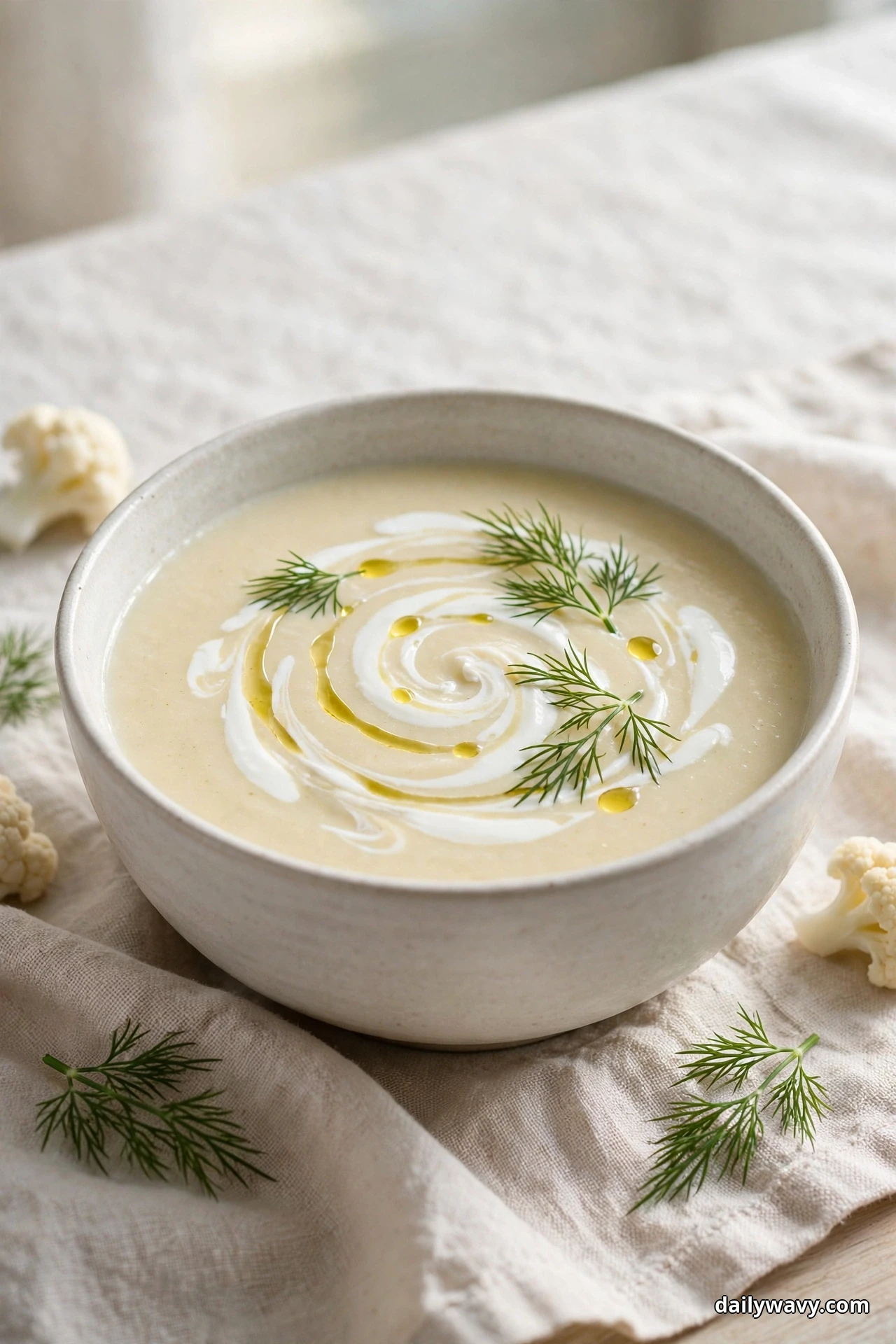
10. Cauliflower Soup With a Yogurt Swirl
A swirl of Greek yogurt gives this soup gentle tang and a protein boost without any cream. The one rule is timing: stir it in off the heat so the yogurt never boils, which keeps it silky instead of grainy.
Ingredients: 1 large head cauliflower, cut into florets; 1 medium yellow onion, diced; 2 tablespoons olive oil; 4 cups vegetable or chicken stock; 3/4 teaspoon fine sea salt; 1/4 teaspoon black pepper; 1 cup plain whole-milk Greek yogurt, divided; 1 tablespoon lemon juice; 2 tablespoons chopped fresh dill or chives; 1 teaspoon olive oil for drizzling.
Method: Soften the onion in the olive oil over medium heat for 6 to 8 minutes. Add the cauliflower, stock, salt, and pepper; simmer 18 to 20 minutes until tender. Blend completely smooth. Remove the pot from the heat and let it cool 2 minutes. Whisk 3/4 cup of the yogurt with a ladleful of hot soup in a bowl to temper it, then whisk the mixture back into the pot. Stir in the lemon juice and adjust the salt.
To serve: Ladle into bowls and swirl a spoonful of the remaining yogurt over each. Finish with dill or chives and a thread of olive oil.
Troubleshooting: If the yogurt looks grainy, the soup was too hot when it went in. Always temper and always off the heat. Low-fat yogurt curdles more easily, so whole-milk yogurt is worth it here.
Storage: Refrigerate up to 4 days. Freezing works, but the yogurt texture can separate slightly; whisk well while reheating and add a fresh yogurt swirl at serving.
11. Cauliflower Soup With Roasted Garlic
A whole head of roasted garlic melts into this soup and makes it taste deep and mellow, nothing like raw garlic bite. Roast the garlic while the oven is free and the kitchen smells incredible.
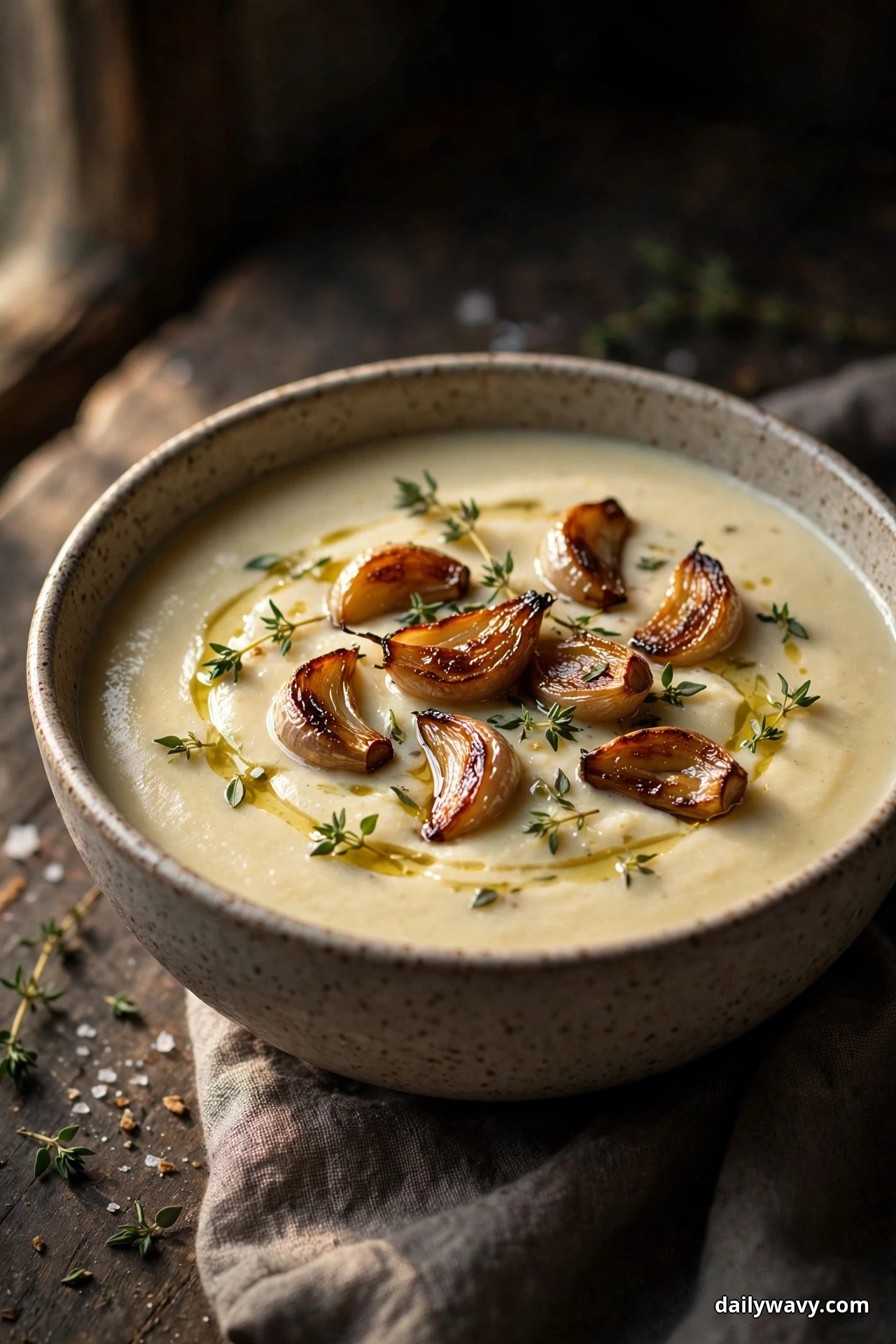
Ingredients: 1 whole head garlic; 1 large head cauliflower, cut into florets; 1 medium yellow onion, diced; 2 tablespoons olive oil, plus 1 teaspoon for the garlic; 4 cups vegetable or chicken stock; 3/4 teaspoon fine sea salt; 1/4 teaspoon black pepper; 1/2 cup heavy cream; 1 tablespoon lemon juice; fresh thyme leaves for serving.
Method: Heat the oven to 400°F. Slice the top off the garlic head to expose the cloves, drizzle with 1 teaspoon olive oil, wrap in foil, and roast 35 to 40 minutes until the cloves are soft and caramel colored. Squeeze the cloves out of their skins. Meanwhile, soften the onion in the olive oil 6 to 8 minutes, add the cauliflower and stock, and simmer 18 to 20 minutes. Add the roasted garlic cloves to the pot and blend everything smooth with the cream. Stir in the lemon juice and adjust the salt.
To serve: Ladle into bowls and top each with a couple of extra roasted cloves if you roasted more than one head, a drizzle of olive oil, and thyme leaves.
Troubleshooting: Under-roasted garlic stays sharp. The cloves should be deeply golden and completely soft when squeezed. If you only have time for a shortcut, simmer 6 smashed raw cloves with the cauliflower; the flavor is milder but not the same.
Storage: Refrigerate up to 4 days. Freezes up to 3 months. The garlic flavor deepens overnight, so this is an excellent make-ahead.
12. Cauliflower Soup With White Beans
Blending in a can of white beans makes this soup extra creamy and adds staying power, with no cream and no nuts. It is the most filling version in the roundup and the easiest path to a complete dinner, especially paired with something hearty on the side like a chickpea wrap.

Ingredients: 1 large head cauliflower, cut into florets; 1 medium yellow onion, diced; 2 carrots, diced; 2 tablespoons olive oil; 3 garlic cloves, minced; 1 can (15 ounces) cannellini or great northern beans, drained and rinsed; 4 cups vegetable stock; 3/4 teaspoon fine sea salt; 1/4 teaspoon black pepper; 1 teaspoon dried rosemary, crushed (or 1 tablespoon fresh, chopped); 1 tablespoon lemon juice.
Method: Heat the olive oil in a large pot over medium heat. Cook the onion and carrots with a pinch of salt for 8 minutes until softened. Add the garlic and rosemary; cook 1 minute. Add the cauliflower, beans, stock, salt, and pepper. Bring to a boil, reduce to a simmer, and cook 18 to 20 minutes until the cauliflower is very tender. Blend until completely smooth; the beans disappear into the soup and thicken it. Stir in the lemon juice and adjust the salt. If you prefer texture, reserve 1/2 cup of the beans before blending and stir them back in at the end.
To serve: Ladle into bowls and finish with a drizzle of olive oil, cracked pepper, and a pinch of fresh rosemary.
Troubleshooting: If the soup tastes bland, it almost always needs more salt or more lemon, not more ingredients. Beans absorb salt, so taste twice. If it is too thick, thin with warm stock.
Storage: Refrigerate up to 4 days. Freezes up to 3 months. This one reheats especially well and makes excellent next-day lunches.
Frequently Asked Questions
Can I make cauliflower soup dairy free?
Yes. Ideas 3, 4, 7, and 12 are dairy free as written, and the rest become dairy free by swapping butter for olive oil and skipping the cream or yogurt. The cashew cream version (idea 4) is the creamiest dairy free option.
How do I keep my cauliflower soup from tasting bland?
Season in stages, not all at the end. Salt the aromatics, salt the simmering soup, then taste after blending and adjust again. Finish with acid: lemon juice or vinegar. Bland cauliflower soup is almost always under-salted or missing acid.
Can I freeze cauliflower soup?
Yes. Cool it within 2 hours, pack in sealed containers with about an inch of headspace, and freeze up to 3 months. Blended cauliflower soup can turn slightly grainy or watery after thawing; a vigorous whisk or a quick re-blend while reheating brings the texture back. Thaw overnight in the fridge or reheat gently from frozen, stirring often. Add fresh garnishes like yogurt, pesto, or croutons after reheating.
Why is my soup grainy instead of smooth?
The cauliflower was undercooked or under-blended. Simmer until the florets crush easily with a spoon, then blend a full minute longer than you think you need. A high-speed blender gives the silkiest result; an immersion blender works but may leave slight texture.
Can I use frozen cauliflower?
Yes. Use about 2 pounds of frozen florets straight from the freezer, no thawing needed. Add 2 to 3 minutes to the simmer time and expect a slightly softer texture, which blends just fine.
What should I serve with cauliflower soup?
Grilled cheese, crusty bread, a green salad, or a hearty sandwich all work. The thyme biscuits (idea 8) and herb croutons (idea 9) turn the bowl itself into the full meal.
A Bowl for Every Kind of Day
Twelve soups, one humble vegetable. Start with the pesto drizzle when you want the classic, reach for the roasted garlic when you have the oven on anyway, and keep the white bean version in your back pocket for busy weeks. However you make it, remember the two rules that matter most: season in stages, and finish with something bright. If this roundup got you in a soup mood, browse more cozy ideas in Food & Drink, pair a bowl with a sheet pan dinner for a full week of cooking, or bake a batch of blueberry muffins to go alongside. Your soup pot is about to get very busy.