
14 Business Casual Office Outfits with Practical Dress-Code Notes
Business casual is one of those phrases everyone uses and almost no one defines the same way. In one office…
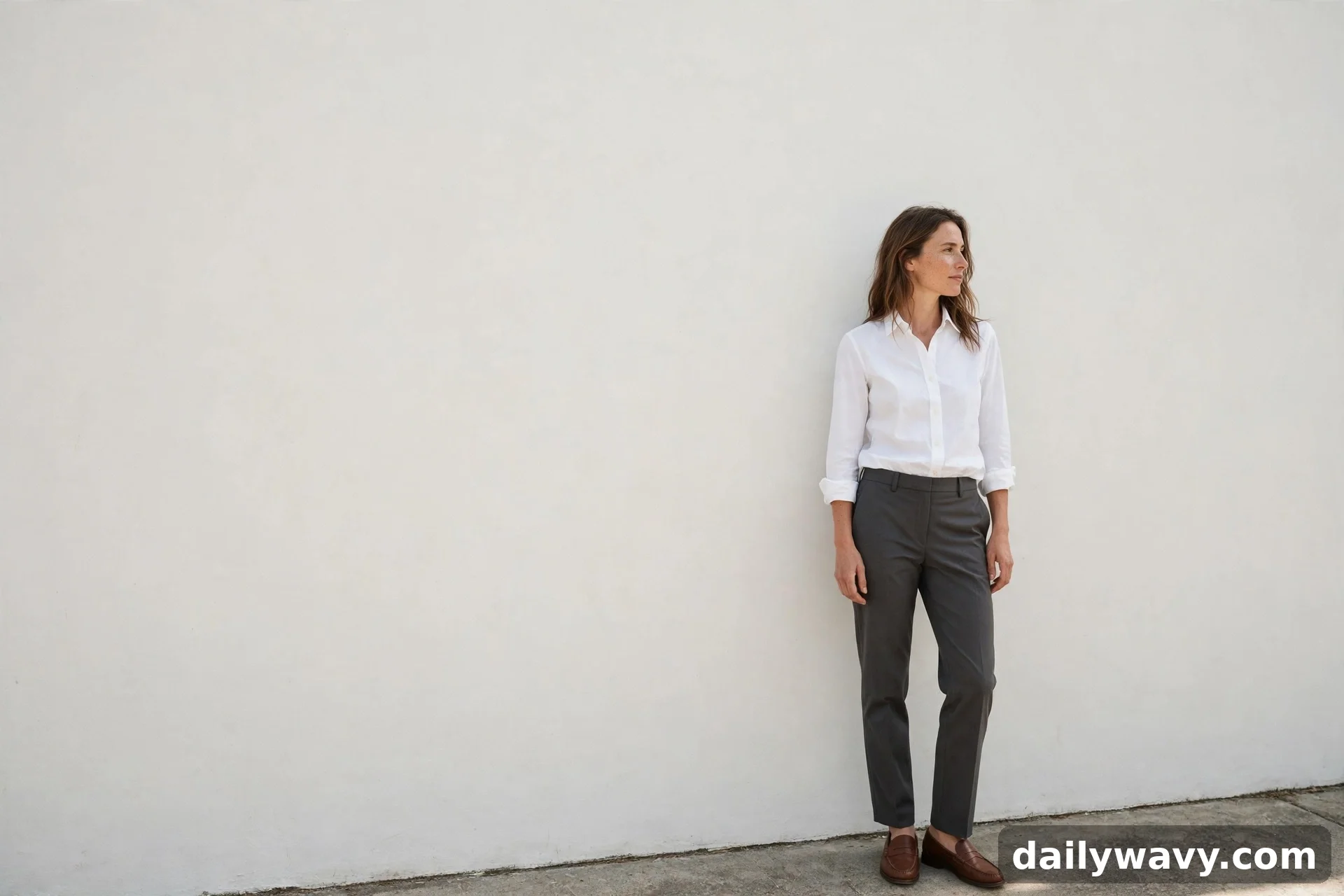
Business casual is one of those phrases everyone uses and almost no one defines the same way. In one office it means a blazer and pressed trousers. In another it means a nice sweater and clean sneakers on Friday. The outfits below sit in the middle ground most workplaces actually expect: polished, comfortable, and appropriate for everything from a client meeting to a long day at your desk.
Each idea is a complete outfit with honest notes on dress code, fit, and fabric, plus one practical substitution when you want to tweak it. Pick the ones that match your office, your climate, and your mornings.
Jump to an outfit
- Cotton shirt with tailored trousers and loafers
- Fine knit with an A-line midi skirt
- Soft blouse with straight trousers
- Matching suit with a simple shell top
- Cardigan with a plain midi dress
- Knit polo with pleated trousers
- Structured blazer with a modest blouse
- Turtleneck with wide-leg wool trousers
- Buttoned vest over an opaque shirt
- Shirt dress with a narrow belt
- Simple knit with a straight midi skirt
- Longline jacket with tailored separates
- Silk-look blouse with a navy trouser
- Textured blazer over a plain dress
1. Cotton shirt with tailored trousers and loafers
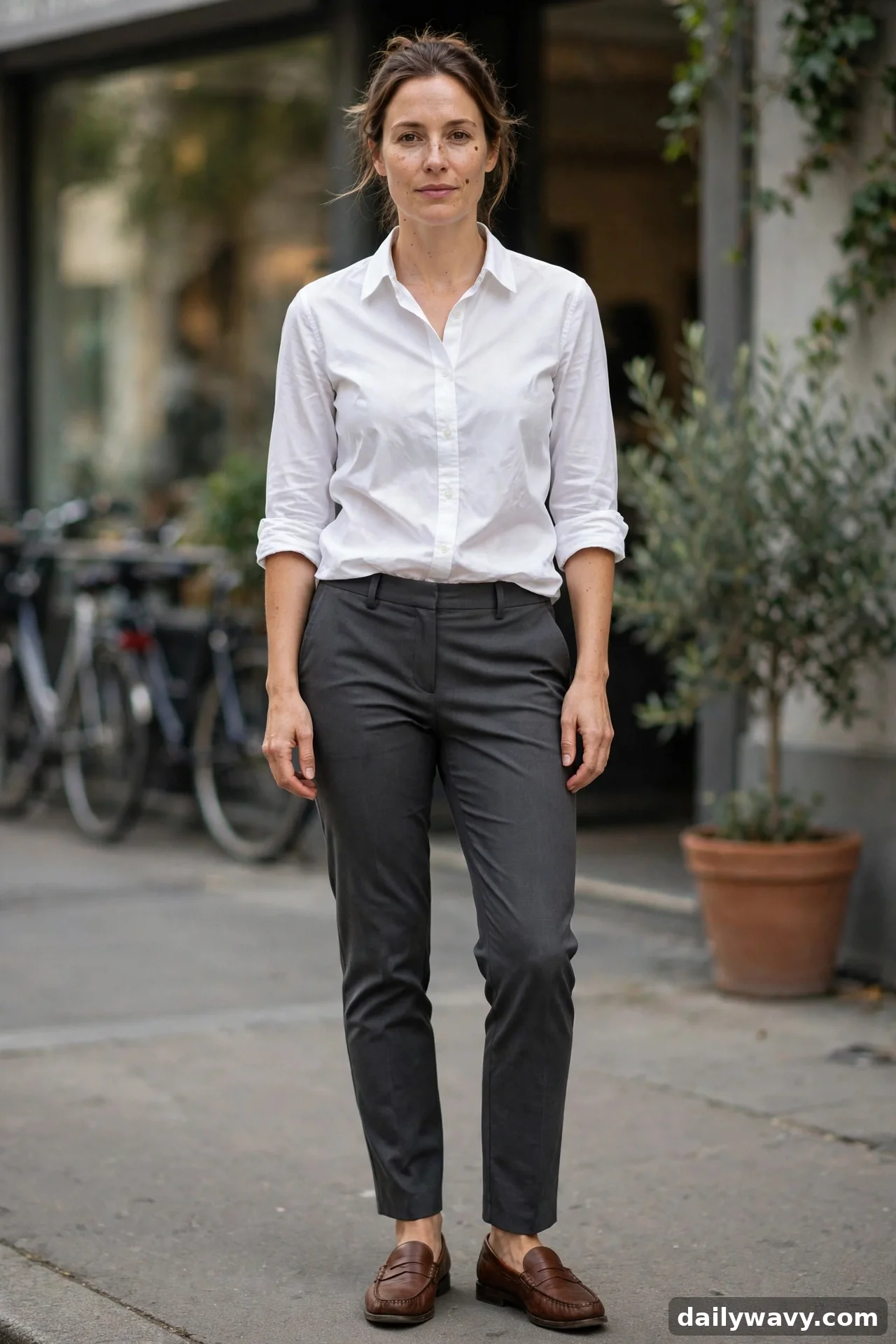
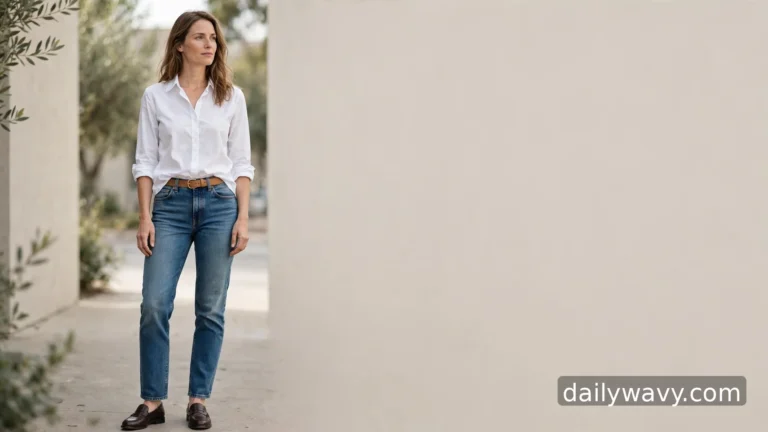
This is the business casual baseline, the outfit everything else gets measured against. A crisp cotton button-down, tucked into tailored flat-front trousers, finished with classic leather loafers. It reads as professional in just about any office that uses the term business casual.
Dress code: True business casual. Safe for interviews at business-casual companies, client meetings, and presentation days.
Fit and proportion: The shirt should skim, not pull, across the shoulders and chest. Trousers with a mid rise and a tapered leg keep the line clean; a full break at the ankle looks sloppy, so aim for a slight break or a clean crop above the loafer. Loafers with a low vamp elongate the foot and keep the outfit from feeling heavy.
Fabric and weather: Cotton breathes well for warm offices and commutes. In winter, swap the cotton shirt for an oxford cloth version, which has a bit more body.
Practical substitution: Trade the loafers for pointed ballet flats when you know you will be on your feet all day.
2. Fine knit with an A-line midi skirt
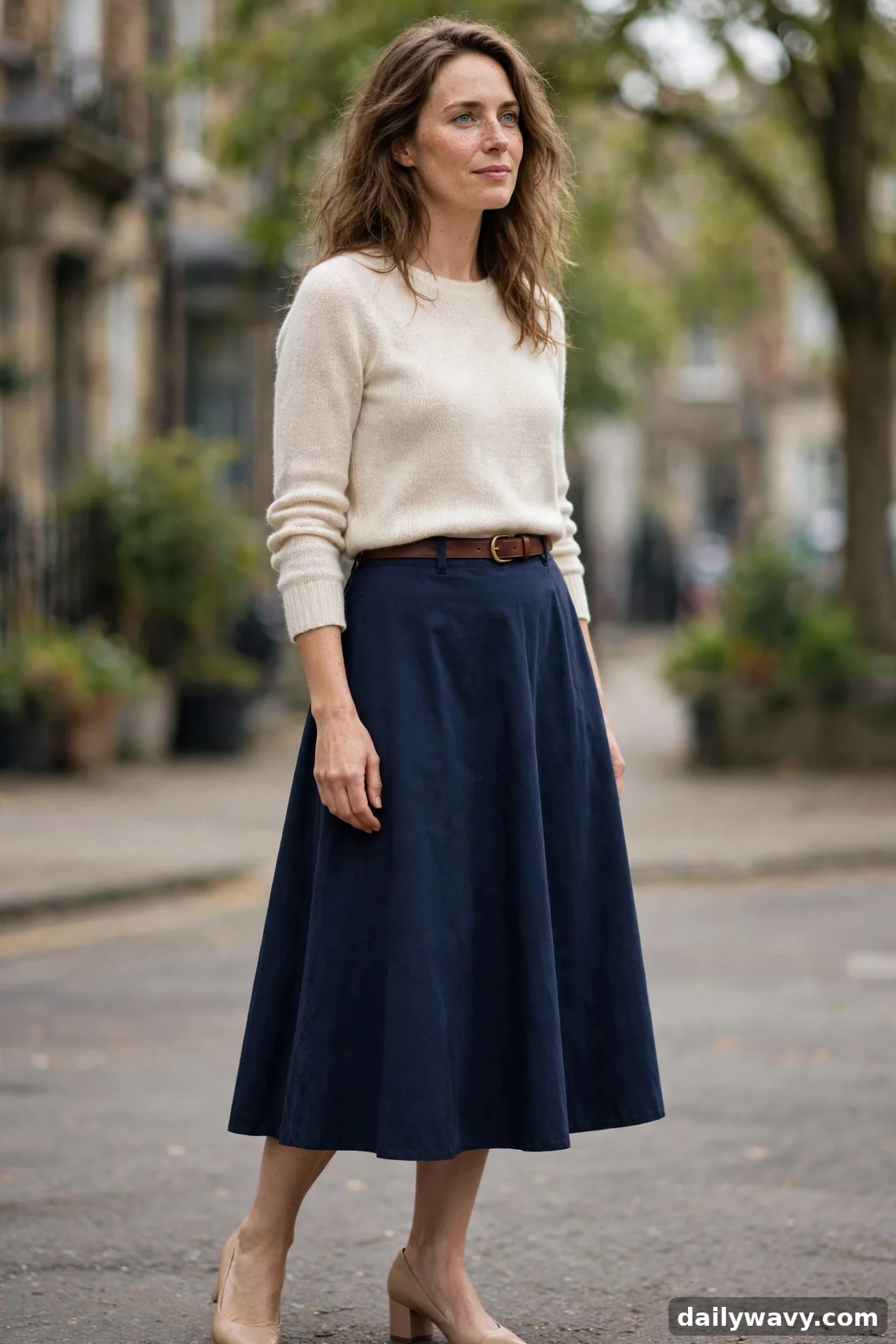
A fine-gauge knit tucked into an A-line midi skirt is soft without being sloppy. The knit keeps it comfortable for long desk days, while the structured skirt holds the polished line a workplace expects.
Dress code: Business casual. Works well in creative-adjacent offices and traditional ones alike, since the silhouette is modest and tidy.
Fit and proportion: The knit should be fine enough to tuck without bulk. An A-line skirt that hits mid-calf balances a fitted top; if the skirt flares a lot, keep the knit slim. Add a thin belt at the waist to define the tuck.
Fabric and weather: Merino or a merino blend regulates temperature across a workday better than chunky acrylic knits and keeps its shape well through repeated wear. For summer, a short-sleeve fine knit in cotton does the same job.
Practical substitution: Swap the midi skirt for tailored wide-leg trousers on days with a lot of walking.
3. Soft blouse with straight trousers
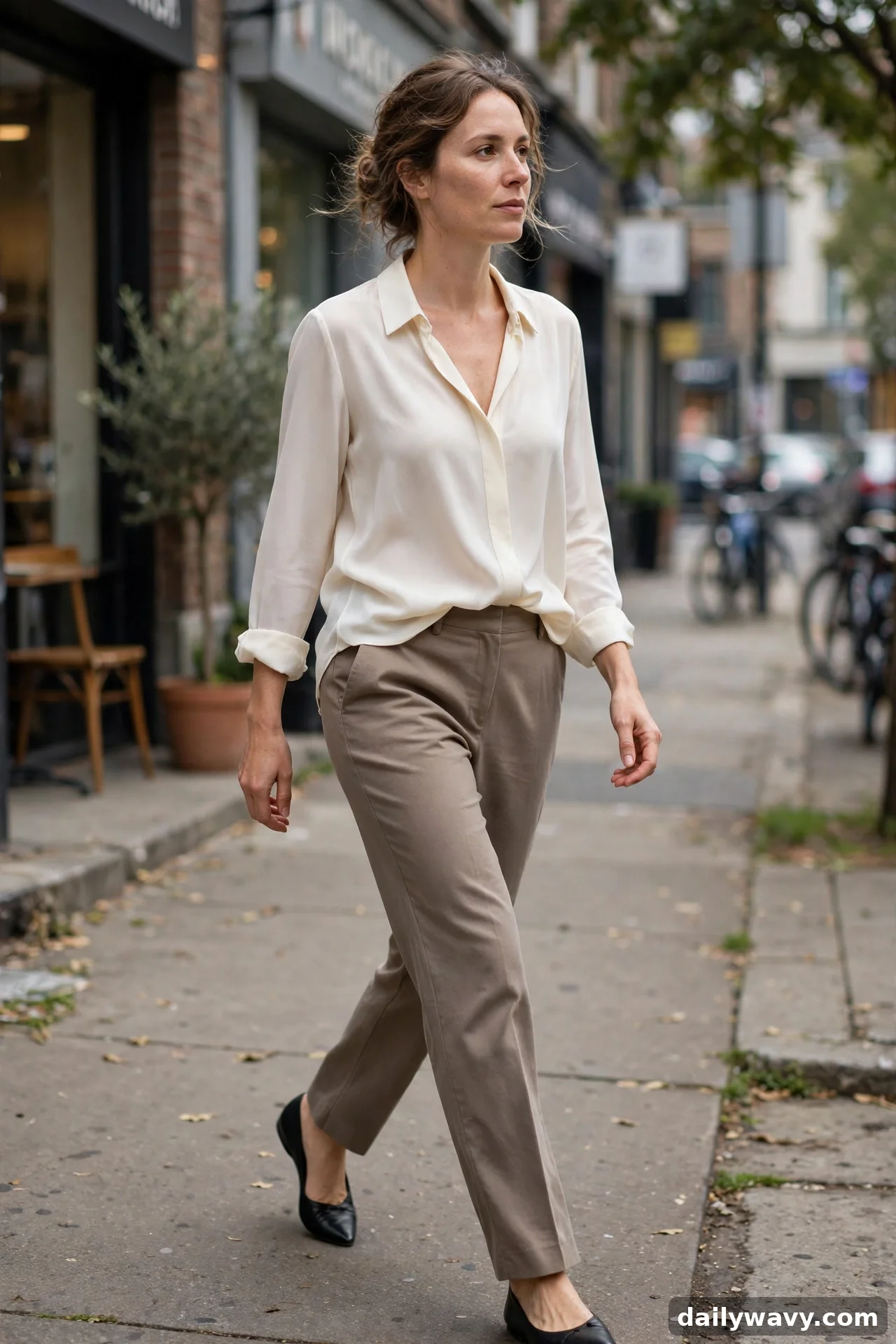
A softly draped blouse with straight-leg trousers is the commuter’s friend. Nothing is tight, nothing wrinkles badly in a bag, and the whole thing looks intentional when you walk in.
Dress code: Business casual, leaning relaxed. Fine for everyday office wear; add a blazer (see idea 7) for meeting-heavy days.
Fit and proportion: Let the blouse blouse. A straight trouser with a clean front balances the softness on top. Tuck just the front of the blouse to show where your waist is, which keeps the volume from overwhelming a petite frame.
Fabric and weather: Look for blouses in crepe or a matte satin-back fabric, which resist wrinkles far better than plain cotton voile. Straight trousers in a mid-weight stretch suiting fabric survive a seated commute.
Practical substitution: Trade the blouse for a fine-knit short-sleeve sweater when the office air conditioning runs cold.
4. Matching suit with a simple shell top
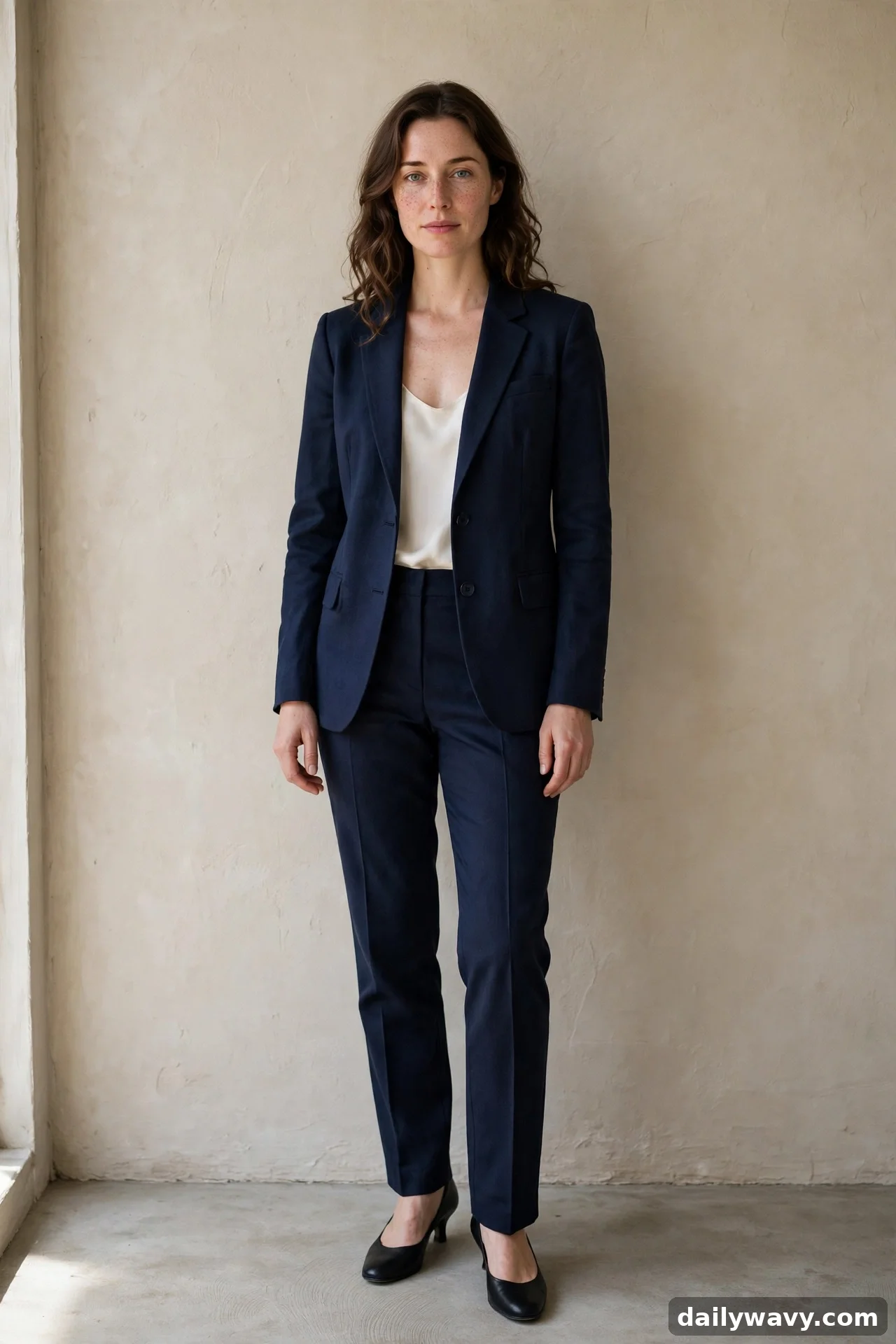
This is the most formal outfit in the roundup. A matching blazer and trouser in the same fabric, worn with a simple shell top underneath, covers every situation where business casual shades toward business formal.
Dress code: Business casual at its most polished, and acceptable anywhere business formal is expected except the very strictest settings.
Fit and proportion: The suit should match exactly; near-matches look like a mistake. Trousers with a single clean crease and a blazer that closes without pulling give the sharpest line. The shell top should sit flat under the blazer with a modest neckline.
Fabric and weather: A wool-blend suiting fabric works across seasons. In summer, an unlined blazer in a lighter weave keeps you comfortable without losing structure.
Practical substitution: Lose the blazer after hours and the shell top with trousers still reads as neat business casual on its own.
5. Cardigan with a plain midi dress
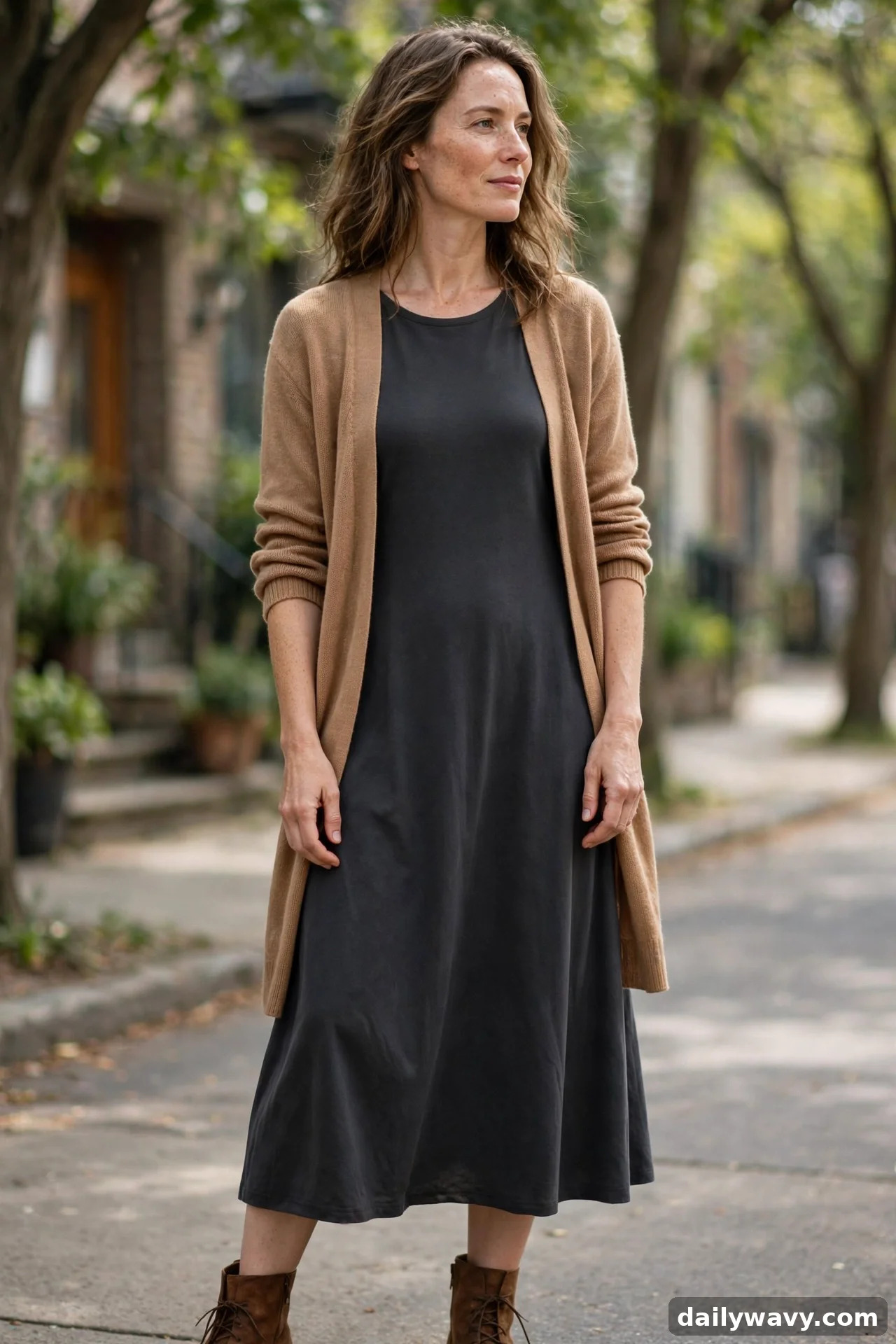
A plain midi dress with a cardigan over it is the easiest polished outfit to put on. One dress, one layer, done. The cardigan adds the coverage and structure that make a simple dress office-appropriate.
Dress code: Business casual. The cardigan is what keeps this on the professional side; without it, check your office’s dress policy.
Fit and proportion: The dress should skim rather than cling. A cardigan that hits at the hip or just below keeps the proportions balanced over a midi length. Push the sleeves to the elbow for a less fussy look.
Fabric and weather: A dress in ponte or a heavy jersey holds its shape through a workday. Choose a cardigan in a fine knit rather than chunky, so it layers without bulk.
Practical substitution: Swap the cardigan for a cropped jacket when you want a sharper line for meetings.
6. Knit polo with pleated trousers
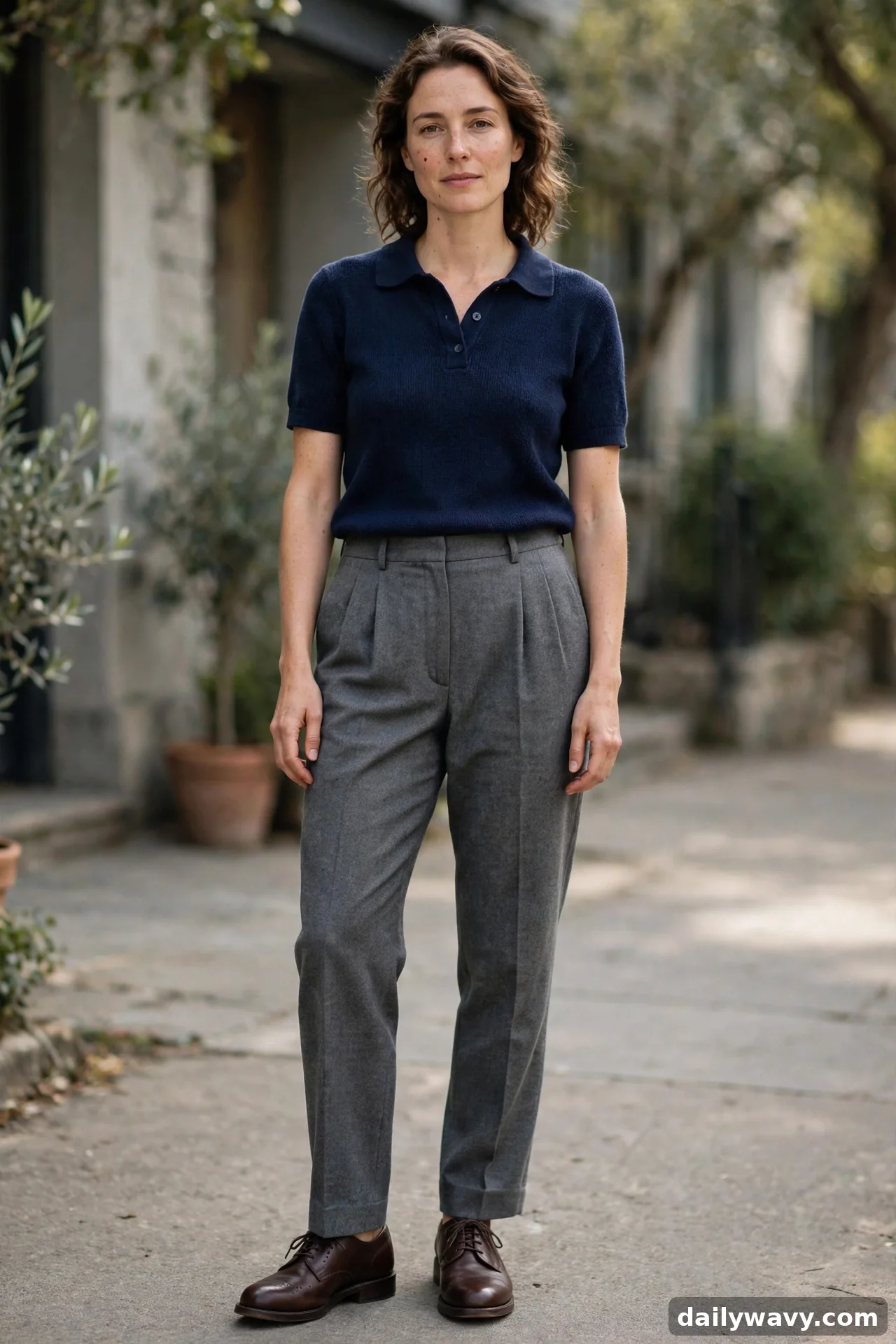
The knit polo is the modern answer to the button-down. It has a collar, so it reads as intentional, but the soft knit keeps it comfortable. Pleated trousers add a tailored counterweight that keeps the whole thing firmly in business casual territory.
Dress code: Business casual with a contemporary feel. If your office leans more relaxed than this, our Fashion & Beauty section has more relaxed workday looks.
Fit and proportion: The polo should sit close at the shoulder and skim the torso; too much ease looks like golf wear. Pleats need room to lie flat, so the trouser should not pull at the hip. A clean tuck is essential here.
Fabric and weather: A cotton or cotton-blend polo holds its collar better than a flimsy jersey. Pleated trousers in a tropical-weight wool work year round.
Practical substitution: Swap the pleated trousers for flat-front chinos on casual Fridays.
7. Structured blazer with a modest blouse
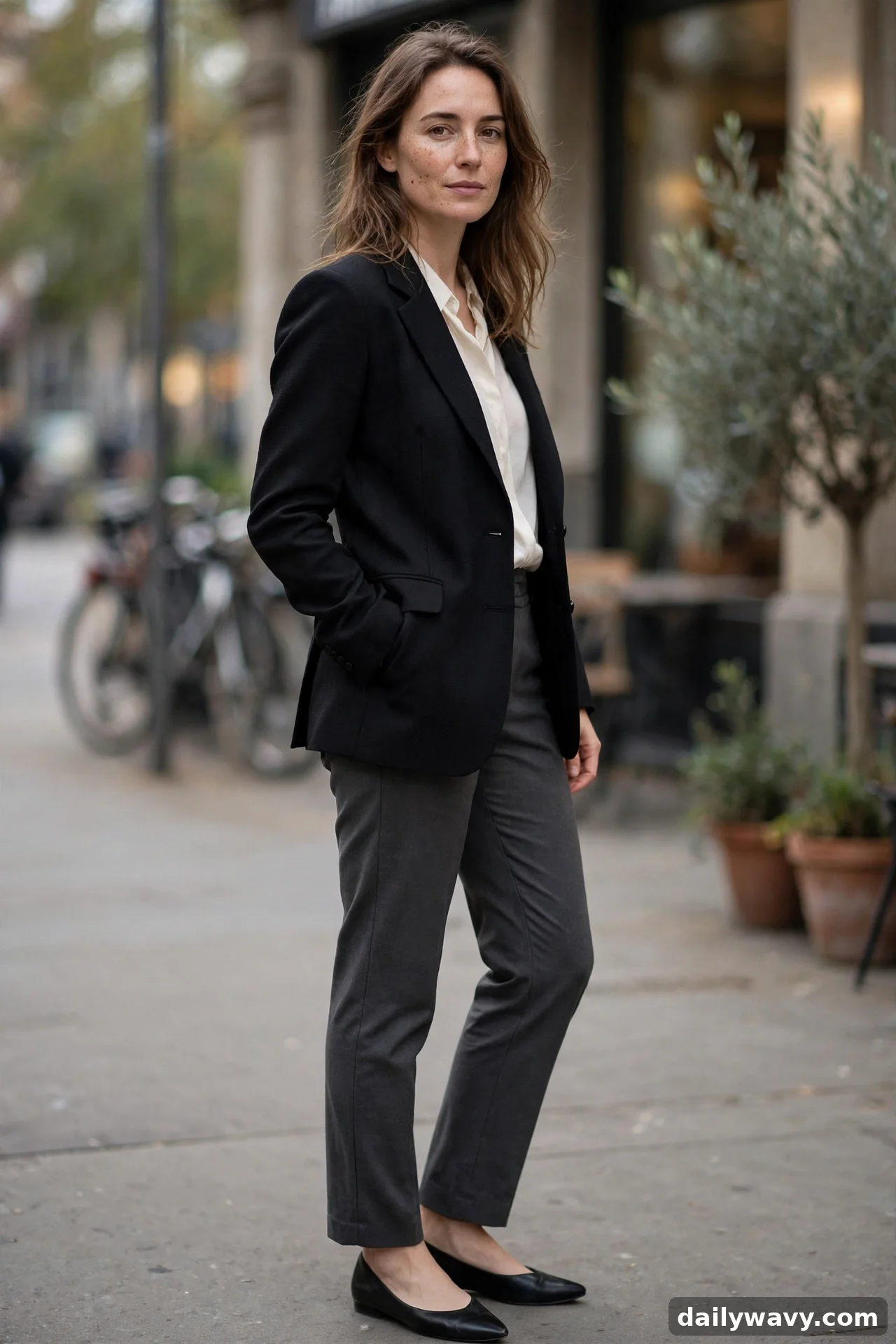
When the calendar is full of meetings, this is the outfit. A structured blazer instantly raises the formality of whatever is underneath, and a modest blouse keeps it appropriate without a fuss.
Dress code: Business casual to business formal. This is the safest choice for first impressions.
Fit and proportion: Structure is the point, so the blazer should have a real shoulder line and a nipped waist, not a boxy drape. The blouse underneath should be smooth and simple; a modest neckline means no adjusting during the day. Sleeves pushed slightly or full length both work.
Fabric and weather: A half-lined blazer breathes better than a fully lined one for warm offices. The blouse in a matte crepe will not shine under office lighting.
Practical substitution: Trade the blouse for a fine turtleneck in winter; the blazer does the same formalizing job.
8. Turtleneck with wide-leg wool trousers
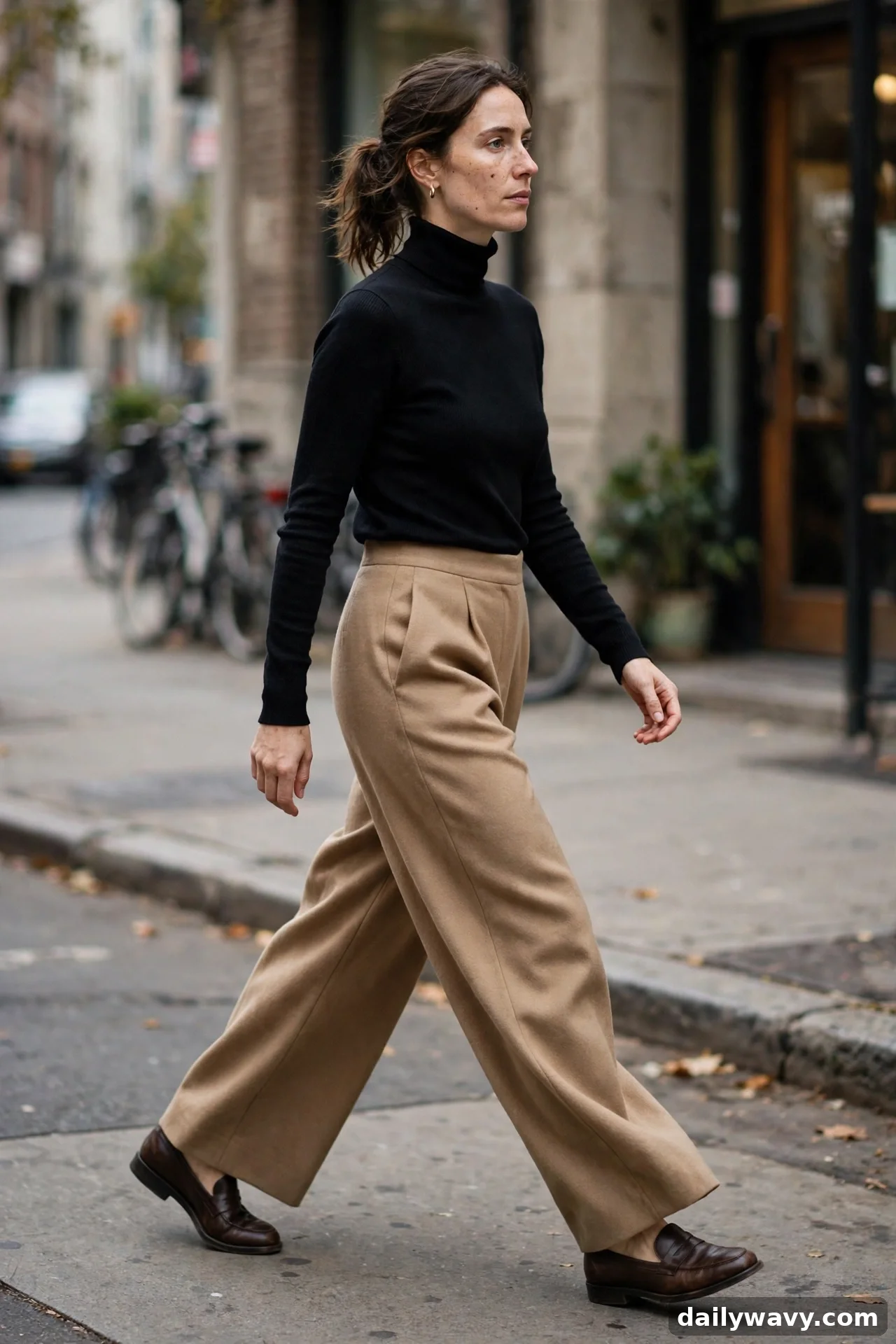
Cold weather business casual done right. A slim turtleneck tucked into wide-leg wool trousers gives you warmth and a strong silhouette at the same time. The contrast between the fitted top and the flowing trouser is what makes it look deliberate.
Dress code: Business casual, cold-weather appropriate. The wool trouser keeps it professional even without a blazer.
Fit and proportion: The turtleneck must be slim enough to tuck cleanly; a bulky one ruins the line. Wide-leg trousers should break just at the shoe. Keep the top dark or tonal with the trouser for the longest line.
Fabric and weather: Merino turtlenecks stay comfortable across a wide temperature range. Wool trousers with a bit of stretch move better for commutes involving stairs.
Practical substitution: Swap the turtleneck for a mock-neck sweater if a full turtleneck feels restrictive.
9. Buttoned vest over an opaque shirt
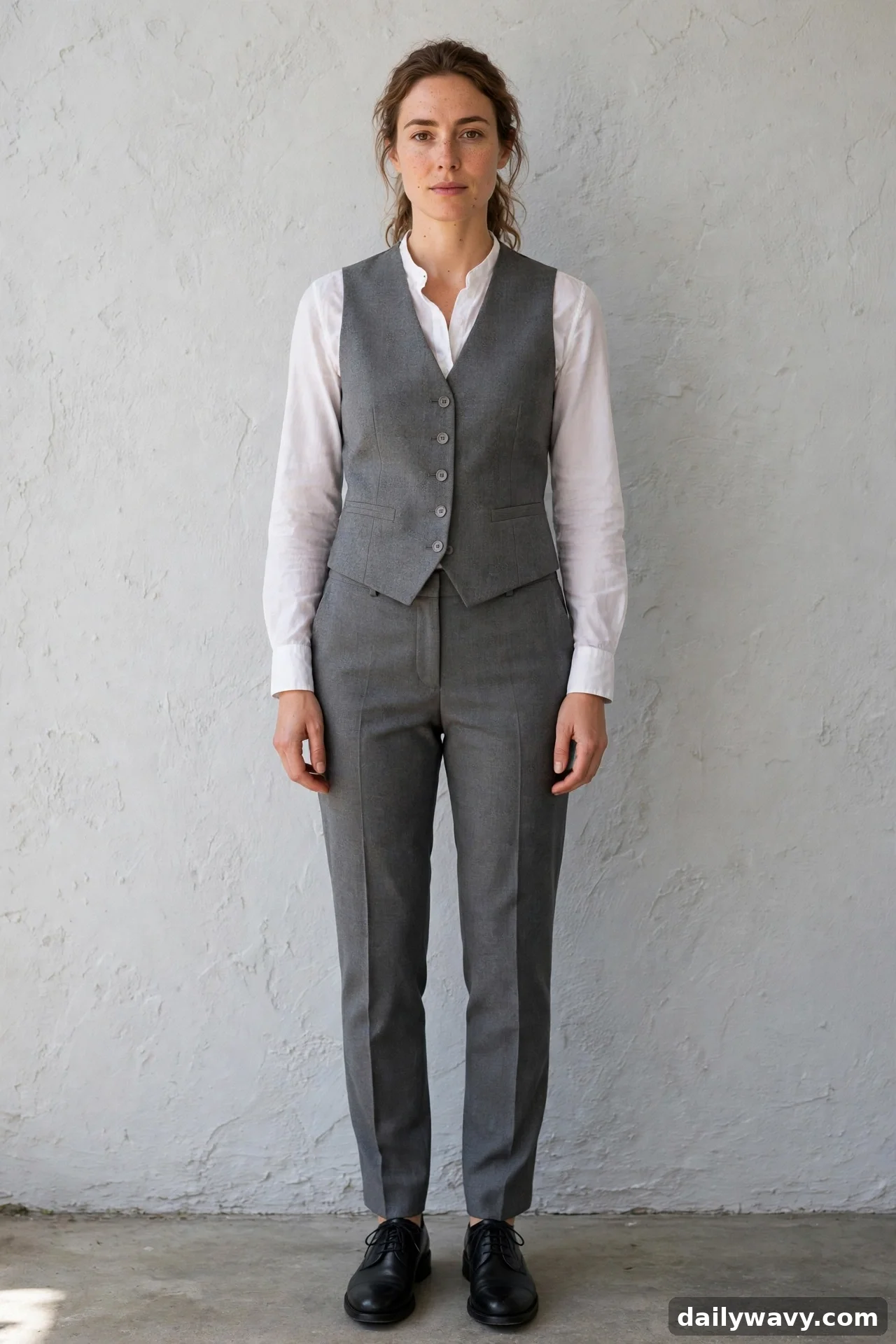
A tailored vest over a crisp shirt is a sharp suiting alternative that skips the blazer. It gives the layered, finished look of a suit with more freedom of movement, which is welcome on active office days.
Dress code: Business casual. The vest reads as intentional tailoring, so it holds up in meetings.
Fit and proportion: The vest should close smoothly over the shirt with no gaping at the buttons. Keep the shirt opaque; anything sheer defeats the purpose. Trousers or a skirt in a matching or tonal fabric complete the suit-like effect.
Fabric and weather: A vest in suiting fabric with a smooth lining layers cleanly. In warmer months, a vest in a lighter weave with short sleeves underneath works well.
Practical substitution: Wear the vest open over the shirt for a more relaxed take on casual Fridays.
10. Shirt dress with a narrow belt
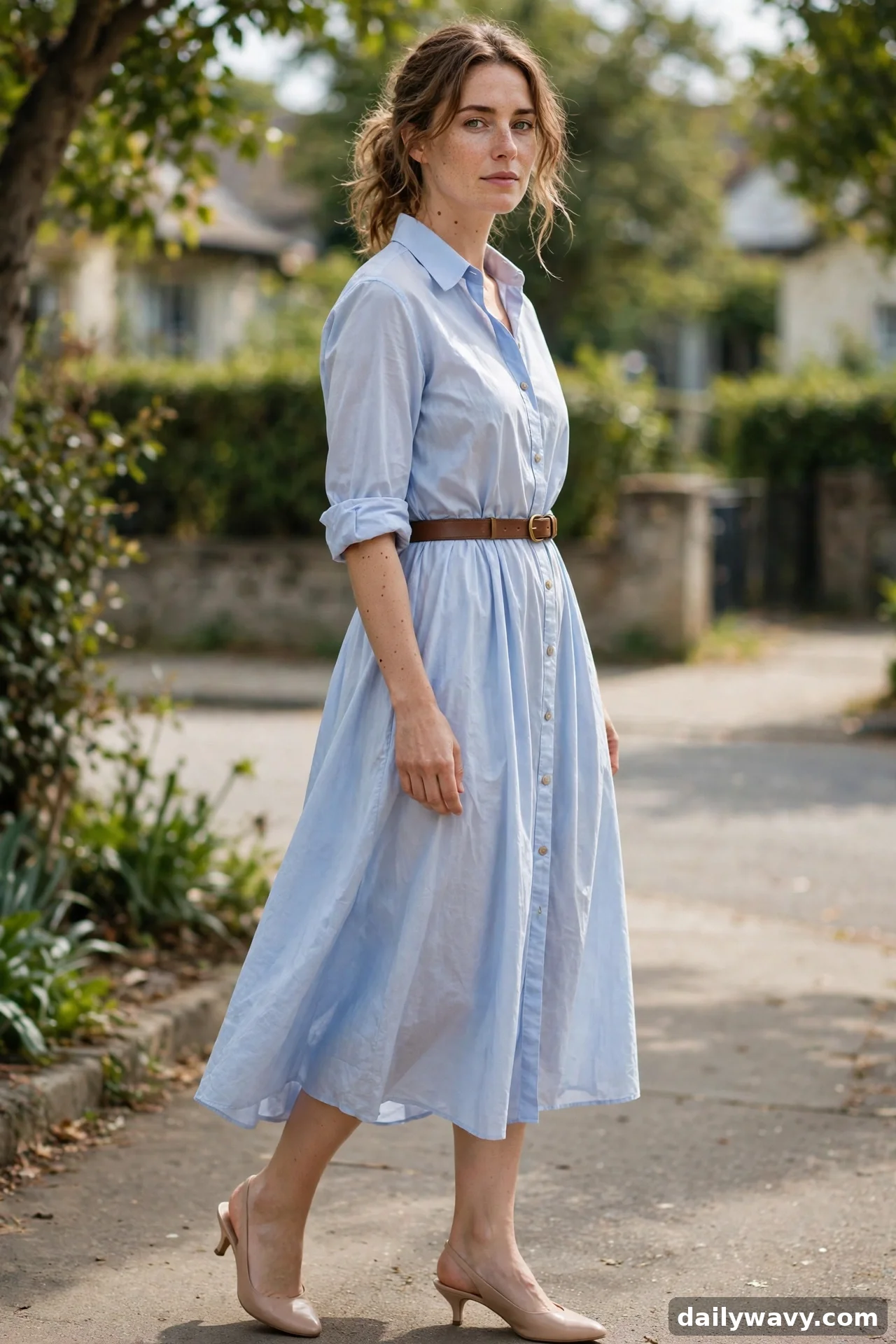
The shirt dress is the one-and-done of business casual. It has a collar, buttons, and structure built in. A narrow belt defines the waist and stops the dress from reading as a lab coat.
Dress code: Business casual. Check the length against your office policy; a hem at or just above the knee is the safe zone.
Fit and proportion: The belt should sit at your natural waist, not your hips. A shirt dress with a defined shoulder and a skirt that skims (rather than balloons) keeps the silhouette professional. Roll the sleeves once for a less stiff feel.
Fabric and weather: Cotton poplin or a cotton blend holds the crisp shirt look. In winter, layer opaque tights and ankle boots underneath.
Practical substitution: Swap the narrow belt for a wider one to change the look entirely without buying a new dress.
11. Simple knit with a straight midi skirt
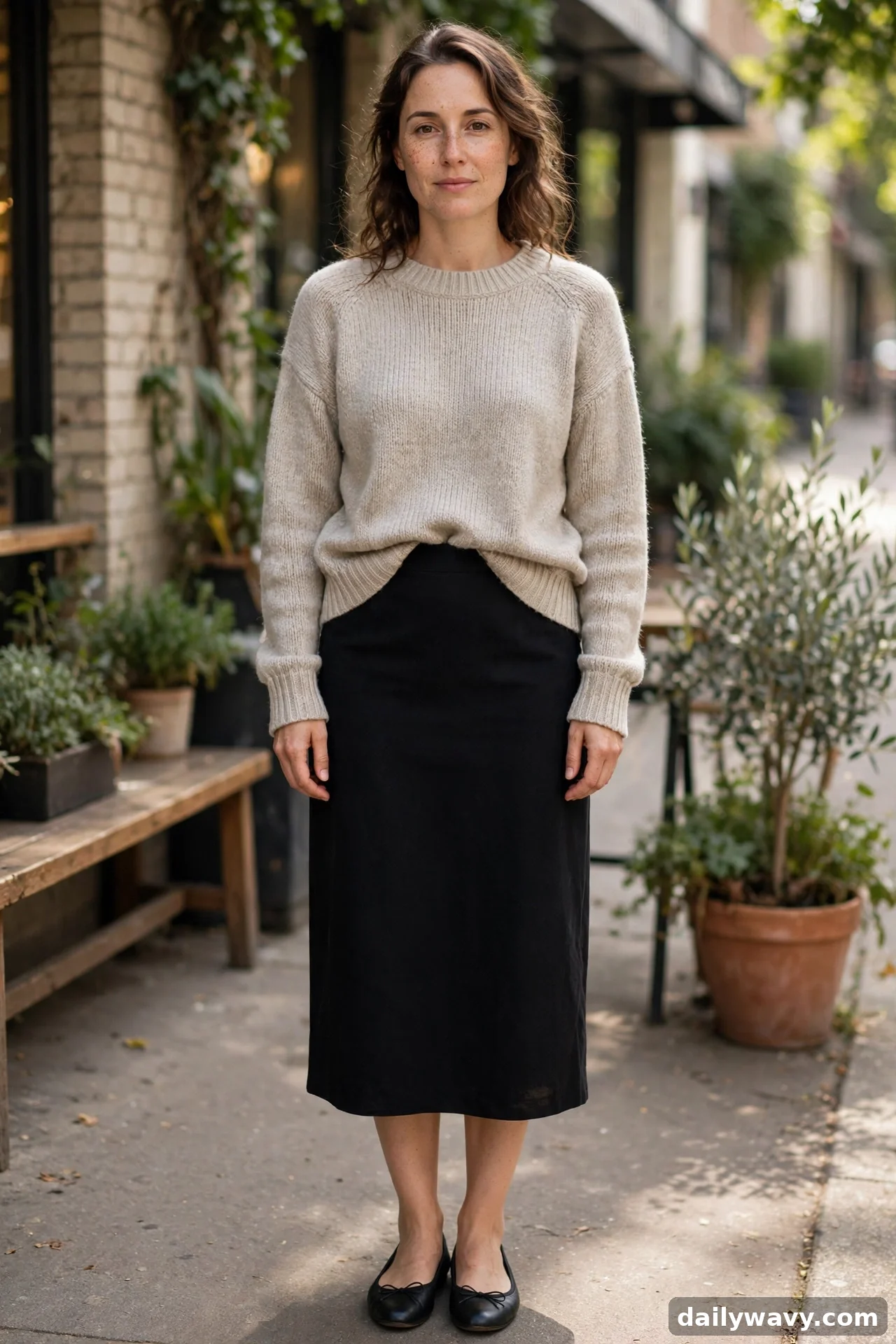
Minimal and calm. A simple crew-neck or scoop-neck knit with a straight midi skirt is the quietest outfit here, and sometimes that is exactly right. No pattern, no fuss, just clean lines.
Dress code: Business casual. The simplicity reads as confident rather than plain when the fit is good.
Fit and proportion: With no pattern to distract, fit has to be exact. The knit should skim the body and the skirt should sit at the natural waist with a straight, even hem at mid-calf. A half-tuck or full tuck both work; choose based on the knit’s thickness.
Fabric and weather: A mid-weight knit in cotton or a cotton blend holds its shape through the day. The straight skirt in a suiting fabric keeps the office-appropriate structure.
Practical substitution: Add a long pendant necklace or a silk scarf when the outfit needs a focal point for video calls.
12. Longline jacket with tailored separates
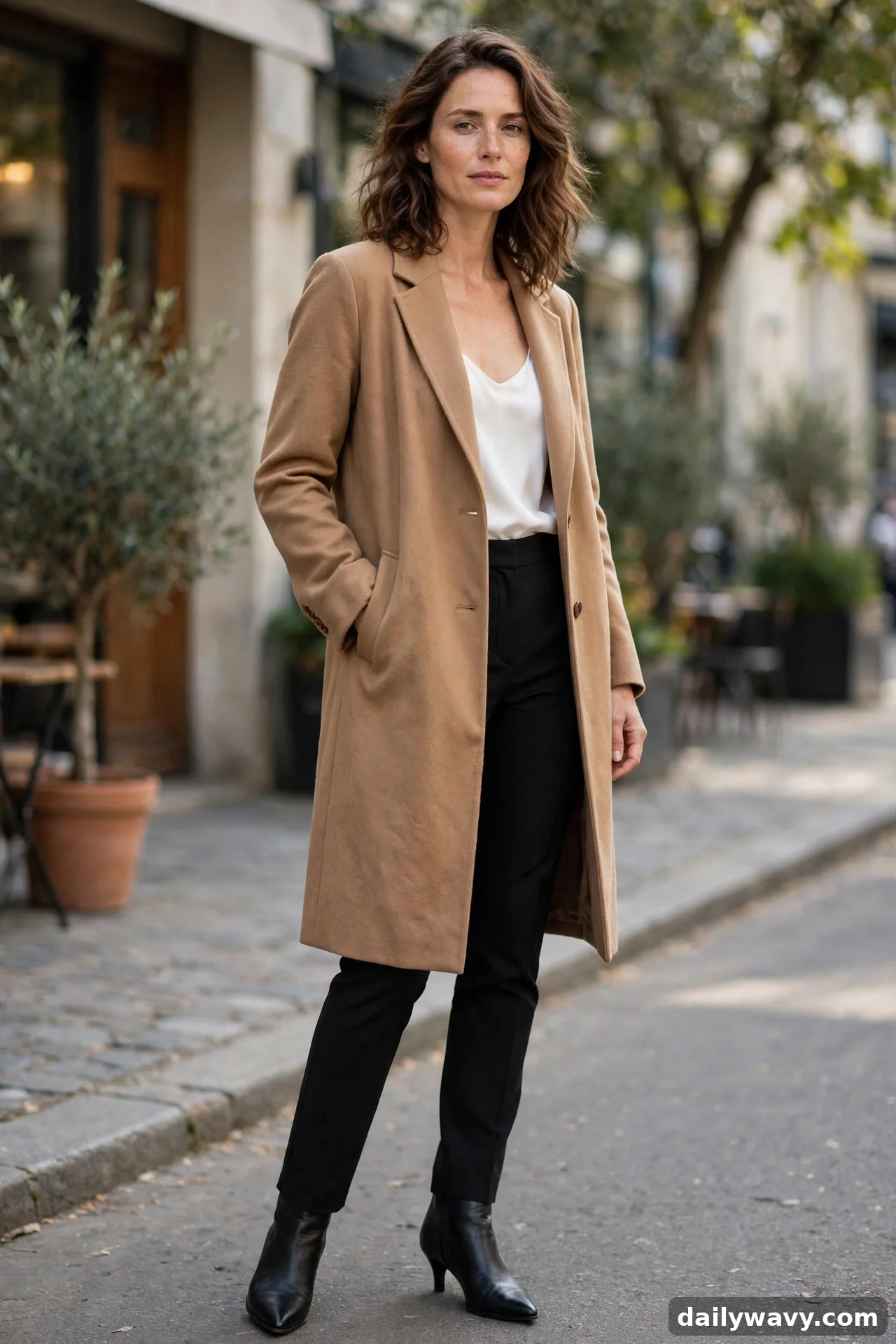
A longline jacket over tailored separates creates one long, uninterrupted line. It is an easy way to look pulled together, and the extra length adds coverage that works well over slim trousers or a pencil-style skirt.
Dress code: Business casual to business formal, depending on what is underneath.
Fit and proportion: The jacket should hit mid-thigh or at the knee; longer than that starts to overwhelm unless you are tall. Keep what is underneath slim so the jacket is the single volume piece. Sleeves at the wrist bone look most polished.
Fabric and weather: An unconstructed longline jacket in a fluid suiting fabric moves well and does not feel heavy. In winter, a longer wool coat-style jacket does double duty as outerwear.
Practical substitution: Swap the tailored separates for dark straight-leg jeans only if your office explicitly allows denim; otherwise keep the trousers.
13. Silk-look blouse with a navy trouser
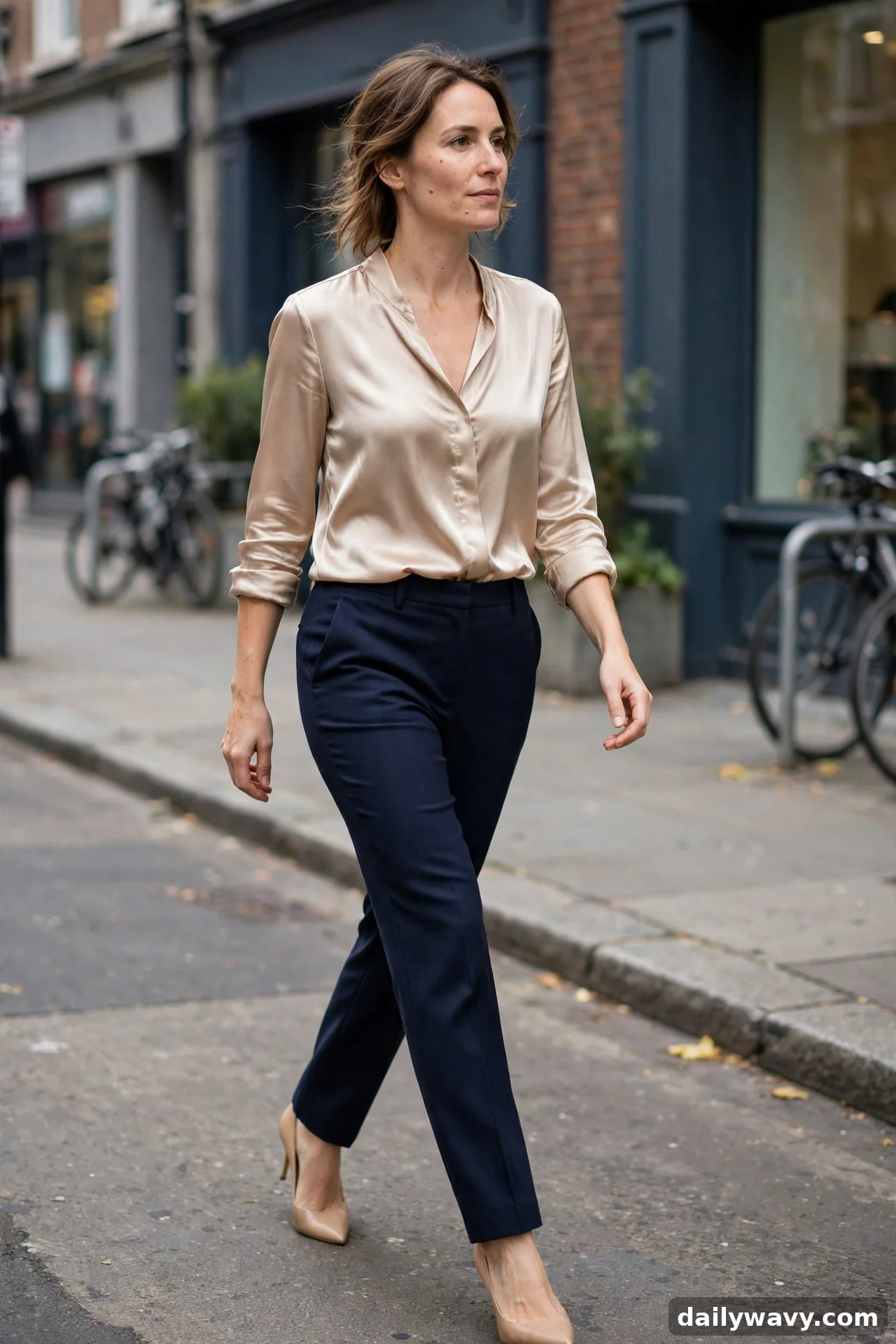
This is the outfit for days that run from desk to dinner. A silk-look blouse has a subtle sheen that catches light nicely, and navy trousers are softer than black while staying firmly professional.
Dress code: Business casual with an evening-ready edge. The sheen elevates it without breaking any dress code.
Fit and proportion: A silk-look fabric shows every pull, so the blouse needs a relaxed, easy fit. Navy trousers in a straight or tapered cut ground the softness. A front tuck keeps the waist defined.
Fabric and weather: Silk-look usually means a polyester satin; choose one with a matte back to avoid a cheap shine. Navy tropical-weight wool trousers work across seasons.
Practical substitution: Trade the navy trouser for charcoal when you want the most conservative version of this outfit.
14. Textured blazer over a plain dress
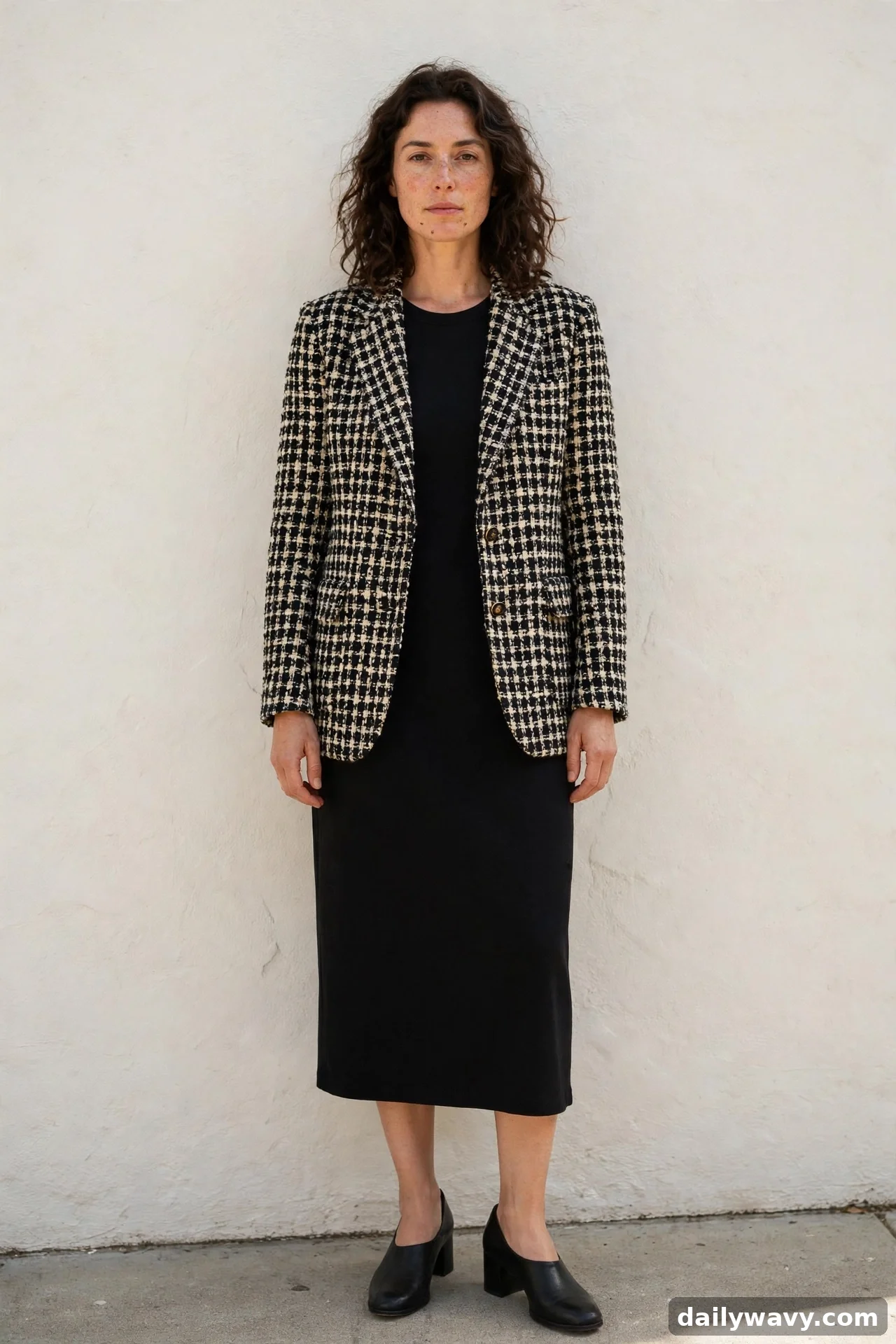
End with texture. A blazer in tweed, bouclé, or another tactile weave over a plain dress adds visual interest without pattern. It is a good choice for creative workplaces or for anyone bored of smooth suiting. For offices that welcome bolder choices, our Fashion & Beauty section has more ways to add personality to workwear.
Dress code: Business casual. Texture reads as personality, not informality, so it stays appropriate.
Fit and proportion: Let the blazer be the star: keep the dress plain, dark, and simple underneath. The blazer should fit like a blazer, not a jacket; shoulder seams at the shoulders, sleeves showing a little cuff if there is one.
Fabric and weather: Tweed and bouclé are naturally warm, so this is a fall and winter favorite. In warmer months, a textured linen-blend blazer gives the same effect.
Practical substitution: Swap the plain dress for a shell top and trousers to make the blazer work harder across your wardrobe.
Frequently asked questions
What is the difference between business casual and smart casual?
Business casual is the more formal of the two. It usually means collared shirts, blouses, tailored trousers or skirts, and closed-toe shoes. Smart casual relaxes the rules: dark jeans, clean sneakers, and untucked shirts can all fit. When in doubt, dress to the business casual side.
Can I wear jeans in a business casual office?
It depends on the office. Some business casual workplaces allow dark, undistressed jeans; many do not. If the policy is unclear, stick with tailored trousers until you see what colleagues actually wear.
What shoes work best for business casual?
Loafers, ballet flats, low block heels, and clean ankle boots cover most situations. Avoid athletic sneakers, flip-flops, and anything visibly worn out. Comfort matters for long days, so choose cushioned insoles over higher heels.
How do I dress business casual in hot weather?
Choose breathable fabrics like cotton, linen blends, and tropical-weight wool. Short sleeves are fine in most business casual offices; sleeveless tops usually need a layer over them. Keep hemlines and necklines modest regardless of temperature.
What should I avoid in business casual?
T-shirts with graphics, shorts, athletic wear, sheer fabrics without a layer, and anything ripped or frayed. Fit matters as much as the garment: clothes that are too tight or too baggy undermine an otherwise fine outfit.
How do I make business casual work for video calls?
Focus on the top half: a structured shoulder, a collar, or an interesting neckline reads well on camera. Solid colors and subtle textures look better on video than busy patterns. Good lighting helps more than any garment. For more fit guidance across sizes, see our Fashion & Beauty section.
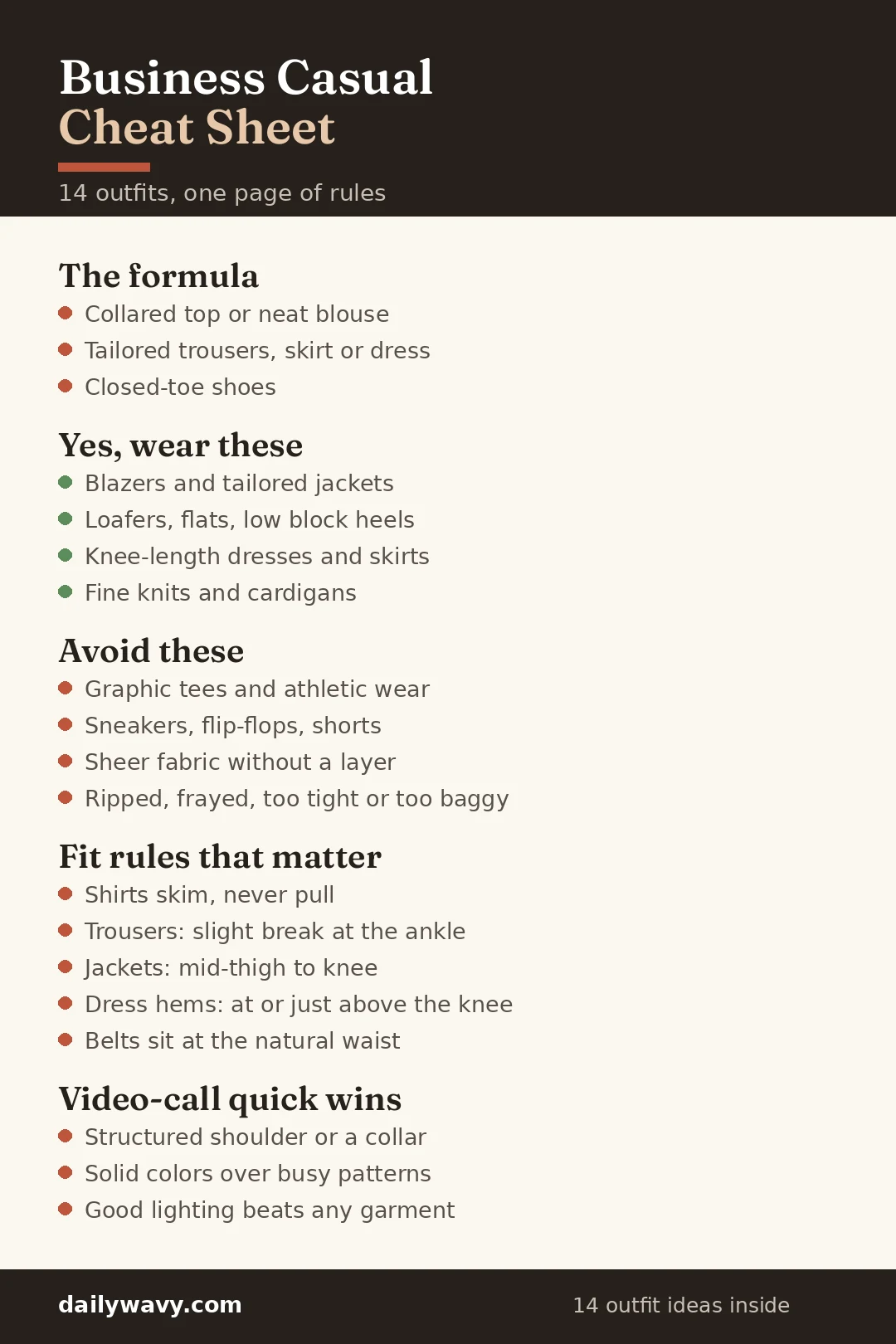
The cheat sheet: the business casual formula, what to wear, what to avoid, fit rules and video-call tips.
One Comment