
13 Small Entryway Decor Ideas for a Welcoming First Impression
Your entryway sets the tone for your whole home. It is the first thing you see when you walk in…
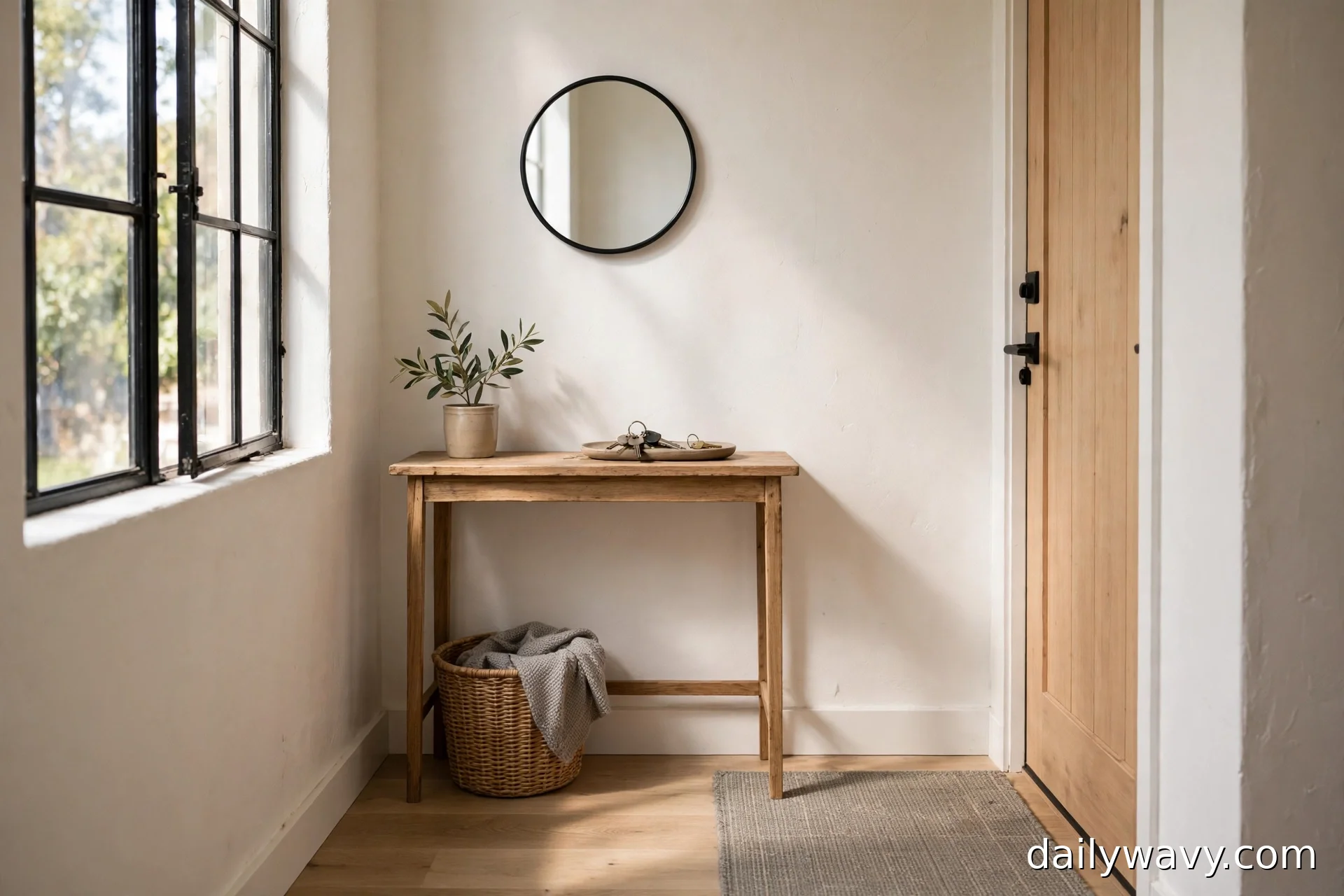
Your entryway sets the tone for your whole home. It is the first thing you see when you walk in and the last thing guests notice on their way out. When the space is small, every inch has to work harder, and that is good news. A compact entryway forces you to choose pieces that earn their place.
Before you buy or move anything, grab a tape measure. Note how far your door swings open, then mark a clear walking lane of at least 30 inches from the door into the house. Every idea below fits those two measurements, and each one ends with a realistic lower-cost alternative.
Jump to an idea:
- A Narrow Tray For Keys
- A Basket Tucked Beneath A Bench
- A Mirror Over A Shallow Surface
- A Durable Mat At The Door
- A Compact Closed Shoe Cabinet
- A Single Wall Hook For A Daily Bag
- A Small Lamp On A Safe Surface
- A Slim Upright Umbrella Holder
- A Lidded Box For Small Essentials
- A Framed Print Beside The Door
- A Washable Seat Cushion
- A Narrow Shelf Above A Clear Walkway
- A Vertical Storage Arrangement
1. A Narrow Tray For Keys
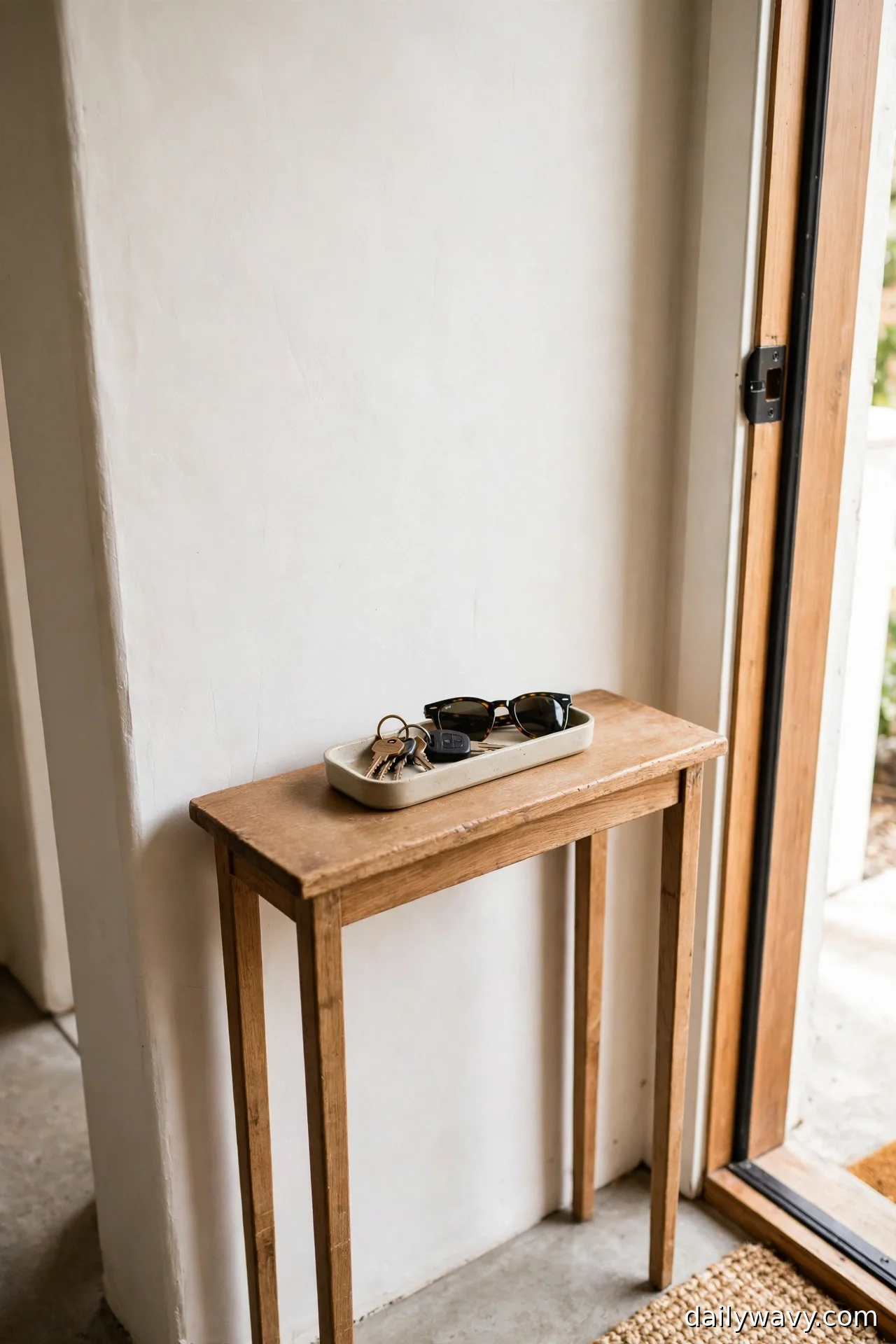
Keys, sunglasses, and the mail you meant to open yesterday all need one home. A narrow tray on the nearest surface gives them that home without eating into your walkway.
What to measure: the depth of the surface the tray will sit on. Most entryway consoles are 10 to 12 inches deep, so a tray 4 to 6 inches deep and 10 to 14 inches wide leaves usable space behind it.
Materials: ceramic, wood, or powder-coated metal all work. A low rim of about 1 inch keeps things contained while staying easy to grab.
Placement: within arm’s reach of the door handle, on the side the door does not swing toward. Keep it completely off the walking lane.
Effort: about 10 minutes, including wiping the surface first.
Budget alternative: a sturdy saucer, a small baking dish, or any shallow bowl you already own. The habit matters far more than the vessel.
2. A Basket Tucked Beneath A Bench
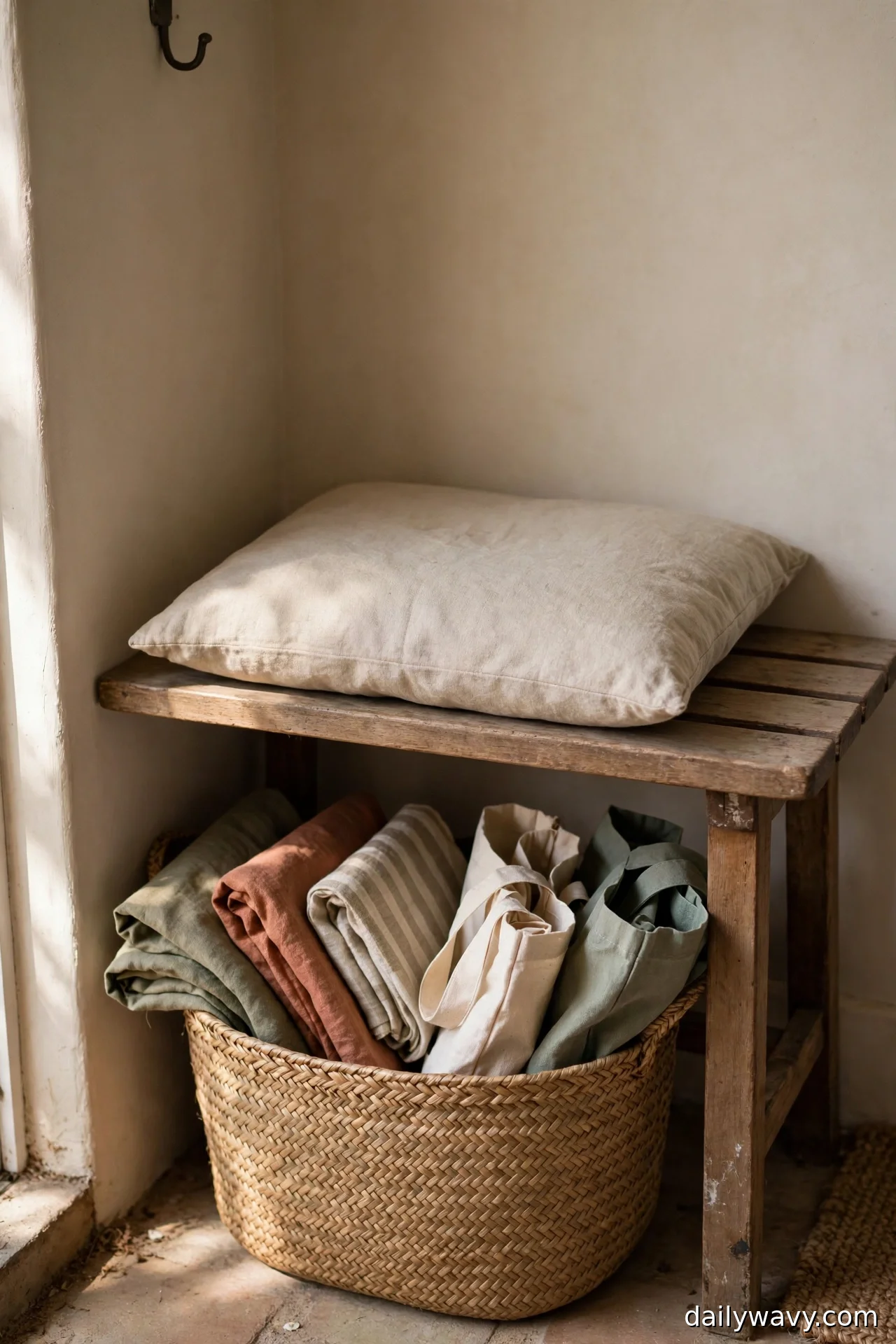
A bench gives you somewhere to sit while you tie your shoes, and the space under it is free storage if you claim it. A basket slides in and out without a sound and hides scarves, hats, and reusable shopping bags.
What to measure: the clear height under the bench seat and the depth from front to back. Leave at least 1 inch of clearance above the basket so it slides freely.
Materials: seagrass, woven cotton rope, or canvas on a wire frame. Avoid anything with a lid here, since you want one-motion access.
Placement: pushed fully under the bench so no handle or rim sticks into the walkway. If the bench sits against a wall, the basket should sit flush too.
Effort: none beyond buying the basket and dropping things in.
Budget alternative: a sturdy paper grocery bag folded down to half height, or a cardboard box wrapped in fabric. Replace it when it softens.
3. A Mirror Over A Shallow Surface
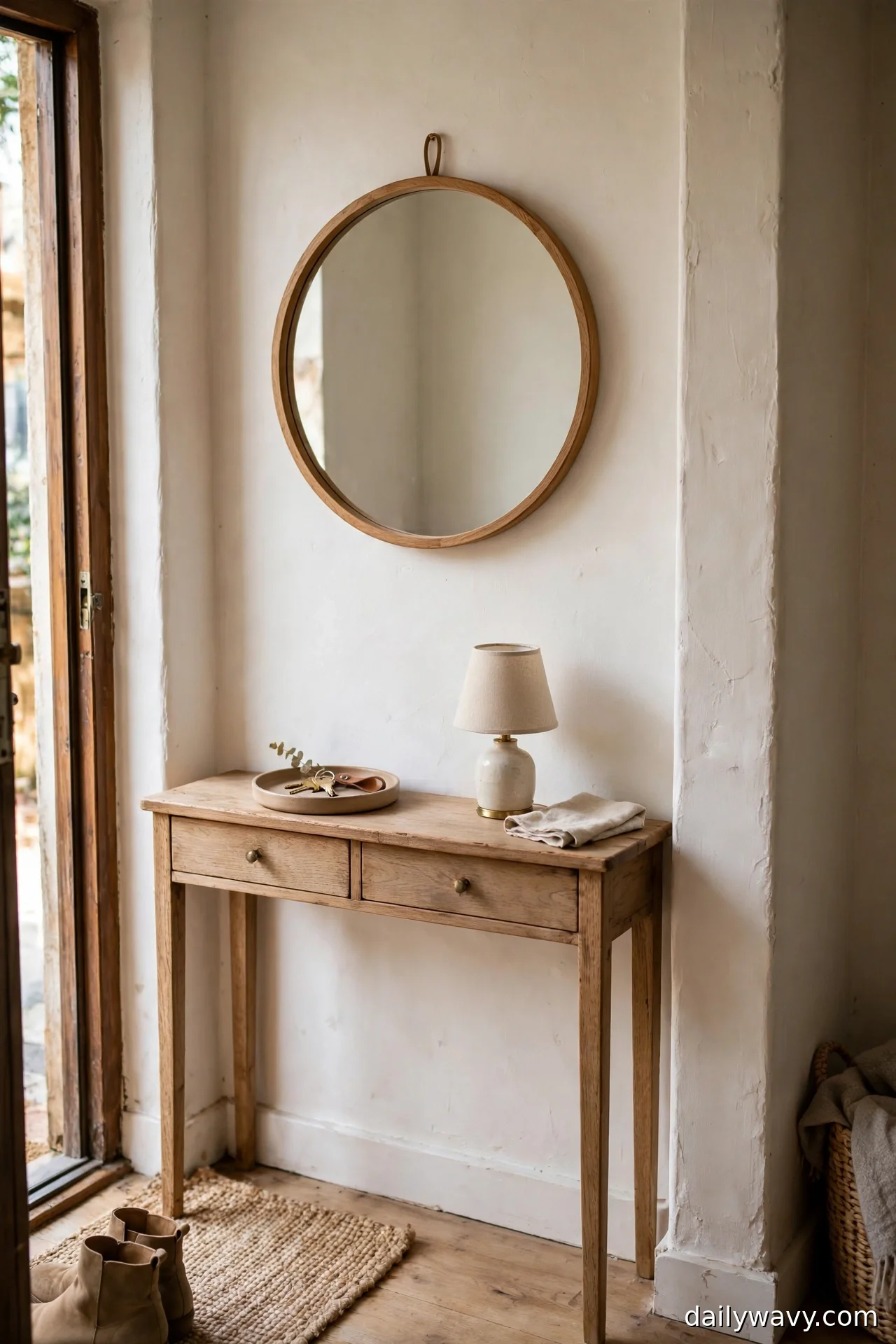
A mirror is the oldest small-space trick there is, and it works because it does two jobs at once. It bounces light deeper into the entryway and gives you a last check before you head out.
What to measure: the width of the surface below it. The mirror should be no wider than the furniture underneath, and its center should sit roughly 60 inches from the floor.
Materials: a simple wood or metal frame in a finish that echoes something else in the room. Round mirrors soften a boxy entryway; rectangular ones suit a narrow wall.
Placement: centered over the console or shelf, with its bottom edge at least 6 inches above the surface so the tray and lamp below still read clearly.
Effort: 20 to 30 minutes with a proper wall anchor. Plaster and drywall need different fixings, so check what you are drilling into first.
Budget alternative: a frameless round mirror from a discount store, hung with a single adhesive hook rated for its weight. It will not look expensive, and nobody will know.
4. A Durable Mat At The Door
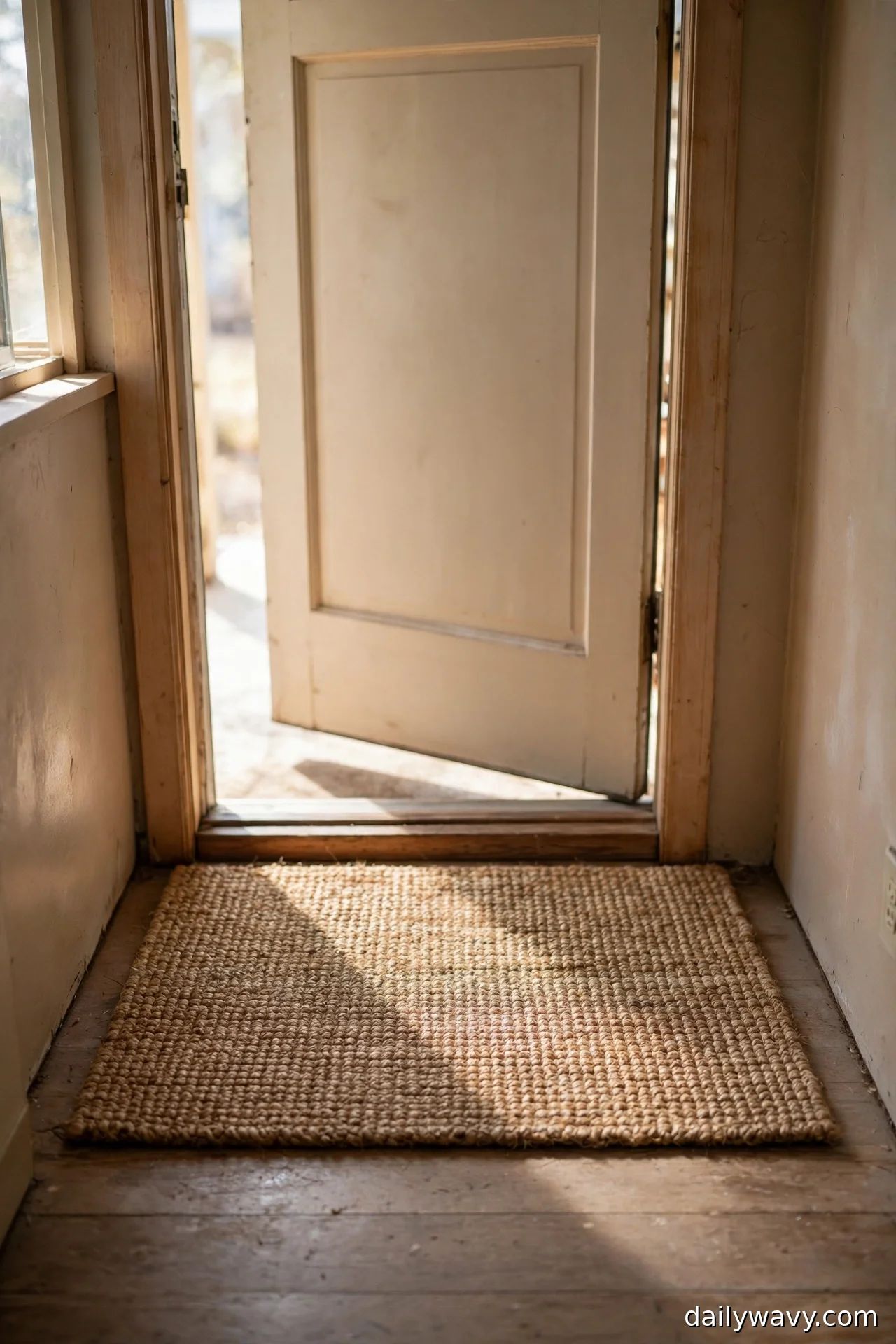
The mat is the hardest-working piece in the whole entryway. It catches grit before it travels through the house, and it marks the boundary between outside and inside.
What to measure: the width of your door plus a few inches on each side. A mat that is at least 80 percent of the door width looks intentional; anything narrower looks like an afterthought.
Materials: coir for scraping shoes outside the door, low-pile woven cotton or washable rubber-backed rugs inside. Skip thick shag, which fights the door swing.
Placement: flat against the threshold with no curled edges. If the door swings inward over the mat, choose one no thicker than half an inch.
Effort: five minutes to unroll and flatten. Weigh down curled corners with books overnight.
Budget alternative: shake out and keep using the mat you have, and add a cheap washable runner behind it for the muddy season.
5. A Compact Closed Shoe Cabinet
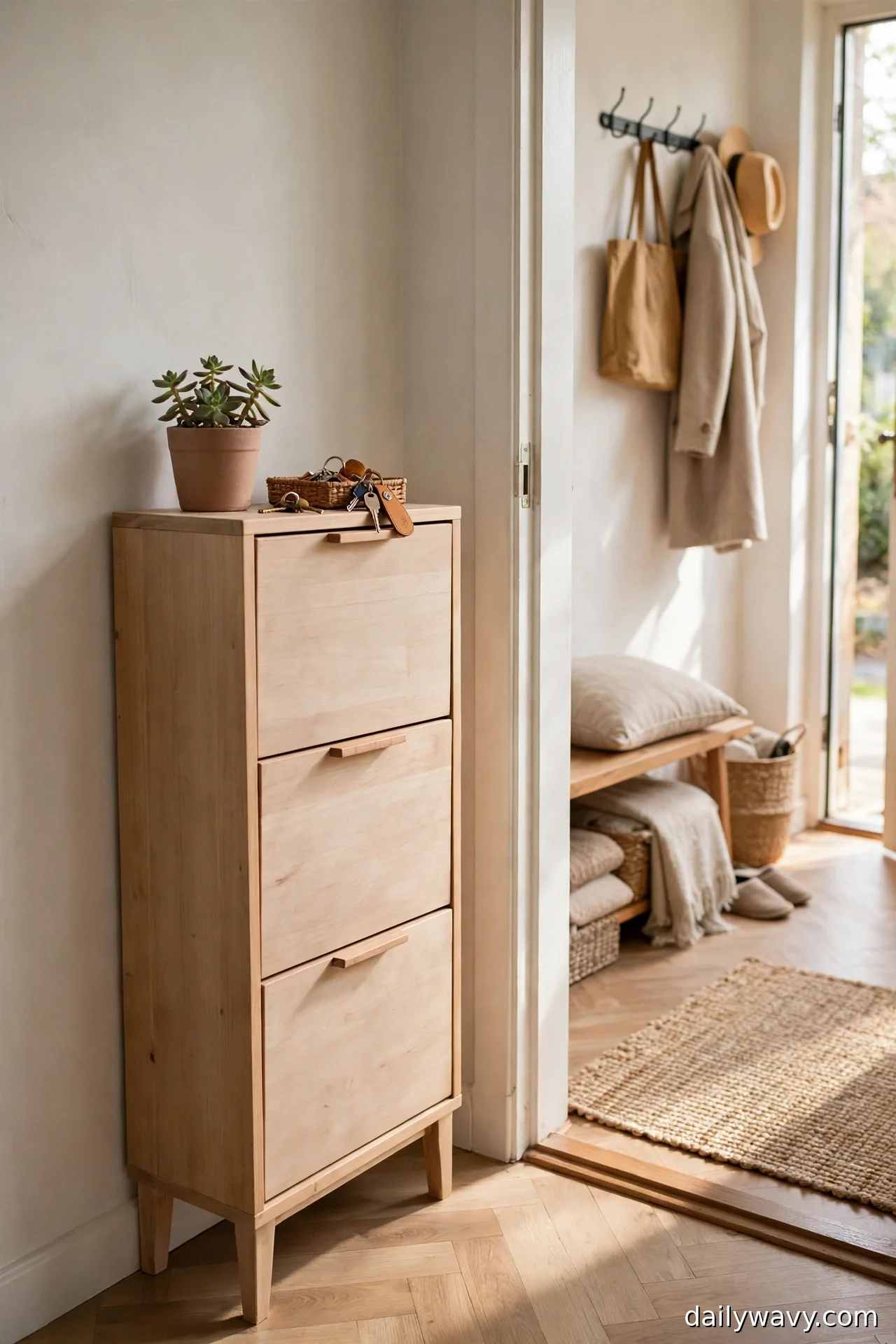
Open shoe racks look fine on day one and chaotic by day ten. A slim cabinet with tilt-out or lidded compartments keeps every pair out of sight and off the floor, which matters most when there is no coat closet to absorb the overflow.
What to measure: the wall run you can spare. Many tilt-out cabinets are only 6 to 8 inches deep, so they fit where a bookcase never could. Check the door swing so the cabinet never blocks it.
Materials: engineered wood with a wipeable finish, or solid pine if you want to paint it. Ventilation slots or a small gap at the back stop odors from building up.
Placement: against the longest clear wall, at least 30 inches from the door’s swing path. Anchor tall units to the wall.
Effort: one to two hours for flat-pack assembly, plus anchoring.
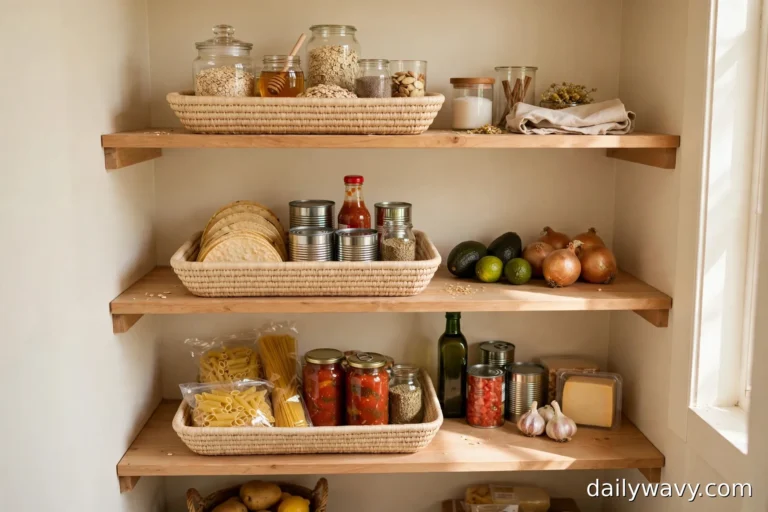
Budget alternative: a lidded storage bench or two stackable crates with a cushion on top. If your entryway truly has no closet at all, our small pantry organization ideas use the same make-every-inch-count thinking for another storage-starved zone.
6. A Single Wall Hook For A Daily Bag
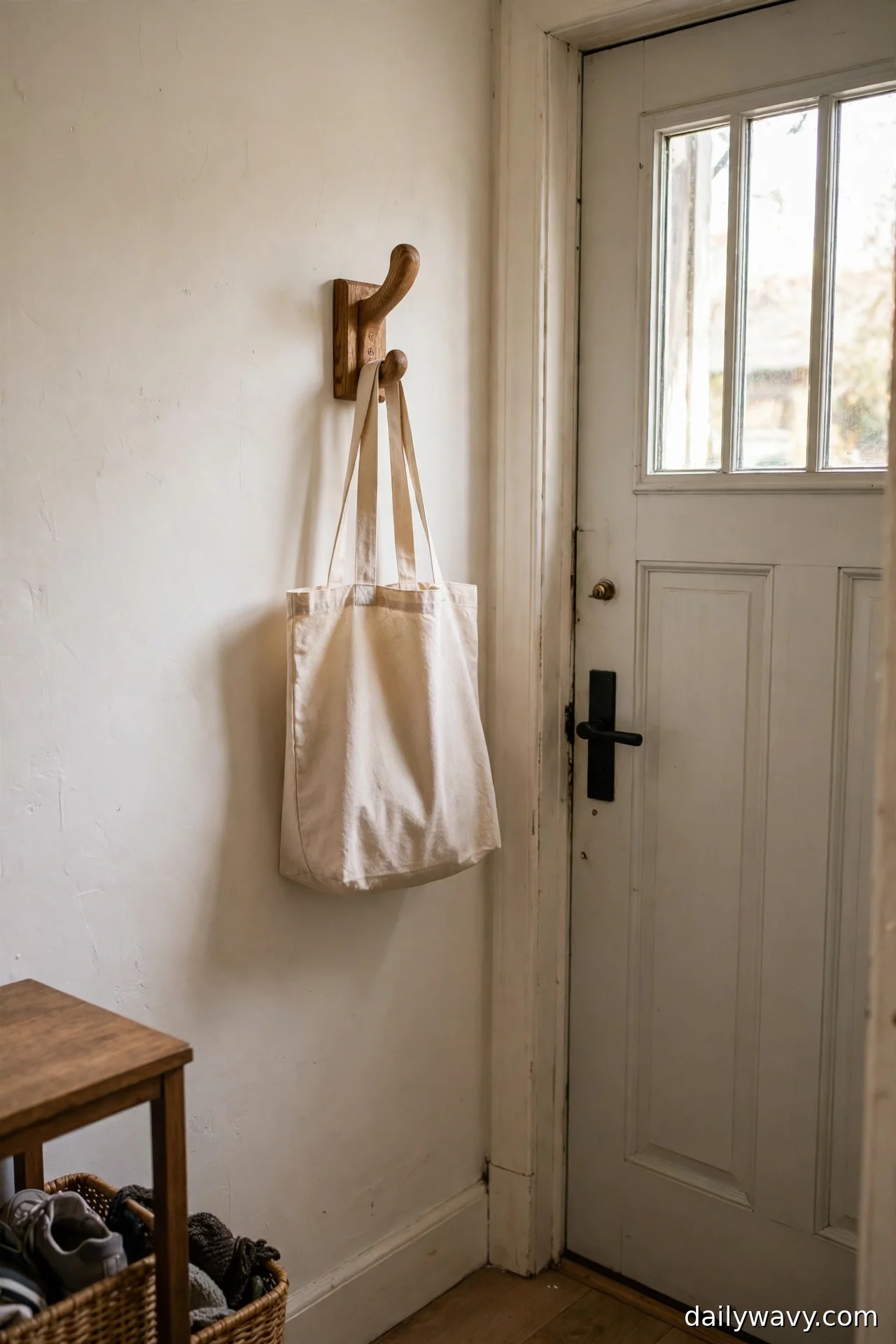
One strong hook beats a row of flimsy ones in a small space. Your everyday bag hangs at grab height, the wall stays mostly clear, and you never have to dig through a closet for the thing you carry daily.
What to measure: your comfortable reach. For most adults, 60 to 65 inches from the floor puts the bag strap right at hand level.
Materials: a solid wood or metal hook rated for at least 15 pounds. A leather loop or a single forged hook both look intentional.
Placement: on a stud or with a proper drywall anchor, beside the door rather than behind it. Give the hanging bag 6 inches of clearance from any shelf below.
Effort: 15 minutes with a drill. Mark the spot with painter’s tape and step back to check the height before you commit.
Budget alternative: an adhesive hook rated for the bag’s weight. Test it for a week before trusting it with anything valuable.
7. A Small Lamp On A Safe Surface
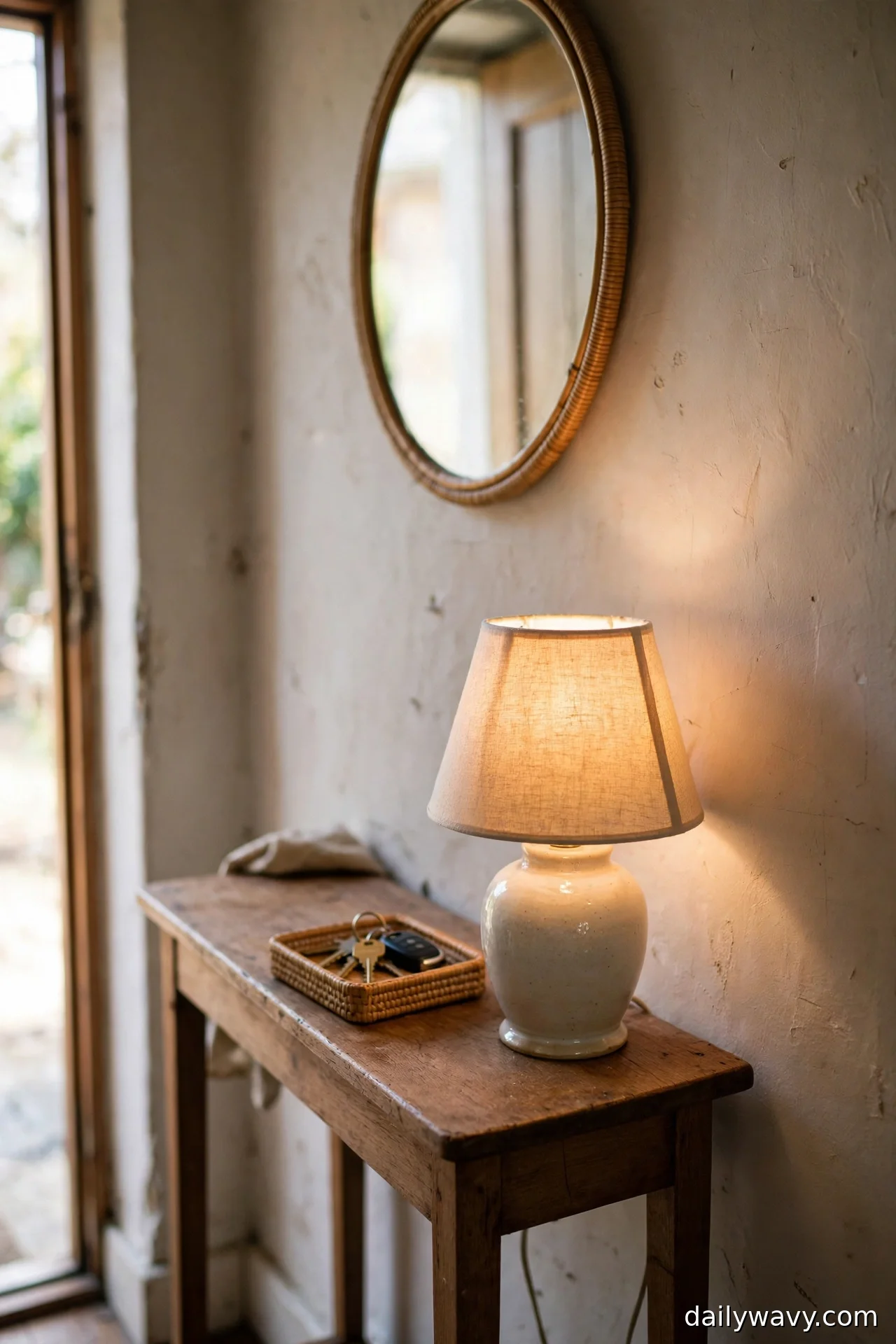
Entryways rarely get good light. A small lamp on the console or shelf warms the whole space and makes the mirror work twice as hard, since it now has something to reflect after dark.
What to measure: the surface area left after the tray and any decor. A lamp with a base 5 to 7 inches wide fits most consoles without crowding.
Materials: a ceramic or metal base with a fabric shade. LED bulbs stay cool, which matters on a narrow surface near the wall.
Placement: toward the back corner of the surface, cord routed behind the furniture to the nearest outlet. Keep the shade clear of the mirror frame and anything hanging above.
Effort: five minutes to place and plug in. Add a timer plug if you want it on when you get home.
Budget alternative: a battery-operated puck light or a small LED candle cluster on the shelf. No wiring, no outlet hunt.
8. A Slim Upright Umbrella Holder
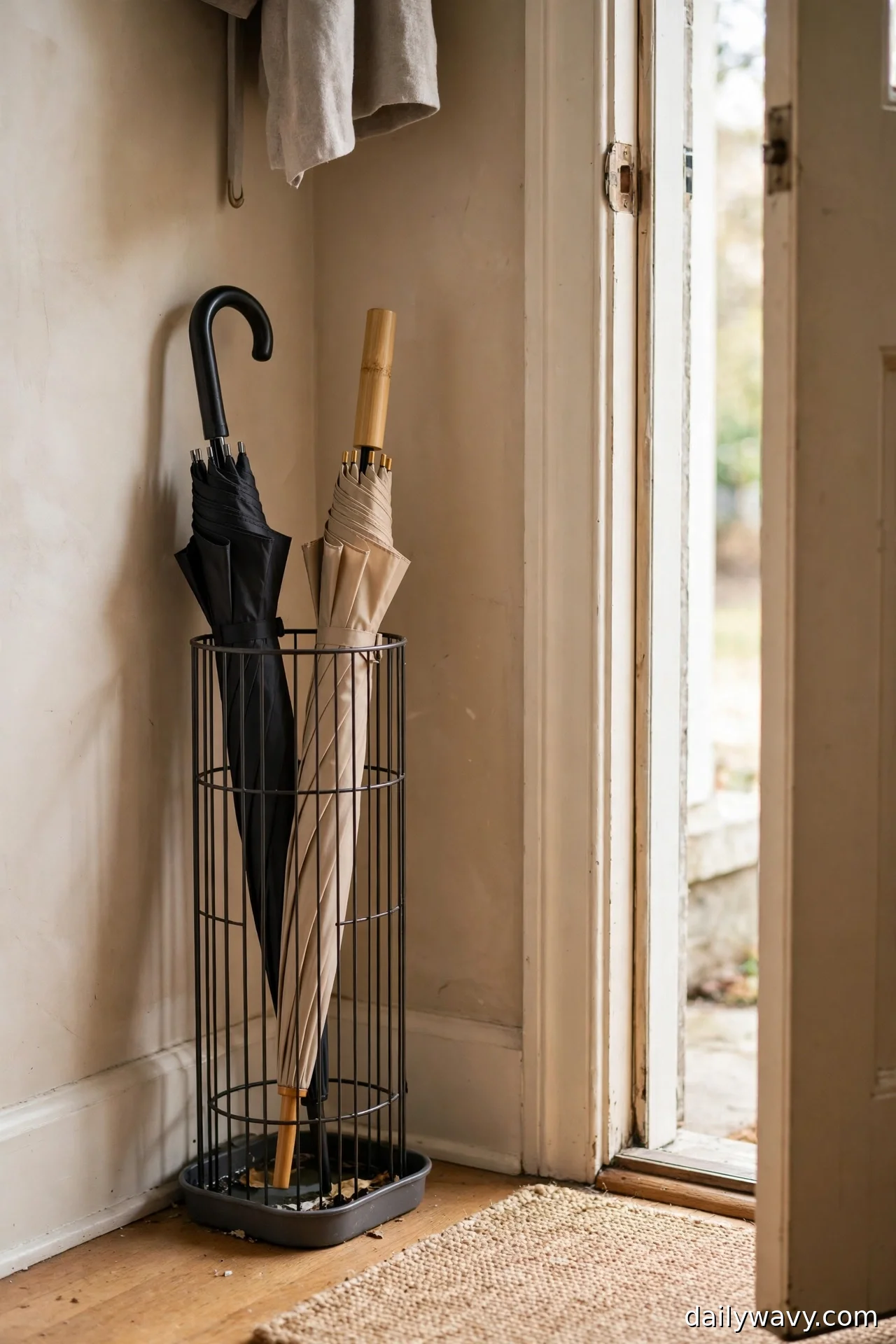
Wet umbrellas on the floor are how entryways get ruined. A slim holder parks them upright in a footprint barely bigger than a dinner plate, and a drip tray underneath protects the flooring.
What to measure: the corner or wall gap where it will live. Most slim holders are 8 to 10 inches in diameter, which tucks beside a cabinet or behind the door swing.
Materials: metal, ceramic, or weighted plastic with a removable drip tray. Weight matters, since a tall holder tips easily when loaded.
Placement: just inside the door but outside the swing arc, where you can grab an umbrella on the way out without backtracking.
Effort: none. Set it down and use it.
Budget alternative: a tall, heavy vase or a deep bucket you already own, with a folded towel at the bottom to catch drips.
9. A Lidded Box For Small Essentials
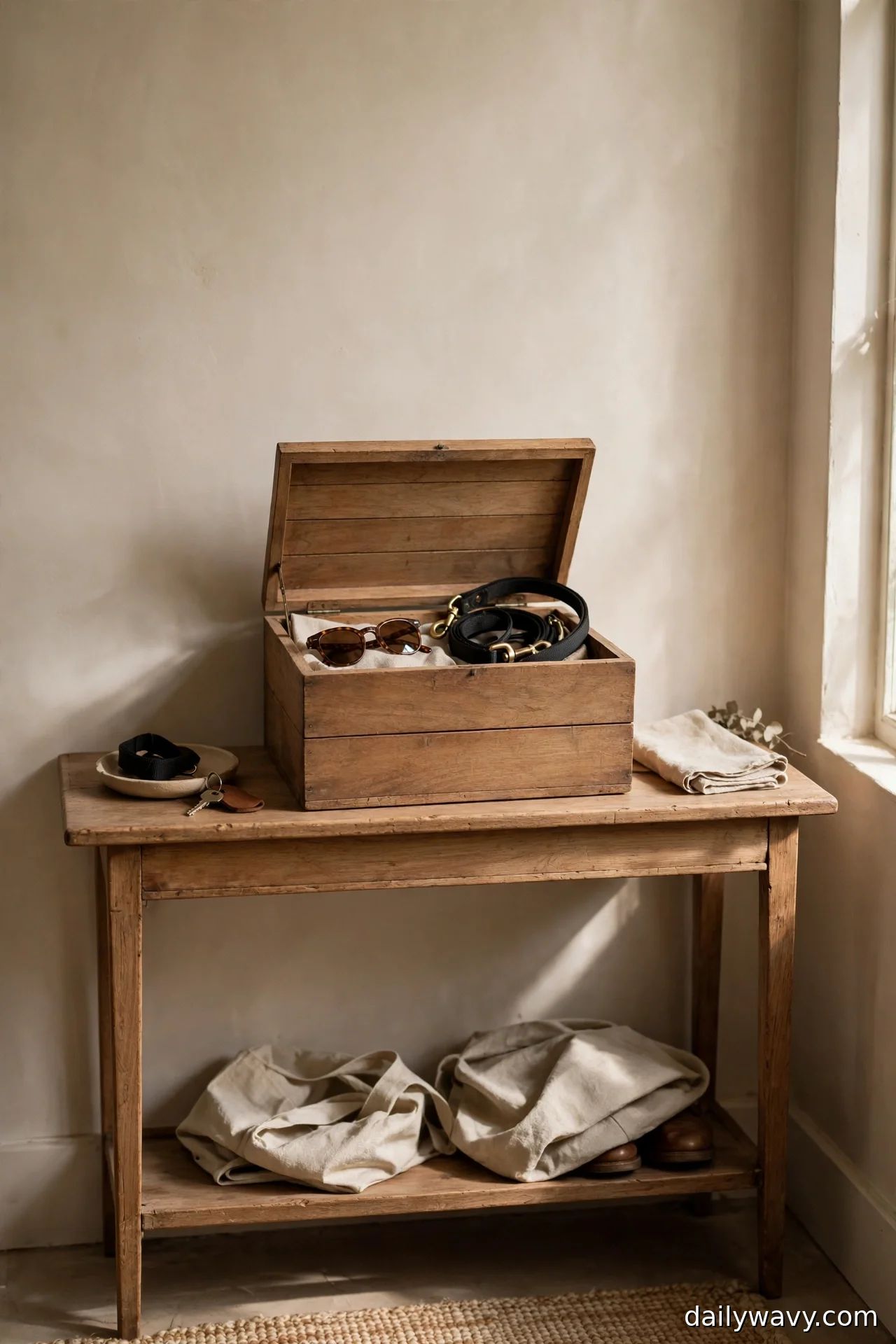
Sunscreen, spare batteries, the dog’s leash, the stamp book. Every household has a dozen small essentials that live nowhere, so they live everywhere. One lidded box ends that.
What to measure: the shelf or console space you can dedicate. A box 8 to 12 inches wide and 4 to 6 inches tall holds a surprising amount without dominating.
Materials: wood, lidded wicker, or a fabric-covered box with structure. A lid is non-negotiable here, since it is what keeps the visual noise down.
Placement: on the console, shelf, or inside the shoe cabinet’s top compartment. Label it only if other people need to find things in it.
Effort: 20 minutes to gather the scattered items and sort them in.
Budget alternative: a shoebox wrapped in wrapping paper or fabric, with the lid kept on. It works exactly as well as the expensive version.
10. A Framed Print Beside The Door
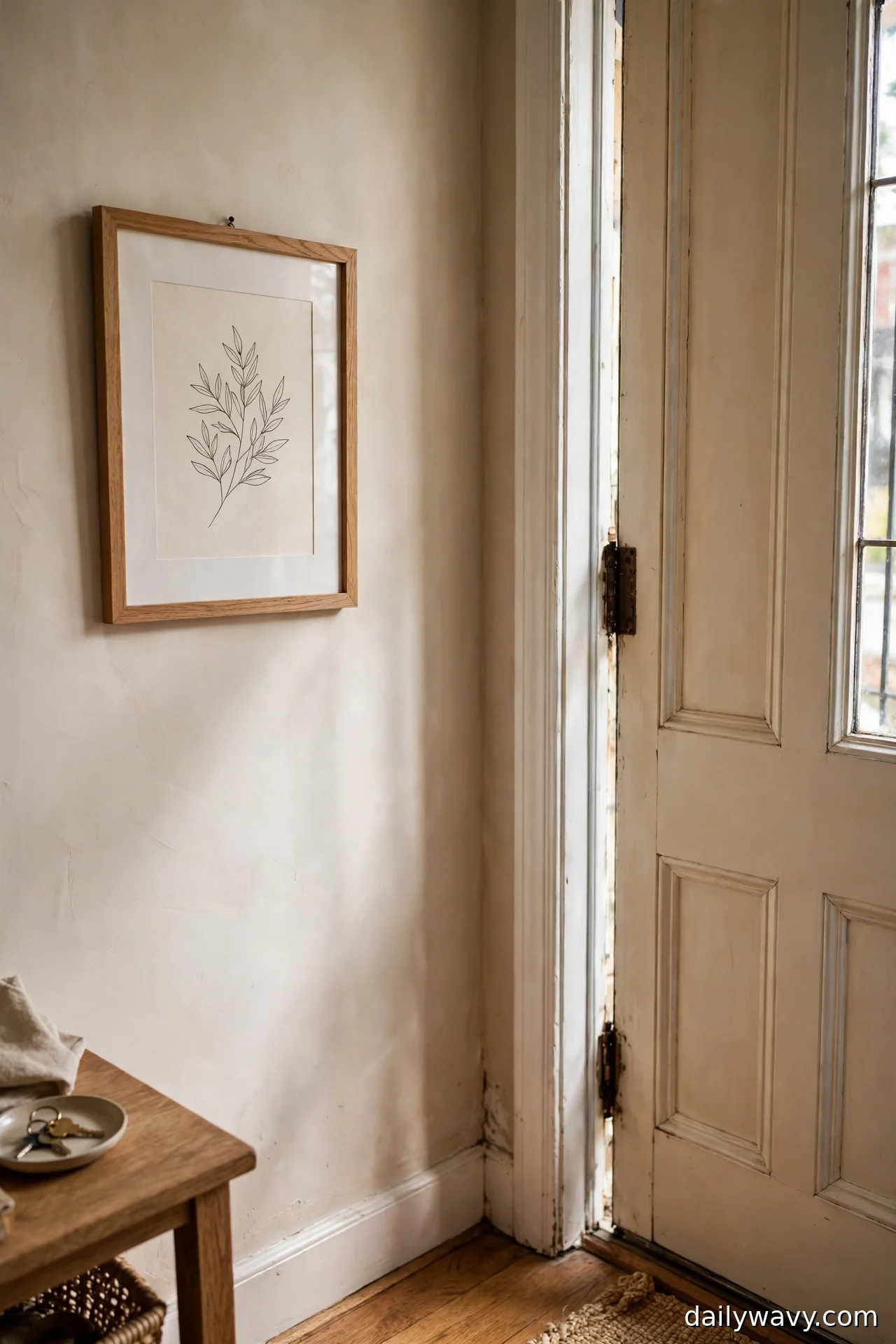
Function covers the basics, but one piece of art is what makes the entryway feel decorated rather than merely organized. A single framed print beside the door adds personality without taking a single inch of floor space.
What to measure: the wall space beside the door frame. Keep the frame at least 4 inches clear of the trim so the door casing reads cleanly.
Materials: any print you actually like, in a frame with glass or acrylic to protect it from door-slam vibrations. A mat board makes even a cheap print look finished.
Placement: center it at eye level, about 57 to 60 inches from the floor to the middle of the frame. If the wall is very narrow, a tall vertical frame suits it best.
Effort: 15 minutes to hang with a proper hook.
Budget alternative: frame a page from a calendar, a postcard, or your own photograph. The frame does most of the visual work.
11. A Washable Seat Cushion
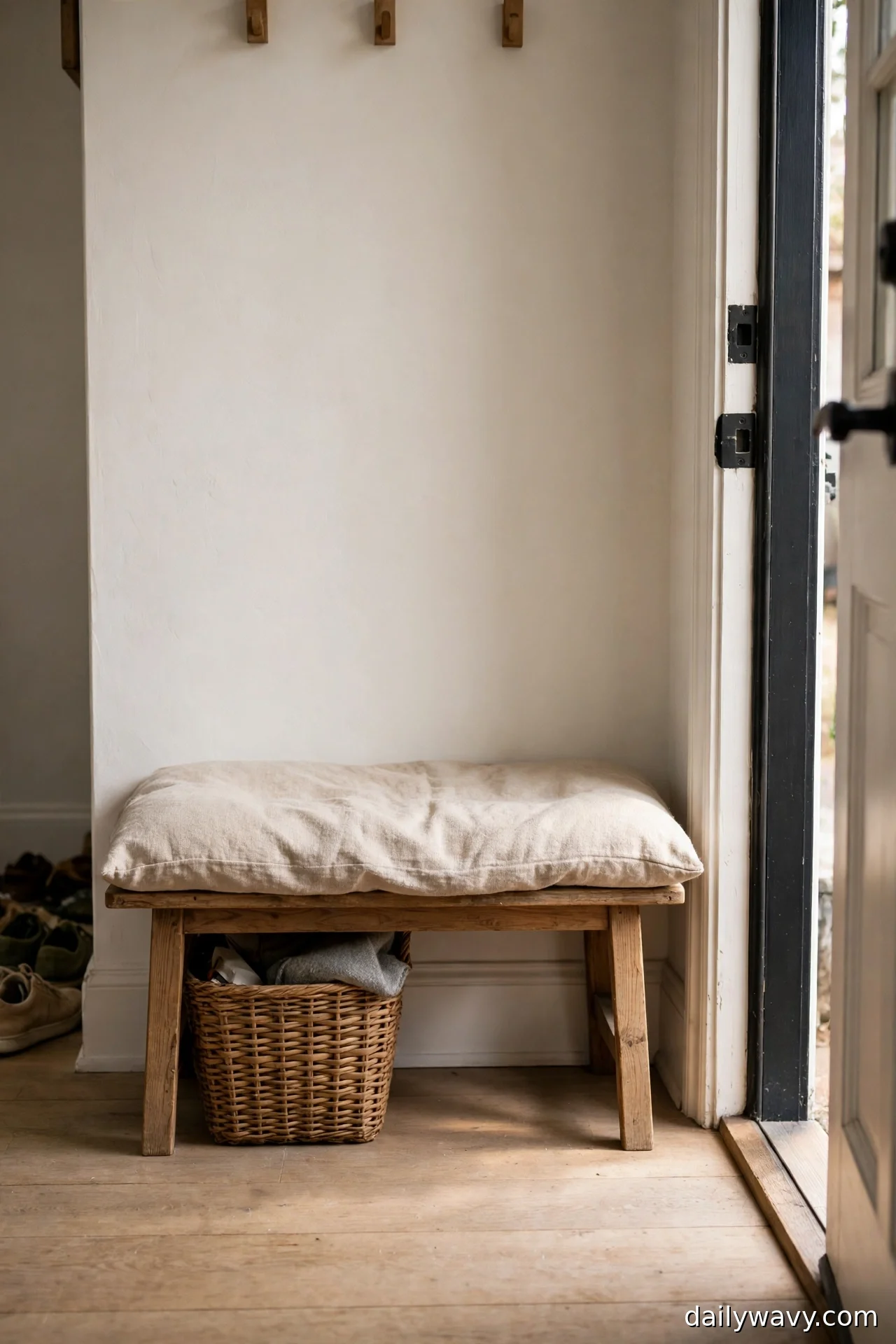
If you have a bench, a cushion turns it from storage furniture into somewhere you actually want to sit. Washable matters here more than anywhere, because entryway seating collects everything shoes bring in.
What to measure: the bench seat, then subtract half an inch all around so the cushion does not overhang and catch hips or bags.
Materials: outdoor-rated fabric or a removable cover you can machine wash. Medium-density foam about 2 to 3 inches thick is comfortable without looking puffy.
Placement: centered on the bench with ties or a non-slip pad underneath so it never slides when you sit.
Effort: none if bought ready-made; an afternoon if you sew a simple envelope cover.
Budget alternative: a folded bath mat or a flat outdoor chair pad. It will not look tailored, but it washes in minutes.
12. A Narrow Shelf Above A Clear Walkway
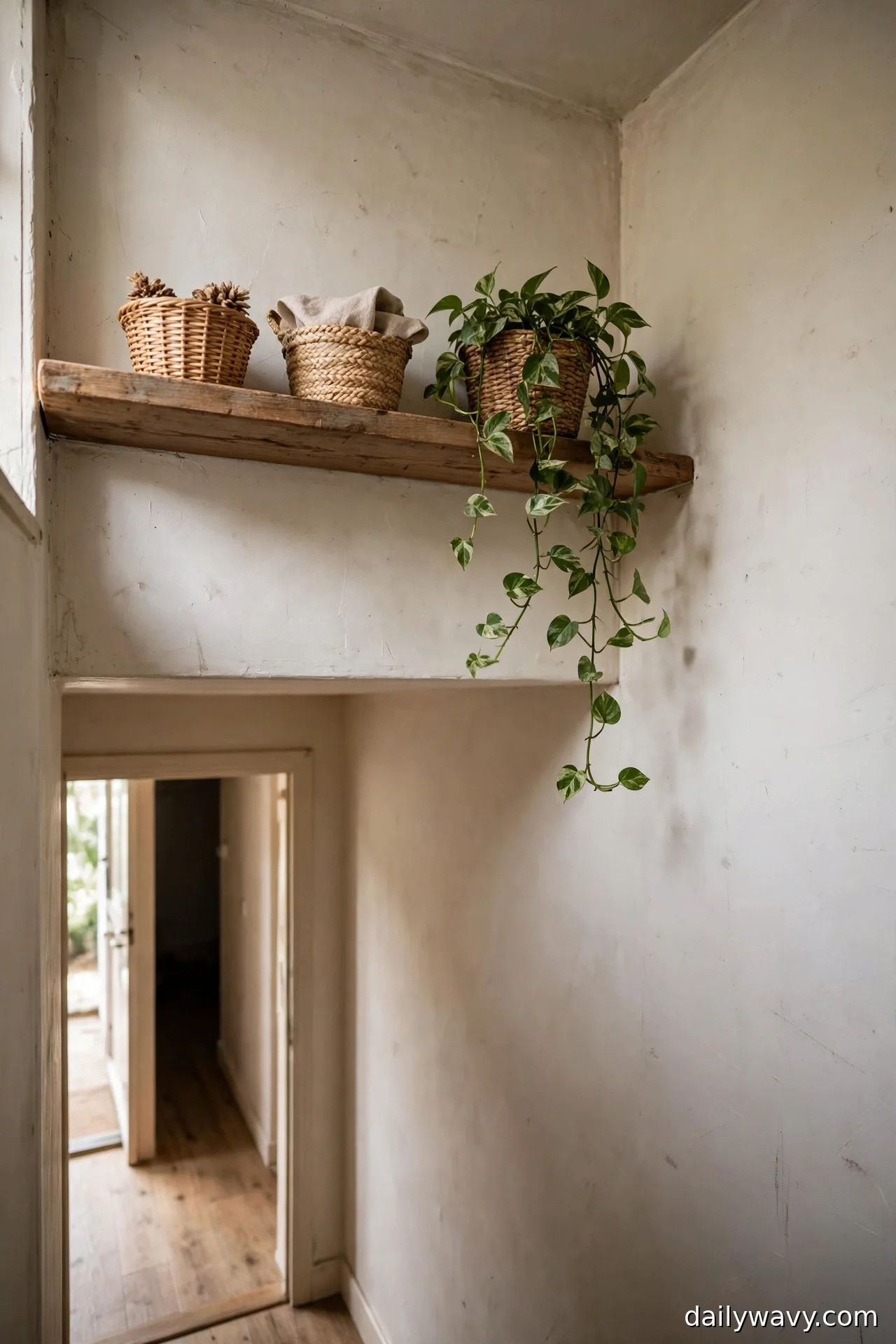
When the floor is full, go up. A single narrow shelf mounted above head height holds baskets, a plant, or the things you reach for weekly, and it never interferes with the walkway below.
What to measure: the wall above the walking lane. Mount the shelf at least 78 inches from the floor so tall guests clear it, and keep its depth to 6 to 8 inches so it never feels looming.
Materials: a solid wood board with two sturdy brackets, or a floating shelf rated for the load. Into studs wherever possible.
Placement: centered over the walkway or above the bench, never above the door swing. Keep the front edge clear of light fixtures.
Effort: 30 to 45 minutes including finding studs and leveling.
Budget alternative: a single board on two L-brackets from the hardware store, sanded and left natural. If your whole entry is a narrow passage, our Home & Decor section has more ideas built around exactly this kind of vertical thinking.
13. A Vertical Storage Arrangement
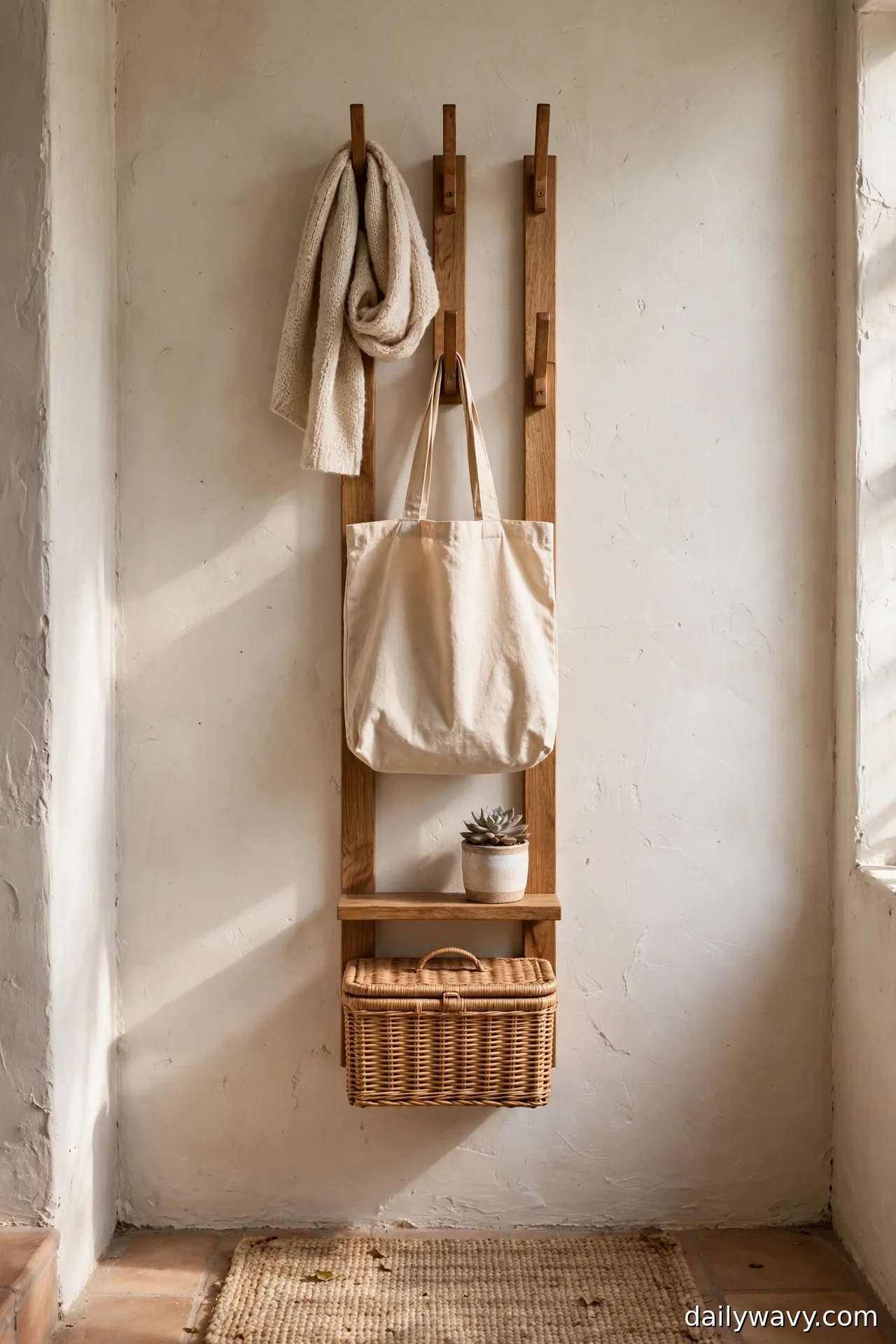
The final idea pulls several small pieces into one deliberate vertical stack: hooks above, a shelf in the middle, a basket or cabinet below. It reads as one designed unit and uses wall space that otherwise goes to waste.
What to measure: the full wall from floor to about 72 inches high, and the width you can claim without crowding the door or walkway. Sketch it on paper first.
Materials: one hook rail or three individual hooks, one 6-inch-deep shelf, and one lidded basket or slim cabinet for the base. Keep finishes in the same family so it reads as a set.
Placement: on the longest uninterrupted wall, arranged so the most-used items sit between knee and shoulder height.
Effort: one to two hours to hang everything level and anchored.
Budget alternative: build it in stages. Hooks this month, the shelf next month. A vertical arrangement grows well because each piece works alone too.
Frequently Asked Questions
How much walkway space should I keep clear in a small entryway?
Aim for at least 30 inches of clear walking lane from the door into the house. Measure it with the door fully open, since the swing is what usually eats the space people forget to account for.
What if my door swings right into the entryway?
Put nothing in the swing arc, not even a mat thicker than half an inch. Keep the landing zone on the hinge side of the door, where the open door shields it, and mount hooks and shelves on the walls the door never touches.
How do I stop a small entryway from looking cluttered?
Give every category of item one container and one place. Keys in the tray, bags on the hook, shoes in the cabinet. Clutter in a small space is almost always just homeless items, not too many items.
What is the best lighting for an entryway with no window?
A small warm lamp on the console plus the mirror above it does more than an overhead fixture in most cases. If there is no outlet nearby, a battery puck light on the shelf is a genuine fix, not a compromise.
How do I store shoes when there is no closet?
A slim tilt-out cabinet hides several pairs in 6 to 8 inches of depth. For a full no-closet setup with coats and bags included, pair the cabinet with wall hooks, and see our small-space organization ideas for more layouts that squeeze storage from tight spots.
Can I do all of this in a rental?
Almost all of it. Trays, baskets, mats, and umbrella holders need no permission at all. For hooks, shelves, and mirrors, use high-quality adhesive mounts rated for the weight, and keep the landlord-friendly pieces for anything you drill.
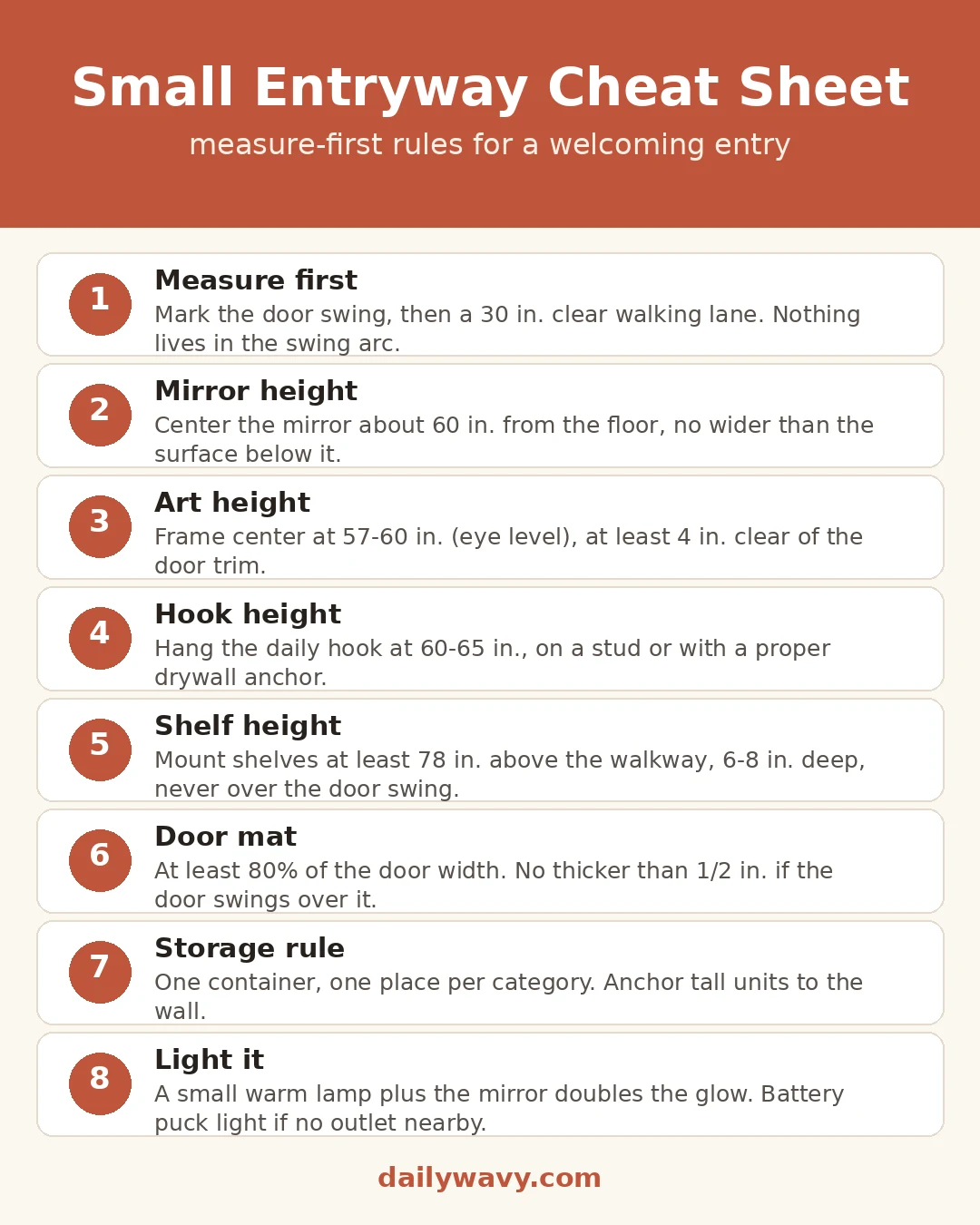
The cheat sheet: measure the door swing and a 30-inch walking lane first, hang mirrors and art at eye level, keep shelves high and mats slim, and give every item one container and one place.
Small entryways reward intention more than square footage. Pick the three or four ideas that solve your actual daily friction, measure twice, and let the rest of the space stay gloriously empty.
One Comment