18 Corporate Interview Outfits with Practical Dress-Code Notes
There is a special kind of morning that only exists before a big interview. You stand in front of the…
There is a special kind of morning that only exists before a big interview. You stand in front of the mirror with your resume printed, your bag packed and one question louder than all the rest: what on earth do you wear? The right outfit will not answer the hard questions for you, but it will quiet the nervous voice in your head so you can focus on the conversation. This guide gives you eighteen complete interview outfits, each built from real garments, real shoes and real fit notes, with honest dress-code guidance for different industries and seasons. Pick the look that fits your field, steam it the night before, and walk in like the job is already half yours.
In This Guide
- Shirt Dress with a Narrow Belt
- Simple Knit with a Straight Midi Skirt
- Longline Jacket with Tailored Separates
- Silk-Look Blouse with a Navy Trouser
- Textured Blazer over a Plain Dress
- Monochrome Top and Trousers
- Collared Knit with Straight Trousers
- Tailored Jacket with a Midi Skirt
- Plain Blouse with Cropped Trousers
- Fine Cardigan over a Sheath Dress
- Relaxed Blazer with a Crewneck Knit
- Cotton Shirt with Tailored Trousers and Loafers
- Fine Knit with an A-Line Midi Skirt
- Soft Blouse with Straight Trousers
- Matching Suit with a Simple Shell Top
- Cardigan with a Plain Midi Dress
- Knit Polo with Pleated Trousers
- Structured Blazer with a Modest Blouse
The Corporate Interview Dress-Code Rules Before You Start
Start with research, not your closet. Look at employee photos on the company website and LinkedIn, and notice what people wear on an ordinary Tuesday. When the dress code is still unclear, ask the recruiter directly: “What should I wear to the interview?” Recruiters hear this question every week, and a straight answer beats a guess every time.
As a rule of thumb, dress one notch above the office norm. If the team wears jeans, you wear tailored trousers. If the team wears tailored trousers, you wear the suit. Finance, law and consulting still lean formal, while tech and creative fields reward polish more than stiffness. Either way, the goal is the same: look like you already belong in the room.
Fabric honesty matters more than labels. Choose opaque fabrics with real structure, keep hemlines at or below the knee, and make sure nothing needs adjusting while you sit. Shoes should be closed toe, polished and comfortable enough that you walk naturally instead of calculating every step. Your bag should be structured enough to hold a resume folder without swallowing it, so leave the gym bag and the tiny evening clutch at home.
Finish is the quiet part that people notice. Steam or iron everything the night before, run a lint roller over dark fabrics, and keep fragrance light or skip it entirely because interview rooms are small. Jewelry stays minimal and quiet. And build a weather plan: offices run cold, sidewalks get wet, so a layer and an umbrella check are part of the outfit. If you are invited back for a second round, repeating the formula with a different top or shirt reads as prepared, not repetitive. Once the offer is signed, our business casual office outfits guide takes over for everyday workwear.
1. Shirt Dress with a Narrow Belt
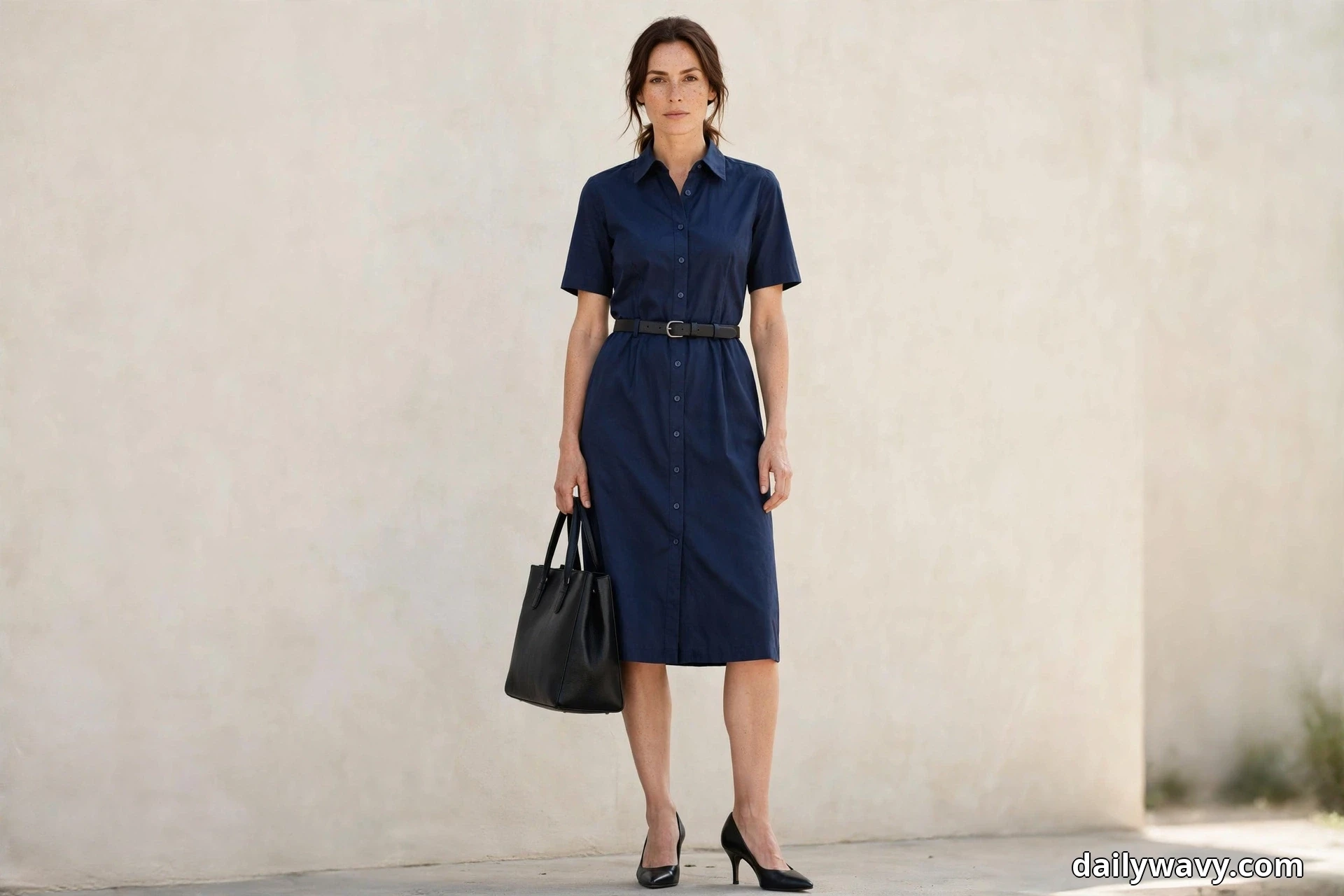
A shirt dress does the thinking for you on a nervous morning, because the collar, buttons and clean lines already speak fluent office. The narrow belt is what turns it from a dress into an outfit, giving your waist definition and your whole look intention.
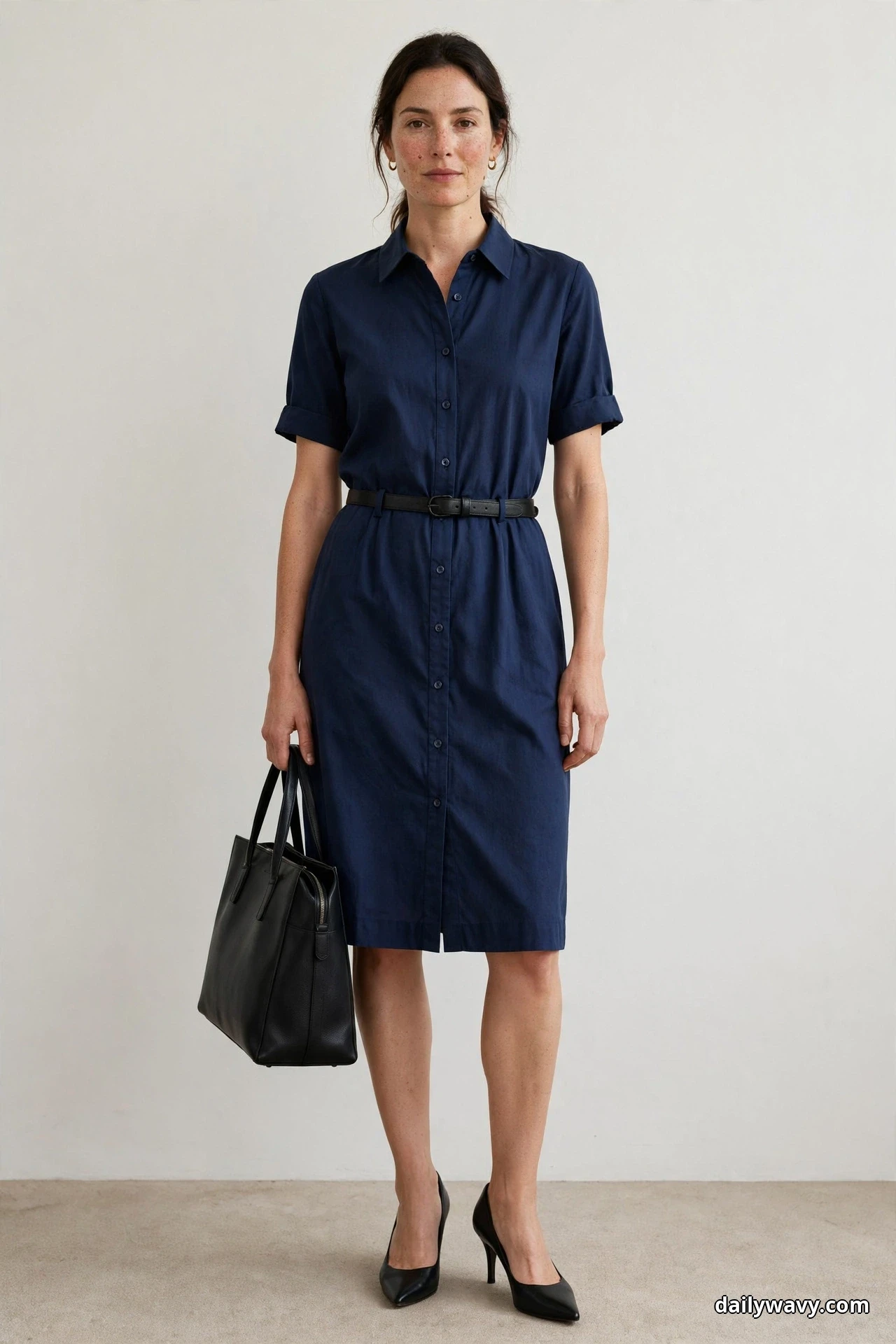
The outfit: A navy knee-length cotton-blend shirt dress with a pointed collar and button front, a thin black leather belt worn at the natural waist, black pointed-toe pumps with a mid heel, and a structured black tote.
Fit notes: The dress should skim without pulling at the buttons, especially across the bust and hips. Sleeves can be long or neatly rolled to the forearm. The belt sits at your natural waist, not cinched tight, and the hem lands at or just below the knee so you can sit comfortably.
Dress-code notes: This is a strong choice for business formal and business casual interviews alike, and the long sleeves make it a reliable pick for cold offices. It also travels well, since a shirt dress shakes out of a garment bag with minimal creasing.
One practical substitution: Swap the pumps for polished black pointed flats if you will be walking between buildings or standing during a tour.
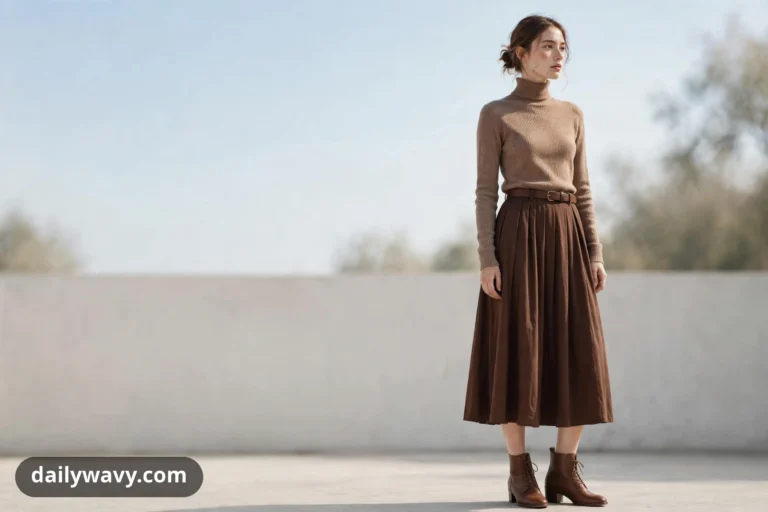
2. Simple Knit with a Straight Midi Skirt
Soft on top, sharp on the bottom: that is the whole trick of this pairing. A fine-gauge sweater reads calm and approachable, while a straight midi skirt keeps the silhouette firmly professional.
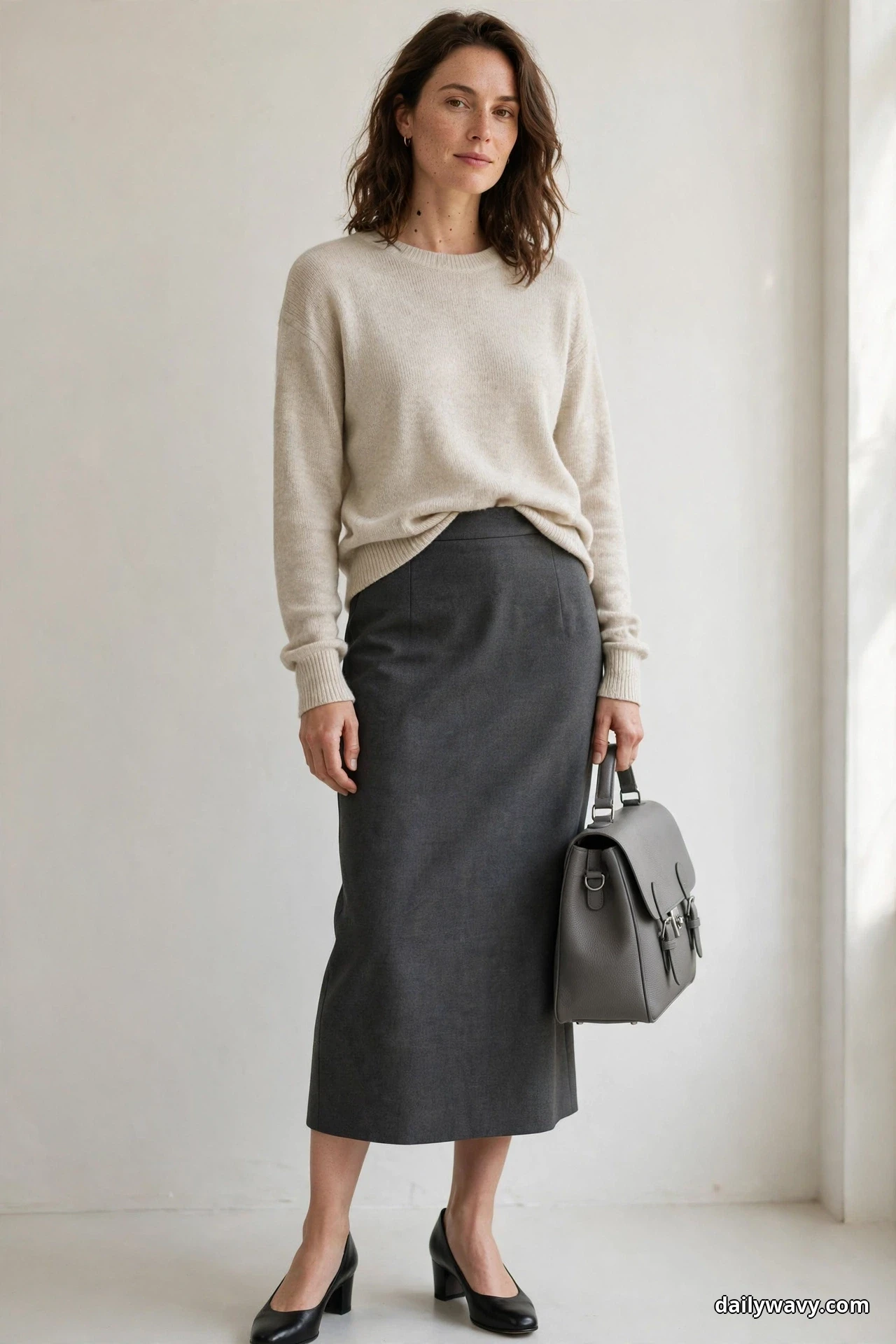
The outfit: A fine-gauge oatmeal crewneck sweater, a high-waist charcoal straight midi skirt, black low block-heel pumps, and a gray structured satchel.
Fit notes: The sweater should be fine enough to tuck a few inches into the waistband without bulk. The skirt sits at the natural waist and falls straight to mid-calf, with enough ease to walk and climb stairs. A half tuck in front keeps the proportions neat.
Dress-code notes: Ideal for business casual and smart casual interviews, and a natural fit for creative or nonprofit settings. The longer skirt and closed shoes keep it modest for more traditional offices too.
One practical substitution: Trade the crewneck for a fine-gauge turtleneck in the same neutral when the interview falls in deep winter.
3. Longline Jacket with Tailored Separates
A longline jacket adds instant authority, which is exactly what you want when you are the least senior person in the room. Worn open over simple separates, it frames the whole outfit like good posture.
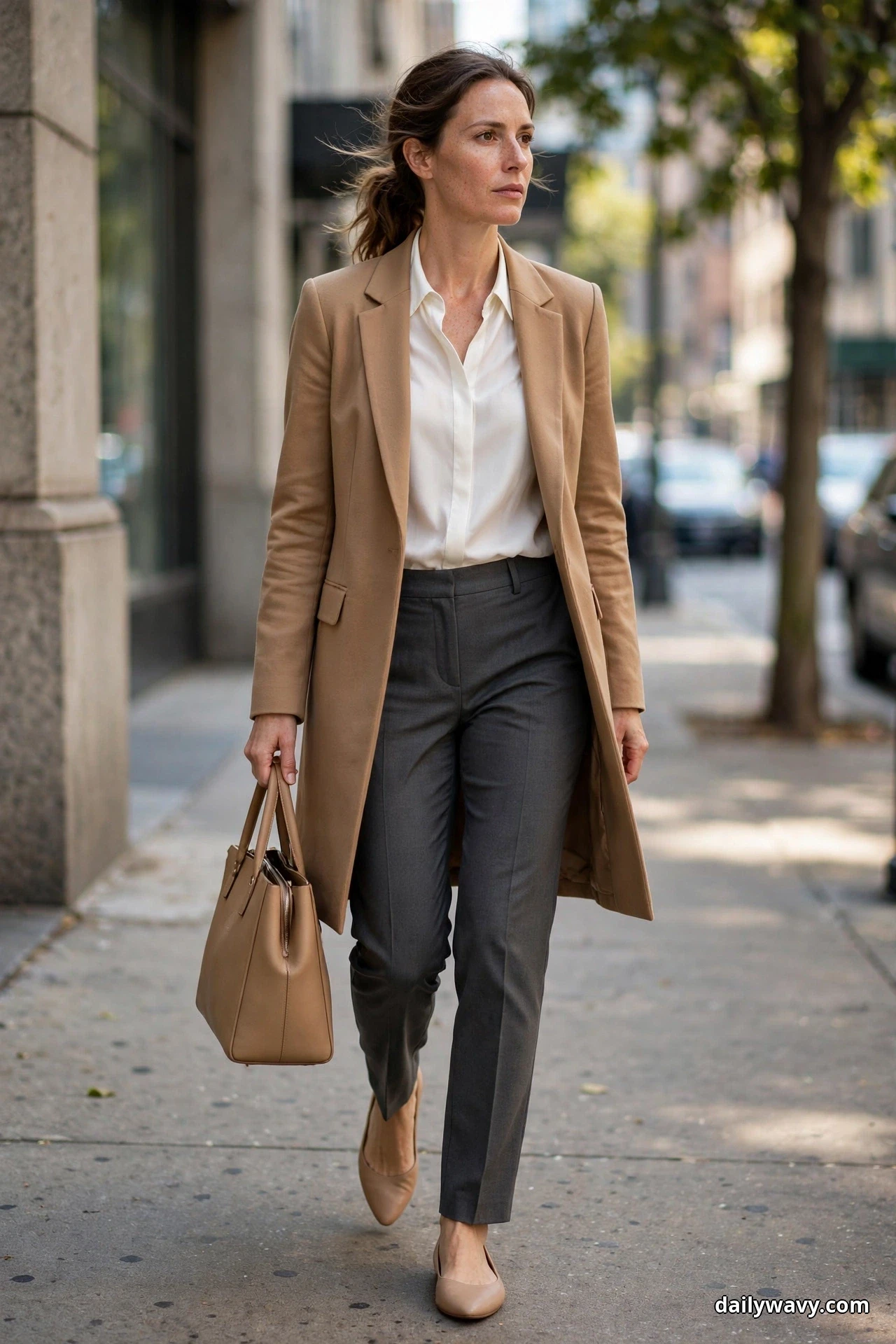
The outfit: A camel longline blazer worn open, an ivory slim blouse tucked in, charcoal straight tailored trousers, nude pointed flats, and a tan structured tote.
Fit notes: The jacket should hit mid-thigh and drape cleanly over the hips without pulling at the single button. Trousers break once over the shoe, no pooling. Keep the blouse slim so it lies flat under the open jacket.
Dress-code notes: This lands beautifully for business casual interviews and panel interviews where you want presence without a full suit. The flats keep it grounded and walkable for campus-style offices.
One practical substitution: If the office leans formal, swap the flats for nude pointed pumps and button the jacket for the handshake.
4. Silk-Look Blouse with a Navy Trouser
There is a reason the silk-look blouse never leaves the interview rotation: it catches the light, photographs well and looks expensive without trying. Paired with navy tailoring, it is quietly confident from every angle.
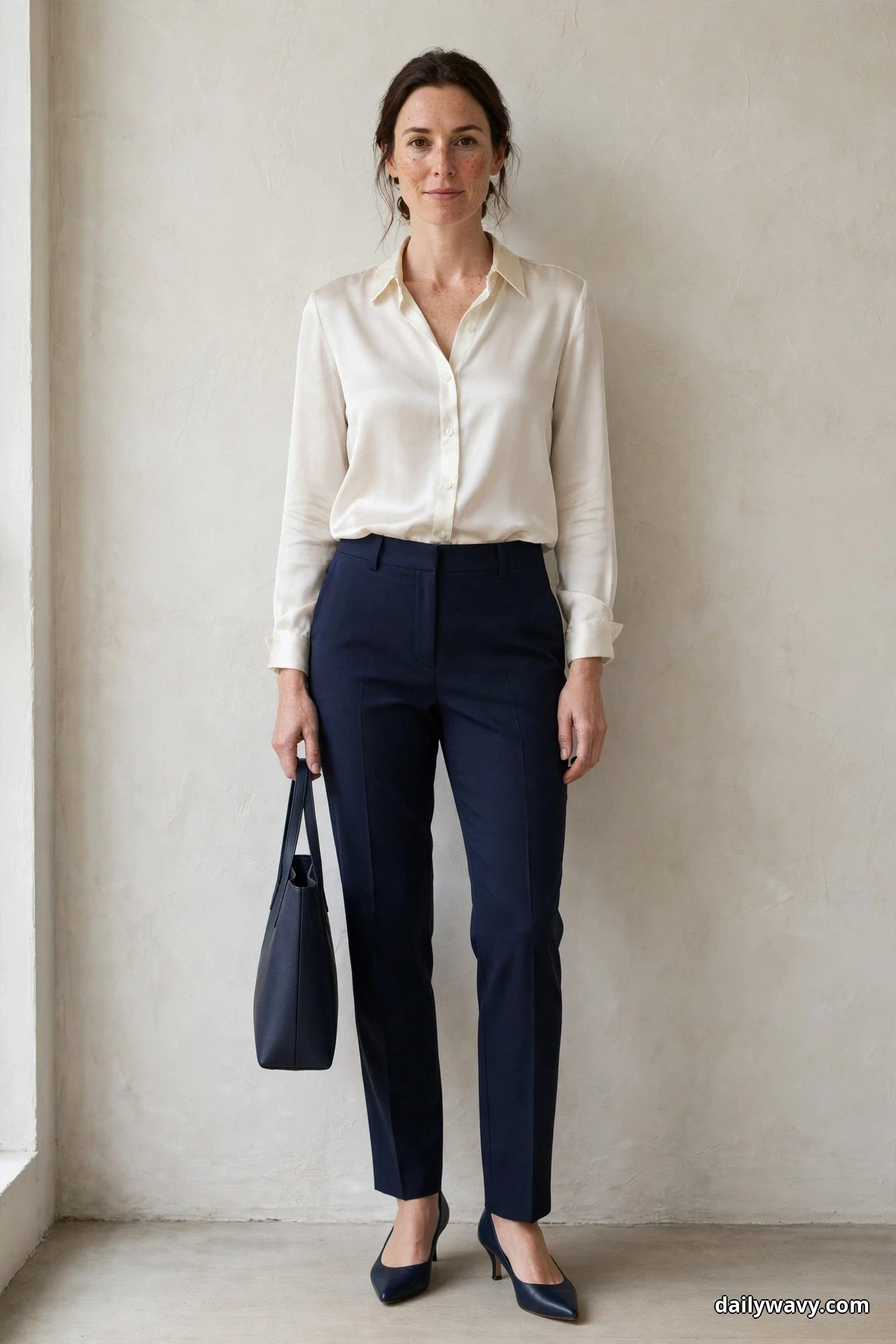
The outfit: An ivory satin-touch blouse with a simple neckline, navy flat-front tailored trousers, navy pointed pumps with a mid heel, and a slim navy tote.
Fit notes: The blouse should drape rather than cling, with enough room to sit and lean forward. Trousers sit flat at the waist with a clean front, no pleats pulling. Match the navy tones closely so the separates read as intentional.
Dress-code notes: A safe, polished choice for finance, consulting and corporate interviews where tradition matters. The closed pumps and opaque blouse keep it firmly in formal territory.
One practical substitution: On a warm day, choose a short-sleeve satin-touch blouse in the same ivory and keep everything else unchanged.
5. Textured Blazer over a Plain Dress
Texture is the difference between wearing a blazer and wearing an outfit. A bouclé or tweed blazer over a plain dress adds depth and personality while the simple dress underneath keeps everything interview-appropriate.
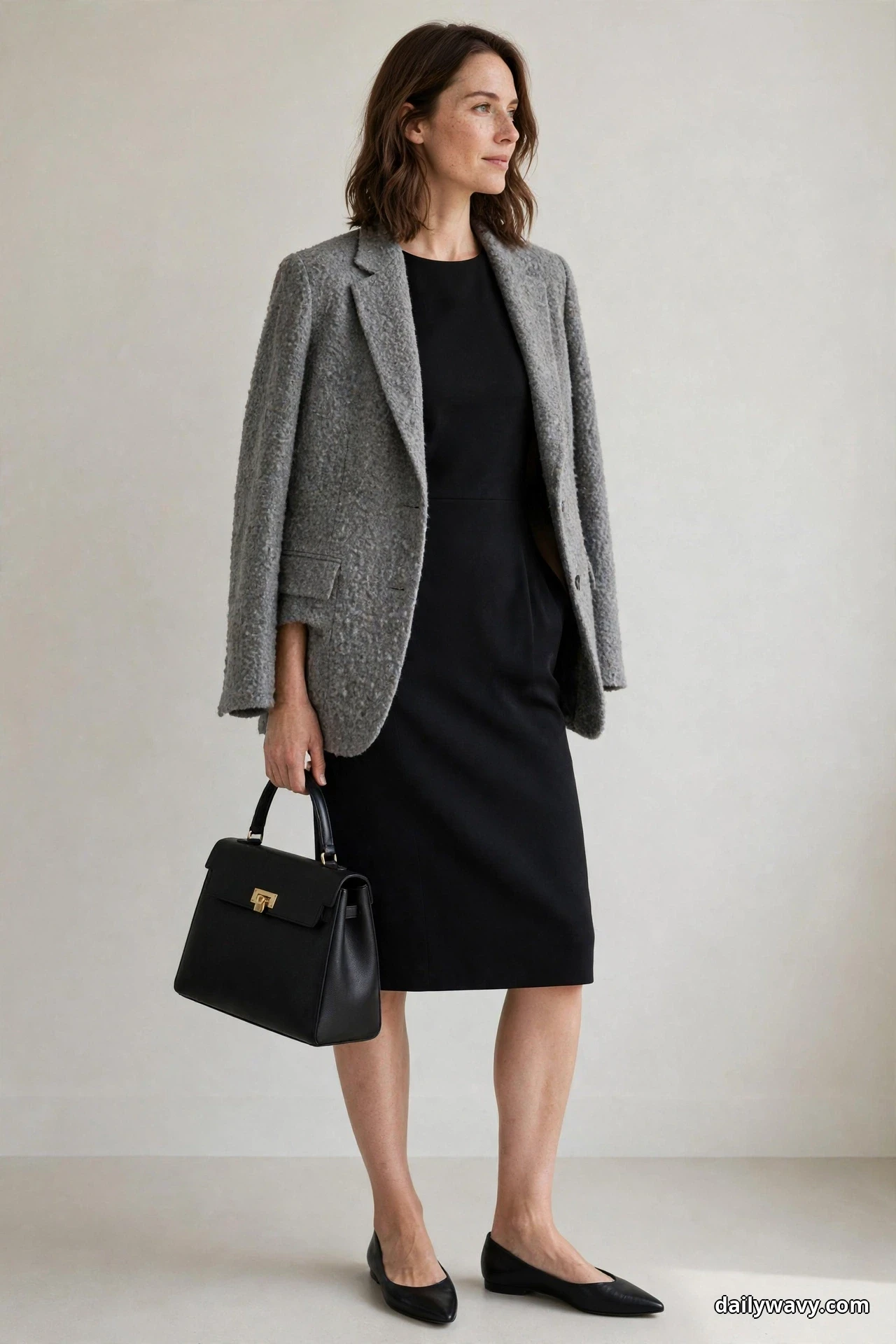
The outfit: A gray bouclé blazer, a plain black knee-length sheath dress, black pointed flats, and a black top-handle bag.
Fit notes: The dress should be simple and fitted without being tight, hitting at or just below the knee. The blazer skims over it with the sleeves showing a slim line of the dress at the wrist. A slight turn shows the drape, so check the back view in the mirror before you leave.
Dress-code notes: Works for business formal through business casual, and the texture makes it memorable in a good way for creative-adjacent corporate roles like marketing or communications.
One practical substitution: Swap the flats for low black pumps if the interview includes a formal presentation or a client-facing office tour.
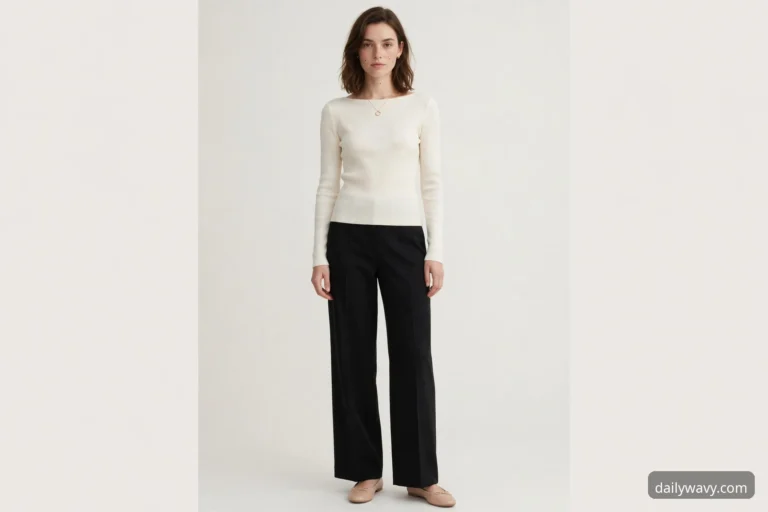
6. Monochrome Top and Trousers
Wearing one color head to toe is the oldest stylist trick for looking taller, calmer and more deliberate. In charcoal or navy, monochrome reads as modern corporate without a single loud note.
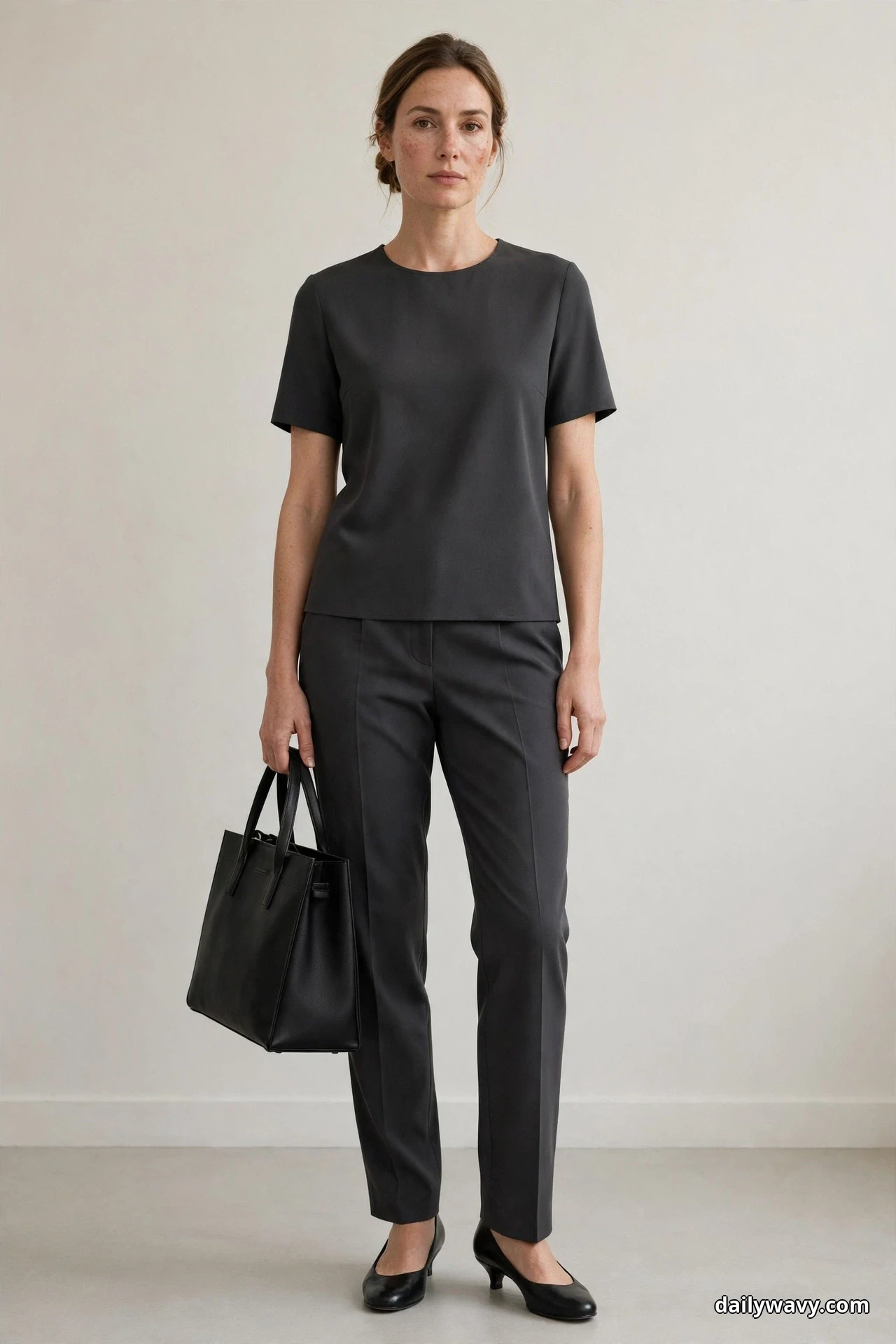
The outfit: A charcoal matte crepe shell top, matching charcoal flat-front trousers, black low pumps, and a structured black tote.
Fit notes: Keep the two pieces in the same color family so they read as one column. The top should end at the hip or tuck cleanly; the trousers need a flat front and a single break. Small texture differences between top and trouser are fine and keep the look from going flat.
Dress-code notes: Strong for business formal interviews and evening-adjacent interview dinners. Monochrome also photographs beautifully if the company takes a team photo on your first week.
One practical substitution: In summer, choose the same formula in navy with a sleeveless shell and add a matching blazer carried over the arm.
7. Collared Knit with Straight Trousers
The collared knit sits exactly between a sweater and a shirt, which makes it a smart pick when the dress code is unclear. The collar says professional; the knit says approachable.
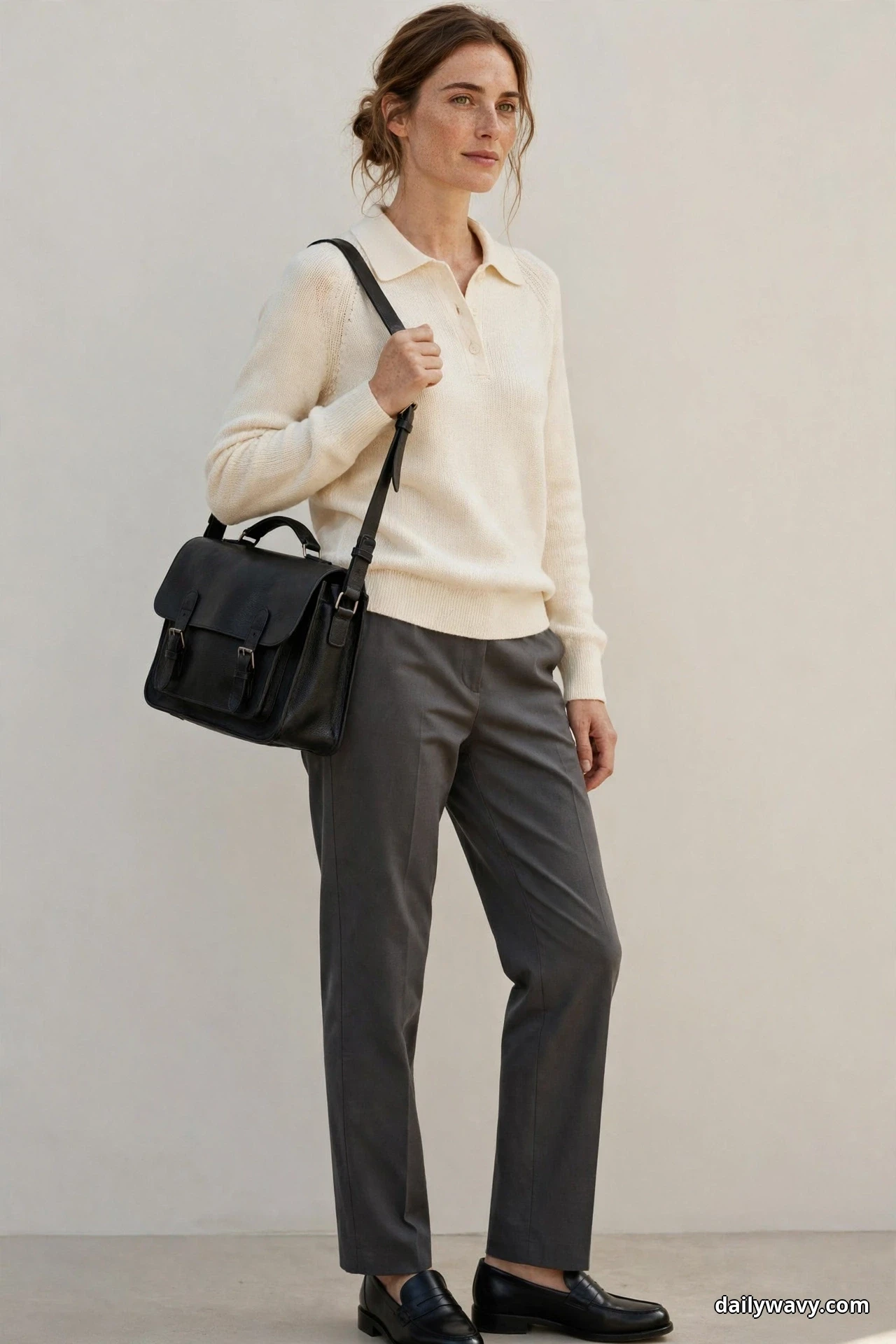
The outfit: A cream fine-gauge knit with a polo collar, charcoal straight trousers, black leather loafers, and a black satchel.
Fit notes: The knit should lie flat at the collar without gaping, with sleeves ending at the wrist. Trousers sit at the natural waist with a clean line through the leg. Loafers need a polished finish and a low, walkable profile.
Dress-code notes: Best for business casual and smart casual interviews, especially in tech, education and operations roles. The collar keeps it a step above a plain sweater.
One practical substitution: Tuck the knit into the trousers and add a slim dark belt if you want a sharper waistline for a more traditional office.
8. Tailored Jacket with a Midi Skirt
This is the interview uniform of women who have done this before: a short tailored jacket, a midi skirt and nothing left to chance. The proportions are classic, the message is competence.
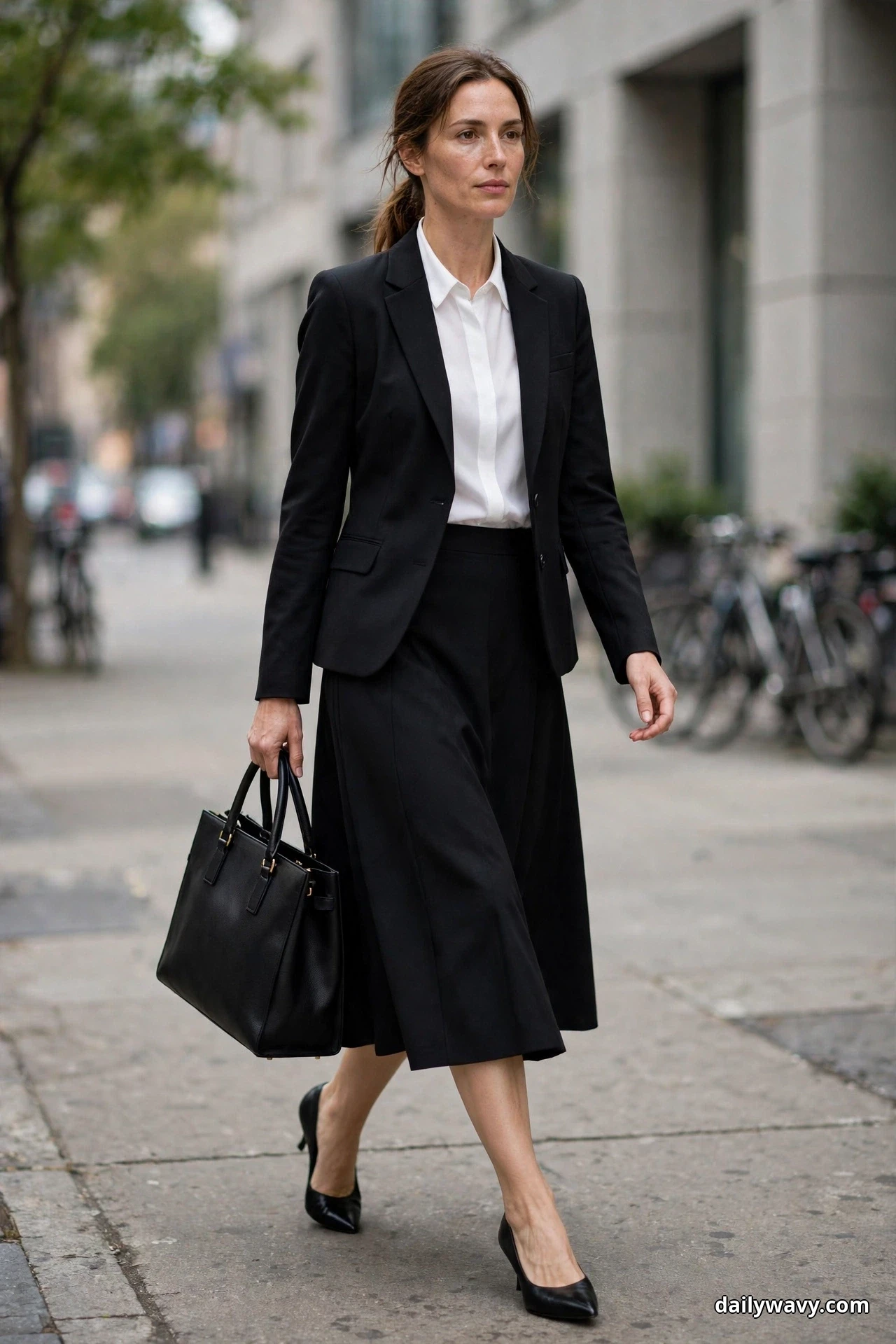
The outfit: A black short tailored jacket, a white modest blouse underneath, a black A-line midi skirt, black pointed pumps, and a structured black tote.
Fit notes: The jacket ends at the high hip so the skirt’s waistline stays visible. The A-line skirt flares gently from the waist and lands below the knee. The blouse stays tucked and opaque; check the button front while seated.
Dress-code notes: A top-tier choice for formal corporate interviews in law, finance and executive roles. The all-black palette with a white blouse is timeless rather than severe.
One practical substitution: Swap the A-line skirt for a straight midi skirt in the same black if you prefer a sleeker line through the hips.
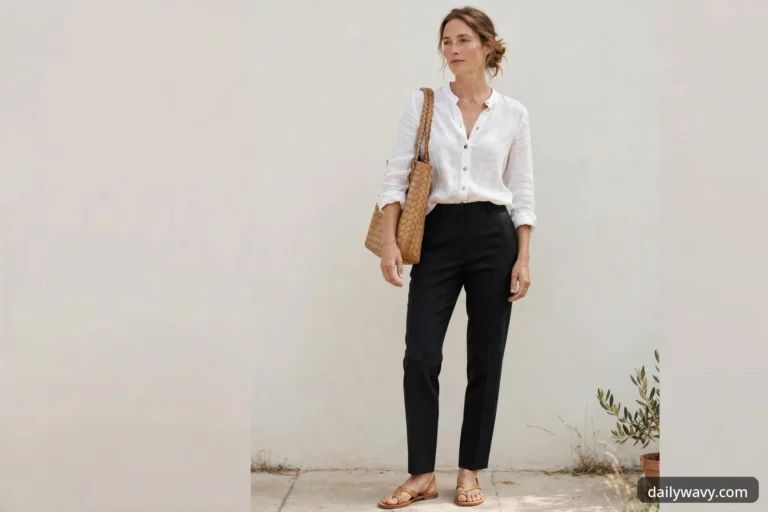
9. Plain Blouse with Cropped Trousers
Crisp, clean and quietly modern, this pairing proves you do not need a suit to look serious. The secret is in the details: a truly crisp blouse and trousers with a sharp crease.
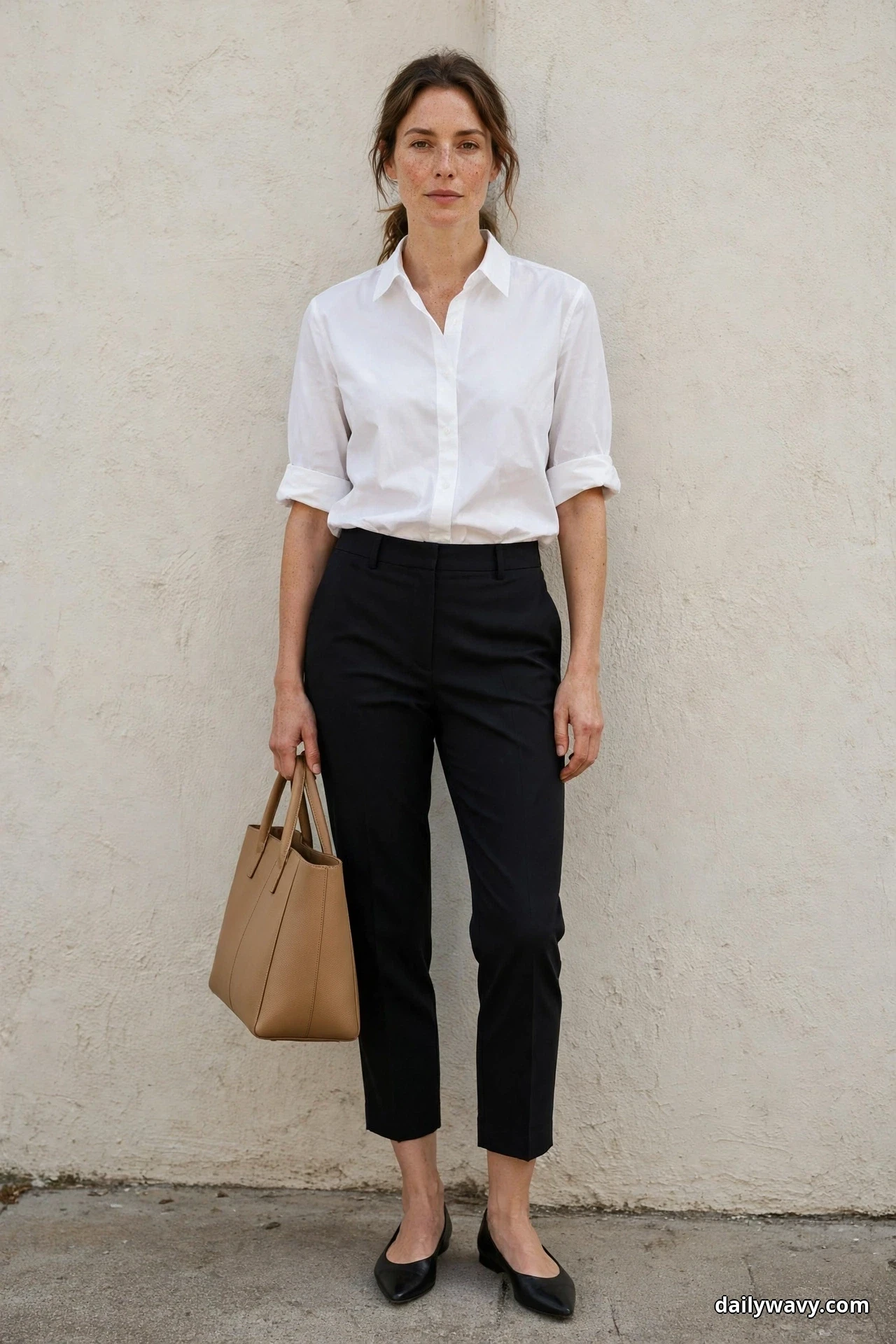
The outfit: A white cotton-poplin blouse tucked in, black cropped tailored trousers, black pointed flats, and a tan structured tote.
Fit notes: The blouse should be freshly pressed with no pulling at the buttons. Cropped trousers end just above the ankle bone, showing a clean line of ankle above the flats. A sharp front crease keeps the cropped length looking deliberate.
Dress-code notes: Ideal for business casual interviews and warm-weather interview days. The cropped length is modern but the covered shoulders and closed shoes keep it office-correct.
One practical substitution: Add a black blazer over the shoulders for the walk in, then remove it if the office turns out to be relaxed.
10. Fine Cardigan over a Sheath Dress
A fine cardigan softens a sheath dress without weakening it, like lowering your voice instead of whispering. Buttoned neatly, it reads as polished layers rather than casual knitwear.
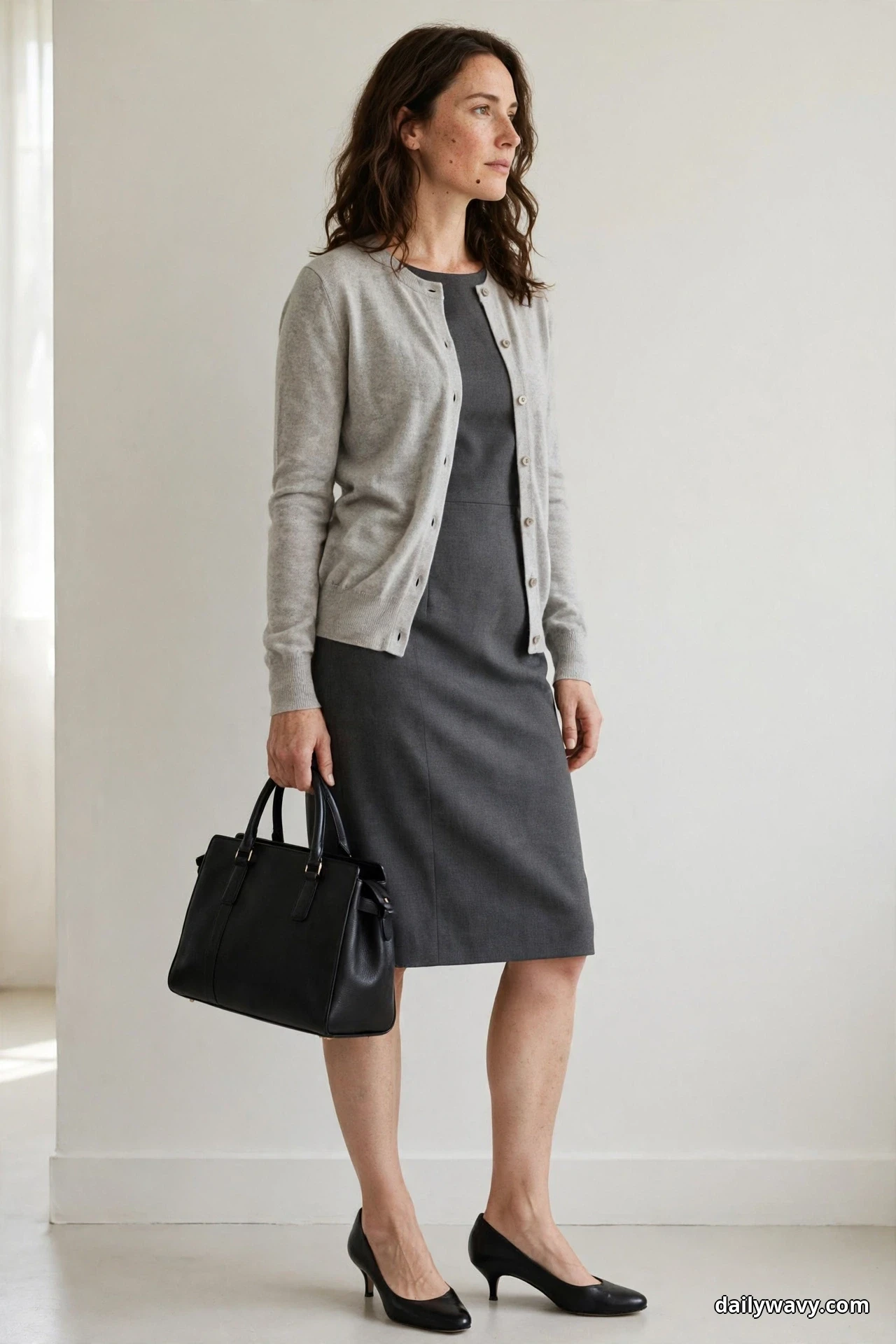
The outfit: A light gray fine merino cardigan worn buttoned, a charcoal knee-length sheath dress, black kitten heels, and a structured black bag.
Fit notes: The cardigan should be fine enough to button without gaping, ending at the hip. The sheath dress skims the body with enough ease to sit. Kitten heels give a little lift while staying genuinely walkable.
Dress-code notes: A comfortable pick for business casual interviews and for anyone who runs cold in air-conditioned offices. The layered look also adapts well from a morning interview to an afternoon second round. For more layering ideas, see our cardigan outfits guide.
One practical substitution: Wear the cardigan open over the dress with a thin belt at the waist for a slightly more styled finish.
11. Relaxed Blazer with a Crewneck Knit
Not every corporate interview happens in a boardroom. For startups, agencies and modern offices, a relaxed blazer over a crewneck says you understand the culture and still respect the occasion.
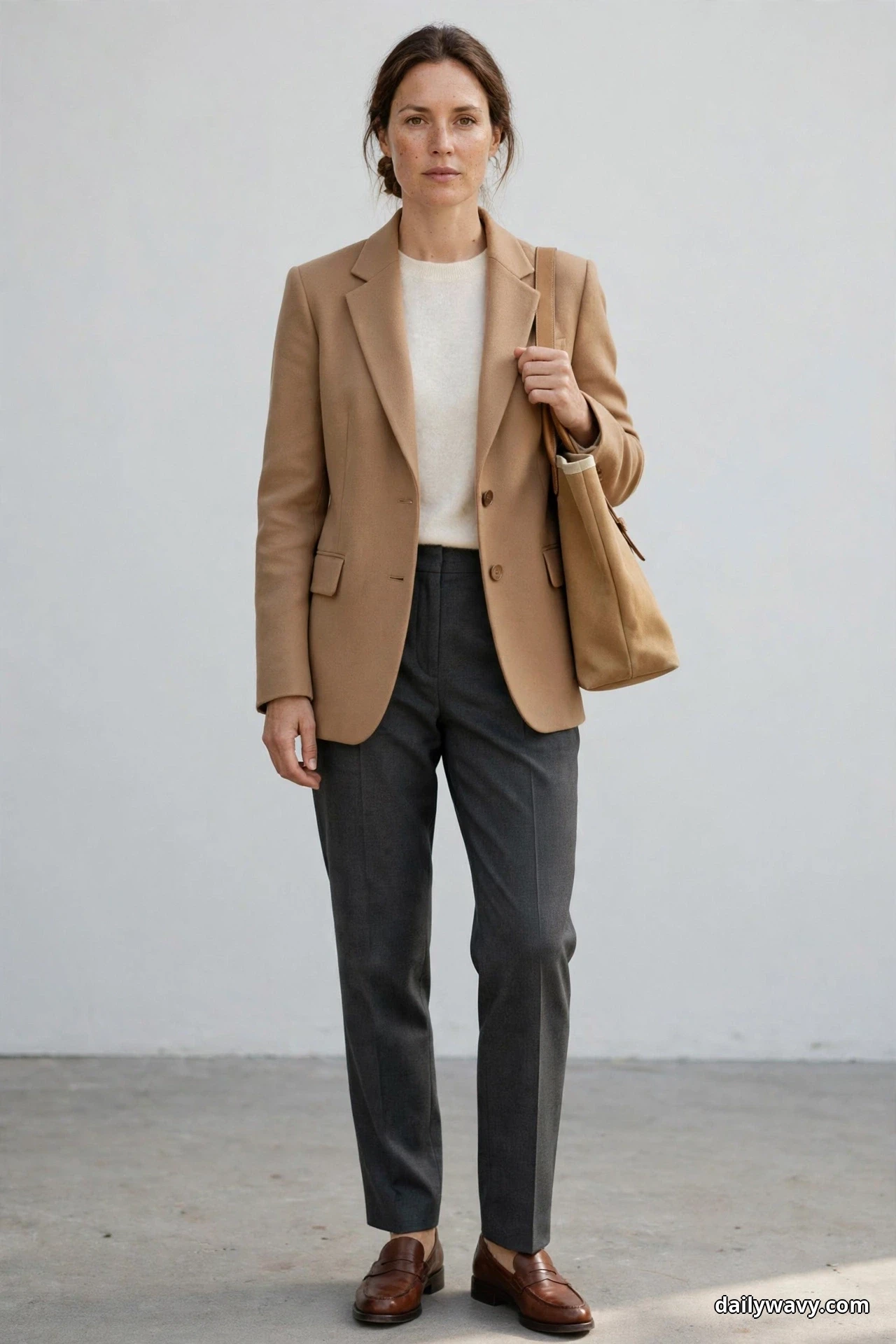
The outfit: A camel softly structured blazer, a cream crewneck sweater, dark gray straight trousers, brown leather loafers, and a tan tote.
Fit notes: “Relaxed” refers to the shoulder line, not the size: the blazer should still fit through the shoulders. The sweater lies flat underneath without bunching at the waist. Trousers keep a clean, straight line to balance the softer top half.
Dress-code notes: Made for smart casual interviews in tech, media and creative industries. It would be underdressed for formal finance or law, so match the outfit to your research.
One practical substitution: Swap the loafers for brown derby-style lace-ups if you want a touch more structure without going full formal.
12. Cotton Shirt with Tailored Trousers and Loafers
The oxford shirt is the hardest-working item in interview dressing. It is crisp without being stiff, familiar without being boring, and it pairs with tailoring like it was born for it.
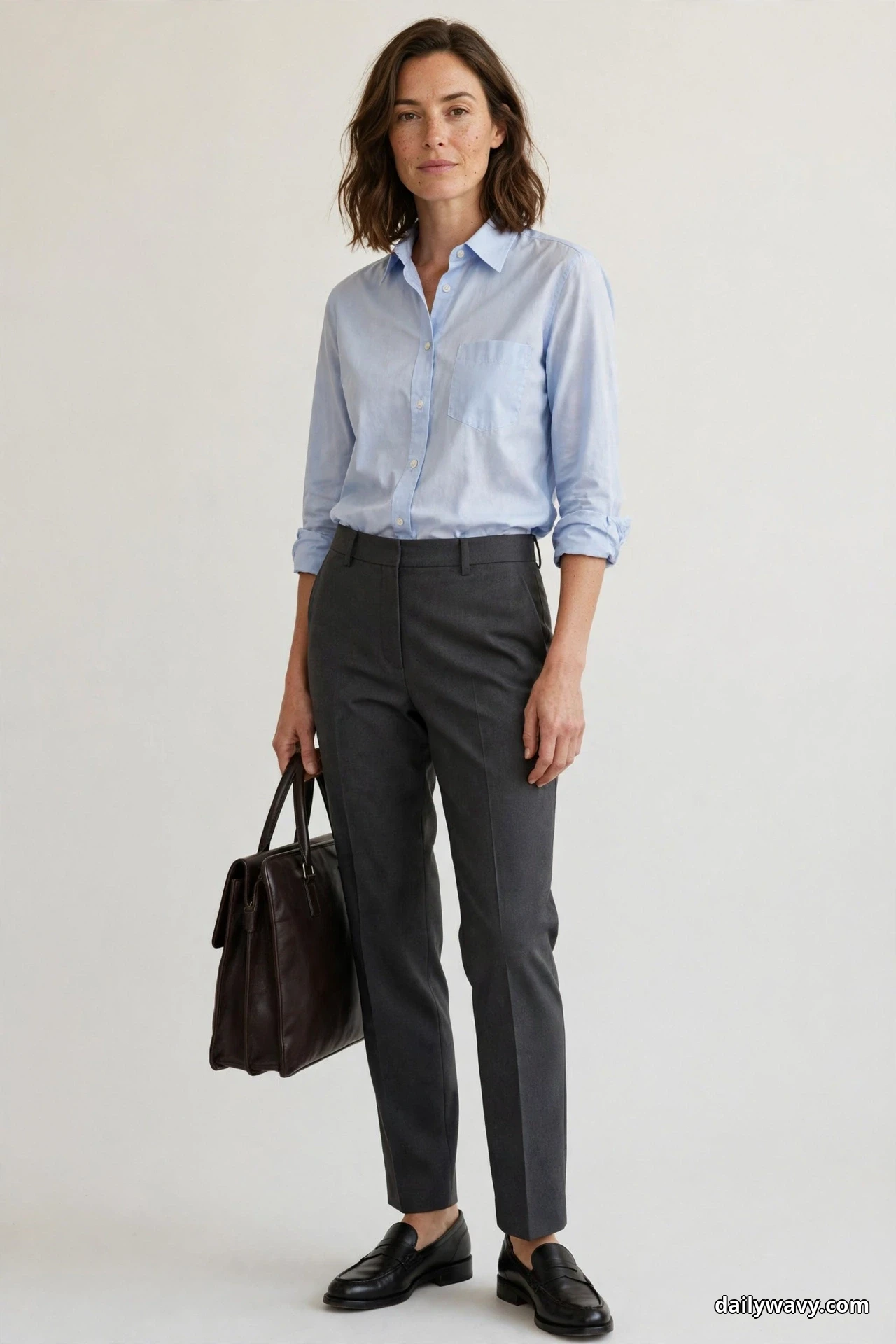
The outfit: A light blue oxford cotton shirt, charcoal flat-front tailored trousers, black leather loafers, and a dark brown briefcase-style tote.
Fit notes: The shirt should be fitted enough to tuck cleanly, with a collar that stands on its own. Trousers need a flat front and a single break over the loafer. Roll the sleeves once to the forearm only if the office is clearly casual; otherwise keep them down and buttoned.
Dress-code notes: A reliable business casual interview outfit across industries, and an excellent choice when the interview involves walking, standing presentations or a working lunch.
One practical substitution: Tuck the shirt into the trousers with a slim black belt for a sharper finish in more traditional offices.
13. Fine Knit with an A-Line Midi Skirt
Color can be an asset in an interview when it is rich rather than loud. A deep burgundy or forest knit with a dark A-line skirt shows personality while staying completely professional.

The outfit: A burgundy fine-gauge turtleneck, a black A-line midi skirt, black low block-heel ankle boots, and a structured black tote.
Fit notes: The turtleneck should sit close without squeezing, with the collar folding neatly. The A-line skirt starts at the natural waist and moves easily when you walk. Ankle boots disappear under the midi hem, so keep the heel low and the shaft simple.
Dress-code notes: Wonderful for fall and winter interviews and for business casual settings. The rich color reads as confident and warm on video calls too, if any round is remote.
One practical substitution: Swap the ankle boots for black pointed pumps if the forecast is warm or the office is strictly formal.
14. Soft Blouse with Straight Trousers
A softly draped blouse brings a little movement to an otherwise structured outfit, which keeps you from looking rigid on a day when you want to seem easy to work with.
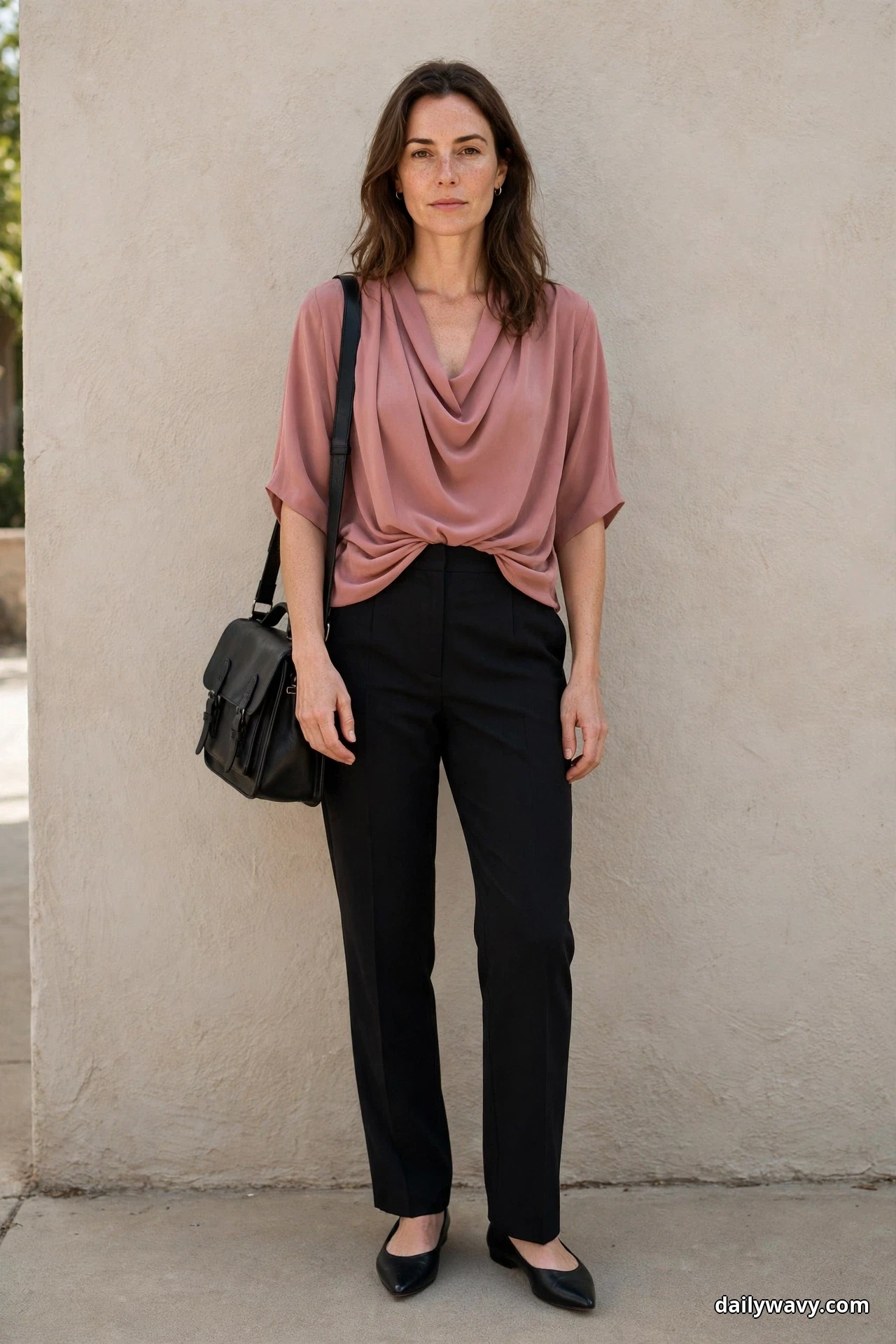
The outfit: A dusty rose draped soft blouse, black straight trousers, black pointed flats, and a black satchel.
Fit notes: The blouse should drape from the shoulder without clinging, tucked in front to define the waist. Trousers stay straight and clean through the leg. The muted color keeps the softness professional rather than romantic.
Dress-code notes: Suits business casual interviews, HR and people-facing roles where warmth matters. The opaque blouse and covered arms keep it appropriate for conservative offices as well.
One practical substitution: Choose the same blouse in ivory or sand if you prefer a neutral palette with the same soft effect.
15. Matching Suit with a Simple Shell Top
When the stakes are highest, the matching suit is still the answer. It removes every question about whether separates “go together” and lets the interviewer focus entirely on you.
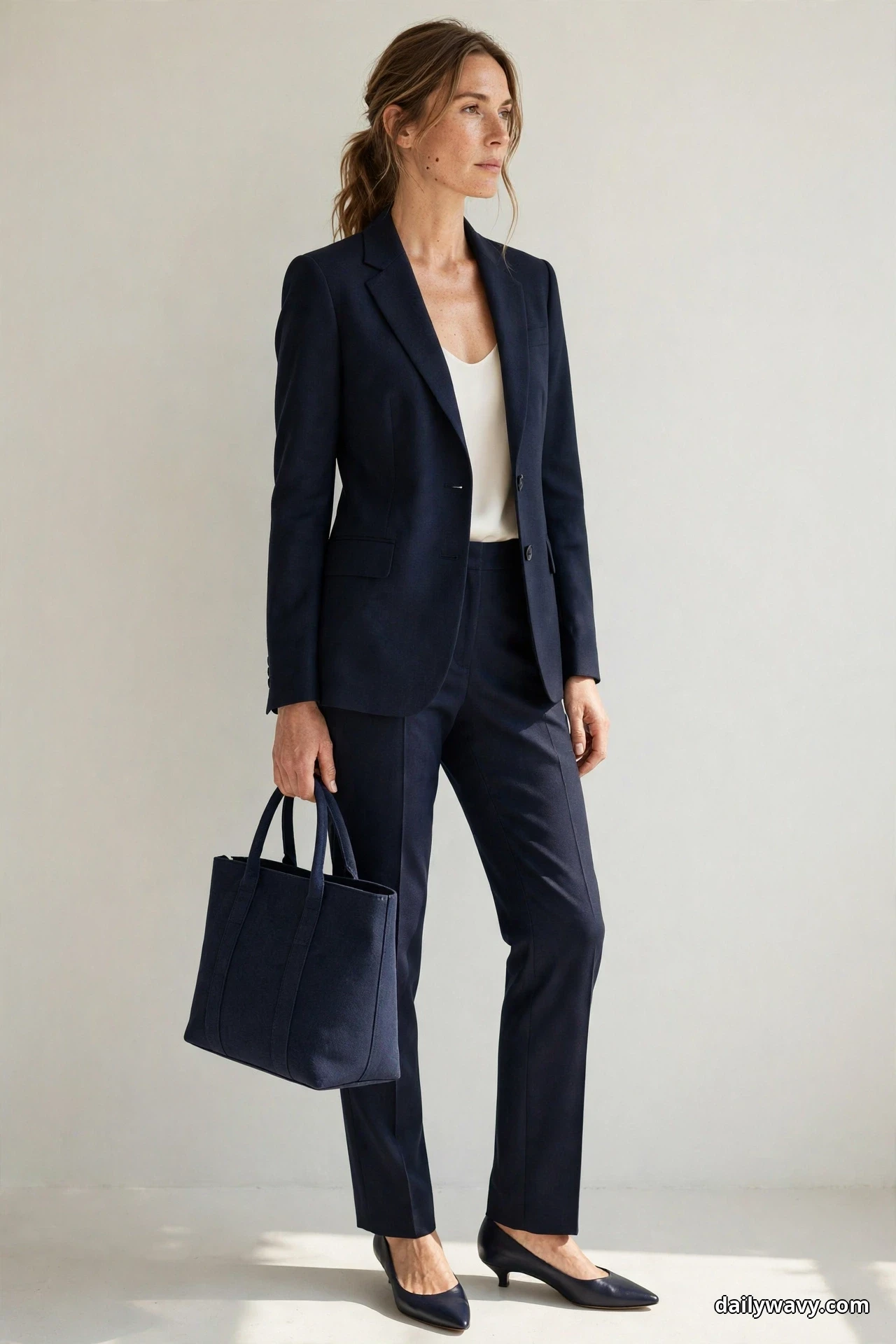
The outfit: A navy single-breasted two-piece suit with flat-front trousers, an ivory shell top, navy pointed pumps, and a navy tote.
Fit notes: The blazer should close without pulling and the sleeves show a sliver of the shell at the wrist. Trousers break once over the pump. The shell top needs a modest neckline and enough length to stay tucked when you sit and stand.
Dress-code notes: The gold standard for formal corporate interviews: law, finance, consulting, executive roles. It is also the safest choice when you could not confirm the dress code at all.
One practical substitution: In warm weather, carry the blazer and wear the shell top with the suit trousers for the commute, then put the jacket on before you enter the building.
16. Cardigan with a Plain Midi Dress
A longer cardigan over a plain midi dress creates one long, calm line from shoulder to hem. It is modest, comfortable and quietly elegant, the kind of outfit that never distracts from your answers.
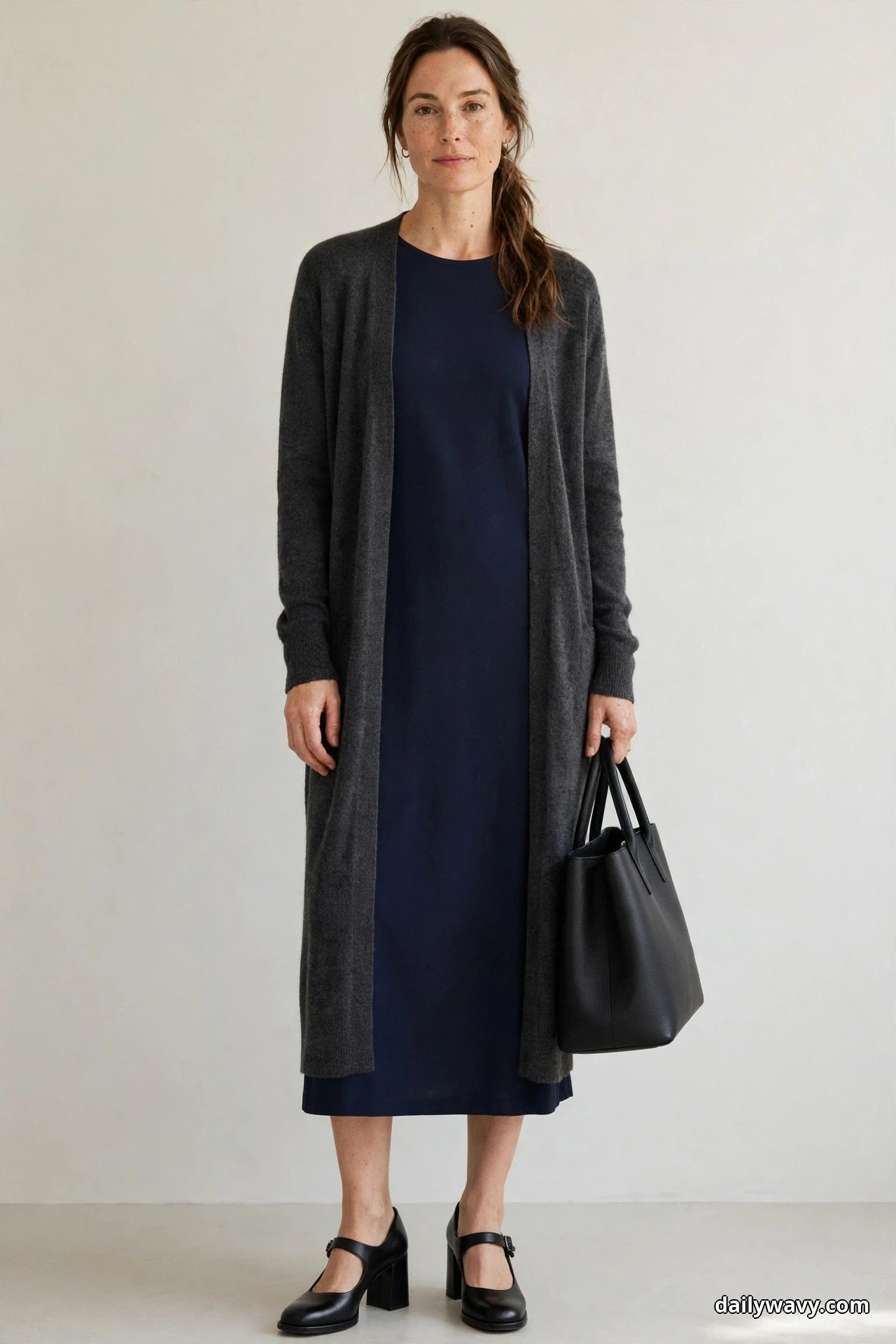
The outfit: A long charcoal fine-knit cardigan worn open, a navy plain midi dress, black block-heel Mary Janes, and a structured black tote.
Fit notes: The cardigan should fall to mid-thigh or just below, skimming rather than wrapping. The dress underneath stays simple with a clean neckline. Mary Janes add a classic note while the block heel keeps you steady.
Dress-code notes: A gentle, polished option for business casual interviews, education and nonprofit settings. The longer layers also work beautifully for cooler months.
One practical substitution: Belt the cardigan once at the waist with a thin black belt if you want more shape through the middle.
17. Knit Polo with Pleated Trousers
Pleats are having a quiet professional moment, and paired with a knit polo they strike a rare balance: tailored but not stiff, current but not trendy. It is a thoughtful choice that shows you pay attention to detail.
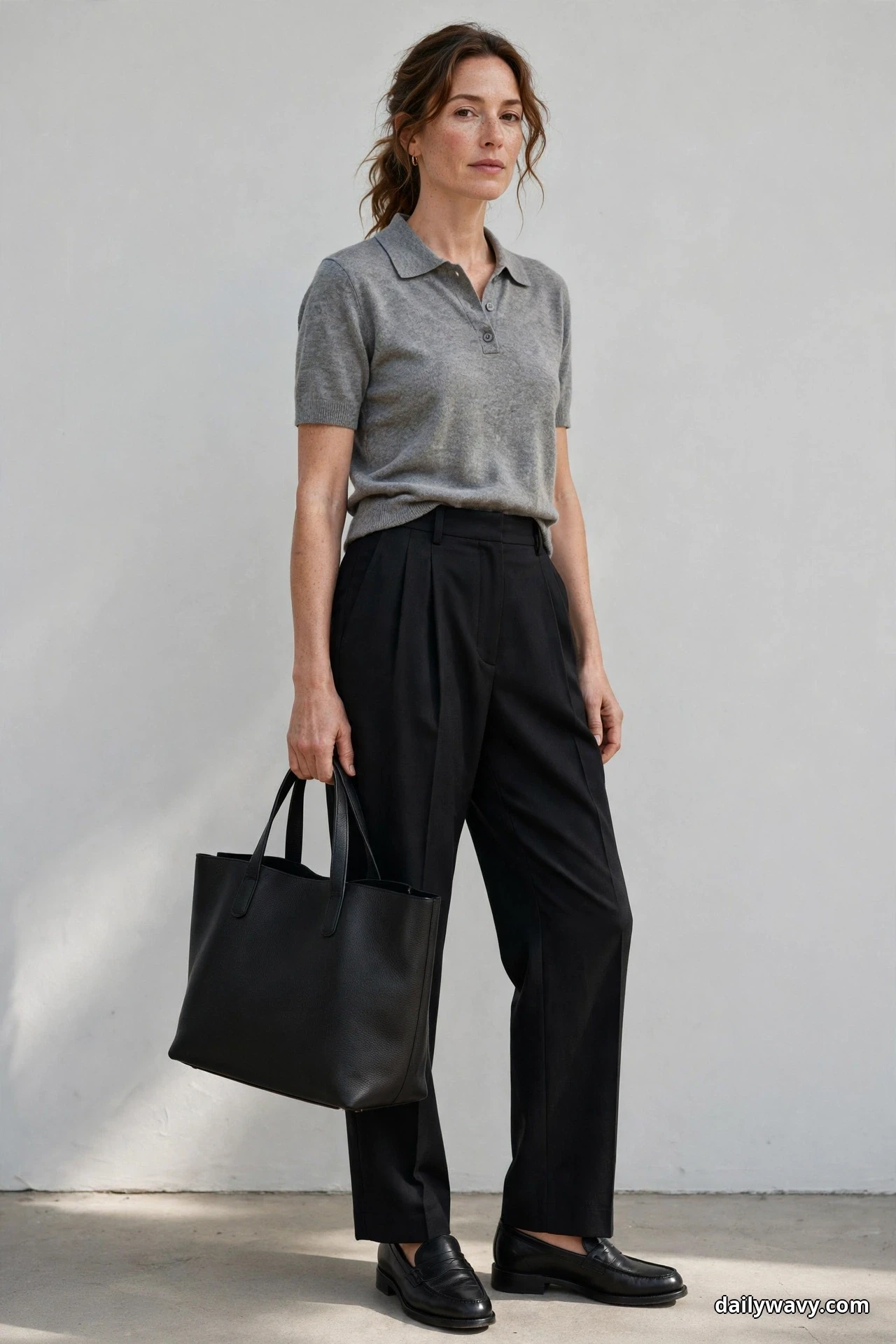
The outfit: A gray knit polo shirt, high-waist black pleated trousers, black leather loafers, and a structured black tote.
Fit notes: The polo should fit smoothly through the shoulders with a collar that holds its shape. Pleated trousers sit at the natural waist with the pleats lying flat, not splaying. The knit texture keeps the polo a step above a standard pique.
Dress-code notes: Best for business casual and smart casual interviews where a little modern polish is welcome. The pleats add interest without noise, which suits design-adjacent and communications roles.
One practical substitution: Swap the loafers for pointed flats if you want a slightly sleeker foot with the same comfort.
18. Structured Blazer with a Modest Blouse
End with the power move: a sharply structured blazer over a modest high-neck blouse. Strong shoulders, clean lines, zero fuss. This is the outfit for the interview you really want.
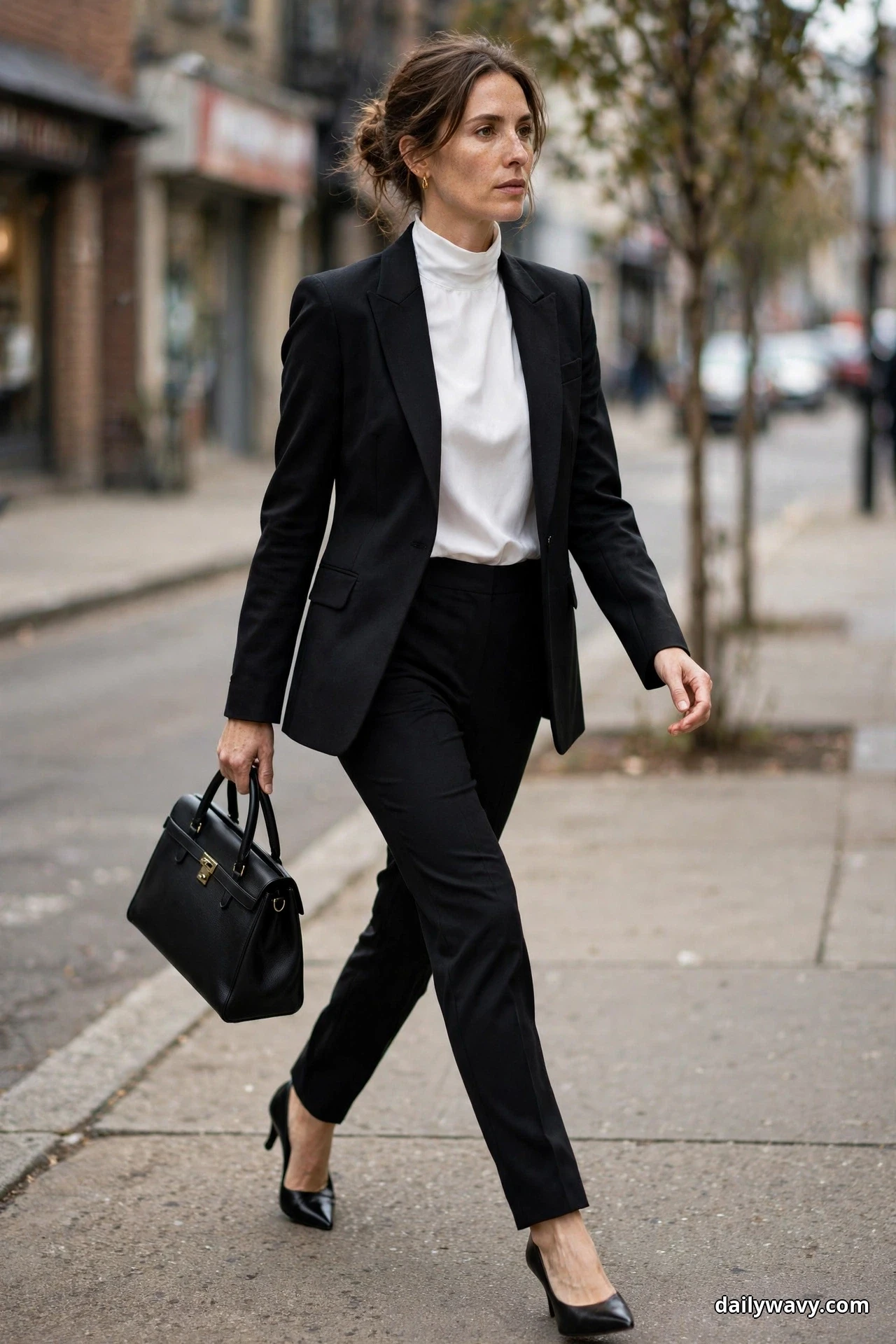
The outfit: A black sharply structured blazer, a white high-neck modest blouse, black tailored trousers, black pointed pumps, and a black top-handle bag.
Fit notes: The blazer’s structure does the work, so it must fit precisely through the shoulders with no divots. The high neckline of the blouse frames the face and stays put all day. Trousers keep a straight, pressed line to match the blazer’s sharpness.
Dress-code notes: Excellent for formal interviews and final-round meetings with senior leaders. The modest neckline also makes it a respectful choice across a wide range of workplace cultures.
One practical substitution: Trade the pumps for polished pointed flats if the day involves a long office tour or a lot of standing.
Interview Outfit Questions, Answered
What should I wear if I cannot find the company’s dress code?
Default to the formal end of business casual: tailored trousers or a midi skirt, a modest blouse or knit, a blazer, and closed shoes. It is far easier to remove a blazer in a relaxed office than to wish you had worn one in a formal one.
Is a dress okay for a corporate interview, or do I need a suit?
A dress is absolutely fine as long as it is structured, opaque, and knee-length or longer. The shirt dress, sheath dress and plain midi dress in this guide all meet that bar. Reserve the full suit for the most formal industries or when you want maximum certainty.
Can I wear flats instead of heels?
Yes. Polished, closed flats and loafers are completely interview-appropriate, and several outfits above are built around them. What matters is that the shoes look intentional and professional, not the height of the heel.
What colors are safest for a corporate interview?
Navy, charcoal, black, ivory, white and soft neutrals like camel and gray will never steer you wrong. One rich accent color, like the burgundy in look 13, is fine. Save bright prints and neon for after the offer.
What should I avoid wearing to a corporate interview?
Skip anything sheer, wrinkled, too tight, too short or too casual: jeans, sneakers, graphic tops, strong fragrance and noisy jewelry. Also skip brand-new shoes you have never walked in; interview day is not the time to break them in.
Can I wear the same outfit to a second interview?
You can, but a small change reads as thoughtful. Keep the base, like the trousers or skirt, and switch the top, blouse or layer. Interviewers notice preparation more than repetition.
Walk In Ready
Eighteen outfits, one shared idea: when your clothes are decided, your mind is free. Choose the look that matches your industry and the season, lay it out the night before, and give yourself the gift of a calm morning. And remember that the interview outfit is just the beginning. Once you land the role, our business casual office outfits guide will keep your workweek wardrobe just as sharp, our winter casual outfits cover the colder months in style, and straight-leg jeans outfits handle polished weekends. Browse more ideas in Fashion & Beauty and walk in ready.