14 Theater Night Outfits with Dressy Styling Details
There is a particular kind of excitement that comes with theater night. The lobby lights are low, the crowd is…
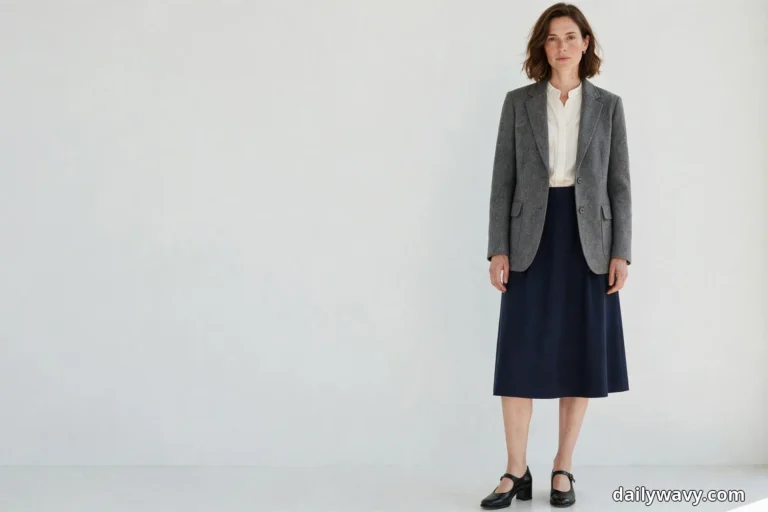
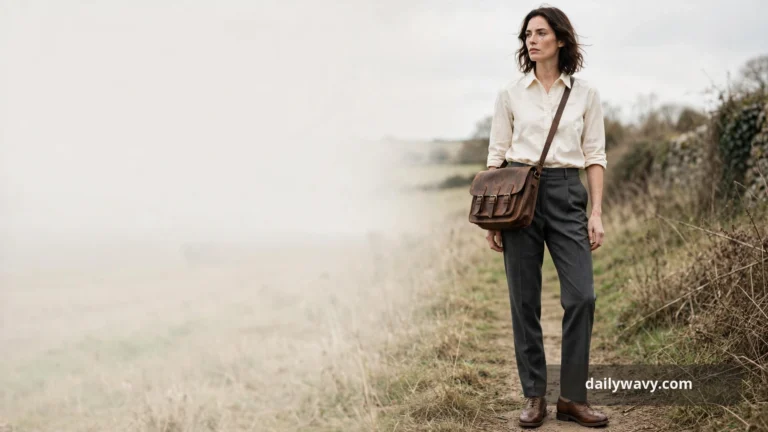
There is a particular kind of excitement that comes with theater night. The lobby lights are low, the crowd is dressed up, and the whole evening feels like an occasion worth honoring. Your outfit sets the tone for that feeling. You want to look polished for the red velvet and brass railings, but you also need to sit comfortably through a long first act and climb a few stairs in heels. This guide gives you 14 theater night outfits that balance dressy style with real comfort. Each one is built around actual garments, shoes, and styling details that work for the venue, the weather, and the seat.
Jump to an idea
- 1. Pleated Midi Skirt With A Fitted Knit
- 2. Matching Tailored Suit With A Soft Blouse
- 3. Dark Floral Dress With A Small Bag
- 4. One-Color Blouse And Trouser Pairing
- 5. Structured Top With A Plain Midi Skirt
- 6. Long-Sleeve Dress With A Narrow Belt
- 7. Crepe Trousers With An Embellished Cardigan
- 8. Lined Lace Blouse With Tailored Pants
- 9. Knit Midi Dress With A Dressy Coat
- 10. Simple Dress With A Statement Necklace
- 11. Satin Trousers With A Tailored Jacket
- 12. A-Line Dress With Slingbacks
- 13. Soft Draped Blouse With A Straight Skirt
- 14. Plain Jumpsuit With A Silk Scarf
The Theater Night Dress Code: Formality, Venue And Weather
Most theater nights call for smart dressy, which sits comfortably between polished casual and full cocktail attire. Unless the invitation says gala, opening night, or black tie, you do not need a gown or a tuxedo. Think structured fabrics, thoughtful color, and shoes that look intentional.
The venue shapes the details. A grand historic theater with a marble lobby invites a little more drama, while a small black box playhouse is fine with simpler pieces. Outdoor summer venues change everything, so check the forecast and bring a layer, since evening temperatures drop fast after sunset.
Seated comfort matters more than most people plan for. Theater seats are narrow, armrests sit low, and you will be sitting still for two to three hours. Avoid stiff fabrics that dig, skirts that ride up, and anything you have to adjust mid-show. A small bag beats a large tote, and pockets are always handy.
Plan your outerwear. Most theaters offer coat check, so you can wear a real winter coat over your outfit and leave it at the door. Arrive a few minutes early so you are not rushed at the door.
Two rules always apply. First, skip white or ivory looks that read bridal, since white at a formal evening event can read bridal. Second, no denim and no trainers anywhere in the look. The crowd will be dressed, and you want to match that energy.
1. Pleated Midi Skirt With A Fitted Knit

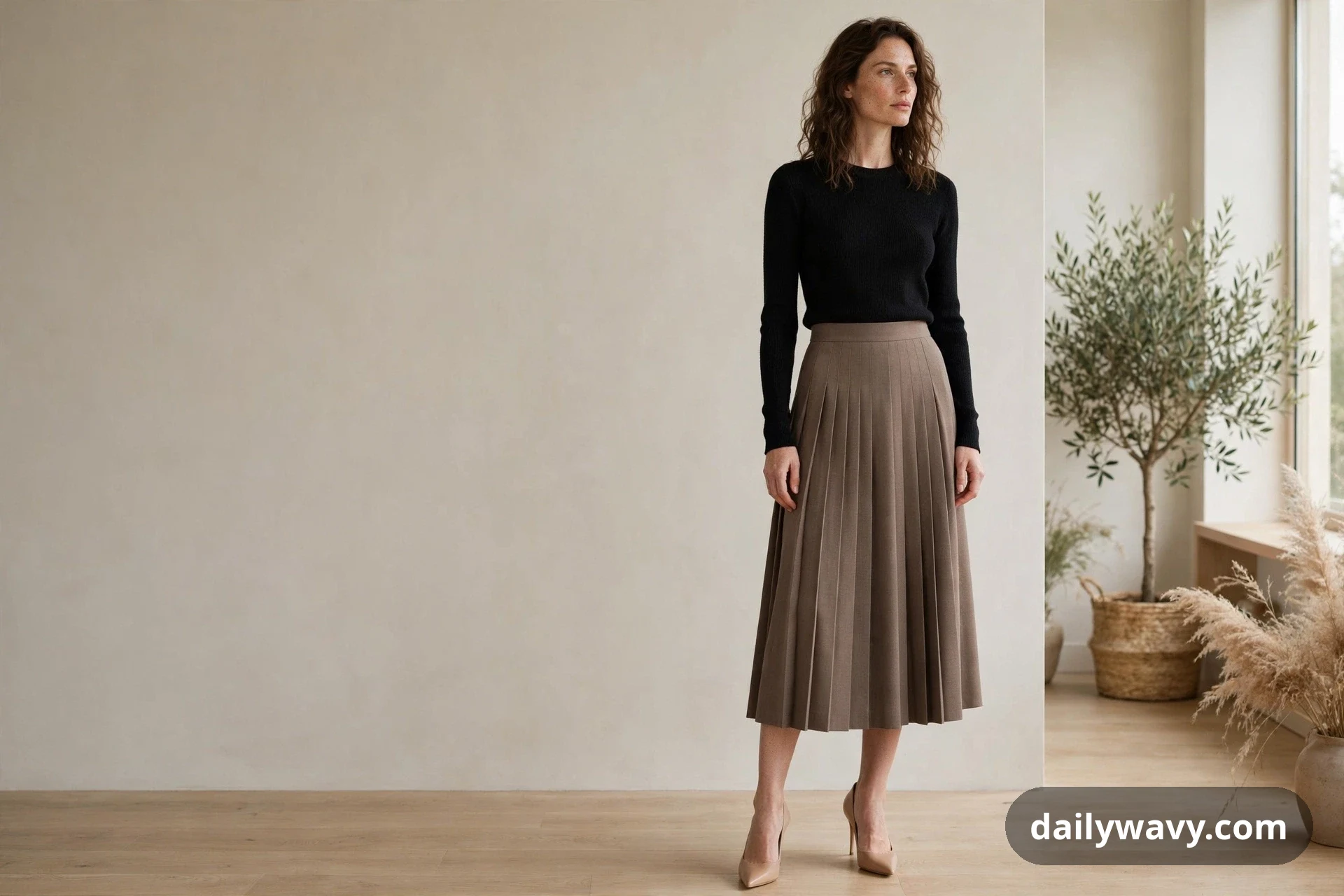
A pleated midi skirt catches the lobby light beautifully as you walk, and a fitted knit keeps the whole look grounded. This pairing works because the contrast between the skirt's movement and the top's clean lines reads instantly polished.
Start with a knife-pleated midi skirt in navy, black, or deep burgundy, hitting mid-calf. Add a fitted knit turtleneck or crewneck in a tone slightly darker or lighter for definition: cream with navy, charcoal with black. Half-tuck the front of the knit, or let it fall to the waistband, so the waistline stays visible. For shoes, heeled ankle boots with a slim shaft suit colder nights, while pointed low pumps work for milder evenings.
Fit note: the knit should skim rather than cling, and the skirt's waistband should sit at your natural waist so the pleats fall from the smallest point.
Dress-code and weather note: this outfit is comfortable at a standard evening performance, and the knit adds warmth for drafty old theaters.
Substitution: swap the turtleneck for a fitted long-sleeve jersey top with a boat neckline.
Seated comfort: pleated skirts drape over your legs without bunching, and a mid-calf length stays modest when you settle into a narrow row.
2. Matching Tailored Suit With A Soft Blouse
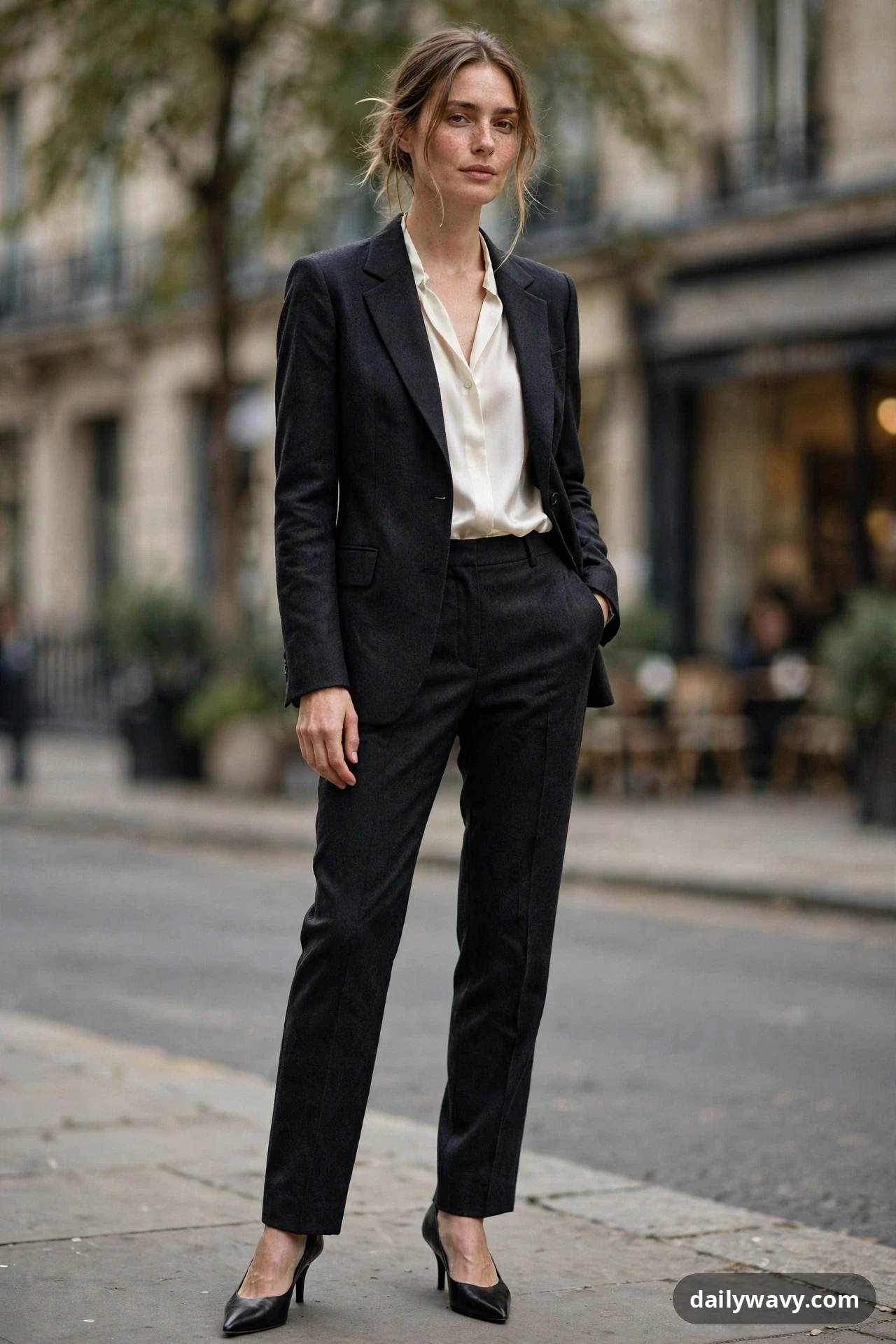
A matching suit always looks deliberate, and a soft blouse underneath keeps it from reading like office wear. The effect is sharp but evening-appropriate, with a quiet confidence that suits the theater crowd.
Choose a suit in a dark neutral: charcoal, espresso, or midnight blue. Single-breasted blazer, flat-front tapered trousers. Underneath, wear a soft blouse in champagne, blush, or ivory with a relaxed collar and no stiff buttons. Leave the blazer's top button undone, or button it for a sharper line, and push each sleeve up a quarter inch if you want a bit of blouse cuff to show. Shoes: pointed-toe heels or polished loafers with a low block heel. A structured clutch finishes the look.
Fit note: the blazer should button smoothly without pulling, and the trousers should break once over the shoe.
Dress-code and weather note: this handles a regular evening performance and leans formal enough for opening weekend. It also works in any season, since the layers are easy to adjust. For more tailored separates to mix into an evening rotation, see these business casual office outfits.
Substitution: replace the blouse with a simple shell in a silk-look fabric.
Walking note: a low block heel handles lobby stairs and intermission lines without the wobble of a stiletto, and you can stand through a long ovation in comfort.
3. Dark Floral Dress With A Small Bag

Dark florals feel romantic under theater lighting without the brightness of a daytime print. This is one of the easiest theater outfits to pull together, since the dress does nearly all the work.
Pick a midi or knee-length dress with a dark ground: black, deep teal, or plum, printed with flowers in muted tones. A v-neck, scoop, or round neckline keeps it evening-appropriate. Long or three-quarter sleeves are practical for air-conditioned auditoriums. Pair with a small structured bag in black or tan that holds a phone and lipstick. Shoes: Mary Jane heels, almond-toe pumps, or strappy block-heel sandals.
Fit note: a defined waist, either sewn in or belted, keeps the print from overwhelming your frame.
Dress-code and weather note: this suits a standard performance in any season. Add opaque tights and boots in winter, bare legs and sandals in summer.
Substitution: if the dress is sleeveless, add a fitted black blazer rather than a cardigan for a dressier finish.
Seated comfort: a mid-calf or knee length with a slight flare means you sit without tugging at the hem, and the dark print hides any creasing from a long act.
4. One-Color Blouse And Trouser Pairing

Head-to-toe color is a stylist trick that makes simple pieces look polished. A blouse and trousers in one shade read as a deliberate evening look, even when every piece is comfortable.
Choose a fluid blouse in a jewel tone: emerald, sapphire, or rich aubergine. Match it with tailored trousers in the same color family, ideally the exact shade. French-tuck the blouse so a strip of waistband shows, or leave it untucked for a softer line. Shoes: metallic or nude heels that disappear under the trouser hem. A slim belt in a matching tone can sharpen the waist.
Fit note: the blouse should be relaxed through the body while the trousers stay trim. That contrast is what keeps the look modern instead of shapeless.
Dress-code and weather note: monochromatic dressing registers as formal at the theater even without a dress, and long sleeves plus full-length trousers cover you in a cold venue.
Substitution: swap the blouse for a draped one-shoulder top in the same color for a more dramatic neckline.
Seated comfort: fluid fabrics give you room to sit through a long first act, and trousers mean no hem adjustments in tight rows.
5. Structured Top With A Plain Midi Skirt

A structured top gives this outfit its evening polish, while the plain skirt keeps everything calm. It is dressy without trying too hard, which is exactly the theater sweet spot.
Start with a plain midi skirt in a matte fabric: black, navy, or camel. Add a structured top: a peplum shell, a fitted corset-style top, or a tailored bustier worn over a simple base. The top is the statement, so the skirt stays quiet. Shoes: block-heel pumps, strappy heeled sandals, or pointed slingbacks. A small envelope clutch works best.
Fit note: the skirt should sit high on the waist, and the structured top should end at or just below the waistband for clean proportions.
Dress-code and weather note: this is a fair-weather favorite. In cooler months, wear a tailored coat over it and check the coat at the door.
Substitution: replace the structured top with a fitted satin camisole and a cropped blazer.
Walking note: strappy sandals are fine if the straps are secure. Skip slides for theater night, since lobby stairs are much easier in shoes that stay on your feet.
6. Long-Sleeve Dress With A Narrow Belt

A long-sleeve dress with a narrow belt is a reliable theater outfit. It is simple, it covers you, and the belt adds the shape that turns a plain dress into an intentional outfit.
Pick a knee-length or midi dress with long sleeves in a solid color: black, burgundy, forest, or deep teal. Add a narrow belt at the natural waist in black leather or a metallic finish. The belt is the whole styling trick here, so keep everything else simple. Shoes: heeled booties or classic pumps. Keep jewelry minimal: studs and a slim bracelet.
Fit note: the belt should sit at your true waist, not higher. A narrow belt under an inch wide suits most frames.
Dress-code and weather note: this is appropriate for nearly every theater occasion short of a formal gala, and the long sleeves handle chilly auditoriums on their own.
Substitution: swap the belt for a slim fabric sash tied in a low bow at the back.
Seated comfort: long sleeves mean no shawl is needed in a cold room, and the simple silhouette sits flat in narrow seats without bulky layers to rearrange.
7. Crepe Trousers With An Embellished Cardigan
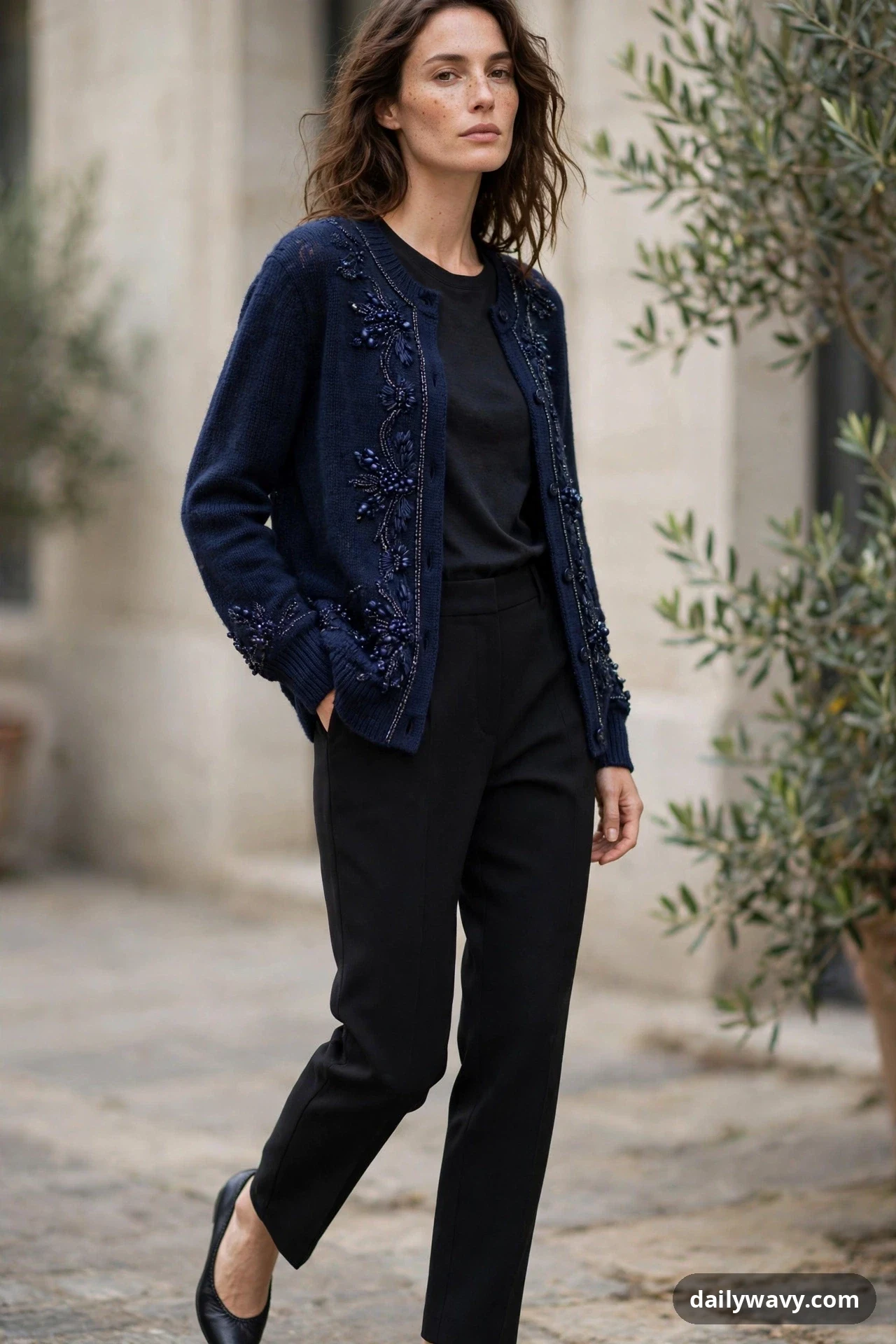
This pairing brings comfort and sparkle together. Crepe trousers move like a dream, and an embellished cardigan gives you the theater-worthy detail that lifts the whole outfit into evening territory.
Choose crepe trousers in black or deep navy with a flat front and tapered leg. Pair them with a cardigan that has beading, sequin trim, or metallic thread woven through the knit, worn open over a simple camisole. Wear the cardigan open, or fasten two or three of its buttons and leave the rest undone. Shoes: pointed flats with a slight heel or low kitten heels.
Fit note: the trousers should skim the hip, and the cardigan should end at the high hip so your proportions stay clean and leggy.
Dress-code and weather note: the embellishment is what makes this theater-appropriate rather than daytime, and the covered silhouette works for cooler evenings. For more knit-layer ideas, see these cardigan outfits.
Substitution: if embellished cardigans are not your style, a black velvet blazer over the camisole achieves the same evening effect.
Seated comfort: crepe is one of the most forgiving theater fabrics and resists wrinkles through two acts. This is also a warm choice for drafty venues, since every layer adds insulation.
8. Lined Lace Blouse With Tailored Pants

Lace reads evening instantly, and a lined version keeps it theater-appropriate rather than delicate. Paired with tailored pants, it balances soft and sharp in a way that feels modern and grown-up.
Choose a lined lace blouse in black, navy, oxblood, or beige with a modest neckline: a high jewel neck or a small keyhole. Tuck it into high-waisted tailored pants in black or charcoal. A simple gold or silver pendant is the only jewelry you need. Shoes: pointed pumps or heeled loafers.
Fit note: the blouse can be relaxed through the body since the tucked waist and slim pants define the shape underneath.
Dress-code and weather note: lace elevates the look enough for slightly dressier venues, and the covered arms and legs suit cold auditoriums.
Substitution: swap the lace blouse for a silk blouse in the same dark tone for a sleeker finish.
Seated comfort: tailored pants with a bit of stretch stay comfortable through a long performance, and the high neckline means nothing shifts when you lean forward in your seat to read the program.
9. Knit Midi Dress With A Dressy Coat
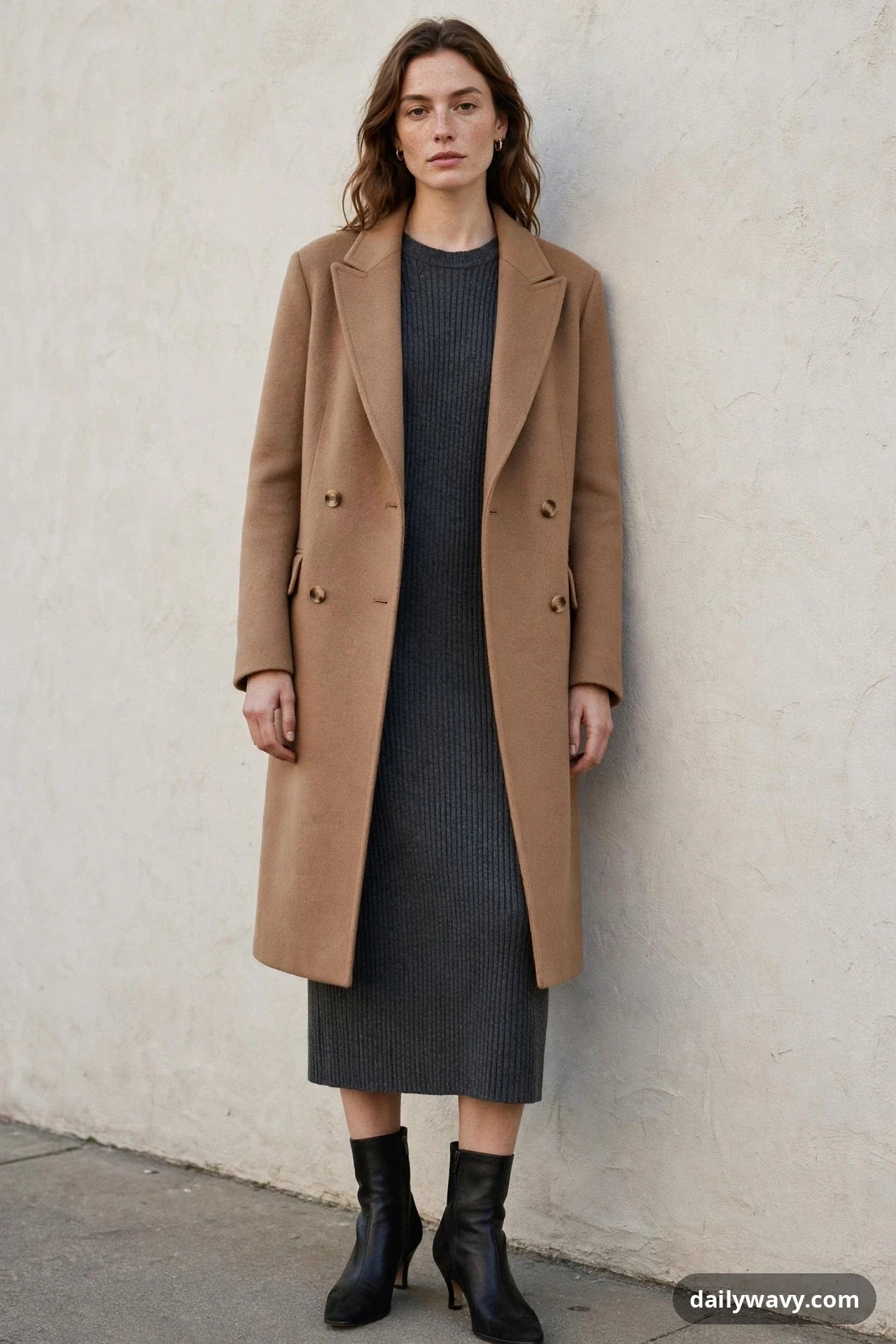
A knit midi dress is one of the most comfortable things you can wear to the theater, and a dressy coat on top makes the whole look feel intentional rather than casual. This is the winter theater uniform.
Pick a fitted or gently flared knit midi dress in black, camel, or heather gray. The knit should be a medium weight: substantial enough to hold its shape through the evening. Over it, wear a dressy coat in wool or a wool blend: a tailored overcoat or a structured wrap coat. Shoes: heeled ankle boots or pointed pumps. A scarf in a contrasting tone adds polish on the coldest nights.
Fit note: the coat should fall at or below the dress hem. A shorter coat over a midi dress chops the line and breaks the elegance.
Dress-code and weather note: this is built for winter theater, from the cold walk off the parking lot to the warm auditorium. For more cold-weather layering ideas, see these winter casual outfits.
Substitution: trade the overcoat for a long velvet blazer when the night is cool but not cold.
Walking note: heeled ankle boots handle wet sidewalks and lobby stairs well, and the coat goes straight to coat check so you walk into the lobby in just the dress.
10. Simple Dress With A Statement Necklace
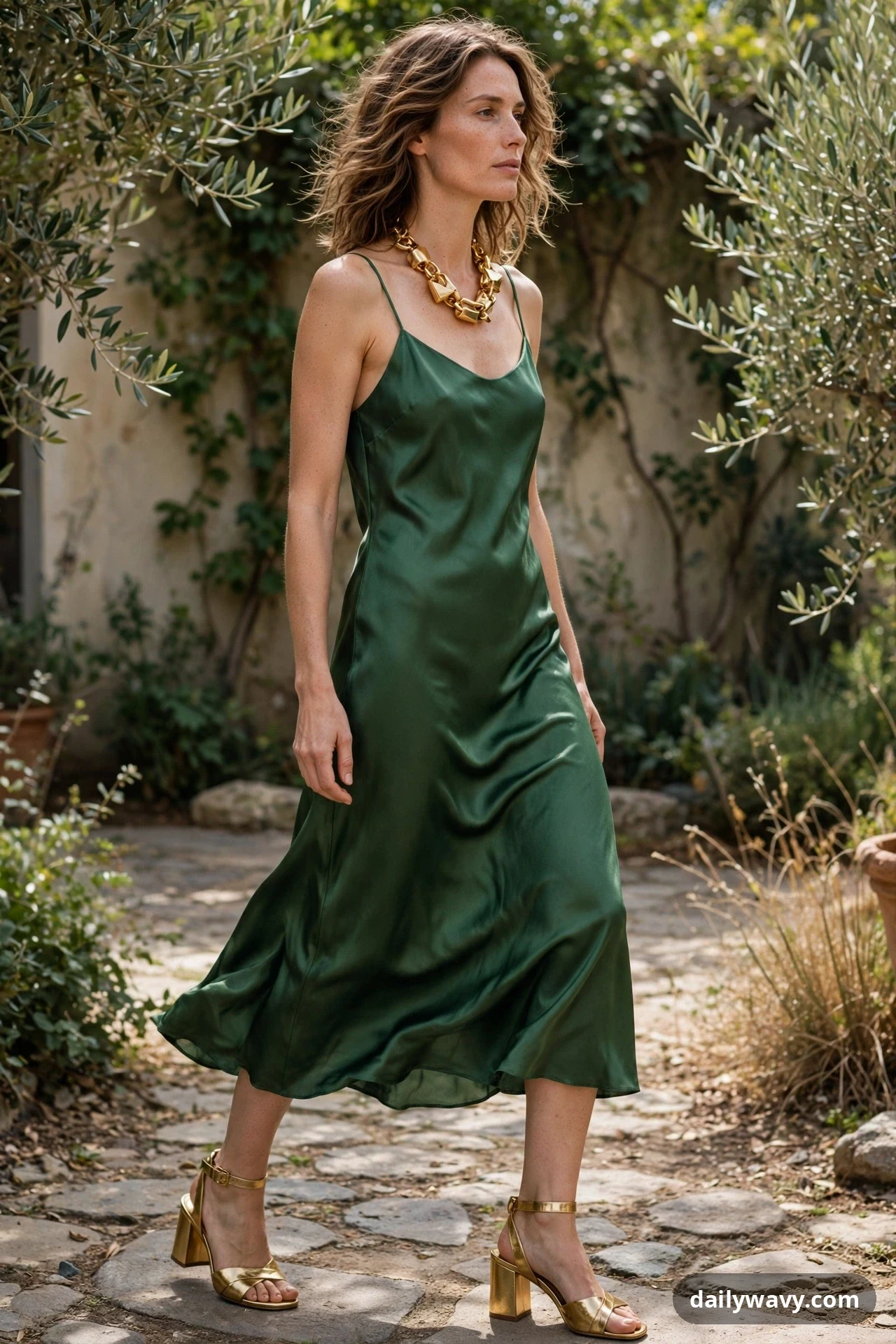
One bold necklace can carry an entire theater outfit. A simple dress underneath lets the jewelry do all the talking, which makes this one of the easiest looks to assemble.
Choose a simple slip, shift, or sheath dress in black, navy, espresso, or deep green. Keep the neckline open: scoop, v-neck, or boat, so the necklace sits against skin. Then add the statement: a bold cocktail necklace, layered beads, or a sculptural metal piece. Shoes: classic pumps, dressy flats, or block-heel sandals. Keep earrings small so they do not compete.
Fit note: the dress should be fitted but not tight. The necklace needs a clean, calm backdrop to stand out.
Dress-code and weather note: statement jewelry registers as evening dressing even on the simplest dress, so this works for a standard performance in any season.
Substitution: if necklaces are not your thing, a bold cuff bracelet with simple earrings creates the same focal point.
Seated comfort: a shift dress is easy to sit in, and with the jewelry carrying the look, you can choose the most comfortable dress you own. No fussing with layers during the performance.
11. Satin Trousers With A Tailored Jacket

Satin trousers bring evening shine without a dress, and a tailored jacket keeps the whole thing sharp. This is a confident, modern theater look for anyone who prefers pants.
Pick satin or satin-finish trousers in champagne, black, or deep bronze. Pair with a tailored jacket in a complementary dark tone: black velvet or midnight wool. Underneath, a simple camisole or fitted top in black or cream. Shoes: pointed heels or pointed flats in black or metallic. A small hard-case clutch finishes it.
Fit note: satin shows every line, so the trousers should skim without pulling. A relaxed straight or wide leg is the safest cut.
Dress-code and weather note: the sheen of satin reads dressy, so this suits an evening performance well. The jacket adds warmth for air-conditioned rooms.
Substitution: swap the satin trousers for silk-finish wide-leg pants in black.
Walking note: satin can be slippery on seat edges, so stand and smooth once when you sit. The tailored jacket stays structured all night, and pointed heels with a mid-height block are the practical choice for stairs.
12. A-Line Dress With Slingbacks

An A-line dress is flattering on many figures, and slingbacks add just enough heel for evening. This is the timeless theater choice, the one you reach for when you do not want to think too hard.
Choose an A-line dress that hits at or below the knee, in black, a solid jewel tone, or a subtle texture: jacquard, brocade, or matte crepe. The fitted bodice and flared skirt create a classic silhouette that photographs beautifully in a grand lobby. Shoes: slingbacks with a kitten or mid heel in black, nude, or metallic. Add a small top-handle bag or clutch.
Fit note: the waist seam should sit at your natural waist. The skirt's flare gives you room without bulk.
Dress-code and weather note: A-line dresses suit everything from community theater to a touring Broadway show, and the covered knee works year-round with or without tights.
Substitution: swap slingbacks for pointed pumps if you prefer a closed shoe.
Seated comfort: the flared skirt drapes over your knees naturally when you sit, and slingbacks are easy to slip on and off under the seat. A mid heel is kind to stairs at intermission.
13. Soft Draped Blouse With A Straight Skirt

A soft draped blouse brings movement and elegance, while a straight skirt keeps the silhouette sleek. This pairing feels refined without stiffness, like the outfit of someone who goes to the theater often.
Choose a blouse with draping at the neckline or a soft cowl in ivory, champagne, dusty rose, or plum. Pair it with a straight pencil or column skirt in black or dark gray, hitting at or below the knee. Tuck the blouse neatly and keep accessories quiet. Shoes: pointed-toe heels or elegant flats with a pointed toe. A slim clutch or small shoulder bag completes the look.
Fit note: the blouse's drape adds volume on top, so the skirt should be slim to balance the proportions.
Dress-code and weather note: the draped neckline gives this an evening softness that suits the theater, and the covered silhouette works for cooler nights.
Substitution: replace the draped blouse with a silk wrap top in the same tone.
Seated comfort: a straight skirt needs a back vent or kick pleat for comfortable sitting, so check that detail before the night. The blouse's soft fabric will not wrinkle across your lap during a long act.
14. Plain Jumpsuit With A Silk Scarf

A plain jumpsuit is the one-piece theater outfit: no matching, no fuss, and it always looks intentional. A silk scarf at the neck adds the dressy detail that makes it evening-ready.
Choose a plain jumpsuit in black, navy, or deep green with a defined waist: either a sewn waistband or a fabric belt. A v-neck or square neckline works best. Tie a small silk scarf at the neck in a contrasting pattern or color. Shoes: block heels, pointed flats, or pointed heels. A structured mini bag keeps it evening.
Fit note: the jumpsuit's inseam must be long enough. Too-short legs ride up when you sit, so check the fit in a seated mirror before the night.
Dress-code and weather note: a dark jumpsuit with polished accessories is accepted at nearly every theater event short of black tie.
Substitution: swap the silk scarf for a long pendant necklace if scarves are not your style.
Seated comfort: this is where a jumpsuit shines. Nothing rides, twists, or needs adjusting through a long show. Just remember the restroom logistics of a one-piece at intermission and plan your timing.
Frequently asked questions
How dressy should I be for a normal theater night?
Aim for smart dressy: a step above a nice dinner out, a step below cocktail party formal. Unless the invitation says gala, opening night, or black tie, you do not need a gown. Structured fabrics, polished shoes, and one intentional detail are enough.
What should I wear to sit comfortably for a long show?
Choose fabrics with a little give and silhouettes that drape rather than dig. Trousers, knit dresses, and A-line or pleated skirts are the most comfortable choices. Avoid stiff waistbands, skirts that ride up, and anything you have to adjust mid-act.
Should I use coat check?
Yes, whenever it is available. Many theaters offer it, and it means you can wear a real winter coat for the walk in without holding it on your lap all evening. Arrive a few minutes early so you are not rushed.
What heel height is safe for theater stairs?
A kitten heel or low block heel of about two inches is the practical sweet spot. It looks dressy, handles lobby stairs and standing ovations well, and keeps you steady on carpeted steps in low light. Save the stilettos for flat-floored venues.
What outerwear works for theater night in winter?
A wool overcoat or structured wrap coat over your outfit is ideal, and it goes straight to coat check. For milder nights, a long velvet blazer or a dressy wool coat works over most of the looks in this guide.
What should I avoid wearing to the theater?
Skip white or ivory looks that read bridal, and leave denim and trainers at home entirely. Also avoid anything too casual like shorts, graphic tops, or athletic wear. The crowd will be dressed, and matching that energy is part of the fun.
The Takeaway
A great theater night outfit is really about two things: looking like you belong in the room, and feeling good in your seat when the lights go down. Pick the look from this guide that fits your venue and the weather, give yourself a little extra time to get there, and enjoy the show. If you are building a wardrobe of evening-ready pieces, our Fashion & Beauty section has plenty more ideas to explore.